Health & WellnessS


Health

Inpatient sleeping drug quadrupled fall risk

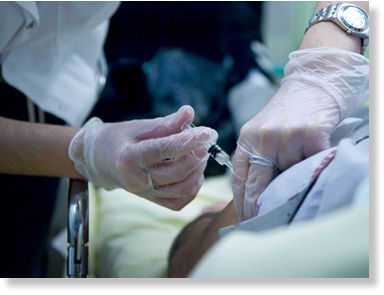
A drug commonly prescribed to help patients sleep in hospitals has been associated with an increased risk of falls, according to a study published in the Journal of Hospital Medicine.

U.S. sleep specialists from the Mayo Clinic found that the fall rate among the 4,962 patients who took zolpidem during their hospital stay was more than four times as high as the 11,358 who did not take the drug.

They also found that the risk posed by the drug was greater than the risks posed by factors such as age, cognitive impairment, delirium or insomnia, regardless of the dosage used.

"Ensuring that people get enough sleep during their hospital stay is very important, but it can also prove very challenging," says the Clinic's Chief Patient Safety Officer Dr. Timothy I. Morgenthaler, who specializes in sleep disorders and pulmonary and critical care.

"Patient falls are also a significant patient safety issue in hospitals and one that has been quite difficult to tackle, despite considerable efforts. That is why it is one of the target aims of the U.S. Department of Health and Human Services Partnership for Patients project."

Arrow Down

Miss America contender latest to surgically remove breasts to 'prevent' cancer

Cancer
© PreventDisease.com
Following in the footsteps of women like Sharon Osbourne and others, a 24-year-old Miss America contestant who is set to represent Washington D.C. has announced that she will be removing both of her breasts through double masectomy in order to 'prevent' breast cancer that killed her mother. This trend, which is actually advocated by many doctors (gynecologists in particular, it seems), is considered 'heroic' by many mainstream media outlets that fail to mention the barbaric nature of the procedure and the powerful importance of nutrition and lifestyle when it comes to real cancer prevention.

Miss America contestant Allyn Rose says that she is genetically predisposed to breast cancer, and that she feels it is the only choice for her to stay alive because of it.

If Rose wins the pageant this year, she says she will undergo surgery later in January of 2014. If not, she will have the surgery performed as early as next June. According to her interview with the NY Daily News, Rose says she is 'choosing life over beauty'. She said:
"Breasts don't define your life. I'm choosing life over beauty. I'm choosing to remove something that's so iconic to my womanhood."
Rose's statements echo those of Sharon Osbourne and other women like Allison Gilbert who have decided that a double masectomy is the only way to truly prevent breast cancer from taking their lives. Gilbert explained to CNN, in fact, that her gynecologist had convinced her that the procedure was necessary to 'stay alive' for her children.

Pills

U.S. drug shortages leave dying patients without medicine

Image
© Agence France-Presse/Martin BureauMorphine: not guaranteed even for the dying.
A nationwide drug shortage has left American hospital patients untreated and in pain. Manufacturing problems have left emergency care providers without some of the most crucial medicines, putting lives at risk.

More than 100 drugs were put on the shortage list this year, prompting Congressional hearings and leading to an executive order by President Barack Obama, which forces drug companies to publicize their shortages.

Health care workers have had no other option than to ration some medicines, giving it only to patients that need it most. Paul Davis, the chief of a rural ambulance squad in Ohio, told the New York Times that he was unable to give morphine to a woman with a broken leg because he was saving his last pills for patients he thought needed it more.

Elsewhere, desperate health care workers are treating patients with expired drugs and less effective medicine. Those with cancer have been hit particularly hard. About 80 percent of the drugs in short supply are generic medicines for injection, including the chemotherapy treatment drug Doxil, WFTV reports. Sodium bicarbonate injections, which are used to stabilize critically ill patients suffering from sepsis, heart attacks or other cardiac problems, are also in short supply.

"When you can't treat basic things - cardiac arrest, pain management, seizures - you're in trouble. When you only have five tools in your toolbox and three of them are gone, what do you do?" Dr. Carol Cunningham, state medical director for the Ohio Department of Public Safety's emergency services division, told the Times.

Light Sabers

The battle for control over our plates

Image
© Activist Post
You may think it unlikely that the government would have any real interest in exactly what is landing up on the plate of the average American, but in truth nothing could be more wrong. The lid has started to be lifted on the huge scale deception that has lead to the worst health epidemic that this country has ever seen. When you stop and think about it for just a few seconds, it really doesn't make sense that in this day and age, in one of the most developed countries in the world, with the best medical facilities and doctors; we have the worst state of public health ever seen. How could an affluent, forward thinking country have higher rates of diabetes, cancer, heart disease and countless other problems that simply did not exist on this scale 50 years ago? It is no accident.

Who's Responsible?

The blame game could lead us down a number of avenues, all of which take us back to the same answers. Those who have money to be gained from illness and disease.
Now this is not some form of twisted joke, it is a real issue, and as hard as it may be to comprehend, the illnesses that we, our friends, families, and co-workers are all getting in such high numbers are largely avoidable simply by changing our diet. It is not down to one company, or group, but a huge industry that profits from packaging up chemicals and toxins and selling it as food, and another that profits from selling the drugs that are supposed to heal you. In truth, the best way to prevent illness is to stop eating all of the processed sugars, additives, preservatives and colorants, and return to a natural diet consisting mainly of fresh fruit and vegetables. There is a direct correlation between the amount of processed foods we are consuming and the amount of illness and disease in the country yet the government seems intent on covering it up to protect the interests of the industries that are profiting from it.

Alarm Clock

Teen suffers from 'Sleeping Beauty' syndrome, slept for 64 days straight

North Fayette - A local teenager is dealing with a sleep disorder called Kleine-Levin or Sleeping Beauty Syndrome.

Nicole Delien, 17, of North Fayette, slept 64 days in her longest sleeping episode.

Her mom, Vicki, says Nicole will sleep 18 or 19 hours a day, and when she does wake up to eat, she says Nicole is in a sleepwalking state which she doesn't remember.


  • Clipboard

    Life in a post-antibiotic age

    Image
    It is coming; indeed, it is already here. It is a lethal strain of bacteria beyond the ability of modern antibiotics to treat. We see news stories of untreatable bacteria in hospitals, schools, cruise ships, hotels, and in our daily lives. We can do nothing about this, but we can devise new methods of treatment if we are to survive. We must rethink modern medicine if we are to live through the post-antibiotic age we now are living in.

    Antibiotics themselves are a new treatment first begun with the creation of Penicillin in the 1940s from bread mold. The theory of bacteria only dates back to Louis Pasteur and Joseph Lister in the 1860s. The concept of antiseptic technique, is even newer. The simple idea of medical providers washing their hands; creating a sterile atmosphere is one of the great medicinal advances of all time. Aseptic technique has saved more lives than all the drugs and modern medical treatments combined.

    If you think back to an 1860 American Civil War scene, with filthy surgeon, unwashed hands, unwashed surgical tools, and a not germ-free operating room, you get my idea. Fortunately, whatever collapse comes our way we need not lose the knowledge of sterile techniques and medical practices. What we will lose is the ability to treat bacteria with antibiotics.

    Smoking

    Mandatory 'smokers license' under consideration

    WASHINGTON DC - A public health proposal suggests that tobacco smokers should be required to apply and pay for a "smoker's license" in order to continue buying cigarettes.

    Image
    © Matt Cardy/Getty ImagesA recent public health proposal looks at the pros and cons of enforced “smoker’s licenses” to curb international tobacco use.
    In this week's PLOS Medicine medical journal, two leading tobacco control advocates debate the merits of the smoker's license. Simon Chapman, a professor at the University of Sydney, proposes that users would have to apply and pay for a mandatory license in the form of a smartcard that would be shown when buying cigarettes.

    Dr. Chapman wrote that it could discourage young people from picking up the habit.

    In a controversial move, the smartcard would allow the government to limit how many cigarettes a smoker could buy. Professor Chapman suggests 50 per day averaged over two weeks to accommodate heavy smokers. The anti-smoking activist told the Daily Mail that the sale of tobacco is currently subject to trivial controls compared to other dangerous products that threaten both public and personal safety.

    A 2009 study from the Pew Research Center found that for the period of January through June 2008, the share of current smokers in the American adult population was 20.8 percent. According to statistics on the PLOS journal's website, tobacco continues to kill millions of people around the world each year and usage is even increasing in some countries.

    Health

    Cholesterol lowering statins found to damage peripheral nerves

    Statins
    © GreenMedInfo
    Have the nerve-damaging properties of statin drugs now been confirmed? There are over 300 adverse health effects associated with the use of this chemical class of cholesterol-lowering medications known as statins, with myotoxicity (muscle-damaging) and neurotoxicity (nerve-damaging) top on the list. When will the FDA step in and warn the public, as proof of the problem in the biomedical literature reaches an alarming level of clarity?

    The neurotoxicity of statin drugs are back in the news. Following on the heels of the FDA decision earlier this year to require statin drugs manufacturers to add "memory loss" as a side effect of this chemical class, a new study in published in the Journal of Diabetes reveals a clear association between statin use and peripheral neuropathy in a US population 40 years of age and older.

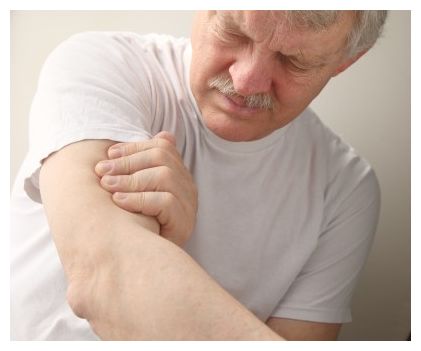
    The study found "The prevalence of peripheral neuropathy was significantly higher among those who used statins compared to those who did not (23.5% vs. 13.5%; p < 0.01)," which is a 75% increase in relative risk.

    Case reports of statin-induced peripheral neuropathy have existed in the medical literature for over 15 years.[i] Now, larger human studies are confirming that statin drugs do damage to the peripheral nerves. Moreover, much of the damage is occurring below the threshold of clinical surveillance, silently causing harm in unsuspecting patients.

    2 + 2 = 4

    Mutation of immune system has possible links to Alzheimer's

    Image
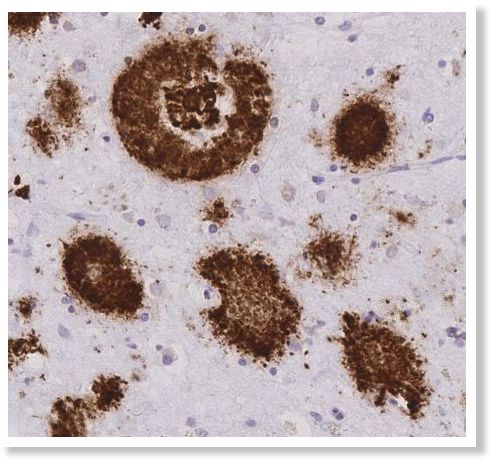
    © New York TimesAmyloid plaques build up in the brains of people with Alzheimer's disease.
    Alzheimer's researchers and drug companies have for years concentrated on one hallmark of Alzheimer's disease: the production of toxic shards of a protein that accumulate in plaques on the brain.

    But now, in a surprising coincidence, two groups of researchers working from entirely different starting points have converged on a mutated gene involved in another aspect of Alzheimer's disease: the immune system's role in protecting against the disease. The mutation is suspected of interfering with the brain's ability to prevent the buildup of plaque.

    The discovery, researchers say, provides clues to how and why the disease progresses. The gene, known as TREM2, is only the second found to increase Alzheimer's risk substantially in older people.

    Red Flag

    Gardasil genetic fingerprints found in postmortem samples of girls given vaccine

    Image
    A recent study published in the open-access journal Pharmaceutical Regulatory Affairs provides shocking new evidence that viral components contained in the human papillomavirus (HPV) vaccine Gardasil are capable of crossing the blood-brain barrier and triggering cerebral vasculitis, a severe form of blood vessel inflammation in the brain that can lead to severe autoimmune disorders and even death.

    A postmortem assessment of two young girls from opposite ends of the world who died recently after being given the Gardasil vaccine revealed fragments of the HPV-16L1 antigen, which is added to both Gardasil (Merck & Co.) and Cervarix (GlaxoSmithKline), inside the girls' brain tissue. According to the study's authors, these particles represent a genetic fingerprint of the Gardasil vaccine, which is now clearly exposed as causing serious, adverse events in at least some of the girls that receive it.

    For their research, Dr. Chris Shaw from the University of British Columbia (UBC) in Canada and Dr. Lucija Tomljenovic from the Neural Dynamics Research Group in Vancouver examined samples of brain tissue taken from both girls, one 19 years old and the other 14 years old. Their analysis focused specifically on the potential presence of both HPV-16L1 and HPV-18L1, two specific antigens used in HPV vaccines.

    Comment: Read the following articles about the serious health concerns regarding the Gardasil Vaccine:

    Time for the Truth about Gardasil
    Gardasil Researcher Speaks Out
    New Worries About Gardasil Safety
    The HPV Vaccine: Herd Immunity or Human Sacrifice?
    Uncovered FDA Documents Reveal 26 More Gardasil Deaths
    Gardasil HPV vaccines found contaminated with recombinant DNA that persists in human blood