Health & WellnessS


Info

Foie gras taken off Lords' menu

Image
Foie Gras will no longer be served in the House of Lords restaurant when the peers return from their Christmas break.

The catering department has withdrawn the delicacy after protests from the campaign group People for the Ethical Treatment of Animals (Peta) were backed by a number of peers. A Lords spokesman said: "It will not feature on menus from January."

Peta complains that the geese and ducks are force-fed corn to grossly enlarge their livers before they are killed.

Its associate director, Mimi Bekhechi, said: "We are delighted that the House of Lords will join the House of Commons in taking a stand against cruelty and removing this most un-British of products from its menus."

Bacon n Eggs

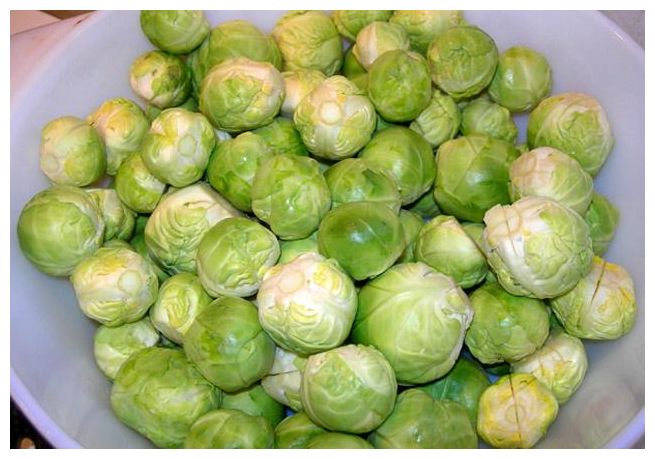
Man with mechanical heart lands in the hospital after eating too many Brussels sprouts

Brussels sprouts aren't necessarily good for everyone.
Brussels Sprouts
© DreamstimeBrussels sprouts contains vitamin K, can can interfere with anticoagulent medication.
A man with a mechanical heart had to be rushed to the hospital last Christmas after eating too many helpings of the leafy green vegetable, the BBC reports.

Initially baffled, doctors at Golden Jubilee Hospital in Clydebank, Scotland concluded that the man's plentiful plateful of sprouts were to blame for his sudden sickening.

The nutrient-rich vegetable contains vitamin K, which promotes blood clotting. The doctors discovered that the sprouts interfered with the man's anticoagulent regimen, needed to maintain his mechanical ticker.

The curious case, which was reported in an Australian medical journal, illustrated that too much of a good thing -- even one's veggies -- isn't always a good idea.

"Patients who are taking anticoagulants are generally advised not to eat too many green leafy vegetables, as they are full of vitamin K, which antagonize the action of this vital medication," cardiologist Dr Roy Gardner stated in the study.

The patient, who was not named, was eventually stabilized and released.

Syringe

FDA approves neurotoxic flu drug for infants less than one

Tamiflu
© GreenMedInfo
Whereas the flu is self-limiting, the FDA's capacity for bad decisions is not...


The recent decision by the FDA to approve the use of the antiviral drug Tamiflu for treating influenza in infants as young as two weeks old, belies an underlying trajectory within our regulatory agencies towards sheer insanity.

Tamiflu, known generically as oseltamivir, has already drawn international concern over its link with suicide deaths in children given the drug after its approval in 1999. In fact, in 2004, the Japanese pharmaceutical company Chugai added "abnormal behavior" as a possible side effect inside Tamiflu's package. The FDA also acknowledged in its April, 2012 "Pediatric Postmarket Adverse Event Review" of Tamiflu that "abnormal behavior, delirium, including symptoms such as hallucinations, agitation, anxiety, altered level of consciousness, confusion, nightmares, delusions" are possible side effects.[i]

Recent animal research on Tamiflu has found that the infant brain absorbs the drug more readily than the adult brain,[ii] [iii] lending a possible explanation for why neuropsychiatric side effects have been observed disproportionately in younger patients.

The very mechanism of Tamiflu's anti-influenza action may hold the key to its well-known neurotoxicity. Known as a neuromindase inhibitor, the drug inhibits the key enzyme within the flu virus that enables it to enter through the membrane of the host cell. So fundamental is this enzyme that viruses are named after this antigenic characteristic. For instance, the "N" in H1N1 flu virus is named for type 1 viral neuromindase.

Mammals, however, also have neurimindase enzymes, known as 'sialidase homologs,' with four variations identified within the human genome so far; NEU1,NEU2,NEU3 and NUE4. These enzymes are important for neurological health. For example, the enzyme encoded by NEU3, is indispensable for the modulation of the ganglioside content of the lipid bilayer, which is found predominantly in the nervous system and constitutes 6% of all phospholipids in the brain.

It is therefore likely that neurimindase-targeted drugs like Tamiflu are simply not selective enough to inhibit only the enzymes associated with influenza viral infectivity. They likely also cross-react with those off-target neurimindase enzymes associated with proper neurological function within the host. This "cross reactivity" with self-structures may also explain why the offspring of pregnant women given Tamiflu have significantly elevated risk of birth defects (10.6%) relative to background rates (2-3%), according to a 2009 safety review by the European Medicines Agency.

Health

Unusual dolphin therapy helps autistic boy gain awareness

Dolphin Therapy
© Medical Daily
Dolphin therapy has helped a five-year-old autistic child become "aware" and "alert".

Dolphin-assisted therapy is a unique technique that helps treat children with mental disabilities. According to China Daily, while the technique has already made a splash in western countries, it is now growing in popularity among Chinese mental health patients.

The young Chinese boy showed significant improvements in his symptoms after just 15 sessions with a pair of bottle-nosed dolphins at Hangzhou Polar Ocean Park.

The boy's father, Zheng Jun, believes that the unusual therapy has been more effective than any other treatment in helping his son.

"Now, you can't tell he's different from his classmates," Zheng said.

Cow

New "potentially deadly" superbug strain found in UK milk supply

Milk
© REUTERS/John Gress

A new, potentially deadly strain of MRSA superbug has been found in British milk for the first time, revealing that the bacteria are spreading through the UK livestock population.

The new strain of MRSA (Methicillin-resistant Staphylococcus aureus), known as ST398, is resistant to antibiotics and can cause serious and even deadly infections in humans.

The superbug, which has become an increasingly frequent cause of udder infections in dairy cows, was discovered from tests on 1,500 samples. Researchers found seven cases of RSA ST398 from five farms in England, Scotland and Wales.

Cambridge University scientists who first identified MRSA in milk in 2011, say that the latest discovery of a different strain is troubling, adding that it shows that the superbug is gaining an increasing hold in the dairy industry.

In theory, bacteria germs are destroyed in the pasteurization process, when the milk is heat-treated before it is bottled and delivered to groceries for consumer use. According to experts, there is no risk of MRSA infection to consumers of dairy products as long as the milk is pasteurized.

However, the problem comes from farmers, vets and abattoir workers who may become infected through contact with cows and could transmit the bug to others. This has happened in the Netherlands where the same strain of MRSA has caused an outbreak among residents in a nursing home.

Syringe

FDA warns doctors of counterfeit Botox

Image
Federal regulators have warned more than 350 medical practices that Botox they may have received from a Canadian supplier is unapproved and could be counterfeit or unsafe.The Food and Drug Administration said in a letter sent last month, a letter released publicly last week, that batches of the wrinkle treatment shipped by suppliers owned by pharmacy Canada Drugs have not been approved by the FDA and that the agency cannot assure their effectiveness or their safety.

The FDA said Canada Drugs was previously tied to shipping unapproved and counterfeit cancer drugs.

The agency warned doctors about buying drugs from sources other than licensed U.S. pharmacies. It is the fifth warning the agency has made this year about foreign suppliers providing unapproved drugs.

Black Magic

New MRSA superbug strain found in UK milk supply

Image
A new strain of MRSA has been found in British milk, indicating that the superbug is spreading through the livestock population and poses a growing threat to human health.

The new strain, MRSA ST398, has been identified in seven samples of bulk milk from five different farms in England.

The discovery, from tests on 1,500 samples, indicates that antibiotic-resistant organisms are gaining an increasing hold in the dairy industry.

The disclosure comes amid growing concern over the use of modern antibiotics on British farms, driven by price pressure imposed by the big supermarket chains. Intensive farming with thousands of animals raised in cramped conditions means infections spread faster and the need for antibiotics is consequently greater.

Three classes of antibiotics rated as "critically important to human medicine" by the World Health Organisation - cephalosporins, fluoroquinolones and macrolides - have increased in use in the animal population by eightfold in the last decade.

Bacon n Eggs

How bone broths support your adrenals, bones and teeth

Image
Like supports like

Modern nutritional research continues to prove what traditional cultures learned through observation over time, when we eat a specific part of an animal, it nourishes that same part of our body. One example of this like supports like principle can be found in Dr. Catherine Shanahanʼs book, Deep Nutrition. Dr. Shanahan explains that the highest source of available vitamin A known to man isnʼt in a carrot or broccoli, but found in the tissue in the back of the eyeball.

As vitamin A is known to specifically support healthy eyesight (among many other crucial health supporting roles), it goes without saying that if we consume what Dr. Shanahan calls "those nasty bits," we will receive the nutritional bounty contained within to support our expression of optimal health. Broths and stocks provide a very easy way to incorporate the health giving benefits of all those culturally unappealing "nasty bits" into our regular diet.

Intelligent Food?

Wouldnʼt it be great if there was a type of intelligence that made it where we could eat a nutrient and have it go to a specific part of the body that needed it most? Well, there is such intelligence in nutrient-dense foods such as bone broths. This concept of an intelligence of a specific nutrient we consume to have an affinity to the same tissues within our own bodies is amazingly simple to our over-intellectualizing culture. Modern science still hasnʼt figured out how this intelligence works but they know that certain compounds have an affinity for certain tissues.

Comment: For more information on how to recover your health, read our forum discussion Life Without Bread. For thousands of years, humanity enjoyed good health by eating foods like bone broth, animal fats and meats. Enjoy! For more information see:

Broth: A Food That Heals
Traditional Bone Broth in Modern Health and Disease


Pills

FDA approves Aegerion cholesterol disorder drug

Federal regulators have approved Aegerion Pharmaceuticals' treatment for a rare inherited disease that causes extremely high levels of bad cholesterol, the company said Monday.

The company's shares have been hitting annual highs but declined in early trading after the Food and Drug Administration approval of Juxtapid, Aegerion's first drug, was announced.

The availability of the drug will be restricted because of the risk of liver damage in patients and the box will carry a "black box" warning, the FDA's most severe safety warning. Aegerion must certify all health care providers that prescribe it.

Megaphone

"Don't Ask, Don't Tell": Concerned citizen uncovers Whole Foods' policy on selling food grown in sewage sludge

Image
© prwatch.org
Don't fancy the thought of your spinach and carrots being grown in sewage sludge?

Neither does Mario Ciasulli, a semi-retired electrical engineer living in Chapel Hill, North Carolina. Mario likes to cook, and enjoys good food. When he found out last year about the practice of spreading dried and heated human and industrial waste as "fertilizer" on food crops, he was upset.

Certified organic food cannot be grown in sewage sludge -- or "biosolids," the Orwellian PR euphemism used by the sewage sludge industry.

But sometimes the vegetable Mario needs for a dish isn't certified organic, or he can't afford the higher price of the organically grown version. Until he found out about sludge, he thought that as long as a "conventionally" grown fruit or vegetable he used wasn't one of the "dirty dozen" for pesticide residues, he had nothing to worry about.