Health & WellnessS


Health

Intermittent fasting is a powerful healing modality

Image
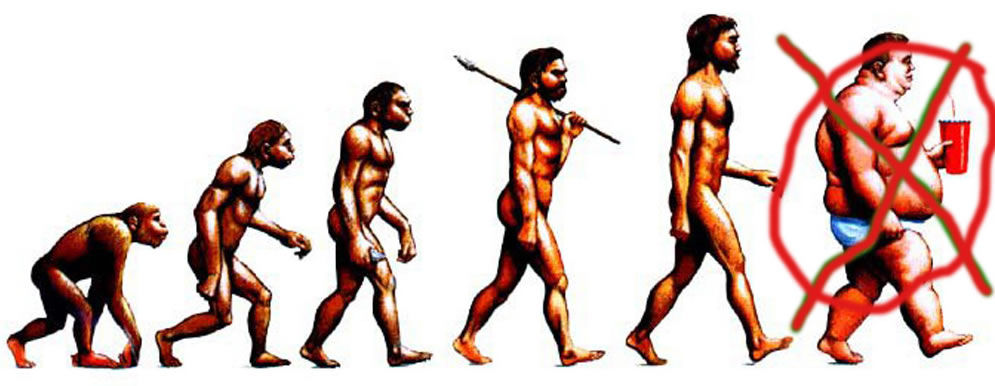
Our ancient ancestors grew up in a world of stress and scarcity. Food was not often not available and intermittent fasting was common. This form of life left a genetic blueprint with key information pertaining to our health and wellbeing. Intermittent fasting reduces oxidative stress, enhances cellular repair processes and appears to be a key strategy for anti-aging and longevity.

Our ancient ancestors lived in a world where food had to be fought and won. Many days went by with little food. Occasionally, a big hunt would score days of food at a time. This was rare. Typically, one or 2 big meals every few days was sufficient to keep our ancestors nourished.

Food scarcity creates efficient metabolic systems

Thousands of years of food scarcity led our bodies to develop a protective mechanism to adapt to alternating phases of food abundance and scarcity. During times of food scarcity our cell membranes become more sensitive to insulin. This is especially important when food is scarce because it ensures that every bit of food be efficiently used or stored.

During times of food abundance the body desensitizes the cells to insulin in an effort to avoid the stress of a heavy calorie intake. This results in elevated insulin levels, increased fat storage and increased oxidative stress and inflammatory conditions in the body. Insulin also enhances cellular division which is a risk factor for cancer formation.

Today, we have a massive abundance of food sources. We can virtually eat anytime we would like. In fact, many health coaches recommend eating 5-6 small meals throughout the day. This process, however, sends the body the signal of surplus that inhibits key tissue repair hormones that have powerful anti-aging effects.

Turning on genetic repair mechanisms

Intermittent fasting acts to turn on certain genetic repair mechanisms that enhance cellular rejuvenation. This adaptation appears to allow certain cells to have a longer lifespan during times of famine. It is energetically less expensive to repair a cell than it is to divide and create new cells. This has a positive effect at shutting down cancer cell formation and proliferation.
Health

Deadly and mysterious coronavirus detected in the UK for second time

Image
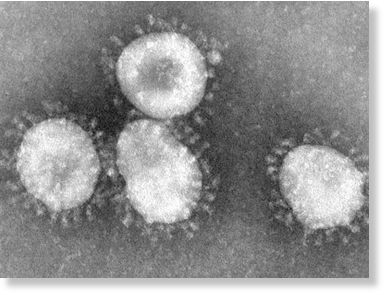
© wikipedia.orgCoronaviruses are a group of viruses that have a halo, or crown-like (corona) appearance when viewed under an electron microscope.
The 10th global case of the potentially fatal coronavirus was found in northern England. A patient is in intensive care suffering from the SARS-like infection, which has killed five so far, and sparked a global alert last September.

His symptoms developed on January 26th; laboratory investigations have revealed that that the patient is suffering from both the H1N1 swine flu infection and the NCoV (novel coronavirus) infection.

The UK's Health Protection Agency has introduced stringent infection control measures around the patient, who is currently in intensive care in a hospital in Manchester, northern England. People who have had any contact with the patient are also being monitored.

The patient recently traveled to Saudi Arabia and Pakistan. Out of the 10 laboratory-confirmed cases to date, five were in Saudi Arabia, where three of the men infected had died. A further two cases were in Jordan, both of whom died. One was in Germany, in a patient from Qatar, and two were in Britain, where both are receiving treatment. The other patient, also from Qatar, was kept alive in St. Thomas's Hospital, London, with the help of an artificial lung and remains in intensive care.

Ambulance

What really causes kidney stones (and why vitamin C does not)

Image
A recent widely-publicized study claimed that vitamin C supplements increased the risk of developing kidney stones by nearly a factor of two.[1] The study stated that the stones were most likely formed from calcium oxalate, which can be formed in the presence of vitamin C (ascorbate), but it did not analyze the kidney stones of participants. Instead, it relied on a different study of kidney stones where ascorbate was not tested. This type of poorly organized study does not help the medical profession or the public, but instead causes confusion.

The study followed 23,355 Swedish men for a decade. They were divided into two groups, one that did not take any supplements (22,448), and another that took supplements of vitamin C (907). The average diet for each group was tabulated, but not in much detail. Then the participants who got kidney stones in each group were tabulated, and the group that took vitamin C appeared to have a greater risk of kidney stones. The extra risk of kidney stones from ascorbate presented in the study is very low, 147 per 100,000 person-years, or only 0.15% per year.

Key points the media missed:

Life Preserver

Exercise beats drugs for depression

Image
Combating depression is big business in the US. In fact, it's the biggest business in the pharmaceutical industry. Americans currently spend around $10 billion a year for antidepressants. Despite the fact that antidepressants may cause significant side effects such as sexual dysfunction, weight gain, dry mouth, nausea, sleep disturbances, tremors, dizziness, congenital defects, stroke, and ironically, increased depression. And although plenty of evidence suggests that they often don't work, the medical community seems inclined to hand out prescriptions for them like Halloween candy. As I've written before, antidepressants are the most prescribed of all medications, and the number of prescriptions keeps growing -- across all age levels.

But what if a free, no side-effects treatment worked just as well or even better for depression? Would the medical community endorse it? A recent article in Time Magazine touts the work of Dr. Jasper Smits, a psychologist in Dallas, Texas, who has developed a program using exercise as the primary treatment for depression, anxiety, and a variety of other mood disorders. And the thing is, it works. As Dr. Smits says, "Exercise appears to affect, like an antidepressant, particular neurotransmitter systems in the brain, and it helps patients with depression re-establish positive behaviors. For patients with anxiety disorders, exercise reduces their fears of fear and related bodily sensations such as a racing heart and rapid breathing."

Dr. Smits and Dr. Michael Otto of Boston University reviewed dozens of studies on the impact of exercise on mental health and recently presented their findings at a major conference in Baltimore. At least some of those studies date way back. For example, in 1999, James A. Blumenthal and colleagues at Duke University showed that exercise was more effective than Zoloft for patients with major depression. The study followed 156 depressed older adults. Some were given Zoloft (Pfizer's trade name for the antidepressant setraline), some 30 minutes of exercise three times a week, and some both. After six months, the group who exercised without also taking Zoloft did better than the other two groups. Now that's a curious finding given Zoloft's professed purpose.

Health

Contaminated horsemeat could harm health, environment secretary warns

Image
© Photograph: AlamyThe environment secretary, Owen Paterson, said the public should be prepared for further bad news as the horsemeat scandal rumbles on.
Contaminated horsemeat could prove "injurious" to people's health, the environment secretary Owen Paterson said on Sunday as he served notice on the public to expect "further bad news" this week.

Amid fears in Downing Street that the ministerial team at the environment department is struggling to get a grip on the crisis, Paterson said "an international criminal conspiracy" may be behind the introduction of dangerous meat into processed food.

"We may find out, as the week progresses as the tests begin to come in, that there is a substance which is injurious to human health," Paterson told LBC 97.3 Radio. "We have no evidence of that at all at the moment. At the moment this is a labelling issue."

Patersons's remarks were the first government acknowledgment of a possible health threat after the discovery that food labelled as beef contained horsemeat. Last week it emerged that Findus lasagne contained up to 100% horsemeat. The Food Standards Agency is conducting tests to discover whether the veterinary drug phenylbutazone, known as bute, is in some of the horsemeat. Meat with the drug is not allowed to enter the human food chain.

Evil Rays

Genetically engineered virus kills cancer: study

Image
© Shutterstock
A genetically-engineered virus tested in 30 terminally-ill liver cancer patients significantly prolonged their lives, killing tumours and inhibiting the growth of new ones, scientists reported on Sunday.

Sixteen patients given a high dose of the therapy survived for 14.1 months on average, compared to 6.7 months for the 14 who got the low dose.

"For the first time in medical history we have shown that a genetically-engineered virus can improve survival of cancer patients," study co-author David Kirn told AFP.

The four-week trial with the vaccine Pexa-Vec or JX-594, reported in the journal Nature Medicine, may hold promise for the treatment of advanced solid tumours.

Magic Wand

Scientists find key to growth of "bad" bacteria in inflammatory bowel disease

Image
© UC DavisSebastian E. Winter (left) and Andreas J. Bäumler have discovered why potentially harmful bacteria can thrive in inflammatory bowel disease, paving the way for the development of new and better treatments.
Scientists have long puzzled over why "bad" bacteria such as E. coli can thrive in the guts of those with inflammatory bowel disease (IBD), causing serious diarrhea. Now UC Davis researchers have discovered the answer - one that may be the first step toward finding new and better treatments for IBD.

The researchers discovered a biological mechanism by which harmful bacteria grow, edge out beneficial bacteria and damage the gut in IBD. This new understanding, published in the Feb. 8 issue of Science, may help researchers develop new treatments for IBD with fewer side effects than current therapies.

IBD begins when "good" bacteria are mistakenly killed by the immune system, while harmful bacteria multiply - resulting in inflammation and damage to the intestines, and chronic episodes of abdominal pain, cramping, diarrhea and other changes in bowel habits. It's estimated that IBD, which includes ulcerative colitis and Crohn's disease, affects 1.4 million people in the U.S., according to the Centers for Disease Control and Prevention.

Bacon n Eggs

The paleo diet explained


What is the Paleo diet and why should you care? Well, it's the original human diet and it's probably still the healthiest way you could eat.

Here the world's #1 expert, professor Loren Cordain, explains what you need to know and answers common questions. For example: Is Paleo always low carb? What's wrong with vegan diets? What single dairy product is ok to eat?

Professor Cordain's website

Phoenix

Real salt, Celtic salt and Himalayan salt

Image

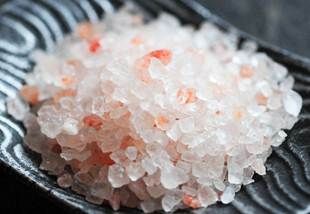
This is what real salt looks like - we all know what regular white salt looks like - and we mistakenly think it is real salt when it is not. The fact is that refined white salt, such as commercial table salt is bad, very bad stuff. Unrefined natural salt on the other hand is good, very good stuff providing many health benefits.

Unrefined sea salt is healthy. The blood-pressure-raising effect of table salt can be due to its high content of sodium with not enough magnesium to balance it. This has a magnesium-lowering effect that can constrict the arteries and raise blood pressure. Real salt (of various kinds) contains plenty of magnesium and other important minerals, which is why it usually does not affect blood pressure in a negative way.[1]

Sodium is an essential nutrient required by the body for maintaining levels of fluids and for providing channels for nerve signaling. Some sodium is needed in your body to regulate fluids and blood pressure, and to keep muscles and nerves running smoothly.

Without appropriate amounts of sodium, your body may have a difficult time cooling down after intense exercise or activity. When the body is hot, you sweat. If you do not have enough sodium, your body may not sweat as much and you may then become overheated. This could result in a stroke or exhaustion as well as dehydration.

Sodium is an energy carrier. It is also responsible for sending messages from the brain to muscles through the nervous system so that muscles move on command. When you want to move your arm or contract any muscle in your body, your brain sends a message to a sodium molecule that passes it to a potassium molecule and then back to a sodium molecule etc., etc., until it gets to its final destination and the muscle contracts. This is known as the sodium-potassium ion exchange. Therefore, without sodium, you would never be able to move any part of your body.

Life Preserver

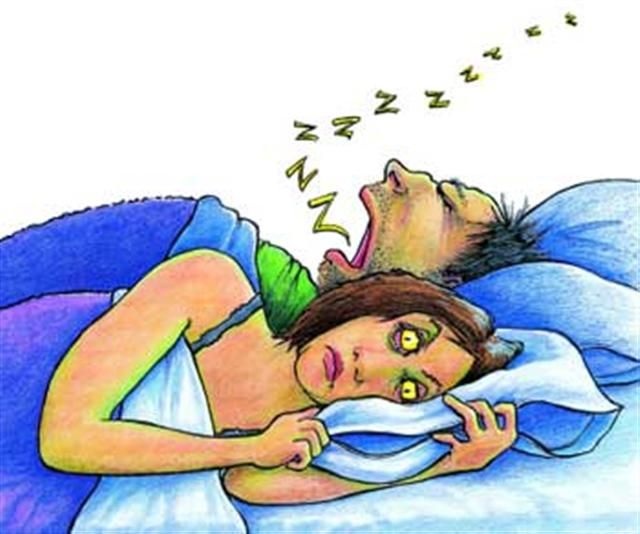
Are you a sleep deprived zombie?

Image
If you are not releasing adequate Human Growth Hormone, you are in fast forward in the aging process.

Ah, precious sleep. It may be my favorite thing. Unfortunately, I've danced with a few rounds of terrible insomnia and know all too well what it's like to have sleep elude you. After roughly 3 days of not sleeping well I start to lose my wits. Not only do I become crabby, but my reflexes are slowed, my brain halts to a crawl and a foreboding sense of doom overcomes my entire being.

One of the main question lines I ask during a New Patient Intake is all about sleep. Do you sleep well? How many hours a night? Do you have trouble falling asleep or staying asleep? Do you feel rested upon waking in the morning? Do you feel you get enough sleep?

Most of my patients say "NO" to most of these questions. It's a National Crisis, people are no longer sleeping well! I'm not exaggerating, the majority of my patients do not sleep well. There are many reasons for this, but regardless, it needs to be dealt with.

When a patient presents with very little in the way of overall health issues, but tells me that they are not sleeping well, I know it is going to be a difficult case. When patients have a laundry list of concerns but they are sleeping like a champ, it's usually an easy fix with the rest.

How much sleep does an adult need? 8-10 hours a night. If you are not getting that much sleep a night, read on!

Lack of sleep has shown causation in obesity, diabetes, accidents, depression, heart disease, increased injuries and even cancer! I see a ton of chronic pain issues associated with sleep problems. There is science behind all of these issues, but that is for another post.

Beyond the diseases it can potentially lead to, if you are not sleeping deeply for a good period of the night, then you're not releasing adequate Human Growth Hormone. If you don't have adequate HGH you are in fast forward in the aging process.

I'd like to address what some common causes are and what you can do about it.