Health & WellnessS


Pills

Tylenol just once a month raises a child's asthma risk 540%

Image
The vast majority of babies are given Tylenol (acetaminophen) within the first six months of life. It is the go to medicine for modern parents whenever discomfort or fever strikes even very young children and its use is frequently encouraged by many pediatricians.

Now, a major study of over 20,000 children suggests that giving this popular medicine even as infrequently as once per year could have a permanent, life-threatening health effect.

Researchers at the University of A Coruna in Spain asked the parents of 10,371 children ages 6-7 and 10,372 adolescents aged 13-14 whether their children had asthma and how often they had been given acetaminophen within the previous year and when they were babies.

The children in the younger age group who had received the medicine only once per year were at 70% greater risk for asthma while those receiving Tylenol once a month or more were shockingly 540% more likely to have asthma.

Syringe

Vaccines and flu shots good for big pharma, not us!

Image
© over-vaccination.net
The brain-washing promotion of vaccinations and "flu shots" by the "BIG PHARMA" medical establishment, the government and the media, is propaganda generated by themselves and the "powers that be" behind them.

The interests of the giant pharmaceutical companies and their profit partners do not center around our good health.

In my opinion, vaccines are not solutions to infectious disease. I consider injecting a contaminant into the body to be a toxic stress. I do not believe it has ever been proven to be effective, but I am sure it is often quite harmful.

Cupcake Choco

Craving for a chocolate fix? Prepare to pay more as prices double in 6 months

Chocoholics may have to dig deeper to pay for their favorite treat this festive season as sweet makers face sky-high prices for cocoa butter, the special ingredient that gives chocolate its melt-in-the-mouth texture.

Chocolate Tunnel of love
© Unknown

Increased demand from Asia's expanding middle class and a turnaround in sales in big consuming countries have seen butter prices nearly double to more than $7,000 a tonne (1.1023 ton) from $4,000 a tonne six months go.

With supplies tightening and demand showing no sign of slowing ahead of the Christmas and New Year period, some chocolate makers may have little choice but to pass on the increased costs to consumers.

In the secretive industry, which has only a handful of big players, chocolatiers tightly guard the recipes that distinguish their products, and are equally cautious on prices.

People

Getting Worse: One in three Britons struggling to feed themselves

A Which? survey out today reveals that rising grocery bills are causing real hardship

Image
© Unknown
The rise in the price of food is an extra source of stress for households who are already struggling to make ends meet, new research has revealed.

A survey by the consumer group Which? shows that as incomes stagnate, eight in 10 people in Britain are concerned that food is too expensive, and more than half worry about how they will pay for their groceries in the future if prices continue to climb.

The findings come at a time when the cost of food has grown over and above general inflation by 12.6 percentage points over the last six years, according to the Office for National Statistics.

Since last year, the price of food and alcoholic drinks rose by 3.9 per cent on average. However, in the same period, incomes rose by only 2.1 per cent, with three-quarters of consumers saying their income has stayed the same or decreased in the last year. The result of this is that three in 10 people now struggle to feed themselves or their family.

Richard Lloyd, executive director of Which?, said: "While people seem to have accepted their grocery bill going up, stagnating incomes and rocketing food prices are causing stress and worry, and leaving people wondering how they are going to cope.

Pills

Why drugging all schizophrenics for life is not the answer

Image
Fascinating research reveals that some people who suffer a psychotic break do better without a lifetime of medication.
It was an amazing victory for mental health treatment reform activists and one investigative reporter: on Aug. 28, 2013, National Institute of Mental Health director Thomas Insel announced that psychiatry's standard treatment for people diagnosed with schizophrenia and other psychoses needs to change.

After examining two long-term studies on schizophrenia and psychoses, Insel came to what was previously considered a radical conclusion: in the long-term, some individuals with a history of psychosis do better off medication.

Insel finally recognized what mental health treatment reform activists and investigative reporter Robert Whitaker have been talking about for years - the research shows that American psychiatry's standard treatment protocol has hurt many people who could have been helped by a more selective and limited use of drugs, and a more diverse approach such as the one used in Finland, which has produced the best long-term outcomes in the developed world.

Like many treatment reform activists and Whitaker, Insel does not completely reject the use of medications, but instead called for a more judicious use of them. Insel concluded:
Antipsychotic medication, which seemed so important in the early phase of psychosis, appeared to worsen prospects for recovery over the long-term....

It appears that what we currently call "schizophrenia" may comprise disorders with quite different trajectories. For some people, remaining on medication long-term might impede a full return to wellness. For others, discontinuing medication can be disastrous.
What is amazing about this recent conclusion by the NIMH director is that it means less money for drug companies, which in the past, have heavily influenced psychiatric treatment through their financial clout. Big Pharma has profited enormously from the current standard treatment protocol that calls for lifetime antipsychotic medication after a single psychotic episode. Because of this treatment protocol and the increasing use of antipsychotic drugs for nonpsychotic conditions, antipsychotics grossed over $18 billion a year in the United States by 2011. The antipsychotic Abilify became the highest grossing of all drugs in the first quarter of 2013, and it is on track to gross $6 billion this year (entire corporations that only grossed approximately $5 billion last year include Facebook and Yahoo).

Sherlock

Seed freedom, not GMOs, the answer to malnutrition and hunger

Image
© BloombergAccording to biodioversity campaigner Vandana Shiva corporate seed monopolies are undermining health and nutrition.
What happens to the seed affects the web of life. When seed is living, regenerative and diverse, it feeds pollinators, soil organisms and animals - including humans. When seed is non-renewable, bred for chemicals, or genetically engineered with toxic Bt or Roundup Ready genes, diversity disappears.

In recent years, beekeepers have been losing 25 percent of their hives each winter. According to a scientific study in 2008, bees and pollinators contribute more than €153 billion annually to agriculture. Chemically-farmed soils, sprayed with herbicides and pesticides kill the beneficial organisms that create soil fertility and protect plants.

Organic seeds and organic farming do not just protect human health; they protect the health and wellbeing of all.

Comment: Dr. Vandana Shiva has written several excellent articles on the topic of seed saving and food sovereignty:

Great Seed Robbery
Food poisoning on a global scale
GMOs: Myths, Falsehoods, Superstitions
Monsanto and the Big Fat Lie of Food Safety
Vandana Shiva: Understanding the Corporate Takeover
Vandana Shiva on the Problem with Genetically Modified Seeds
GM Seeds and the militarization of food - and everything else


Pills

The many failures of the "health" care system

Image

Clients that seek holistic nutritional therapy services often have a long history of failed attempts to obtain answers for their health issues through the conventional health care system. All too frequently, these clients come to nutritional and health coaching after their physicians have told them things like, "Well, I can't seem to find a reason for your fatigue (or body aches, or stomach distress, or headaches, or rash, or....). But I'd like you to go ahead and try some Prozac (or any number of other pharmaceutical drugs) and see if it makes you feel better." Some clients have also reported physicians and other providers becoming abrupt or even rude when pressed for more direct answers and explanations. Others have been told that nothing is wrong with them because "all of the lab results are normal", despite their ongoing symptoms and poor quality of life. And still other clients have fallen victim to the general acceptance of the decline of health in our society, in which they are treated as though it is quite normal to be coping with issues such as acid reflux, osteoporosis, and high blood pressure. And, of course, the acceptable way to cope with these insidious health problems is through the use of pharmaceutical medications.

So, what is happening with the delivery of health care in the United States and other developed nations? Why are more and more clients struggling to find the answers to treating their health concerns? I've pondered this question for one reason or another since becoming a nurse and there is no easy answer. An argument for the greatest failure, perhaps, is that the focus of our system is not truly on "health". From the bottom up, conventional health care is designed to be reactive, instead of proactive. The priority is on caring for those with disease, rather than promoting healthy lifestyles to prevent disease. There is nowhere that this fact is more obvious than in the observation of health care billing and payment structures. It's safe to say that physicians do not make the bulk of their money off providing preventative exams and other wellness services. There is much more money to be made in billing for encounters in which diseases are diagnosed and managed. In reality, our "health" care system is really a sick care system.

Black Magic

More Americans estimated to die from hospital mistakes than from strokes and accidents combined

Image

Going to the hospital is increasingly a risky proposition, considering that more Americans die from mistakes in the hospital than those killed by strokes and accidents combined.

A new study published in the Journal of Patient Safety estimates that between 210,000 and 440,000 patients annually don't make it out of hospitals because of some kind of preventable harm.

These figures eclipse those reported in earlier studies that blamed bad hospital care for 98,000 deaths (1999, Institute of Medicine) and 180,000 fatalities (2010, Office of Inspector General for Health and Human Services, which only focused on Medicare patients).

The new study, produced by John T. James, a toxicologist with the National Aeronautics and Space Administration in Houston who runs an advocacy organization called Patient Safety America, means hospital deaths are now the third leading cause of death in the U.S., behind only heart disease (No. 1) and cancer (No. 2).

When asked about James' conclusions, a spokesman for the American Hospital Association told ProPublica that the organization was inclined to stick with the Institute of Medicine's lower number of 98,000 deaths.

Book 2

A toddler on 3 different psychiatric meds? How drugging kids became big business

Image
© Beacon Press
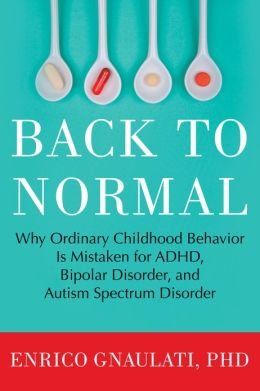
The following is an excerpt from Enrico Gnualati's new book Back to Normal: The Overlooked, Ordinary Explanations for Kid's ADHD, Bipolar, and Autistic-Like Behavior (Beacon Press, 2013):

On December 13, 2006, paramedics arrived at the Plymouth County, Massachusetts, home of four-year-old Rebecca Riley only to find her slumped over on her parents' bed, dead. The medical examiner on hand identified the cause of death as heart and lung failure brought about by the medications she was on. Rebecca was being prescribed Depakote, Seroquel, and Clonidine by Dr. Kayoko Kifuji, a Tufts - New England Medical Center child psychiatrist. She had diagnosed Rebecca with ADHD and bipolar disorder when she was two years old. Rebecca's death provoked a national debate on how a child as young as two could ever be diagnosed with major mental illnesses and be put on powerful tranquilizers. Katie Couric eventually covered the story in a CBS 60 Minutes segment. Ultimately, Rebecca's parents were tried for and convicted of murder due to allegedly overdosing her. But this harrowing outcome didn't take the national spotlight off the shocking revelation that a toddler could be diagnosed with mental illness and put on not just one but three powerful tranquilizers.

None of the drugs Rebecca was prescribed was approved by the Food and Drug Administration for use with kids her age - not then and not now. There was absolutely no robust scientific justification for Dr. Kifuji making the medication choices that she made. How could a reputable psychiatrist be so inclined to diagnose a child so young with diagnoses so severe and treat with medications so unapproved? The main answer lies with the spectacular success of twenty-first-century pharmaceutical marketing of psychiatric drugs.

Comment: Childhood is not a mental disorder! Read the following articles to learn more about the mass drugging of children in America:

The Psychiatric Drugging of Infants and Toddlers: An American Phenomenon
Mainstream Media and Medical Journals Pushing ADHD Drugs for Six-year-olds
Medicating your kids for peace and quiet: Is it ever OK?
A Look at How the Field of Psychiatry Is Over-Medicating Our Country
BigPharma and Wall Street Profit from the Drugging of Children and Elderly
Disturbing! Drugging Kids: Backlash on bipolar diagnoses in children
Drugging America: The drug industry exposed
Drugging foster kids shows more neglect


Bad Guys

How the mental health industry creates disease, works with Big Pharma

Image
We spend a lot of time at NaturalSociety talking about Big Pharma and their role in the health care industry. These huge pharmaceutical companies make billions every single year by perpetuating a culture of dis-ease and illness. They exaggerate conditions, offer their solutions as the only viable treatments, and essentially market disease to the American people. But they aren't acting alone. Some of their biggest sellers are drugs created to treat mental health issues, diseases, and symptoms. Doctors and professionals within the mental health industry, therefore, act as their top salespeople.

Mike Bundrant is the host of Mental Health Exposed, a radio program from our friends at Natural News. He is a former mental health counselor and had an inside look at how the system works. as Bundrant points out, the system has some "dirty secrets".

"The conventional mental health system is a cruel joke," he writes for Natural news. "It's ugly."

Bundrant and others like him say the mental health industry is just as dirty as Big Pharma itself, creating conditions and "curing" with prescriptions. This means many counselors and psychiatrists are interested in treating mental illness with one solution - drugs.

Comment: For a comprehensive program on how to boost mental health see Mass nervous breakdown: Millions of Americans on the brink as stress pandemic ravages society.