Health & WellnessS


Heart - Black

Obamacare: One blow after another

Image

The Obamacare that consumers will finally be able to sign up for next week is a long way from the health plan President Barack Obama first pitched to the nation.

Millions of low-income Americans won't receive coverage. Many workers at small businesses won't get a choice of insurance plans right away. Large employers won't need to provide insurance for another year. Far more states than expected won't run their own insurance marketplaces. And a growing number of workers won't get to keep their employer-provided coverage.

Every branch of the federal government played a role in weakening the law over the past three years, the casualty of a divisive legislative fight, a surprise Supreme Court ruling, a complex implementation and an unrelenting political opposition. The result has been a stark gap between the promise of Obamacare and the reality - one that has fueled a deep vein of skepticism about the law as it enters its most critical phase.


Comment: Obamacare will provide a boon to BigPharma and the medical-industrial complex while taxing an already economically overburdened populace. Exactly what the psychopaths had in mind.
Obamacare: A Deception
$1 Trillion Obamacare Tax Hike Hitting on Jan. 1
The Devastating Truth Behind Obamacare


Info

Arsenic in environment tied to higher heart attack, stroke risk

Image
There are children out there who drink apple juice with elevated arsenic levels every single day.
People chronically exposed to low to moderate levels of arsenic in their environment may be more likely to suffer a heart attack, stroke or other cardiovascular disease, a study of American Indians suggests.

Previous research has linked exposure to high levels of arsenic in drinking water (more than 100 micrograms per liter) with coronary heart disease, stroke, peripheral artery disease and carotid atherosclerosis.

Environmental health researchers decided to explore whether exposure to the lower levels of arsenic more commonly found in drinking water or food also would increase the risk of heart disease.

"We didn't know what would happen at levels that occur regularly in the United States," said study author Dr. Ana Navas-Acien, a researcher in the department of environmental health sciences at the Johns Hopkins Bloomberg School of Public Health.

Regular exposure to more common levels of arsenic did indeed correlate to increased risk of fatal and nonfatal cardiovascular disease, even after adjusting for other risk factors such as smoking, obesity and cholesterol levels, according to the findings, which were published in the Sept. 24 issue of the journal Annals of Internal Medicine.


Comment: Smoking is hardly a risk factor, on the contrary. For more information see:

Nicotine - The Zombie Antidote
Tobacco used as medicine
Warning: Nicotine Seriously Improves Health


Pills

Antidepressants linked to a higher risk of diabetes

Image
The numbers of Britons taking antidepressants has soared in the last decade and more than 50 million prescriptions were handed out by GPs last year compared to just 20 million in 1999.
Researchers say the risk is for all antidepressants, not just some types.

The pills could put hundreds of thousands at risk of type 2 diabetes.

The increased risk could be because people on antidepressants are more likely to be overweight and this is a risk factor for diabetes.

Scientists think the pills may also be an independent risk factor.
Antidepressants taken by hundreds of thousands of people may increase the chances of developing diabetes, researchers warn.

A major study involving more than a million patients has shown that those taking all antidepressant pills are at far higher risk from the condition.

Academics from Southampton University think this may be because antidepressants cause weight gain which in turn leads to type 2 diabetes.

But despite the strong link, they cannot be sure that the pills are definitely causing the condition.

Patients on antidepressants are more likely to be overweight so have a higher risk of developing diabetes in the first place than healthy individuals.

Comment: For more information on this topic and to deal with it effectively, see Mass nervous breakdown: Millions of Americans on the brink as stress pandemic ravages society.


Syringe

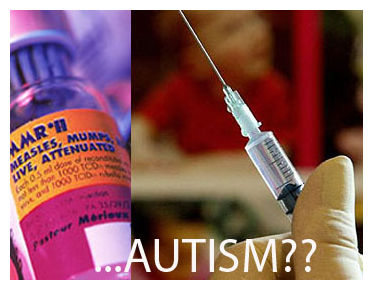
Courts quietly confirm MMR Vaccine causes Autism

MMR Vaccine
© whydontyoutrythis
After decades of passionate debate, parents probably missed the repeated admissions by drug companies and governments alike that vaccines do in fact cause autism. For concerned parents seeking the truth, it's worth remembering that the exact same people who own the world's drug companies also own America's news outlets. Finding propaganda-free information has been difficult, until now.

Dr. Andrew Wakefield

At the center of the fifteen-year controversy is Dr. Andrew Wakefield of Austin, Texas. It was Dr. Wakefield that first publicized the link between stomach disorders and autism, and taking the findings one step further, the link between stomach disorders, autism and the Measles Mumps Rubella (MMR) vaccine.

For that discovery way back in 1996, and a subsequent research paper published by the doctor in 1998, Andrew Wakefield has found himself the victim of a world-wide smear campaign by drug corporations, governments and media companies.

And while Dr. Wakefield has been persecuted and prosecuted to the extent of being unable to legally practice medicine because of his discovery, he has instead become a best-selling author, the founder of the Strategic Autism Initiative, and the Director of the Autism Media Channel.

But in recent months, courts, governments and vaccine manufacturers have quietly conceded the fact that the Measles Mumps Rubella (MMR) vaccine most likely does cause autism and stomach diseases. Pharmaceutical companies have even gone so far as to pay out massive monetary awards, totaling in the millions, to the victims in an attempt to compensate them for damages and to buy their silence.

Dollars

FDA wants to increase budget by nearly $1 Billion, 94% coming from drug industry

Image
The US Food and Drug Administration (FDA) otherwise known as the Corporate Patsy and Drug Pushing Administration (CPDPA) wants to increase their budget by $820 million next year, bringing it's budget to just under $5 billion for 2014. Is it possible that interest group money to 'protect the people of the United States from chemical and biological threats' isn't enough?

As an utter slap in the face, Commissioner Margaret Hamburg told Congress that the FDA was 'a bargain among federal agencies.' We certainly agree with you Ms. Hamburg. While:
  • Hamburgers and hormone-laden milk are given to our children,
  • Inexpensive and sometimes free cures for things like cancer are blocked (the Gerson Institute had to go to Tijuana to set up since the US won't allow coffee enemas and organic green juicing as well as chelation to 'cure' cancer),
  • Monsanto and other companies are given complete freedom to poison our foods, neglect to label GMO foods that can harm us and even permanently alter our DNA,
  • Pharmaceutical companies are allowed to sell drugs that cause birth defects and heart attacks,
Why shouldn't she receive a $1 billion dollar pay raise?

Info

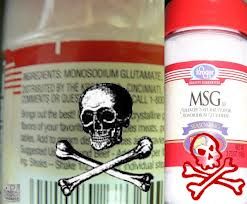
How to avoid being secretly poisoned by MSG

Image
© msreversed.com
MSG is a neurotoxin that is used as a food additive. It is toxic, inflammatory and causes or contributes to many diseases. It must be eliminated from your diet but avoiding it may not be as easy as you think. Here is what you need to know to avoid it and reverse its damaging effects.

MSG Toxicity

I have often worked with patients who are simply unable to overcome their pain syndromes or weight loss problems despite many effective therapies, diets and exercise. This is most often due to toxicity of one form or another. That is why living a non-toxic lifestyle is vital to achieving wellness.

Toxins must be removed from the foods you consume on a daily basis. MSG is the most common and deceptive toxin found in food. By eliminating MSG and other toxins, I have seen so many patients health conditions, including weight loss resistance, resolve completely.

Comment: Additional helpful information:

MSG is Where You Least Expect It
How to Find Hidden MSG on Food Labels
Avoiding MSG is Trickier Than You Think
Monosodium Glutamate: What We All Should Know
Protect Yourself from MSG and Aspartame Excitotoxicity
MSG: The Flavor Enhancer That Sickens In Two Ways
The Shocking Dangers of MSG You Don't Know
MSG: Is This Silent Killer Lurking in Your Kitchen Cabinets
Food Additives You Should Avoid: Aspartame and MSG
MSG Lurks As A Slow Poison In Common Food Items Without Your Knowledge


Arrow Down

GMO-riddled 'Lucky Charms' makes it to UK supermarket, parents outraged

Lucky Charms
© NaturalSociety

In the U.S., we tend to live in a bit of a bubble, accepting everything we are exposed to on a daily basis as normalcy. We forget it isn't the same in other countries around the world. Case in point: Lucky Charms, an artificially-colored, GMO-riddled cereal popular in the U.S., recently made its way to U.K. store shelves, and parents are outraged.

Lucky Charms, made by GM, is a common breakfast cereal here in the U.S. I imagine many older individuals reading this now thought its blue moons, yellow diamonds, and green clovers were the best thing that ever happened to breakfast growing up.

Older and wiser, however, many of us won't let our children touch the product. Still, Lucky Charms remains one of the top-selling cereals on the market, and it has recently debuted overseas to a less-than-thrilled market.

"Imported Lucky Charms can have adverse effects on children's behavior," said an article originally printed in Britain's Daily Mail. "It is marketed as nutritious, but contains four suspect colourings," they warn.

The cereal recently showed up on shelves of Tesco grocery stores, a chain of stores that bans genetically modified ingredients in their own store-brand, but obviously has no problems selling genetically modified imports from the country who does GMOs best.

Arrow Down

Why is the food industry poisoning us with trillions of nanoparticles?

Nanoparticles
© GreenMedInfo

The U.S. food industry is notorious for poisoning the very consumers who drive their multi-billion dollar enterprise, even spending millions against their right to informed consent (truthful GMO labeling). So, is it any wonder that this deregulated and increasingly deranged juggernaut is experimenting on its own customer base by exposing them to trillions of toxic nanoparticles?

A new study published in Biomedicine and Pharmacotherapy titled, "Effects of titanium dioxide nanoparticles in human gastric epithelial cells in vitro," reveals for the first time that the nanoparticle form of the common "whitening" agent known as titanium dioxide is capable of inducing "tumor-like" changes in exposed human cells.[1]

Whereas previous cell research has established that titanium dioxide (TiO2) is cytotoxic (cell damaging),[2] this is the first study of its kind to find exposed cells undergo a 'phenotypal' transition from normal to cancerous cell traits, including an increased rate of cell proliferation and a decrease in programmed cell death - hallmark features of precancerous and/or cancerous cells associated with 'immortalization.'

Owing to the fact that the researchers tested human gastric epithelial cells, a type of stomach cell in direct contact with material we eat, and considering the broad range of drug, personal care and food products nanoparticle TiO2 is commonly used within, the toxicological implications of these findings are deeply concerning.

Ambulance

Celiac Disease: How gluten invades and sets up an auto-immune reaction

Celiac disease: Why your body thinks gluten is a nasty invasive antigen or 'bug'. And how - if you keep eating gluten a vicious cycle of damage will ensue.

In this post I will set the scene for future posts on dietary strategies to treat celiac disease. A number of recent studies have shown that just avoiding gluten is not enough for many, and they also need to avoid other foods in order to reduce the gluten antibodies and inflammation in the intestine.

In this post I will explain why and how gluten is a problem for those who have a specific genotype that predisposes them to celiac disease. I won't be tackling gluten sensitivity in this post.

Celiac disease (CD) is an immune response to gluten proteins that happens in genetically vulnerable people. Gluten is found in wheat and related cereal grains e.g. wheat, rye, barley, triticale. Gluten is a protein - not a carbohydrate - even though it is found in grains.

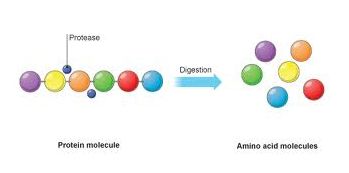
Protein digestion: we usually break down proteins into single amino acids

Proteins are constructed with very long chains of amino acids. There are 20 standard amino acids; imagine these being 20 different coloured beads and linked like long chains - like those beads that children snap together. Every protein molecule is constructed with a particular sequence of amino acids (i.e. the beads are in a specific pattern or arrangement). These long chains are folded and coiled, and sometimes crosslink to make a specific protein.

When we eat proteins our digestive enzymes (think of these as being chemical scissors) cut the links between the amino acids (pull the beads apart). Each different amino acid requires a different enzyme to disconnect it from its neighbour.

Image

Comment: For more information see:

The Dark Side of Wheat - New Perspectives on Celiac Disease and Wheat Intolerance
Opening Pandora's Bread Box: The Critical Role of Wheat Lectin in Human Disease
Beyond Gluten-Free: The Critical Role of Chitin-Binding Lectins in Human Disease


Life Preserver

Herbal antiseptic oils beats chemical for inhibiting superbug infections

Image
As the battle against superbugs like MRSA and other hospital-acquired infections rages on, researchers have determined that oils derived from plants outperform the antiseptic chlorhexidine and even ethanol in the inhibition of antibiotic-resistant bacteria.

The researchers - from Australia's Royal Brisbane and Women's Hospital - tested a number of extracts derived from plants, including Tea Tree oil, Lemongrass oil, and Eucalyptus oil - against several of the most deadly antibiotic-resistant superbugs. These included Klebsiella pneumoniae, MRSA - methicillin-resistant Staphylococcus aureus, VRE - vancomycin-resistant Enterococcus, multi-drug resistant Pseudomonas aeruginosa, and ESBL-producing Escherichia coli. The testing was carried out in a laboratory.

The researchers also tested the same bacteria strains against the two most popular antiseptic products used to disinfect hands, hospital equipment and bedsides - chlorhexidine and ethanol, commonly termed rubbing alcohol. The concentration of these were standard issue - 0.1% chlorhexidine and 70% ethanol. The researchers also tested olive oil - as olive oil is also used in some settings to repel bacteria.

The researchers measured what is referred to as the zone of inhibition. This is the distance to which a substance will repel the bacteria - preventing microbiological activity. A larger zone of inhibition relates to a stronger antiseptic/antibiotic agent.

The researchers found that the three most active plant oils - Lemongrass, Eucalyptus and Tea tree - had significantly large zones of inhibition. These were significantly greater than those resulting from the application of the 0.1% chlorhexidine and 70% ethanol, as well as the olive oil.