Health & WellnessS


Heart - Black

The great myth of the FDA as protector of our health

FDA
© NaturalSociety

Just like we've been taught to bow to the white coats, we've also been conditioned to think that whatever the Food and Drug Administration approves must be safe. Nothing could be further from the truth. This organization is supposed to be a governmental watchdog over our food supply and public health, as well as an agency to keep medicines or other proposed 'cures' - both natural and pharmaceutical - from doing us harm. The FDA is supposed to block the interests of greedy corporations who want to make a fast buck, but its original intentions, if they were ever pure, have been tainted.

Political maneuvering, lobbying, racketeering, and outright corporate infiltration of the FDA has made the institution a complete waste of tax payer money, and worse, an absolute detriment to our overall food and medicine safety. Just because you see 'FDA' approved on something anymore, doesn't mean it is safe. FDA drugs have been responsible for over 140,000 deaths in hospitals every year - some would call that an epidemic. Others go as far as to accuse the FDA of mass homicide of the American people.

Consider this: just one FDA approved pain drug called Vioxx (rofecoxib) has been responsible for over 139,000 heart attacks and was only pulled off the shelves after tens of thousands of people died. Merck, it's maker, raked in over $2.5 billion in sales. How about the thousands of women who had children who now suffer from reproductive cancers because they took FDA approved DES (diethylstilbestrol)? This isn't even touching on FDA approved GMOs.

Hotdog

Your "healthy" diet could be quietly killing your brain: Q&A with David Perlmutter, author of Grain Brain

Image
I recently stumbled across a book that opened my eyes in many ways to the misinformation plaguing Americans regarding healthy eating, particularly where it concerns brain health. The book, Grain Brain, by Dr. David Perlmutter, is mind-blowing - no pun intended - and disruptive to some long-standing beliefs about what our bodies require for optimal health.

"The brain thrives on a fat-rich, low-carbohydrate diet, which unfortunately is relatively uncommon in human populations today," he says. Carbohydrates typically thought of as healthy, even brown rice, 100% whole grain bread, or quinoa - mainstays of many of the most health-conscious kitchens - cause disorders like dementia, ADHD, chronic headaches, and Alzheimer's, over a lifetime of consumption. By removing these carbohydrates from the diet - harbingers of inflammation, the true source of problems that plague our brains and hearts - and increasing the amount of fat and cholesterol we consume, we can not only protect our most valuable organ, but also potentially, undo years of damage. Cholesterol, for example, long vilified by the media and medical community, actually promotes neurogenesis (the birth of new brain cells) and communication between neurons, to the degree that studies have shown that higher levels of serum cholesterol correlates to more robust cognitive prowess.

The book is also not without serious consideration for cardiovascular system, citing study after study to reaffirm that it's not fat and cholesterol, but carbohydrates and certain fats - and not the fats that you would think - that are the true enemies of heart and vascular health. Guidelines to eating for above-average health and longevity are not without nuance, but Grain Brain lays out an easy-to-understand roadmap packed with the latest science in a colloquial writing style, never once doubting the ability of its audience to keep up.

Comment: For more information on this topic, see our forum discussions "Life Without Bread" and the following articles:

The Ketogenic Diet - An Overview
Ketogenic Diet Reduces Symptoms of Alzheimer's
Beyond weight loss: a review of the therapeutic uses of very-low-carbohydrate (ketogenic) diets
Ketogenic Diet (high-fat, low-carb) Has Neuroprotective and Disease-modifying Effects
Gluten & Your Nervous System - Depression, Brain Abnormalities, and Neuropathy
Sensitivity To Gluten May Result In Neurological Dysfunction; Independent Of Symptoms
Leaky Gut - Leaky Brain - Gluten is an Equal Opportunity Destroyer


Ambulance

Women in clinical trials - So that's why my meds don't work

Image
Do Hormones Matter with Clinical Trials Research?

As I search for investment to build out our software programs and launch a testing lab, I am repeatedly struck by the avoidable ignorance that surrounds the industry that we seek to enter. Women's hormones are considered a fringe science by many, despite the fact that hormones modulate all bodily functions and impact all aspects of pharmacokinetic and pharmacodymanic response, the key variables evaluated in clinical trials research. Repeatedly, we face the assumption that hormones make no difference to women's health - quite ironic since simultaneously hormones are blamed for everything from migraines to mental health.

And then there is the long held notion that we don't need any more data in women's health - quite striking considering only 30% of Ob/Gyn clinical practice guidelines are based on data. Just the other day, a well-positioned female physician, one of the fewer than 4% female healthcare executives, argued that while what we doing was interesting, it was unnecessary because the 1993 Gender Guidelines 'mandated' women be included in clinical trials.

Perhaps some history is in order. Until 1993, women of 'childbearing potential' were prohibited from participating in clinical trials research. This means that all of the drugs developed before 1993 (most are still being used today) were not tested on women; any potential dosing differences, sex- specific side-effects could not be found until after the drug reached the market and even then it was, and is difficult to ascertain because sex-specific analytics were not, and are still not, routinely performed. This makes proving sex-based adverse events all but impossible.

Health

Peanut butter sniff test confirms Alzheimer's

Image
A dollop of peanut butter and a ruler might be a way to confirm a diagnosis of early-stage Alzheimer's disease.

Jennifer Stamps, a graduate student in the McKnight Brain Institute Center for Smell and Taste and the University of Florida, came up with the idea of using peanut butter to test for smell sensitivity when she was working with Kenneth Heilman, a professor of neurology at the University of Florida.

The ability to smell is associated with the first cranial nerve and is often one of the first things affected in cognitive decline. Because peanut butter is a "pure odorant," it is only detected by the olfactory nerve and is easy to access.

"Dr. Heilman said, 'If you can come up with something quick and inexpensive, we can do it,'" Stamps says.

For a small pilot study published in the Journal of Neurological Sciences, patients who were coming to the clinic for testing also sat down with a clinician, 14 grams of peanut butter - which equals about one tablespoon - and a metric ruler.

The patient closed his or her eyes and mouth and blocked one nostril. The clinician opened the peanut butter container and held the ruler next to the open nostril while the patient breathed normally. The clinician then moved the peanut butter up the ruler one centimeter at a time during the patient's exhale until the person could detect an odor.

The distance was recorded and the procedure repeated on the other nostril after a 90-second delay.

Health

Physician, Heal Thy Ego

Image
There is a dramatic paradigm shift taking place in healthcare and it's changing the doctor-patient relationship in ways we never imagined. When I started medical school in 1989, there was no internet and my 20MB hard drive PC was really nothing more than a word processor but it was top of the line. When we researched diseases and conditions, it required going to a textbook or a trip to the library to review the hardcopies of journals. During residency, I saw the birth of the internet and experienced my first exposure to public discussions of medical conditions, if a disease existed, there was a chat room on AOL for people to openly discuss. Today, the resources of the world are only a few clicks away and you can quickly find an answer to almost any question you could think to ask.

What does all of this mean to physicians? It means that we have to be aware of the fact many patients coming to us actually possess more current knowledge on a disease or condition than might. This is the reality of medicine now and those physicians who refuse to check their ego at the door are soon going to find empty waiting rooms. Patients are now exhaustively researching their conditions and symptoms, they are going to online discussion sites, joining online support groups, and they are even able to access the most up to date research articles. The well researched patient is knowledgable and we need to be listening. I have found myself learning quite a bit from patients and they have certainly improved my patient care by giving me direction on some current research. Medicine is now a team approach and physicians need to function in a role that is collaborative with patients.

Attention

10 disturbing reasons WHY sugar is bad for you

Image
© livingtherusticlife.blogspot.com
Added sugar is the single worst ingredient in the modern diet.

It can have harmful effects on metabolism and contribute to all sorts of diseases.

Here are 10 disturbing reasons why you should avoid added sugar like the plague.

1. Added Sugar Contains No Essential Nutrients and is Bad For Your Teeth

You've probably heard this a million times before... but it's worth repeating.

Added sugars (like sucrose and high fructose corn syrup) contain a whole bunch of calories with NO essential nutrients.

For this reason, they are called "empty" calories.

There are no proteins, essential fats, vitamins or minerals in sugar... just pure energy.

When people eat up to 10-20% of calories as sugar (or more), this can become a major problem and contribute to nutrient deficiencies.

Sugar is also very bad for the teeth, because it provides easily digestible energy for the bad bacteria in the mouth (1).
Bottom Line: Sugar contains a lot of calories, with no essential nutrients. It also causes tooth decay by feeding the harmful bacteria in the mouth.

Ladybug

Health benefits of garden therapy

Image
Garden or horticultural therapy refers to the activities involved while taking care of a garden or an allotment, such as digging, watering and pruning. Milder forms of garden therapy, suitable for elder people, simply allow the patient to wander in a controlled natural environment (aka wander gardens) and be in touch with nature. Research suggests that garden therapy is an efficient way to reduce stress, alleviate depression and accelerate rehabilitation in a variety of clinical settings, with no side-effects.

The hypothalamic-pituitary-adrenal (HPA) axis and the hormone cortisol are key players in regulating and mediating the physiological responses to stress. Stress induces hypothalamic responses, which result in the production of hormones such as adrenaline and cortisol by the adrenal glands, located on top of the kidneys. These hormones are responsible for the "fight or flight" reaction and affect the metabolic, digestive, immunological and growth function of the human body, among others. Over-secretion of cortisol and other stress-related hormones is an important factor contributing to obesity and a variety of behavioral problems, such as insomnia, depression and memory impairment.

Arrow Down

Why scientists held back details on a unique botulinum toxin

Botulism Toxin
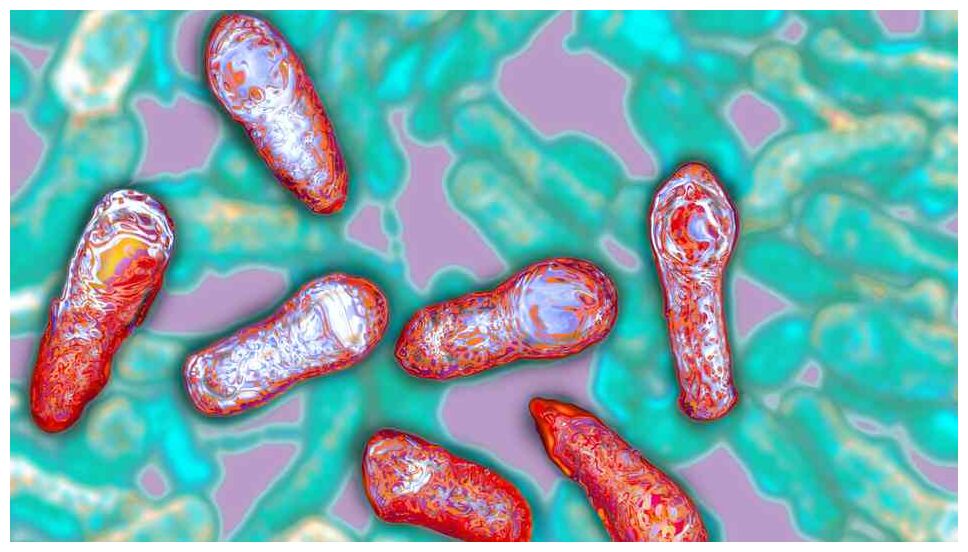
© James Cavallini/Science SourceThe botulism toxin comes from Clostridium botulinum bacteria, seen here in a colorized micrograph.
Scientists have discovered the first new form of botulinum toxin in over 40 years, but they're taking the unusual step of keeping key details about it secret.

That's because is one of the most poisonous substances known. It , and the newly identified form of it can't be neutralized by any available treatment.

The researchers published two describing their work online in The Journal of Infectious Diseases. The information in those is deliberately incomplete, to prevent anyone from using it as the recipe for a potent new bioweapon.

"This is not the usual process for publishing manuscripts. We thought in this case an exception was appropriate," says , an infectious disease specialist at Massachusetts General Hospital who serves as one of the editors of the journal.

Normally, the journal would require that the scientists disclose the genetic sequences needed to make the toxin. In this case, however, the researchers didn't want to do that because of the security risk.

The journal's editors ultimately agreed that they could go ahead and publish but withhold the information until new treatments were developed. "There was enough scientific importance that we did not want to delay the publication," says Hooper.

Their decision comes as biologists have been grappling with how to handle potentially dangerous information.

Dollars

Factory Farms: Taxpayers pay, politicians take, agribusiness profits

Image
© omnivoredilemmagrass.wordpress.com
The agribusiness giants would have us believe that our inherently unsustainable and morally reprehensible factory farming system is the only way to feed the world's burgeoning population. But the facts prove otherwise. Factory farming is all about maximizing profits for a handful of the world's largest corporations.

Agribusiness spent $751 million over the past 5 years on lobbying congress and another $480.5 million in direct campaign contributions over the past two decades. Since 1995, taxpayers have provided $292.5 billion in direct agricultural subsidies, another $96 billion in crop insurance subsidies, and over $100 billion in subsidies to promote the growth of genetically engineered corn and soy.

Feeding huge numbers of confined animals actually uses more food, in the form of grains that could feed humans, than it produces. For every 100 food calories of edible crops fed to livestock, we get back just 30 calories in the form of meat and dairy. That's a 70-percent loss. And recent research from the University of Minnesota shows that reallocating croplands away from fuels and animal feed could boost food available for people by 70 percent without clearing more land.

How did we end up with this cruel, unsustainable, unhealthy, environmentally destructive factory farm model? The numbers say it all.

Comment: Listen to the informative SOTT Talk Radio interview with author of The Vegetarian Myth, Lierre Keith: Get the real scoop on 'how we end(ed) up with this cruel, unsustainable, unhealthy, environmentally destructive factory farm model'.


Handcuffs

Prosecutions scare food industry

Image
© AP PhotoJensen Farms is linked to the deadliest foodborne illness outbreak in U.S. history.
The threat of criminal prosecution has the food industry on its toes.

When it comes to massive, deadly foodborne illness outbreaks, implicated companies have always paid a price - in legal and medical costs, if not a loss in business, shattered consumer confidence and even bankruptcy - but, until recently, criminal penalties have been virtually unheard of.

The Obama administration is changing the legal landscape, however, having filed criminal charges against Eric Jensen, 37, and Ryan Jensen, 33, owners of Jensen Farms, in Colorado, the cantaloupe grower and processor linked to the deadliest foodborne illness outbreak in U.S. history. The two brothers, accused of six counts of introducing adulterated food into interstate commerce and aiding and abetting, each face up to six years in jail and a combined $1.5 million fine if found guilty after their farm was found responsible for a 2011 Listeria outbreak that hospitalized 143 people and ultimately was tied to 33 deaths and one miscarriage.