Health & WellnessS


Wolf

Dog's mood offers insight into owner's health

Monitoring a dog's behaviour could be used as an early warning sign that an older owner is struggling to cope or their health is deteriorating.

Experts at Newcastle University, UK, are using movement sensors to track normal dog behaviour while the animals are both home alone and out-and-about.

Providing a unique insight into the secret life of man's best friend, the sensors show not only when the dog is on the move, but also how much he is barking, sitting, digging and other key canine behaviours.

By mapping the normal behaviour of a healthy, happy dog, Dr Cas Ladha, PhD student Nils Hammerla and undergraduate Emma Hughes were able to set a benchmark against which the animals could be remotely monitored. This allowed for any changes in behaviour which might be an indication of illness or boredom to be quickly spotted.

Presenting their findings at the 2013 UbiComp conference in Zurich, project lead Ladha, says the next step is to use the dog's health and behaviour as an early warning system that an elderly owner may be struggling to cope.

Health

Whooping Cough: The reality behind the myth

Image
I like to watch a little bit of mainstream news to keep abreast of the information, or misinformation, being fed to the general public. A few nights ago I saw a report on the evening news effectively blaming unvaccinated kids for the 2010 outbreak of whooping cough in my home state of California based on a retrospective study published recently in the journal Pediatrics. The next morning headlines read "Anti-vaccine parents caused California's lethal whooping cough epidemic" and "Unvaccinated children helped fuel whooping cough outbreak, data show." Let's start from the beginning.

There were reports of outbreaks starting in the 16th century but Bordetella pertussis was not isolated until 1906. [1] Whooping cough is a toxin-mediated disease associated most commonly with the gram-negative bacterium B. pertussis and the lesser-known B. parapertussis. The bacterium attaches to the cilia (hair like projections) of the epithelial cells in respiratory tract and produce multiple antigens including pertussis toxin (PT), filamentous hemagglutinin (FHA) and adenylate cyclase toxin (ACT). These antigens work together to evade host defenses and paralyze the cilia inhibiting the host's ability of the to clear pulmonary secretions. The incubation period can last from 4-42 days. [1]

Megaphone

Anti-Monsanto Activism

Image
© businesspundit.com
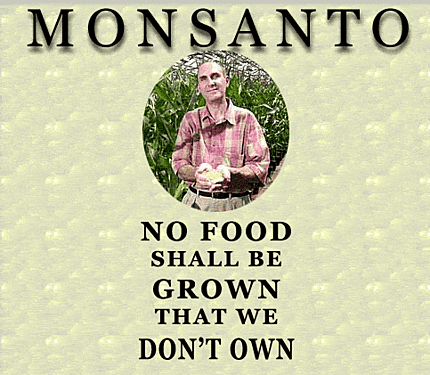
Monsanto perhaps is the world's most hated corporation. Considering the competition, it's not easy taking top honors.

GMO foods and ingredients are toxic. They're unsafe to eat. They're hazardous to human health. They should be banned. Monsanto's the leading producer.

GMOs poison people for profit. Independent studies explain. Agribusiness giants want all animal and vegetable life forms patented.

They want worldwide food control. Getting it means everything produced for human consumption won't be safe to eat. Last May, tens of thousands of people marched against Monsanto.

They did so in dozens of countries worldwide. They want consumer protections enacted. They want safe food to eat.

They want governments assuring it. They want GMO foods and ingredients labeled. Ideally they want them banned.

Handcuffs

Farmers to face fines or prison sentences for selling food directly to customers

Image
This would seem to embody the USDA's advisory, "Know your farmer, know your food," right? Not exactly.

For the USDA and its sister food regulator, the FDA, there's a problem: many of the farmers are distributing the food via private contracts like herd shares and leasing arrangements, which fall outside the regulatory system of state and local retail licenses and inspections that govern public food sales.

In response, federal and state regulators are seeking legal sanctions against farmers in Maine, Pennsylvania, Wisconsin, Minnesota, and California, among others. These sanctions include injunctions, fines, and even prison sentences.

Food sold by unlicensed and uninspected farmers is potentially dangerous say the regulators, since it can carry pathogens like salmonella, campylobacter, and E.coli O157:H7, leading to mild or even serious illness.

Most recently, Wisconsin's attorney general appointed a special prosecutor to file criminal misdemeanor charges against an Amish farmer for alleged failure to have retail and dairy licenses, and the proceedings turned into a high-profile jury trial in late May that highlighted the depth of conflict: following five days of intense proceedings, the 12-person jury acquitted the farmer, Vernon Hershberger, on all the licensing charges, while convicting him of violating a 2010 holding order on his food, which he had publicly admitted.

Info

GMO mumbo-jumbo

Image
The debate over genetically modified organisms (GMO) has intensified in recent months. On one side of the debate is scientific evidence that GMOs are not delivering on their promise, and on the other side is ideological propaganda by the genetically modified seed industry and scientists whose careers are locked into the GMO trajectory.

The technical expert committee (TEC) appo­inted by the Supreme Court of India, made up of India's eminent and independent scientists, has clearly recommended in its report to the apex court a ban on open field trials of genetically engineered crops till a robust, impartial regulatory mechanism is put in place.

After two decades of commercial applications, data clearly shows that GMOs do not increase yields and do not decrease the use of agrichemicals, but have instead created super-pests and super-weeds.

Dollar Gold

Greed: Why an accepted "cure" for cancer won't be found

Cancer Cure
© NaturalSociety
Cancer kills about 1,600 people in the United States every single day. That's 580,350 in 2013, according to the American Cancer Society. Millions if not billions of dollars every year are funneled into cancer research, yet the issue is still growing. In many cases we know what causes cancer or what increases your risk of developing cancerous tumors, but the world has yet to see a "medically accepted" 'cure'. Why is that during this age of great scientific strides and bright minds we can't find a solution? Put simply: because the system won't allow a "cure" to be found.

Cancer, though a crushing and heartbreaking disease to so many patients, friends, and families globally, is money in the bank to Big Pharma. These giant corporations post significant earnings for every case of cancer they can drag out. The longer they keep someone on their cancer-treating drugs, the more money they make. If they were to actually cure the disease - as with so many other diseases - their profits would take a considerable hit.

Mainstream medicine would label me crazy for talking this way, but Big Pharma has proven time and time again that profits, not patients, are their number one concern. Even the American Cancer Society accepts multimillion dollar contributions from pharmaceutical companies like AstraZeneca. Astrazeneca, in turn, influcnes virtually everything that the ACS does. Almost all 'awareness' attempts focus almost exclusively on mammography and don't mention a word about carcinogenic foods, chemtrails, aluminum in deodorants, antiperspirants, as well as vaccines. There is no spoken word of breast cancer prevention via natural, inexpensive means, while touting the 'cure' of mammography and cancer drugs.

Syringe

The courts are owned? Sisters must receive MMR vaccine, court rules

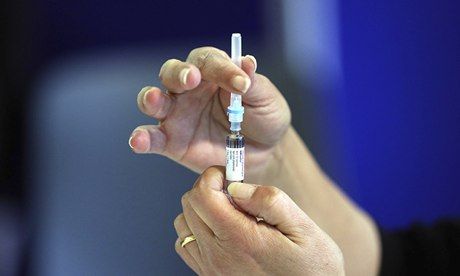
A nurse prepares an MMR jab
he girls and their mother are concerned about animal-based ingredients in the vaccine. Photograph: D Legakis Photo/Athena Pictures
A judge has ruled that two sisters must receive the MMR vaccine even though neither they nor their mother want them to have it.

The father of the girls, who is divorced from their mother, brought a case to the high court seeking the vaccination, according to the BBC.

The parents had agreed not to vaccinate the girls following the MMR controversy surrounding subsequently discredited claims that the vaccine could cause autism.

Mrs Justice Theis said it was a specific case "only concerned with the welfare needs of these children".

Handcuffs

Drug giants fined $11bn for criminal wrongdoing

Image
Fines are not enough to reform drug industry, warn lawyers.
The global pharmaceutical industry has racked up fines of more than $11bn in the past three years for criminal wrongdoing, including withholding safety data and promoting drugs for use beyond their licensed conditions.

In all, 26 companies, including eight of the 10 top players in the global industry, have been found to be acting dishonestly. The scale of the wrongdoing, revealed for the first time, has undermined public and professional trust in the industry and is holding back clinical progress, according to two papers published in today's New England Journal of Medicine. Leading lawyers have warned that the multibillion-dollar fines are not enough to change the industry's behaviour.

The 26 firms are under "corporate integrity agreements", which are imposed in the US when healthcare wrongdoing is detected, and place the companies on notice for good behaviour for up to five years.

The largest fine of $3bn, imposed on the UK-based company GlaxoSmith-Kline in July after it admitted three counts of criminal behaviour in the US courts, was the largest ever. But GSK is not alone - nine other companies have had fines imposed, ranging from $420m on Novartis to $2.3bn on Pfizer since 2009, totalling over $11bn.

Kevin Outterson, a lawyer at Boston University, says that despite the eye watering size of the fines they amount to a small proportion of the companies' total revenues and may be regarded as a "cost of doing business". The $3bn fine on GSK represents 10.8 per cent of its revenue while the $1.5bn fine imposed on Abbott Laboratories, for promoting a drug (Depakote) with inadequate evidence of its effectiveness, amounted to 12 per cent.

Red Flag

Get ready for extra helpings of feces, pus and chlorine on your plate - America is deregulating its meat industry

Image
Risks to food consumers will only increase as the government "washes its hands" of meat and poultry inspection.

Remember in the mid-1990s when USDA began telling people to wash their cutting boards and utensils after preparing meat and always use a meat thermometer? Because US meat and poultry is so full of pathogens, if you don't kill them they might kill you? That was the beginning of the government's move to pass food safety risks on to customers, and more distressingly, to meat processors themselves. The move is continuing with new, alarming government efforts to reduce and disempower meat inspectors at slaughter plants and allow private industry to regulate itself.

In 1998, USDA rolled out its pilot HACCP system. The acronym stood for "Hazard Analysis and Critical Control Points" but federal meat inspectors, industry watchers and food advocates quickly dubbed it "Have a Cup of Coffee and Pray" because it transferred oversight from the government to the plant, in shocking, industry-friendly de-regulation. HACCP was supposed to replace meat inspectors' old-fashioned "poke and sniff" method of visually examining carcasses by instituting advanced microbiology techniques. But it is also an "honors system" in which federal inspectors simply ratify that companies are following their own self-created system. As in "Trust us."

Last week, a coalition of food and worker safety advocates and allies gathered outside the White House to protest USDA's imminent plan to implement HACCP system-wide now that it has been used at pilot locations. "Instead of trained USDA inspectors, companies will police themselves," says the site of the group that organized the protest, sumofus.org. "Plants will be allowed to speed up production dramatically. Chickens will spend more time soaking in contaminants (including pus and feces!), and poultry plants are compensating by washing them in with chlorine."

Magic Hat

Magic trick: Promoting diseases that don't exist

Image
The disease/treatment/profit machine requires more and more diseases, even if they aren't real.

Here is an unspoken but largely accepted medical notion of what a disease is:
A group of physical symptoms shared by many people, which has a single cause.
For example, take the flu. Wikipedia lists the common symptoms: chills, fever, muscle pains, headache, coughing. For each type of flu, there is single virus announced as the cause. E.g., Swine Flu; H1N1 virus.

Drug companies develop medicines and vaccines to kill the virus or prevent it from gaining a foothold in the body. They sell the drugs and vaccines. Profits soar. Nice and neat.

Of course, many doctors don't bother to test patients to see if they have a disease like seasonal flu. It's too time consuming to take a blood sample and send it to a lab and wait for the results.

So the doctor makes an eyeball diagnosis based on symptoms and the season of the year.