Health & WellnessS


Muffin

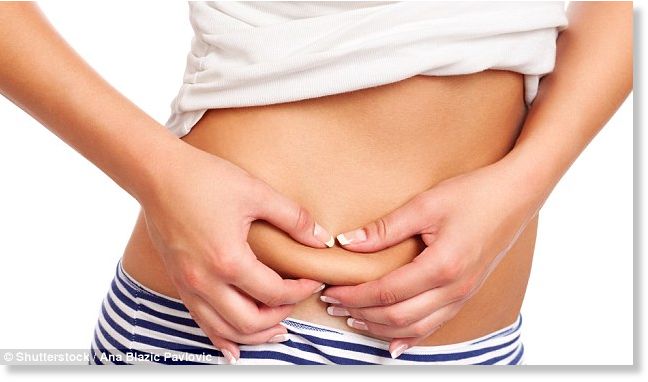
Could that low-fat diet make you even fatter?

Image
Scepticism: The conventional wisdom behind the low-fat, high-carbohydrate diet is under attack by those who now believe a low-carb rather than a low-fat diet is best
When most attempt to lose weight, they try the low-fat, high-carb diet
But this formula is increasingly under attack
Sceptics now believe you should cut down on carbs and eat more fat
Personal trainer Sam put this theory to the test in a unique experiment
On the high-fat diet, he lost one inch off of his middle!
But he put on 16lb and gained 4lb in around his waist on the low-fat plan
Everyone who has ever tried to lose weight knows the formula: eat less and move more. According to this, what you eat doesn't matter so much, as long as you keep an eye on the total number of calories.

It's best to avoid fat because of its extra calories - and saturated fats raise the risk of heart disease.

This has been the thinking behind the low-fat, high-carbohydrate diet that has been the cornerstone of dieting and healthy eating for more than 40 years.

But today, this mantra is increasingly being questioned by clinicians and nutritional scientists - not least because it seems to have failed to halt the obesity epidemic.


Health

Suspected polio outbreak in Syrian province spreads

Image
© REUTERS/Khalil AshawiA family moves remnants of their house after it was damaged due to shelling in Deir al zor, Syria October 5, 2013. Now, at least 20 people are suspected of having contracted polio in this war-torn region of the country.
At least 22 people are now suspected of having polio in Syria, where health officials are scrambling to respond to the first outbreak of the crippling viral disease in 14 years, the World Health Organization (WHO) said on Thursday.

Most of those stricken with acute flaccid paralysis - a symptom of diseases including polio - in the eastern province of Deir al-Zor are children under the age of two, WHO spokesman Oliver Rosenbauer said.

"There is a cluster of 22 acute flaccid paralysis cases that is being investigated in that area," Rosenbauer told Reuters. "Everybody is treating this as an outbreak (of polio) and is in outbreak response mode."

The WHO, a U.N. agency, announced on Saturday that two suspected cases of polio had been detected, the first appearance of the disease in Syria since 1999.

Initial tests came back positive for polio in two of the 22 cases and final laboratory results due next week from a WHO reference laboratory in Tunis are "very, very likely" to confirm presence of the virus, Rosenbauer said.

Bacon

From the Heart: Saturated fat is not the major issue

Image
"Let’s bust the myth of its role in heart disease." Aseem Malhotra, interventional cardiology specialist registrar, Croydon University Hospital, London
Scientists universally accept that trans fats - found in many fast foods, bakery products, and margarines - increase the risk of cardiovascular disease through inflammatory processes.1 But "saturated fat" is another story. The mantra that saturated fat must be removed to reduce the risk of cardiovascular disease has dominated dietary advice and guidelines for almost four decades.

Yet scientific evidence shows that this advice has, paradoxically, increased our cardiovascular risks. Furthermore, the government's obsession with levels of total cholesterol, which has led to the overmedication of millions of people with statins, has diverted our attention from the more egregious risk factor of atherogenic dyslipidaemia.

Saturated fat has been demonised ever since Ancel Keys's landmark "seven countries" study in 1970.2 This concluded that a correlation existed between the incidence of coronary heart disease and total cholesterol concentrations, which then correlated with the proportion of energy provided by saturated fat. But correlation is not causation. Nevertheless, we were advised to cut fat intake to 30% of total energy and saturated fat to 10%."3 The aspect of dietary saturated fat that is believed to have the greatest influence on cardiovascular risk is elevated concentrations of low density lipoprotein (LDL) cholesterol. Yet the reduction in LDL cholesterol from reducing saturated fat intake seems to be specific to large, buoyant (type A) LDL particles, when in fact it is the small, dense (type B) particles (responsive to carbohydrate intake) that are implicated in cardiovascular disease.4

Comment: For more information see:

Sweden touts low-carb diet as key to weight loss

Swedish Expert Committee: A Low-Carb Diet most effective for weight loss
The Ketogenic Diet - An Overview
Saturated fat heart disease 'myth': UK cardiologist calls for change in public health advice on saturated fat
Heart surgeon speaks out on what really causes heart disease


Bulb

Sweden touts low-carb diet as key to weight loss

Image
Swedes who want to lose weight fast have been told to cut out the carbohydrates according to a new report by the Swedish Council on Health Technology Assessment (Statens beredning för medicinsk utvärdering, SBU).

The report by the SBU recommends that eliminating carb-rich food such as bread and potatoes will speed up weight loss quicker than a conventional low-fat diet. However, in the long-term there is little difference between how effective various diet plans are says the report.

"What was surprising about the research in our report is that we did not find any health risks associated with reducing your carbohydrate intake. Also, we were unable to establish just what types of fats you should eat," Jonas Lindblom, project director with SBU told The Local.

Lindblom added that if Swedes are concerned about their weight then they should "cut out the soda" and said the impression that the country is getting fatter may not be accurate.

Health

Starch: Fallback food or essential nutrient?

Image
I've always said that carbs aren't bad in and of themselves. They're better in certain contexts and worse in others.

Are you CrossFitting five days a week? Training for the Olympics? Breastfeeding? These are contexts in which carbs are warranted, helpful, and even healthy.

Are you insulin-resistant and hyperinsulinemic? Are you a moderately active person with a few extra pounds? Are you diabetic, or nearly so? These are contexts in which a low carb intake would be warranted, helpful, and even healthy.

With my Carb Curve, I've tried to establish a basic framework that works for most people who come to this site looking to get healthy. I think I've mostly succeeded. 150 grams of carbohydrates from fruit, squashes, roots, and tubers is more than enough for the vast majority of people to feel sated, healthy, and energetic without leading to weight gain or exacerbating metabolic syndrome. Add more if you need it to fuel your training; remove some if you're particularly sedentary, diabetic, or looking to lose weight; try a carb refeed every few days of 200-300 grams if you're very low carb or ketogenic. Round that out with all the non-starchy vegetables you want and you're looking at a very diverse diet rich with phytonutrients, vitamins and minerals with lots of room for nutrient-dense meat and fat sources. Not bad, right? Pretty simple, and the results speak for themselves.

Despite that, there's an undercurrent that high-carb Primal and low-carb Primal are interchangeable. That macronutrient ratios don't matter regardless of health status or metabolic context, and that we evolved eating a diet rich in, if not based on, starchy tubers.

Today, I'm going to address some of the most common arguments for these claims. I'm not arguing against including starch in your diet, now. I'm arguing against this notion that inclusion of large amounts of starch is the defining characteristic of an ancestral diet.

Let's jump right in...

Bacon n Eggs

Eat less, move more and die anyway!

Image

Mainstream medicine's latest multimillion dollar effort to prove the effectiveness of the low-calorie, low-fat diet once again blew up in their collective faces, but that's not what this post is about. This post is about how mainstream medicine deals with data it doesn't like. How instead of presenting the data for what it is, mainstream medicine tries desperately to sweep its failures under the rug.

Despite not showing what their authors want them to show, the important point about these 'failed' studies is that they move science forward. They sometimes nullify dearly held theories, which is exactly what scientists are supposed to want to do.

Sadly, all too often, scientists (who should know better) fall in love with an hypothesis and set up an experiment to confirm it instead of trying to falsify it. Then when their machinations fail and the experiment is a bust, they try to put a good face on and make like the experiment really showed what they wanted it to show all along.

Just as there is no doubt a bias in the mainstream news media, sad to say, there is also a bias in the mainstream medical scientific media.

Most academic nutritional researchers hold two progressions near and dear to their hearts.

Eating saturated fat - > elevated cholesterol - > heart disease.

Exercise plus cutting calories and fat - > weight loss - > a longer, healthier life

The first of those progressions is known as the lipid hypothesis; the second is the eat less, move more hypothesis.

If any part of one of the above equations breaks down, then the whole thing falls apart. So God forbid that anyone should make the case that any segment of the above pathways doesn't hold up to scrutiny. Should that happen, the infidel needs to be prepared to pay the price.

How do these infidels pay the price? Usually by having their data and/or their conclusions attacked in the very same journal in which their study was published.

Info

New biological links between sleep deprivation and the immune system discovered

Sleep And Immune System
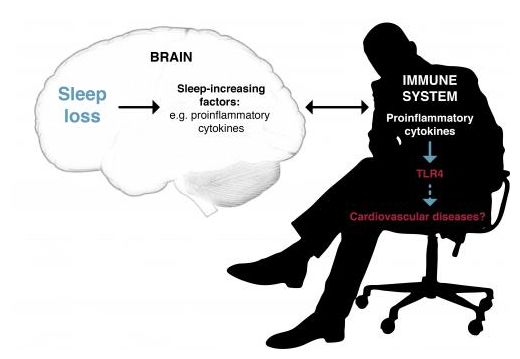
© Vilma Aho/Univ. of HelsinkiSleep loss causes changes to the system that regulates our immune defence. Some of these changes appear to be long-term, and may contribute to the development of cardiovascular diseases and type 2 diabetes.
Population-level studies have indicated that insufficient sleep increases the risk of cardiovascular diseases and type 2 diabetes. These diseases are known to be linked to inflammatory responses in the body.

University of Helsinki researchers have now shown what kinds of biological mechanisms related to sleep loss affect the immune system and trigger an inflammatory response. They identified the genes which are most susceptible to sleep deprivation and examined whether these genes are involved in the regulation of the immune system. The study was published in the journal PLOS ONE on October 23, 2013.

Conducted at the sleep laboratory of the Finnish Institute of Occupational Health, the study restricted the amount of sleep of a group of healthy young men to four hours per night for five days, imitating the schedule of a normal working week. Blood samples were taken before and after the sleep deprivation test. White blood cells were isolated from the samples, and the expression of all genes at the time of the sampling was examined using microarrays. The results were compared with samples from healthy men of comparable age who had been sleeping eight hours per night for the week.

Hearts

Swedish Expert Committee: A Low-Carb Diet most effective for weight loss

Image
Which diet is the most effective for weight loss?

This could be a historic day in Sweden. Today it became official. After over two years of work, a Swedish expert committee published their expert inquiry Dietary Treatment for Obesity (Google translated from Swedish).

This report from SBU (Swedish Council on Health Technology Assessment) is likely to be the basis for future dietary guidelines for obesity treatment within the Swedish health care system.

The health care system has for a long time given general advice to avoid fat and calories. A low-carbohydrate diet (such as LCHF) has often been dismissed as a fad diet lacking scientific foundation. The time has now come to update knowledge in this area.

According to SBU, the only clear difference among different dietary recommendations is seen during the first six months. Here a low-carbohydrate diet, such as LCHF, is clearly more effective than today's conventional advice.

From fad diet to best in test.

Here are some more highlights from the report:

Health Markers

In addition, health markers will improve on a low-carbohydrate diet, according to SBU. You'll get:

Comment: Mainstream guidelines cannot longer ignore what the alternative media has been saying for years: animal fats are good for our health. For hundreds of thousands of years, our ancestors practiced hunting and herding, eating a low-carb diet. We have spent most of our human evolutionary history in ice age conditions where vegetables and fruits were simply not available, and when they were, they were vastly different from the fruits and vegetables available today. The fact is, our bodies are designed, evolved, to live and thrive without consuming any carbohydrates whatsoever, as long as there is plenty of nutritious protein and fat available, and water to drink. Animal fat was our primal energy, as it was - and still is - the most efficient, dense and long-burning fuel. We became smart - Homo sapiens sapiens - because we ate animal fat and meat.

For more information see:

The Ketogenic Diet - An Overview

Saturated fat heart disease 'myth': UK cardiologist calls for change in public health advice on saturated fat

Heart surgeon speaks out on what really causes heart disease


Health

Is overeating carbs worse than overeating on an LCHF diet?

Image
The result of 5,800 calories of junk food a day
Sam Feltham carried out an experiment a few months ago that caught a lot of attention. For three weeks he pigged out on low-carb LCHF foods, 5,800 calories a day.

According to simplistic calorie counting, Feltham should have gained 16 lbs (7.3 kg). But in reality, he only gained less than 3 lbs (1.3 kg).

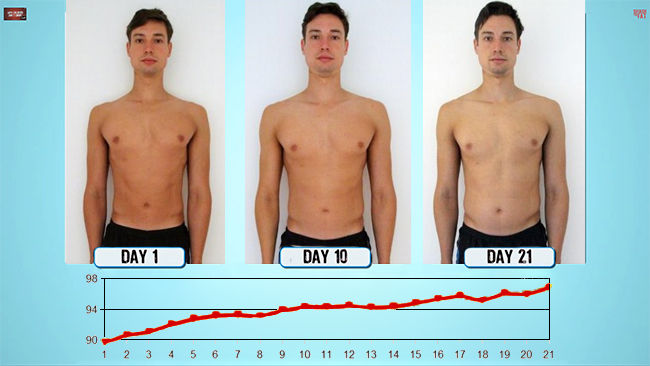
Now Feltham has repeated his experiment with exactly the same amount of calories, but from carbohydrate-rich junk food. On the same amount of calories he gained more than five times as much weight: almost 16 lbs (7.1 kg)!

The difference in waist circumference was even more significant: 5,800 calories of LCHF food for three weeks reduced his waist measurement by 1 1/4 inches (3 cm). The same amount of junk food led to a 3 1/2 inch (9.25 cm) increase in his waist. And you can see the difference visually.

A Picture is Worth a Thousand Words

Above are photos from the junk food experiment. Below, the LCHF experiment (with the same amount of calories) as a comparison:

Comment: For more information on the benefits see:

Sweden becomes first Western nation to reject low-fat diet dogma in favor of low-carb high-fat nutrition

The Ketogenic Diet - An Overview


Bacon

Saturated fat heart disease 'myth': UK cardiologist calls for change in public health advice on saturated fat

Triple Burger
© ThinkstockThat eating a diet high in saturated fat can raise the risk of heart disease is not supported by scientific evidence

A UK cardiologist is calling for a change in public health advice on saturated fat.

Dr Aseem Malhotra says the risks have been overstated, with other factors such as sugar intake being overlooked.

It is time to "bust the myth of the role of saturated fat in heart disease", he writes in an opinion piece in the British Medical Journal.

The British Heart Foundation says reducing cholesterol through drugs or other means does lower heart risk.

Studies on the link between diet and disease have led to dietary advice and guidelines on how much saturated fat, particularly cholesterol, it is healthy to eat.