Health & WellnessS


Airplane Paper

The bitter truth about fructose, obesity and metabolic disease


Unless you've been living under a rock for the past few years, you should be familiar with Dr. Robert H. Lustig.

He is the doctor who gave one of the most famous lectures in the history of nutrition called Sugar: The Bitter Truth, where he reviewed the science behind the harmful effects of sugar.

It has been viewed almost 4 million times. If you haven't already, then you can watch and read more about it here.

It's been 4 years since then and a lot of new research has come out about how sugar (because of the high amount of fructose) can cause harm to the body.

In the video above, Lustig revisits the topic of fructose and its effects on obesity and metabolic disease. Please skip to 4:30, as the intro is long and boring.
Image

Comment: Keep in mind that we've been cultivating fruit (and only some fruits) for only the past few thousand years, (many fruit trees for only the past few hundred years) and the fruit that we see today - Fuji apples, Bartlett pears, navel oranges - have been recently bred to be far sweeter than the wild varieties and hence, they are more fattening due to their higher fructose content.


Bulb

Cholesterol levels: Are they really that important?

Image
Is cholesterol the villain it is made out to be by the medical authorities? Does too much cholesterol cause heart disease? Will it shorten your life? Should you avoid saturated fats to stay free from heart disease? The answers to these questions are not the ones most people would anticipate. The video below provides a different perspective.

About three months ago I got an email from a television producer in Australia informing me she was going to be in the US and would like to interview me. I consented, and the resultant TV show was just show last night in Oz.

It may be the first time a major television network devoted a serious show to debunking the lipid hypothesis. As readers of the blog are all too aware, most take the opposite approach. Let's hope this one starts a trend. It would be nice to have an investigative reporter go after a lot of these mainstream lipid guys. As you will see, they look pretty uncomfortable under intensive questioning. Unlike those of us on this side of the debate, they're not used to being questioned as to the validity of their views.

Enjoy!

Whistle

Lessons from the NFL's MRSA outbreak: Technology part of the team fight

Image
© wellcome images/FlickrThe “superbug” MRSA up close
NFL players are some of the strongest, most physically-fit people in the world, but even they are not immune to the microscopic bacteria and viruses the Centers for Disease Control and Prevention (CDC) label "superbugs." News that a third player with the NFL's Tampa Bay Buccaneers is battling Methicillin-resistant Staphylococcus Aureus (MRSA), a potentially deadly skin infection, generated national headlines, but it's not an isolated case. High schools in Carmel, Ind., and Northville, Mich. reported MRSA outbreaks within the past month. The lesson for all high school, collegiate and professional locker rooms: follow the CDC's recommendation to be more proactive in preventing an outbreak rather than simply cleaning up after one occurs.

The Centers for Disease Control and Prevention (CDC) in September released a report that paints a grim picture of the on-going war against these so-called "superbugs" - pathogens such as MRSA and C. difficile that are becoming increasingly resistant to traditional medicines and killing tens of thousands of people every year. The report, "Antibiotic Resistance Threats in the United States, 2013" states that more than two million people in the United States get infections that are resistant to antibiotics and at least 23,000 people die as a result.

Red Flag

Dr. Brad Spellberg: Antibiotic resistance is "Everyone's Fault"

Image
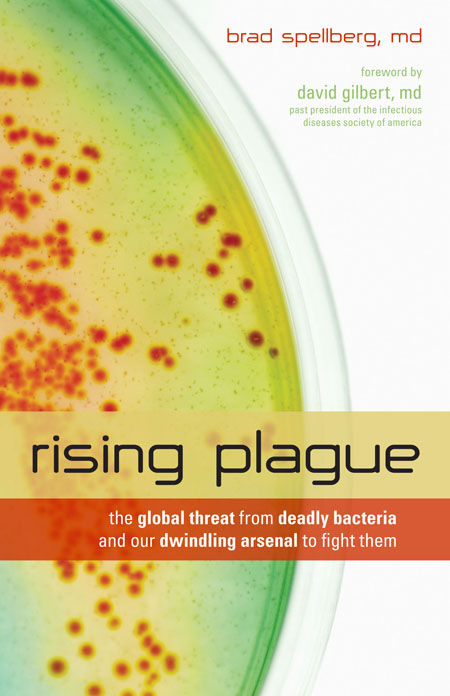
Dr. Brad Spellberg is an infectious disease specialist and leader in the field of developing ways to combat drug resistant infections. Spellberg, who wrote a book about the problem, Rising Plague, told FRONTLINE that the science of developing new tools in the fight against infection is in trouble, unless the culture around developing drugs changes. This is the edited transcript of an interview conducted on May 30, 2013.

Comment: Antibiotic Resistance and Super Bugs have been a growing concern for the past several years read the following SOTT articles to learn more:

Clue Discovered In Spread Of 'Superbugs'
Soil Studies Reveal Rise in Antibiotic Resistance
Antibiotic-Resistant Meningitis Reported in U.S.
Got Antibiotics in Your Food? Thank the FDA
Municipal Wastewater Spreads Antibiotic Resistance
Antibiotics in animal feed could be causing human deaths
Antibiotic Resistance: A Rising Concern In Marine Ecosystems
FDA Report: Alarming Amounts of "Superbugs" in Supermarkets
Antibiotic Resistance Existed Before Man Created the First Drug?
New Threat: Antibiotic-resistant Bacteria Causes Deadly Pneumonia
Common Infections Will Be 'Untreatable' If Antibiotic Misuse Continues
Scientists Fear Antibiotics are Perpetuating Diseases Impossible to Treat
Antibiotic-Resistant Bacteria Found in Fertilizer Could Breed More Super Bugs
Virginia Tech Engineer Identifies New Concerns For Antibiotic Resistance, Pollution
As MRSA Gets Worse, the FDA Discovers Antibiotic Abuse on Factory Farms
Hospital-bred Superbugs Escaping into Communities, Threatening Children


Alarm Clock

CDC: We've reached 'the end of antibiotics, period'

Image
In an interview that aired on PBS's Frontline, an associate director of the Centers for Disease Control and Prevention, Dr. Arjun Srinivasan, said that "for a long time, there have been newspaper stories and covers of magazines that talked about 'The end of antibiotics, question mark?' Well, now I would say you can change the title to 'The end of antibiotics, period.'"

"We're in the post-antibiotic era," he continued. "There are patients for whom we have no therapy, and we are literally in a position of having a patient in a bed who has an infection, something that five years ago even we could have treated, but now we can't."

As an example, Dr. Srinivasan discussed the spread of Methicillin-resistant Staphylococcus aureus, or MRSA, which recently made headlines when word spread that three players from the NFL's Tampa Bay Buccaneers were battling it. The options for treating it have always been limited, but until the past decade, MRSA infections were rarely seen outside of health-care facilities.

Comment: Learn more about MRSA and how it has led to the 'post-antibiotic era'

Widespread Antibiotic Use in 1960s sparked MRSA
Community-Acquired MRSA in Hospital Outpatients A Growing Problem
MRSA Deaths in the US Exceed AIDS Deaths: Circumcision is a Culprit
MRSA Superbugs Actually Caused by Widespread Antibiotics Use in the 1960s
"Superbug" methicillin-resistant Staphylococcus aureus (MRSA) is prevalent at several U.S. wastewater treatment plants
US: Ohio Hospitals Fight Resistant Bacteria - Clostridium difficile Now More Common than MRSA Infections
Influenza-Associated Pediatric Mortality and the Increase of Staphylococcus aureus co-infection


Cookies

Grains - A summary of some problems

Image
The food pyramid over the last 30 years has placed grains as the foundation of a "healthy diet". The only science that this is based on is the "science of economics".... An oxymoron if ever there was one. Here are some facts:
  • Whole grains are very low in Vitamin C and beta carotene. Vitamin B6 is poorly absorbed
  • Grains contain low levels of essential fats, having too much Omega 6 and too little Omega 3 fatty acids, and so are pro-inflammatory.
  • Phytate levels in grain reduces the absorption of many minerals, including zinc, iron
  • Exorphins -It is known that these foods contain exorphins, which are molecules that have opioid (morphine-like) activity. The authors speculate that early humans started to eat these foods because of these exorphins, that is, by eating these foods, it made them feel good. They write "The fact that overall health declined when they [i.e. grains] were incorporated into the diet suggests that their rapid, almost total replacement of other foods was due more to chemical reward than to nutritional reasons." They go on to say "Civilisation arose because reliable, on-demand availability of dietary opioids to individuals changed their behaviour, reducing aggression, and allowed them to become tolerant of sedentary life in crowded groups, to perform regular work and to be more easily subjugated by rulers." (Journal of the Australasian College of Nutrition and Environmental Medicine G. Wadley and A Martin, Dept of Zoology, University of Melbourne, Vol 19 No 1 April 2000)

Cupcake Pink

Heart of the Matter - Dietary Villains

Is the role of cholesterol in heart disease really one of the biggest myths in the history of medicine? For the last four decades we've been told that saturated fat clogs our arteries and high cholesterol causes heart disease. It has spawned a multi-billion dollar drug and food industry of "cholesterol free" products promising to lower our cholesterol and decrease our risk of heart disease.

But what if it all isn't true? What if it's never been proven that saturated fat causes heart disease?


For more information, extended interviews and original papers head here.

Eggs Fried

Higher cholesterol levels associated with improved outcomes in stroke

Image
Low cholesterol levels are associated with increased risk of haemorrhagic stroke and higher cholesterol levels are associated with improved survival in those who have suffered an ischaemic stroke.
'Heart disease' is a term usually used to describe the gradual 'furring up' of the arteries around the heart due to a process known as atherosclerosis (or arteriosclerosis). Eventually, one or more artery may become completely blocked, starving some of the heart muscle of blood. If this persists, heart muscle will die, and this is what a heart attack is.

Atherosclerosis can occur in other blood vessels too, including those supplying blood to the brain. This condition, termed 'cerebrovascular' disease, can ultimately result in a stroke through essentially the same process that underlies heart attacks. These forms of strokes are termed 'ischaemic' strokes (ischaemia is a term that refers to a lack of blood supply).

A minority of strokes are not caused by blockage of a blood vessel, but by bleeding from one. In this case, strokes are referred to as 'haemorrhagic' strokes.

'Raised' cholesterol levels are said to be a risk factor for heart disease. Given that most strokes are caused by the essentially the same process as heart attacks, one might imagine that raised cholesterol is a risk factor here too. However, in reality cholesterol levels appear to have little or no relationship to stroke risk [1,2]. In fact, previous evidence has found that lower levels of cholesterol, including 'unhealthy' LDL-cholesterol, are associated with an increased risk of haemorrhagic stroke [3].


Syringe

How the government's vaccine policy is infected by corruption

Image
Annually we receive warnings from the Centers for Disease Control and Prevention (CDC) of an impending influenza epidemic. Each year the CDC recommends the influenza vaccine. Are the warnings justified? Is the advice that the CDC provides appropriate and supported by scientific findings? Are there any conflicts of interest that would sway what the CDC tells health agencies, health professionals, or the public?

Influenza is a set of contagious diseases, caused by infection by a corresponding set of viruses. The viruses spread from individual to individual by droplet infection. Droplet infection can occur by an infected individual sneezing or coughing directly onto the mucus membranes or into the eyes of another individual. Transmission can also occur from infected droplets in the air landing on surfaces then being placed or wiped into the eye, nose or mouth of another individual. The rate of contagion of influenza varies considerably. Some of the strains of influenza spread very easily and quickly. Some spread more slowly.

Clipboard

There is no scientific consensus on GMO safety

Image
There is no scientific consensus on the safety of genetically modified foods and crops, according to a statement released today by an international group of more than 90 scientists, academics and physicians.[1]

The statement comes in response to recent claims from the GM industry and some scientists, journalists, and commentators that there is a "scientific consensus" that GM foods and crops were generally found safe for human and animal health and the environment. The statement calls these claims "misleading", adding,
"This claimed consensus on GMO safety does not exist."
ENSSER

"Such claims may place human and environmental health at undue risk and create an atmosphere of complacency," states Dr. Angelika Hilbeck, chairperson of the European Network of Scientists for Social and Environmental Responsibility (ENSSER) and one of the signatories. "The ENSSER statement draws attention to the diversity of opinion over GMOs in the scientific community and the often contradictory or inconclusive findings of studies on GMO safety. These include toxic effects on laboratory animals fed GM foods, increased pesticide use from GM crop cultivation, and the unexpected impacts of Bt insecticidal crops on beneficial and non-target organisms," Dr Hilbeck continues.