Health & WellnessS


Evil Rays

34 scientific studies showing adverse health effects from Wi-Fi

Image
Here is an excellent collection of scientific papers finding adverse biological effects or damage to health from Wi-Fi signals, Wi-Fi-enabled devices or Wi-Fi frequencies (2.4 or 5 GHz), complied by campaign group WiFi In Schools.

The papers listed are only those where exposures were 16V/m or below. Someone using a Wi-Fi-enabled tablet computer can be exposed to electromagnetic fields up to 16V/m. Papers are in alphabetical order. A file of first pages, for printing, can be found here.

If you feel like sending a copy of this collection to the local schools in your area, you can search for them here and either print out this article to post or email the link.

Wi-Fi papers

1. Atasoy H.I. et al., 2013. Immunohistopathologic demonstration of deleterious effects on growing rat testes of radiofrequency waves emitted from conventional Wi-Fi devices. Journal of Pediatric Urology 9(2): 223-229. http://www.ncbi.nlm.nih.gov/pubmed/22465825

2. Avendaño C. et al., 2012. Use of laptop computers connected to internet through Wi-Fi decreases human sperm motility and increases sperm DNA fragmentation. Fertility and Sterility 97(1): 39-45. http://www.ncbi.nlm.nih.gov/pubmed/22112647

3. Avendaño C. et al., 2010. Laptop expositions affect motility and induce DNA fragmentation in human spermatozoa in vitro by a non-thermal effect: a preliminary report. American Society for Reproductive Medicine 66th Annual Meeting: O-249 http://wifiinschools.org.uk/resources/laptops+and+sperm.pdf)

People 2

Flashback Woman wakes up after childbirth with no arms and no legs

Image
© Unknown
A new mother says she will literally never be able to hold her newborn baby after the Orlando hospital where she gave birth performed a life-altering surgery that left her a multiple amputee.

"They amputated both her arms and legs and will not explain why..."

At this time the woman claims that the hospital will not tell her why they removed both of her arms and legs during childbirth. Complaints have been filed against the hospital, Orlando Regional Healthcare Systems, because it allegedly said it would not tell her exactly what happened. The hospital maintains the woman wants to know information that would violate other patients' rights.

The event happened over 8 months ago. Claudia Mejia, the mother of the newborn child and victim of the surgery, was transported to Orlando Regional Medical Center in Orlando where her arms and legs were amputated. After the surgeries she was told she had streptococcus, a flesh eating bacteria, and toxic shock syndrome, but no further explanation was given.

The hospital claims that if she wants to find out exactly what happened, she would have to sue them.

"I want to know what happened. I went to deliver my baby and I came out like this," Mejia told the media. "I woke up from surgery and I had no arms and no legs. No one told me anything. My arms and legs were just gone."

Her husband Tim Edwards, a devoted man, said he's sticking with her.

"I love her, so I'll always stick with her and take it a day at a time myself."

Her attorney, Judy Hyman, wrote the hospital a letter saying, according to the Florida statute, "The Patients Right To Know About Adverse Medical Incidents Act," the hospital must give her the records.

The hospital's response? "Ms. Mejia's request may require legal resolution."

It is being considered that Mrs. Mejia caught the skin eating disease streptococcus while in the hospital, contracting it from another patient or someone on her floor who already had the disease.

Comment: There appears to be more to this story than is reported hereL

The woman claimed that the hospital would not tell her why they removed both of her arms and legs during childbirth.

From this report we read:
"Over the next few hours [after childbirth], she developed a rash, fever, chills and other symptoms, according to her suit. The next day, she was in extreme pain, but the hospital tried to discharge her, according to the suit. Her husband, Timothy B. Edwards, refused to leave.

The day after that, doctors performed exploratory surgery and discovered gangrene in her belly.

She was transferred to Orlando Regional Medical Center, but her condition worsened. She went into shock, lost consciousness and her kidneys began to shut down.

Doctors eventually concluded her body was being ravaged by flesh-eating bacteria, also known as Group A Streptococcal infection. They amputated all four limbs, hoping to save her life."
From this site we read:
"Claudia Mejia knows her life will never be the same. Twelve days after giving birth to her son Matthew, doctors gave her a choice no one would ever want to make.

"If I want to live, they want to cut off my arms and legs. If I don't, I'll keep my arms and legs but I'll die. Is this a dream?" Mejia said."
Eventually, in 2009 the woman "got small settlement":
"Experts told Eyewitness News that a case like Mejias should settle in upwards of $40 to $50 million. Sources said she received less than $10 million and once she pays her attorneys 40 percent, she will be left with $5- 6 million."
While it appears that there is more to the story than the woman simply going in to a hospital to give birth and coming out with no arms or legs, there does seem to be some indication of malpractice in that she was awarded considerable compensation.


Cookie

Saturated fat to be cut in chocolate products, but sugar levels to remain the same

Image
© Chris North/PAA Kit Kat bar
Products ranging from Kit Kats to breadsticks to belVita will contain less fat, but sugar levels will stay the same

Kit Kats and Oreos will become healthier, the government will say on Saturday, announcing that the companies which make them have signed up to a "responsibility pledge" to cut the saturated fat the products contain. But the sugar levels in them will stay the same.

Days after the British Medical Journal ran an opinion piece from a cardiologist asserting that sugar and not saturated fat was the leading cause in the rise in heart disease and diabetes, the government announced the latest in its series of public health pledges with food manufacturers and supermarkets. This will, ministers said, remove the equivalent of one and a half Olympic-sized swimming pools full of saturated fat from the national diet.

Comment: So instead of paying attention to the latest research on saturated fat, the idiotic government decides to encourage food producers to lower saturated fats which are a necessary component of a healthy diet, and ignore the excessive amounts of sugar in processed foods which is the real culprit in numerous diseases.
Sugar: The Bitter Truth
146 reasons why sugar destroys your health
Sugar Should Be Regulated As Toxin, Researchers Say
Saturated Fat is Good for You
Higher saturated fat intakes found to be associated with a reduced risk of dying from cardiovascular disease
Get Saturated: Four Reasons Saturated Fat is Healthy


Smoking

SOTT Focus: The myth of smoking during pregnancy being harmful

Image
In about 1999 I was asked to analyze the data of pregnant women with respect to smoking for a major health insurance company. They were running a campaign to get pregnant women to stop smoking and they expected to find interesting data to support their case.

I used to teach college courses covering the topic. The text books said that smoking causes underweight premature babies. Because of this babies of smoking mothers are more likely to have birth defects. With alcohol, two drinks a day was considered safe, but with tobacco, there was no safe threshold. I thought this was rather strange. You smoke one cigarette while pregnant and you are more likely to have birth defects? Even for a hard core health fanatic that is difficult to believe.

Here is what was found in the data. Babies of smoking mothers average weight was 3232 grams (7.1 lbs.). Babies of non-smoking mothers averaged 3398 grams (7.5 lbs.). That is about a half pound difference and it is statistically significant. Seven pounds is a good healthy birth weight that does not set off any alarms. Babies are considered underweight if they are less than 2270 grams (5 lbs.). 4.5% of smoking mothers babies were underweight and 3.3% of non-smoking mothers babies were underweight. This difference is not significant. There is no indication here of a health risk from smoking based on weight.

Cow Skull

Genetic Roulette -The Gamble of Our Lives

A film by Jeffrey M. Smith - Narrated by Lisa Oz

Never-Before-Seen-Evidence points to genetically engineered foods as a major contributor to rising disease rates in the US population, especially among children. Gastrointestinal disorders, allergies, inflammatory diseases, and infertility are just some of the problems implicated in humans, pets, livestock, and lab animals that eat genetically modified soybeans and corn.

Monsanto's strong arm tactics, the FDA's fraudulent policies, and how the USDA ignores a growing health emergency are also laid bare. This sometimes shocking film may change your diet, help you protect your family, and accelerate the consumer tipping point against genetically modified organisms (GMOs). Don't miss this film!


Comment: Genetic Roulette - The Gamble of Our Lives is available for DVD purchase. For more information visit this website.


Heart

What - you still believe cholesterol causes heart attacks?

Cholesterol
© Natural Society
A meta-analysis of properly performed previous studies on heart health and saturated fats concluded "there is no significant evidence for concluding that dietary saturated fat is associated with an increased risk of coronary heart disease or cardiovascular disease".

The saturated fat-high cholesterol myth over the last few decades has resulted in many Americans eating and drinking more low and no fat foods and beverages. Yet, heart disease rates have continued to rise along with obesity.

Dr. William Davis asserts in his article "A Headline You Will Never See: 60 Year Old Man Dies of Cholesterol" that cholesterol doesn't kill "any more than a bad paint job on your car could cause a fatal car accident."

Dr. Davis explains the cause of most heart attacks and coronary problems is atherosclerotic plaque from inflammation and calcium deposits, which can build up and rupture or clog the arteries. He and noted cardiologists Stephen Sinatra and Dwight Lundell have expressed the same viewpoint.

While there can be some cholesterol in the plaque, cholesterol itself is waxy and pliable. Cholesterol is important for brain matter, nerves and all other cellular structural components. Calcium deposits (calcification) in artery interiors are much worse components of plaque.

Arrow Down

Agrochemicals are linked to many health problems; causing deformities and more

Image
"Fortunately" for us (Americans), we aren't exposed to too much chemicals sprayed onto our foods. Or are we? Either way, is it safe to consume these Agrochemicals? Have you seen the statistics? It must all be caused by genetics, right? Click Here

Argentina has recently become a giant experiment in farming genetically modified (GM) Roundup Ready (RR) soy, soy that has been genetically modified to be tolerant to Roundup, Monsanto's formulation of the herbicide glyphosate. The Argentine government has been so eager to pull the country out of a deep economic recession that occurred in the 1990's, that it restructured its economy around GM soy grown for export, most of which goes to Europe to feed livestock. In 2009, GM soy was planted on 47 million acres; over half of Argentina's cultivated land, and sprayed with over 84 million gallons of glyphosate herbicide. Spraying is usually performed from the air which can cause problems many miles away.

Back in 2002, two years after the first big harvest of RR soy, residents and doctors in this soy producing areas began reporting serious health effects from glyphosate spraying, which included high rates of birth defects, infertility, stillbirths, miscarriages, and cancers. Environmental effects included killed food crops and livestock along with streams filled with dead fish.

Health

Hormones, Hysterectomy and the Hippocampus

Image
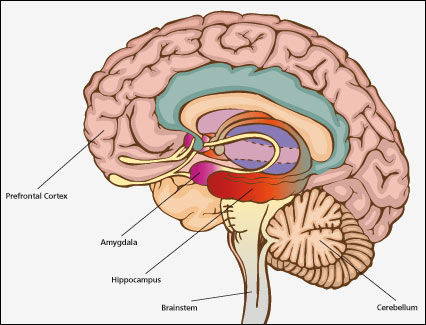
New research, conducted on rodents, suggests that pre-menopausal hysterectomy with ovariectomy induces changes in the hippocampus (memory center of brain) making it hypersensitive to ischemic stressors (reduced blood flow). In contrast, ischemic stressors did not cause hippocampal damage in non-ovariectomized female rats or even gonadectomized male rats

The hippocampus, located in the temporal lobe of the brain, is responsible for working memory formation, storage and retrieval. Researchers have long known that damage to cells in the hippocampus cause significant problems in short-term, long-term and working memory, ranging from mild cognitive decline to complete impairment. Certain cells in the hippocampus are particularly sensitive to the amyloid protein buildup associated with Alzheimer's disease.

In the current study, removal of the ovaries and the associated long-term estradiol deprivation made the hippocampus hypersensitive to ischemic stressors and induced a myriad of events leading to significant hippocampal CA3 cell damage and cell death. The long term estradiol deprivation also led to increased amyloid production and associated neurodegeneration. As one might expect, damage and disruption to the hippocampus, the brain's memory center, was associated with the animal's ability to learn, remember and function.

Syringe

The Vaccine-Autism video the CDC, Big Pharma doesn't want you to see


Why is there still a vaccine/autism controversy? Because families have been blocked from getting into a REAL court to prove that vaccines have caused their child's autism.

The Canary Party presents a video on the corrupt Vaccine Injury Compensation Program to show how the federal government and pharmaceutical companies continue to get away with claiming that vaccines don't cause autism in the face of mounting evidence that they are doing just that in a growing number of children.

Health

New study on neurodevelopmental effects of prenatal exposure to paracetamol

Image
© Unknown
Paracetamol (acetaminophen) is the most commonly used medicine in pregnancy, yet there are very few studies that have investigated the possible long-term consequences for the child. A new study from the Norwegian Institute of Public Health suggests that long-term use of paracetamol during pregnancy may increase the risk of adverse effects on child development.

The study uses data from the Norwegian Mother and Child Cohort Study to investigate the effect of paracetamol during pregnancy on psychomotor development, behaviour and temperament at 3 years of age. Almost 3000 sibling pairs were included in the study.