Health & WellnessS


Syringe

Protest planned against last-minute Bloomberg push for mandatory flu vaccines

flu vaccine
© Denis Charlet/GettyA flu vaccine.

Autism advocates are set to protest tomorrow against a quiet effort by Mayor Michael Bloomberg's administration to require annual flu vaccinations for all New York City schoolchildren.

On Wednesday, with just three weeks to go until he leaves office, Mr. Bloomberg's controversial Board of Health is set to vote on new rules that would force children as young as six months old to be immunized each year before December 31 if they attend licensed day care or pre-school programs.

"Young children have a high risk of developing severe complications from influenza. One-third of children under five in New York City do not receive an annual influenza vaccination, even though the vaccine safely and effectively protects them against influenza illness," the Health Department said in a statement. "This mandate will help protect the health of young children, while reducing the spread of influenza in New York City."

The Board is stocked with mayoral appointees and controversial initiatives - from smoking bans to regulations on soda cup sizes - have sailed through with little opposition, angering a small, but passionate group of advocates who claim the vaccinations are potentially dangerous.

"The Bloomberg administration is wildly exaggerating the benefit of the flu shot and we think they are wildly underestimating the risks involved with it," said John Gilmore, the executive director of the Autism Action Network, speaking more broadly than the controversial claim that links vaccines to autism.


Smoking

Despite containing no tobacco, French court rules e-cigs are part of the tobacco monopoly

e-cig
© AFP
A French commercial court ruled on Monday that e-cigarettes qualify as tobacco products and should only be sold by registered tobacconists.

The ruling by the court in Toulouse is subject to appeal but could eventually see the distribution of e-cigarettes limited by a state-imposed monopoly on tobacco sales.

The decision comes amid a global boom in sales of e-cigarettes - battery-powered, vapour-releasing tubes that are promoted as a healthier alternative to traditional tobacco products.

The case stems from a complaint made by a local tobacconist against the Esmokeclean e-cigarette shop in the southern town of Plaisance-du-Touch.

The court in nearby Toulouse gave its verdict Monday, ordering Esmokeclean to stop selling and advertising e-cigarettes as it was violating the "state monopoly on the sale of tobacco" - a decision that could set a precedent.

Cigarettes and other tobacco products can only be sold in France at registered outlets and their advertising is banned.

Syringe

Drugs used in newborns need better study, docs say

flat-head syndrome
© Vanessa Van Rensburg | DreamstimePlagiocephaly, sometimes known as "flat-head syndrome," is easily treated in most cases.
Many medications commonly given to newborns still have not been officially approved for use in this very young population, despite recent law changes encouraging the study of drugs in children, a new study finds.

That means that drug labels often do not have information about the correct dose that should be used in newborns, and doctors instead must use their best guesses based on their experience and information from adults and older children, said study researcher Dr. Matthew Laughon, an associate professor in the Department of Pediatrics at University of North Carolina at Chapel Hill School of Medicine.

Drug studies in infants are challenging for a number of reasons - for example, a baby's small size prevents doctors from taking several samples of blood that would be needed to understand the effects of a drug.

But researchers must find a way around such obstacles, because such studies are critical to understanding how to most effectively use drugs in newborns, Laughon said. Children and babies have a unique physiology and will not necessarily respond to drugs the way adults do, Laughon said.

"As a society that cares about its premature babies and newborns, it's really incumbent on us to make these vulnerable children less vulnerable," by using effective drugs to treat birth complications, said Dr. Edward McCabe, chief medical officer of the March of Dimes, who was not involved in the study.

Health

Seizure unconsciousness similar to slow wave sleep

Epilepsy patients with complex partial seizures have impaired consciousness during seizure episodes and typically have no memory of the event. However, the mechanisms of seizure unconsciousness are unclear. Research reported today at the American Epilepsy Society (AES) 67th Annual Meeting suggests that the mechanism underlying loss of awareness during complex partial seizures is likely the same as that involved in slow wave or deep sleep.

In earlier research the team of investigators from Yale Medical School revealed an association between slow wave oscillations in neocortex and loss of consciousness in complex partial seizures. They also developed a rodent model with similar seizure characteristics, including neocortical slow waves similar to those seen in sleep. With the use of this model, the team then sought to find whether the slow waves of seizures were closely related to decreased acetylcholine in a specific sleep-associated brain area, as occurs in slow wave sleep.

The synthesis and release of acetylcholine is followed by breakdown into the molecule choline. That molecule was thus used in this study as a proxy for acetylcholine and choline levels at the target site were recorded using an implanted choline-oxidase coated microelectrode.

Health

Seizures and epilepsy: A significant burden on veterans

Three studies coming out of the American Epilepsy Society's 67th Annual Meeting in Washington DC expose the high prevalence of epilepsy and other neurological disorders in US Veterans who served in Operation Enduring Freedom, Operation Iraqi Freedom and Operation New Dawn. The research conducted from these studies indicate that veterans are at a particularly high risk for traumatic brain injury (TBI), post traumatic stress disorder (PTSD), psychological non-epileptic seizures (PNES) and epileptic seizure diagnoses.

A study by the Southeast Epilepsy Centers of Excellence and Duke University Medical Center found that 87,377 Veterans with seizures diagnoses were managed within the Veterans Health Administration during the 2011 Fiscal Year. The prevalence rate was 15.5 per 1,000 and incidence was 148.2 per 100,000. Higher incidence of diagnoses was found in young veterans under the age of 46.

"Appropriately diagnosing and treating Veterans with TBI and PTSD is notoriously difficult," said Tung T. Tran, MD. "It involves a multidisciplinary approach to include both epilepsy and mental health specialists."

Hearts

Time-lapsed video shows woman's transformation with ketogenic diet: 88 lbs. lost in 5 seconds

Image
A woman has documented her one-year, 88-lb. weight loss journey in a series of pictures, which have garnered over three million views on Reddit in the year since they were posted, and compelled one user to turn the pictures into a time-lapsed, morphing transformation.

Amanda, who withheld her last name, dropped 88 lbs. in just over a year. Beginning her journey in July of 2011 at 222 lbs., she embarked on a mission to lose weight through a ketogenic diet - a diet high in fats, moderate in protein, and low in carbohydrates. The 26-year-old conceded she did "virtually zero intentional exercise" over the course of her weight loss journey, just simple dietary swaps and the occasional picture as a reminder.

"I knew that I had to start somewhere," Amanda told ABC News. "I figured if I did it [took pictures] at least once a month, at the end of however long it took, I would have this really cool end product."

|

Comment: For more information on the healing properties of this diet, see:

The Ketogenic Diet - An Overview

Solve Your Health Issues with a Ketogenic Diet

Beyond weight loss: a review of the therapeutic uses of very-low-carbohydrate (ketogenic) diets


Syringe

Australia determined to vaccinate by release of aerosolized GMO vaccine

Aerial Spraying
© The Viral Post.com
The Office of the Gene Technology Regulator (OGTR) is on its way to approve a licence application from PaxVax Australia (PaxVax) for the intentional release of a GMO vaccine consisting of live bacteria into the environment in Queensland, South Australia, Western Australia and Victoria.

According to the regulator, it qualifies as a limited and controlled release under section 50A of the Gene Technology Act 2000 (the Act).

PaxVax is seeking approval to conduct the clinical trial of a genetically modified live bacterial vaccine against cholera. Once underway the trial is expected to be completed within one year, with trial sites selected from local government areas (LGAs) in Queensland, South Australia, Victoria and Western Australia.

PaxVax has proposed a number of control measures they say will restrict the spread and persistence of the GM vaccine and its introduced genetic material, however there is always a possiblity of these restrictions failing and infecting wildlife and ecosystems.

Magnify

New analysis finds: Choice at the supermarket is a mirage

Image
© opinionator.blogs.nytimes.com
Despite shelves overflowing with colorful packages, increased consolidation of the grocery industry leaves shoppers with diminishing choice and higher grocery bills.

Today, Food & Water Watch released an in-depth analysis of the consolidation of the grocery industry and the range of impacts it has on the food chain. Grocery Goliaths: How Food Monopolies Impact Consumers examines 100 types of grocery products and found that the top four or fewer food companies control a substantial majority of the sales of each item. Most often, the biggest food manufacturers offer multiple brands in each type of grocery, giving consumers the false impression that they are choosing between competing products when in fact all the sales can go to the same parent company. Over the past few years as food companies and supermarket chains have consolidated, this illusion of choice has coincided with increasingly expensive grocery bills.

"You might think you're a savvy shopper, supporting independent businesses when you buy a product from the organic foods aisle of your grocery store, but chances are you're really being duped by a small handful of grocery industry Goliaths hiding behind an array of brands and pretty packaging," said Wenonah Hauter, executive director of Food & Water Watch.
"The largest mega-retailers and manufacturers control more of what we eat than you thought. And they're not only costing shoppers, but farmers and small food companies too."

Info

9 things everyone should know about farmed fish

Image
If you eat seafood, unless you catch it yourself or ask the right questions, the odds are pretty good it comes from a fish farm. The aquaculture industry is like a whale on steroids, growing faster than any other animal agriculture segment and now accounting for half the fish eaten in the U.S.

As commercial fishing operations continue to strip the world's oceans of life, with one-third of fishing stocks collapsed and the rest headed there by mid-century, fish farming is seen as a way to meet the world's growing demand. But is it really the silver bullet to solve the Earth's food needs? Can marine farms reliably satisfy the seafood cravings of three billion people around the globe?

This article looks at aquaculture and its long-term effects on fish, people, and other animals. With this industry regularly touted as a paragon of food production, whether you eat seafood or not, you should know these nine key facts about farmed fish.

Comment: 5 more must read concerns everyone should know about farmed fish:

Farmed fish fed contaminated material
Factory-Fed Fish: Monsanto and Cargill's Plan for the Ocean
Farmed Fish Could Give Humans Mad Cow Disease
Wild Fish Stocks Depleted by Feeding of Farmed Fish Like Salmon
What You Need to Know Before You Ever Order Fish at a Restaurant


Bullseye

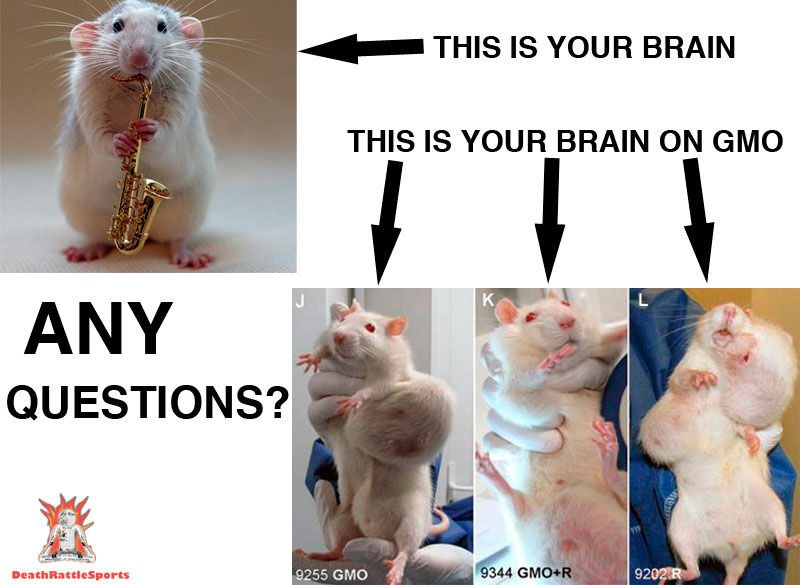
105 Scientists slam GMO-Rat-Study retraction

Image
© naturalindependent.com
What kind of hornet's nest was opened up for the GM industry in view of the retraction of the two year "Long term toxicity of a Roundup herbicide and a Roundup-tolerant genetically modified maize", by G E Séralini et al, published in Food and Chemical Toxicology 2012, 50(11), 4221-31?

According to the article published December 5, 2013 in the Ecologist,
This arbitrary, groundless retraction of a published, thoroughly peer-reviewed paper is without precedent in the history of scientific publishing, and raises grave concerns over the integrity and impartiality of science. These concerns are heightened by a sequence of events surrounding the retraction:
  • the appointment of ex-Monsanto employee Richard Goodman to the newly created post of associate editor for biotechnology at FCT
  • the retraction of another study finding potentially harmful effects from GMOs (which almost immediately appeared in another journal)
  • the failure to retract a paper published by Monsanto scientists in the same journal in 2004, for which a gross error has been identified. [1]