
© BBC
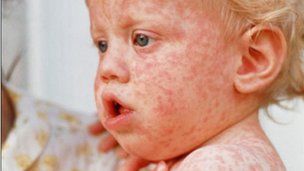
The U.S. Centers for Disease Control reports there was an average of 83 measles cases annually from 2001 to 2011, however for 2014 there have already been 79 cases reported. This is the second year in a row with an increased number of measles cases, in 2013 there were 189 cases of measles reported.
The increase has left health officials and health care centers working to keep infected patients contained and separate from vulnerable populations as they seek treatment.
After an outbreak in northern Manhattan, New York-Presbyterian Hospital sent an email on March 12 to its staff that "nearly 600 patients had potentially been exposed to measles," according to the New York Times. Additionally the Times reported that the email said "many of our clinical staff have never seen a case of measles."
The New York City Department of Health said the outbreak affected 20 people in northern Manhattan. However, the Department said that although people were exposed at different medical facilities, no one has gotten sick from a hospital patient.

















Comment: Vaccines are toxic to the body doing much more harm than good. You can strengthen the immune system naturally through a high fat, low carb diet and by detoxifying your body. For details, visit the diet and health section of our forum.
Almost 800 adverse reactions to swine flu vaccine identified
Exposing the FDA's Vaccine Injury Cover-up: An Interview With Walter Kyle
Shock CDC Study: Flu vaccine ineffective in 91% of seniors