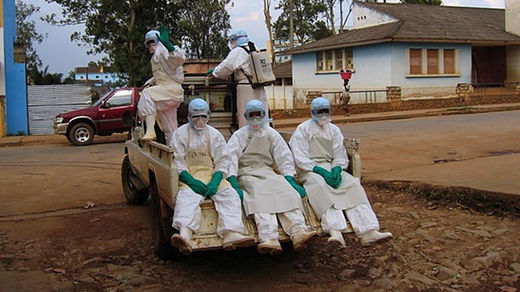
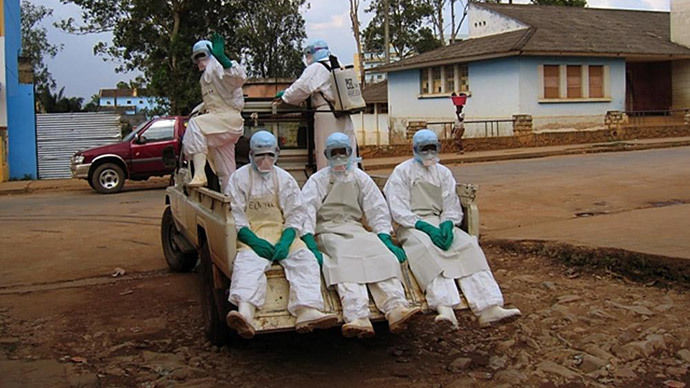
© AFP Photo / Florence PanoussianHealth workers, dressed in head-to-toe "Ebola suits", leaving in a pick-up truck in Uige, about 300km north of the Angolan capital, Luanda, to collect a man dying from haemorrhagic fever.
Local experts had not been able to identify the disease, the symptoms of which are diarrhea, vomiting and bleeding, since they were first identified some six weeks ago. However, lab samples were sent to scientists in the French city of Lyon, who confirmed that it was Ebola.
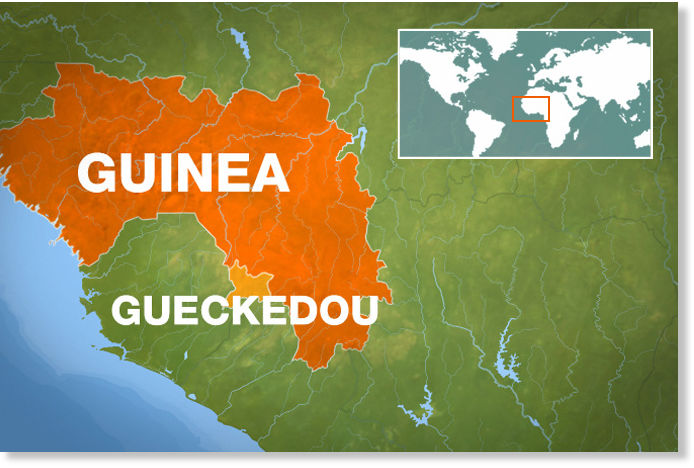
The Guinean health ministry said 49 cases of the disease had been indentified so far with 34 deaths in four prefectures.
"We are overwhelmed in the field, we are fighting against this epidemic with all the means we have at our disposal with the help of our partners but it is difficult. But we will get there," said the Guinean Health Ministry's chief disease prevention officer, Sakobo Keita.
Medical aid group Doctors Without Borders (MSF) said it would send reinforcements to help its teams of 24 doctors, nurses and health experts already in Guinea. The organization has set up isolation units in the southern region of Nzerekore and it is searching for people who may have had contact with infected individuals.
MSF also said it was sending some 33 metric tons of medicines, as well as isolation, sanitation and protective equipment.














Comment: Vascular surgeons write a damning report about lowering cholesterol drugs:
The statin industry is the utmost medical tragedy of all times.
See also:
- No reason at all to limit saturated fat in the diet according to the largest most comprehensive review
- From the Heart: Saturated fat is not the major issue
- Consequences of replacing saturated fats with carbohydrates or Ω-6 polyunsaturated fats: The dietary guidelines have it wrong