Health & WellnessS


Pills

Drugs: Psychiatry's modus operandi - The hidden enemy documentary

It used to be that no one could take psychiatric drugs while in the military. All that has changed in recent years. Today, psychiatric drugging has gone rampant. From 2005 to 2011, the U.S. Department of Defense and the Veterans Administration increased their prescriptions of psychiatric drugs by nearly seven times. That's over thirty times faster than the civilian rate, even though the American military has been steadily reducing troop levels since 2008.

Officially, one in six American service members is on at least one psychiatric drug. That's probably a very low estimate. Psychiatric drugs are handed out not just by psychiatrists, but also by physician's assistants, nurses, medics--they're even passed around from soldier to soldier. And the U.S. government acknowledges they have no way of knowing how many drugs are handed out on the front lines. This rampant drug dispensing has turned very dangerous, especially when so many "qualify" for psychiatry's biggest diagnosis/drugging combo of all.
Image

Document

FDA document reports autism link after tetanus, pertussis & diptheria vaccine

Image
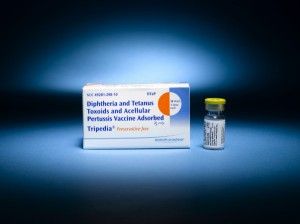
An FDA report from 2005 titled "Diphtheria and Tetanus Toxoids and Acellular Pertussis Vaccine Adsorbed Tripedia" outlines a number of adverse events reported during post-approval use of the Tripedia vaccine, and one of them is autism. (1)

Health-care providers who administer vaccines are required to keep permanent vaccination records, they are also required to report any occurrences (adverse events such as autism) to the Secretary of the US Department of Health and Human Services following immunization of any events.

The report also illustrates that the tripedia vaccine has not been evaluated for its carcinogenic or mutagenic potentials or impairment of fertility. This makes one wonder what other vaccines have not been properly evaluated. Furthermore, it illustrates how a review by the Institute of Medicine (IOM) found evidence for a causal relationship between tetanus toxoid and both brachial neuritis and Guillain-Barre syndrome.

This document just adds more confusion to the topic of vaccines and autism. How can the general public be expected to believe there is no link when more evidence keeps on mounting that suggests that there could be. Why does an FDA document even mention autism and its association with vaccinations?

There is good reason to be confused, this isn't fear mongering.

Syringe

Divisive vaccine proposal abandoned in Colorado

vaccines
© CBS

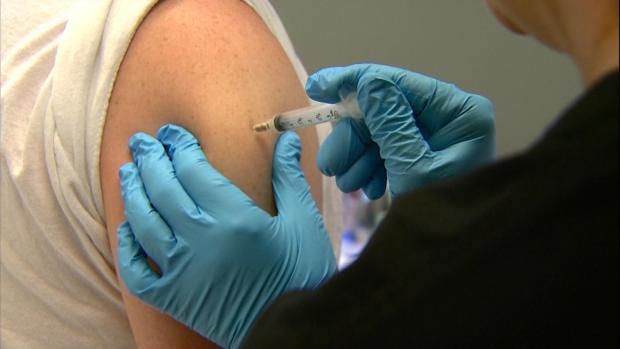
An attempt to improve vaccination rates in Colorado failed Tuesday in the state Senate.

Instead, the Senate approved a bill to enhance vaccine education efforts - a watered-down version of a measure that would have made it harder for parents to opt out of vaccinating their children. Colorado is among a handful of states that allow parents to sign "personal belief" exemptions from required immunizations, and last school year Colorado had the 6th-highest rate of immunization exemption in the U.S. at 4.3 percent.

The bill would have required parents invoking the "personal belief" exemption to watch a video about vaccinations or get doctor clearance for taking the exemption.

Democratic sponsors said the bill stood no chance of passage in the face of strong opposition from some in both parties. They called the watered-down bill the only viable option.

"At this point our decision is, are we happy taking the baby step ... or do we want to give it all up?" said Sen. Irene Aguilar, D-Denver, sponsor of the vaccine measure.

The bill still requires schools to disclose vaccination rates, a safeguard aimed at protecting kids with fragile immune systems. It also directs state health authorities to work on improved communication with parents about vaccines.

Pills

Drug company dominance makes some shrinks very rich, and many patients over drugged

Image
© buquad.com
Psychiatry has a real credibility problem on its hands.


What does it tell us about the state of psychiatry when some of the biggest names in the psychiatric establishment are distancing themselves from psychiatry's diagnostic system and its treatments?

In 2013, National Institute Mental Health director Thomas Insel, citing the lack of scientific validity of psychiatry's official diagnostic manual, the DSM, stated that, "NIMH will be re-orienting its research away from DSM categories." In response, Robert Whitaker, investigative reporter and author of Anatomy of an Epidemic, observed,
"This is like the King of Psychiatry saying that the discipline has no clothes."
"When Insel states that the disorders haven't been validated," Whitaker points out,
"he is stating that the entire edifice that modern psychiatry is built upon is flawed, and unsupported by science... If the public loses faith in the DSM, and comes to see it as unscientific, then psychiatry has a real credibility problem on its hands."

Bomb

Monsanto GMO soy: Scarier than you think

Image
Soybeans are the second-largest US crop after corn, covering about a quarter of American farmland. We grow more soybeans than any other country except Brazil. According to the US Department of Agriculture, more than 90 percent of the soybeans churned out on US farms each year are genetically engineered to withstand herbicides, nearly all of them involving one called Roundup. Organic production, by contrast, is marginal - it accounts for less than 1 percent of total American acreage devoted to soy. (The remaining 9 percent or so of soybeans are conventionally grown, but not genetically modified.)

Americans don't eat much of these lime-green legumes directly, but that doesn't mean we're not exposed to them. After harvest, the great bulk of soybeans are crushed and divided into two parts: meal, which mainly goes into feed for animals that become our meat, and fat, most of which ends up being used as cooking oil or in food products. According to the US Soy Board, soy accounts for 61 percent of American's vegetable oil consumption.

Given soy's centrality to our food and agriculture systems, the findings of a new study published in the peer-reviewed journal Food Chemistry are worth pondering. The authors found that Monsanto's ubiquitous Roundup Ready soybeans, engineered to withstand its own blockbuster herbicide, contain more herbicide residues than their non-GMO counterparts. The team also found that the GM beans are nutritionally inferior.

Comment: Soy is evil:

Soy: Dark Side of a "Health Food"

Soy-Ling of America: Second-hand Soy from Animal Feeds
GMO soy repeatedly linked to sterility, infant mortality, birth defects
The Dangers of Soy Are Real - and Much Worse Than You Might Think
First long term study released on pigs, cattle who eat GMO soy and corn offers frightening results


Heart

Butter is back

Image
Julia Child, goddess of fat, is beaming somewhere. Butter is back, and when you're looking for a few chunks of pork for a stew, you can resume searching for the best pieces - the ones with the most fat. Eventually, your friends will stop glaring at you as if you're trying to kill them.

That the worm is turning became increasingly evident a couple of weeks ago, when a meta-analysis published in the journal Annals of Internal Medicine found that there's just no evidence to support the notion that saturated fat increases the risk of heart disease. (In fact, there's some evidence that a lack of saturated fat may be damaging.) The researchers looked at 72 different studies and, as usual, said more work - including more clinical studies - is needed. For sure. But the days of skinless chicken breasts and tubs of I Can't Believe It's Not Butter may finally be drawing to a close.

The tip of this iceberg has been visible for years, and we're finally beginning to see the base. Of course, no study is perfect and few are definitive. But the real villains in our diet - sugar and ultra-processed foods - are becoming increasingly apparent. You can go back to eating butter, if you haven't already.

Comment: Enjoy Saturated Fats, They're Good for You!

Wrongly Convicted? The Case for Saturated Fat
Animal fats are better for you than vegetable fats
Get Saturated: Four Reasons Saturated Fat is Healthy
The Forbidden Food You Should Never Stop Eating
Eating fat is good for you: Doctors change their minds after 40 years
No reason at all to limit saturated fat in the diet according to the largest most comprehensive review


Ambulance

Ebola outbreak shows no sign of slowing

Image
© Seyllou/AFP/Getty ImagesA view of gloves and boots used by medical staff, drying in the sun, at a center for victims of the Ebola virus in Guekedou, Guinea. The viral haemorrhagic fever epidemic raging in Guinea is caused by several viruses which have similar symptoms — the deadliest and most feared of which is Ebola.
Last week, officials in Guinea expressed optimism. The outbreak of Ebola that had spread into Liberia and beyond appeared to be waning. The number of deaths, which had then numbered 106, had slowed. Travel restrictions had been bolstered. The outbreak, which had sent waves of panic across West Africa, finally seemed under control.

"The number of new cases have fallen rapidly," Rafi Diallo, a spokesman for Guinea's health ministry, told Reuters. On the day of the interview, April 15, there were 159 confirmed or suspected cases of the disease. "Once we no longer have any new cases ... we can say that this is totally under control."

It's eight days later. And the number of those killed by the Ebola killed in Guinea is now 136. Nearly 210 cases have been confirmed. In all, across Liberia and Guinea, 142 people have been killed - and 242 infected - in an outbreak that began months ago in the forested villages of southeast Guinea and shot to the capital city.

Comment: Although animals can certainly be reservoirs, the source may have an altogether different origin. For more information, see:

New Light on the Black Death: The Viral and Cosmic Connection
Black Death found to be Ebola-like virus


Alarm Clock

Ebola outbreak: Death toll tops 140 in Liberia, Guinea

Image
A Guinea-Bissau customs official watches arrivals from Conakry, the capital of Guinea, on Tuesday, April 8. Conakry is being ravaged by an Ebola virus epidemic, and Guinea-Bissau officials are concerned about a possible case inside their borders.
A total of 142 deaths have been reported from the Ebola outbreak in Guinea and Liberia, the World Health Organization said.

The virus is still limited to the two nations, the World Health Organization said Tuesday, despite rumors of it spreading to other countries.

Nineteen suspected cases reported in Sierra Leone tested negative for the virus, it said.

In a statement on its website, WHO said Guinea has reported a total of 208 clinical cases of Ebola, including 136 deaths. Liberia has reported 34 cases, including six deaths.

2 + 2 = 4

Study: antibiotic-resistant MRSA 'Superbug' found in US homes

Image
© Photo by Christopher Furlong/Getty ImagesMethicillin-resistant Staphylococcus aureus (MRSA) is a bacteria that is resistant to many of the strongest antibiotics, and although recent prevalence has been limited to hospitals and nursing homes, a new study of 161 New York City residents who contracted the MRSA infections finds that the these people’s homes were “major reservoirs” for the bacteria strains.
An anti-biotic resistant "superbug" that has long affected hospitals and other health care locations around the world has now found a new "reservoir" location: inside U.S. homes.

Methicillin-resistant Staphylococcus aureus (MRSA) is a bacteria that is resistant to many of the strongest antibiotics, and although recent prevalence has been limited to hospitals and nursing homes, a new study of 161 New York City residents who contracted the MRSA infections finds that the these people's homes were "major reservoirs" for the bacteria strains, HealthDay reports.

Arrow Up

Huge study links aspartame to major problems, sales drop

As concerns about health epidemics plague the nation, demand and sales of diet soda have plunged as consumers try to make better choices. As we reported yesterday, aspartame - the main sweetener for diet soda - is one of the most dangerous ingredients used in our food supply, causing seizures and a host of other health issues.
Image
© eatingrealfood.com
In a new study done over ten years and sampling 60,000 women, it was shown that women who drink two or more diet drinks a day have much higher cardiovascular disease rates and are more likely to die from the disease.

In the largest study done of it's kind, The University of Iowa concluded:
"...[C]ompared to women who never or only rarely consume diet drinks, those who consume two or more a day are 30 percent more likely to have a cardiovascular event [heart attack or stroke] and 50 percent more likely to die from related disease.

'This is one of the largest studies on this topic, and our findings are consistent with some previous data, especially those linking diet drinks to the metabolic syndrome,' says Dr. Ankur Vyas... the lead investigator of the study.

...The association persisted even after researchers adjusted the data to account for demographic characteristics and other cardiovascular risk factors, including body mass index, smoking, hormone therapy use, physical activity, energy intake, salt intake, diabetes, hypertension, high cholesterol, and sugar-sweetened beverage intake.

On average, women who consumed two or more diet drinks a day were younger, more likely to be smokers, and had a higher prevalence of diabetes, high blood pressure, and higher body mass index."
Thankfully this study comes on the heels of reports of already slipping sales of diet soda, one of the largest aspartame markets.