Health & WellnessS


Attention

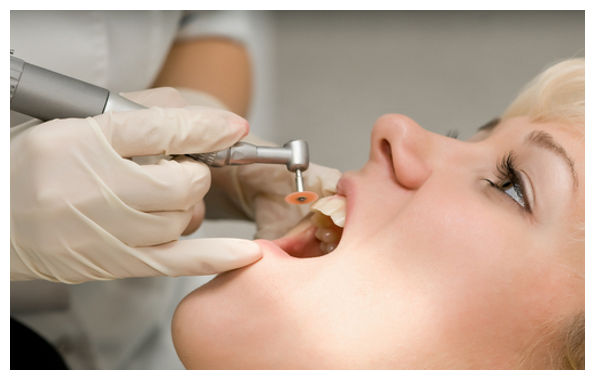
Dental mercury's toxic journey into the environment

"Dental Mercury's Toxic Journey Into The Environment" was narrated by Robert Lamarck and produced as a collaborative effort between The International Academy of Oral Medicine and Toxicology, the website Mercury Exposure and the film You Put What In My Mouth? a documentary about the devastating effects of dental mercury on patients, staff and the environment. Original music score composed by Joshua Myers

The IAOMT has sent a distinguished panel of experts to attend the International Negotiating Committee (INC5) meeting being held in Geneva by the United Nations Environmental Programme. The INC5 is writing a Globally Binding Treaty that will eliminate the use and trade of mercury and mercury containing products. Dental Mercury accounts for 10% of the annual global emissions and therefore is considered a significant contributor. The IAOMT group of experts will represent our position that mercury amalgam is a risk to the environment, dental workers and the general public, and whose use should be discontinued as there are many suitable alternatives available.
Mercury Filings
© UnHealthy Earth

Arrow Up

Ketogenic diet rules! Study compares American Diabetes Association low-fat diet to high-fat ketogenic diet for diabetes

A new study published this month (April 2014) compared two diets with overweight diabetic people.
Image
One group ate the standard recommended diet by the American Diabetes Association, which was a low-fat, high carbohydrate, restricted calorie diet, as per the USDA dietary guidelines for a "healthy" diet. This group was assigned a "registered dietician with several years of diabetes education experience." The group was encouraged to eat a diet that was 45-50% carbohydrates, while restricting calories and fats. As per the study: "the diet includes high-fiber foods (such as vegetables, fruits, whole grains, and legumes), low-fat dairy products, fresh fish, and foods low in saturated fat."

The other group, almost in direct contrast to the ADA diet, was encouraged to eat a a very low carbohydrate, high fat, non calorie-restricted ketogenic diet. Their goal was to reach a state of "ketosis," defined as a blood beta-hydroxybutyrate level between 0.5 and 3 mM, as measured twice a week at home using blood ketone test strips.

So what results did this study find comparing these two contrasting diets?

Comment: The Ketogenic diet rules!

The Ketogenic Diet - An Overview

Solve Your Health Issues with a Ketogenic Diet

Ketogenic Diet (high-fat, low-carb) Has Neuroprotective and Disease-modifying Effects

Beyond weight loss: a review of the therapeutic uses of very-low-carbohydrate (ketogenic) diets

Diet for cancer cure: Starving cancer ketogenic diet a key to recovery


Syringe

Whooping cough evolving in the world thanks to the vaccine

The bacterium that causes whooping cough, Bordetella pertussis, has changed in Australia -- most likely in response to the vaccine used to prevent the disease -- with a possible reduced effectiveness of the vaccine as a result, a new study shows.
Image
© buffaloboy2513 / FotoliaThe bacterium that causes whooping cough, Bordetella pertussis, has changed in Australia -- most likely in response to the vaccine used to prevent the disease.
A UNSW-led team of researchers analyzed strains of Bordetella pertussis from across Australia and found that many strains no longer produce a key surface protein called pertactin.

Comment: This is completely mind boggling: Despite the fact that vaccination made things only worse, the cognitive dissonance is such that they still recommend the vaccine.

Check out FDA document reports autism link after tetanus, pertussis & diptheria vaccine for a collection of scientific studies that should be brought to a court of justice.

Deaths from Pertussis
In the United States from 2012 to 2013 there were over 72,508 reported cases including 9 reported deaths (all infants under 3 months old.) Of the reported cases of pertussis only 635 victims were confirmed as unvaccinated. In England and Wales about 5 deaths per year are recorded.
Source >>

Pertussis Vaccine Reactions
According to the US VAERS, as of the 1st of April, 2012, there were 130,448 reactions reported to a vaccine containing either diphtheria, tetanus or pertussis toxin (pertussis vaccine is usually delivered as a DPT or other multi-vaccine injection) 2,464 of these involved life-threatening reactions of which 2,333 of the children or adults died. 11,498 of those who were reported as reacting to this vaccine had not recovered at the time of the report and may have had life-long-disabilities as a result. VAERS uses a 'passive' adverse reaction reporting system which means that they admit to only collecting between 1 and 10% of all reactions. Therefore, the figures above are likely to represent only a small percentage of the actual damage caused by these vaccines.
Source >>

[I don't know about everyone else but I will take my chance with the Pertussis illness and not the vaccine.]


Health

Rise in the number of MERS virus cases causes concern at the CDC and WHO

arabian health care workers
© Fayez Nureldine/AFP/Getty ImagesFearful of catching the MERS virus, workers wear masks during a soccer match on April 22 at King Fahad stadium in Riyadh
The latest medical acronym to fear is MERS: Middle East Respiratory Syndrome. The virus has killed 83 people in the Arabian Gulf since first emerging in 2012 and now looks as if it could pose a global threat.

This week, the number of new cases rose at a rate that causes concern, the World Health Organization said in a .

There have been only about 300 cases detected worldwide in the past two years. But Saudi Arabia has reported more than 50 in just four days. Cases also turned up in Greece, the Philippines, Malaysia and Jordan. All of the patients were exposed to the virus in the Gulf.

There's no treatment or vaccine for , which kills about 30 percent of those who are infected.

The disease hits like a severe flu. Symptoms include fever, coughing and shortness of breath. Most people who die have another medical condition. It's also possible for someone to become infected but show no symptoms.

Health

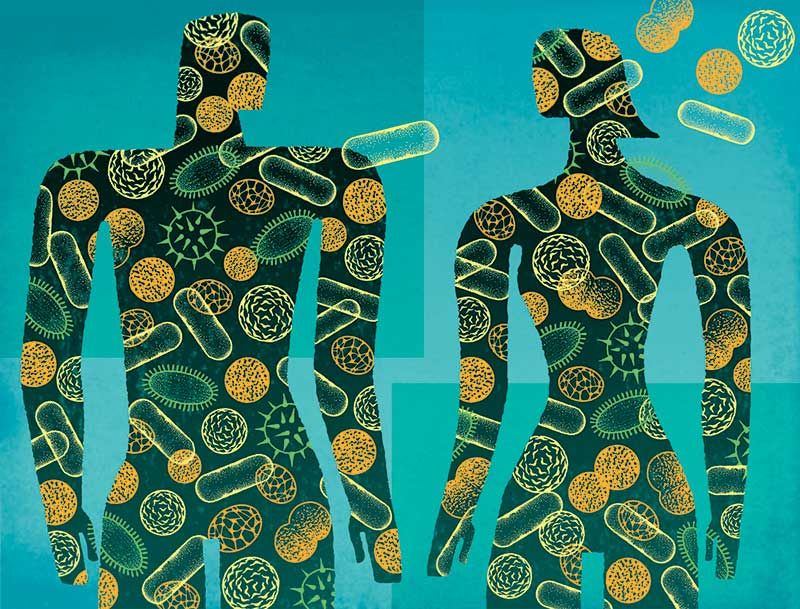
Primal bugs: The hunter gatherer microbiome

Image
© genome.duke.edu
"We barely know what we are doing when it comes to probiotic supplementation," I admitted to my patient, "but we do know that we are on the verge of the most sophisticated understanding of human health and disease since the dawn of medicine, and it comes down to our symbiotic relationship to our body's microbes."

The abuses we have brought upon our gut flora are largely obvious - we have been eating loads of sugar, processed vegetable oils, pesticides, genetically modified foods, and living in a bath of and industrial chemicals.

But what should our microbiome look like?

It turns out that the answer to this question is unlikely to derive from a randomized placebo controlled trial of the latest probiotic on the market. Because we can only guess what the Paleolithic diet actually looked like, the most valuable nutrition data, to my mind, comes from naturalistic surveys such as the invaluable contributions of Weston A. Price who traveled the world assessing the dietary patterns of those traditional societies who were free from the scourge of modern chronic diseases, seemingly brought about by the adoption of Western sweetened, canned, and processed foods. In this way, he was able to identify a through line connecting diverse dietary practices, which included consumption of animal foods, natural fats, and associated minerals and fat-soluble vitamins. These traditional cultures, however, are coming more and more under the influence of industrialized food products and modern medical "care".

Top Secret

How our regulatory system misjudges pesticides and risks our health


Image
© environmentandsociety.org
"A Who's Who of pesticides is therefore of concern to us all. If we are going to live so intimately with these chemicals eating and drinking them, taking them into the very marrow of our bones - we had better know something about their nature and their power." - Rachel Carson, Silent Spring 1962
There is a reason why our springs still have bald eagles, screeching falcons and wave-skimming pelicans on this Earth Day. The reason is Rachel Carson, who died 50 years ago this month - just two years after her book Silent Spring alerted the world to how pesticides like DDT had infiltrated and were poisoning the very building blocks of life.

Today, DDT is banned in the U.S. and many of the creatures it had nearly extinguished have rebounded, but the plague of pesticides Carson warned about continues to infiltrate our lands, our air, our water, and many of Earth's creatures, among them ourselves. It's a plague hard to fight and hard to protect ourselves against - in part because our regulatory system treats the chemicals as if they had rights; safe until proven guilty.

Clipboard

7 Things you had no idea gut bacteria could do

Image
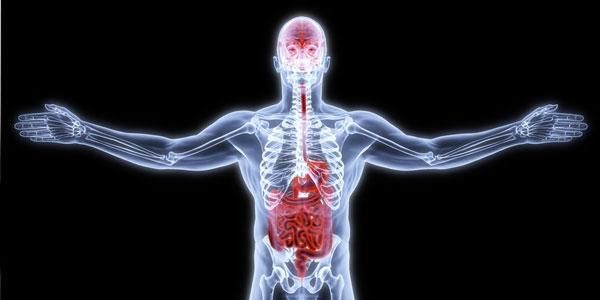
If you're a regular Mark's Daily Apple reader, you probably have at least a generally accurate if somewhat vague notion of the important functions performed by our gut bacteria. They're a "big part" of our immune systems. They "improve digestion" and "eat the fibers and resistant starches" that our host enzymes cannot digest. Yeah, gut bacteria are hot right now. Everyone's talking about them. And, since our host cells are famously outnumbered by our gut bacteria, 10 to 1, we need to be apprised of all that they do.

We don't know everything yet - and we probably never will - but here are some of the most interesting and unexpected functions of our gut bacteria:

They learn from each other.

Bacteria are simple, straightforward organisms. They don't have all the hangups that we mammals do, all the middle men and physiological bureaucracy between "us" and outside information. Bacteria can directly exchange genetic material - defense mechanisms, enzymatic functions, and other characteristics - from other bacteria they come into contact with in the gut. They're very quick learners operating on an entirely different time scale.

Magnify

How the microbes living in your gut might be making you anxious or depressed

Image
Researchers have made some surprising findings.

Microbes are in the news these days. Specifically, the microbes that live in and on the human body, making up our "microbiome." Michael Pollan made a splash with a column titled "Some of My Best Friends are Germs" about a year ago, and now Martin Blaser, director of the Human Microbiome Project at NYU, has published a book called Missing Microbes: How the Overuse of Antibiotics Is Fueling Our Modern Plagues.

In a short period of time, bacteria, fungi and other microbes have gone from enemy to friend in the public consciousness.

But in addition to the many studies finding out about the numbers and diversity of the microbes with whom we share our bodies and their roles in our nutrition and immune function, some researchers have made some surprising findings: the bugs in your gut might actually impact your emotions.

Alarm Clock

Finally catching up - Could the Black Death actually have been an Ebola-like virus?

Could the Black Death Actually Have Been an Ebola-like Virus?
Image
The Triumph of Death is an oil panel painting by Pieter Bruegel the Elder painted c. 1562. It has been in the Museo del Prado in Madrid since 1827.
Things seem to be looking up for rats. After more than 500 years, rats may be off the hook for causing the Black Death, the horrible plague that claimed up to 60% of the European population. In virtually every textbook the Bubonic Plague, which is spread by flea-ridden rats, is named as the culprit behind the chaos. But mounting evidence suggests that an Ebola-like virus was the actual cause of the Black Death and the sporadic outbreaks that occurred in the following 300 years.

At the forefront of this theory are two researchers from the University of Liverpool, Dr. Christopher Duncan and Dr. Susan Scott. Let's look at six small pieces of this puzzle.

Comment: Check out this SOTT focus, first written in 2011:

New Light on the Black Death: The Viral and Cosmic Connection

For more information, see:

Black Death found to be Ebola-like virus
Ebola outbreak shows no sign of slowing


Beaker

SOTT Focus: 'Eppur si muove' - Like it or not, homeopathy works!

Image
"Eppur si muove" - And yet it moves - were the words Italian mathematician and physicist Galileo Galilei allegedly uttered after being sentenced by the Inquisition for heresy. Galileo's heresy was his opinion that the Sun lies motionless, that the Earth is not at the centre of universe, and that it moves. Unlike those around him who were quite happy to blindly follow dogma concerning the universal order, Galileo observed the world around him, measured different parameters and finally, after he analysed enough collected data, worked out that the Earth is moving around the Sun. Galileo was certainly luckier then Giordano Bruno, another Italian mathematician, who was burned at the stake in 1600 for advocating the same idea.

People who attack homeopathy these days do so with the same fervor as the Inquisitors. With their small, medieval minds, they repeat the same nonsense and misconceptions about homeopathy, over and over, without making the slightest effort to conduct their own research or empirical quest. I have to admit that my first reaction to homeopathy was of a similar myopic nature, my 'conventional scientific mind' immediately dismissed it as nonsense, and I had no desire to study the subject further.

Enter Spark, the appropriately named dog

But then one day Spark visited my practice and everything changed.

It took me a few moments to realize that Spark was not some strange, hairless breed I had never encountered before, but rather a West Highland Terrier. He had only a few tufts of hair remaining, mostly on his head, chest and the tip of his tail. The rest of his skin was completely bald, blackish and covered with oozing sores and scabs. I was the fourth veterinarian to see Spark. After learning his medical history and previous treatments, it became obvious that there weren't many options left to try. He had already been treated with several anti-parasitic medicines, tested for different allergies and was eating nothing but hypoallergenic dry-foods. None of this had worked. He'd also been on several types of antibiotics and steroids, as well as a course of fungicidal medicine, all to no positive effect whatsoever. In fact his health kept deteriorating.