The Department of Disaster Prevention and Mitigation (DDPM) in Thailand reports that flooding in southern provinces over the last few days has affected over 20,000 households.
DDPM said heavy rain from 05 April 2022 caused damages and flooding in the provinces of Chumphon, Nakhon Si Thammarat, Narathiwat, Phatthalung and Surat Thani.
A total of 21,669 households have been affected (estimated 108,345 people) in total. By far the worst affected province was Nakhon Si Thammarat, where 20,376 households from 369 villages in 12 districts were affected. The City of Nakhon Si Thammarat recorded 183.8 mm of rain in 24 hours to 04 April and 117.1 mm the following day.
In Surat Thani, 473 families from 36 villages in 2 districts were affected.
There have been no reports of injuries, fatalities or displacements, however and flooding has started to subside in some areas, aided by the deployment of water pumps. Aid and relief supplies have been distributed in some of the affected areas.
In some districts of Maharashtra, including Chandrapur, Yavatmal, Nagpur, Buldhana, Washim, Akola, Wardha, and Bhandara many people were stunned to see objects like electric bulbs leaving blazing marks in the sky during the nighttime on Saturday.
On the same night, people of a village in Sindewahi tehsil of district Chandrapur also reported a metal ring falling on an open plot. In another village of the same tehsil, on the same night, all the people also saw a ball which had fallen in a pond.
According to meteorologist and physicist Professor Kiran Kumar Johre, the three phenomena are also completely unrelated.
Rebecca Stevenson komonews.com Wed, 06 Apr 2022 11:32 UTC
Hello Snow Lovers,
if you aren't already knee deep in powder here's why you should be!
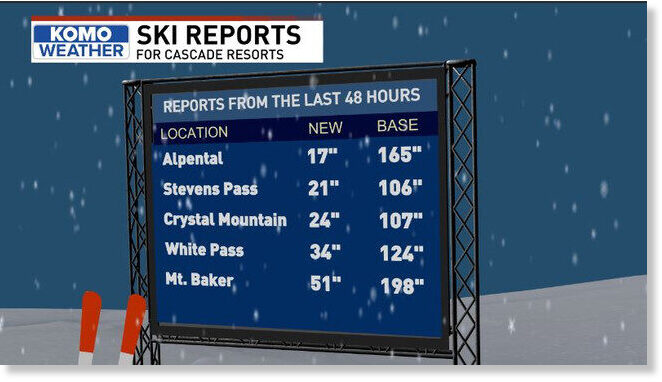
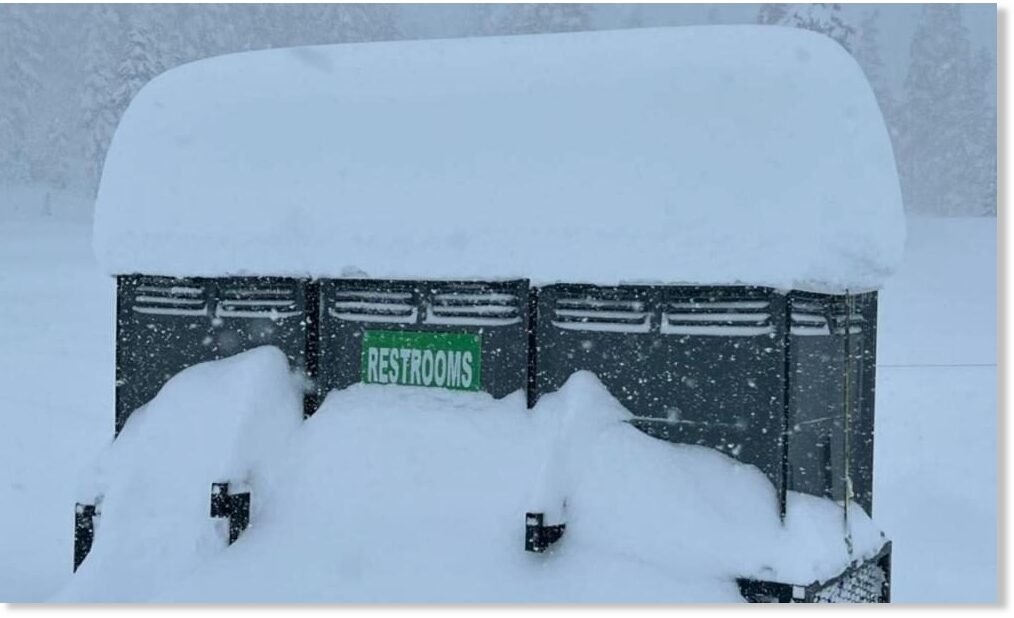
All the wind we just experienced in the last two days, (April 3rd and 4th), carried in plenty of new snow. Here's a round-up of 48-hour accumulation along with how much longer the ski resorts keep the lifts going.
Not unprecedented but certainly unusual! A Spring storm that brings two, to more than three, feet of snow to the Washington Cascades in the beginning of April! It's the storm that blew in wind gusts from 35 to 64 mph in the lowlands and blasted the Cascades with heavy snow and a wind gust measured at Mount Rainier of 90 mph.
Residents speculating about cause of the die-off, with similar reports in Labrador
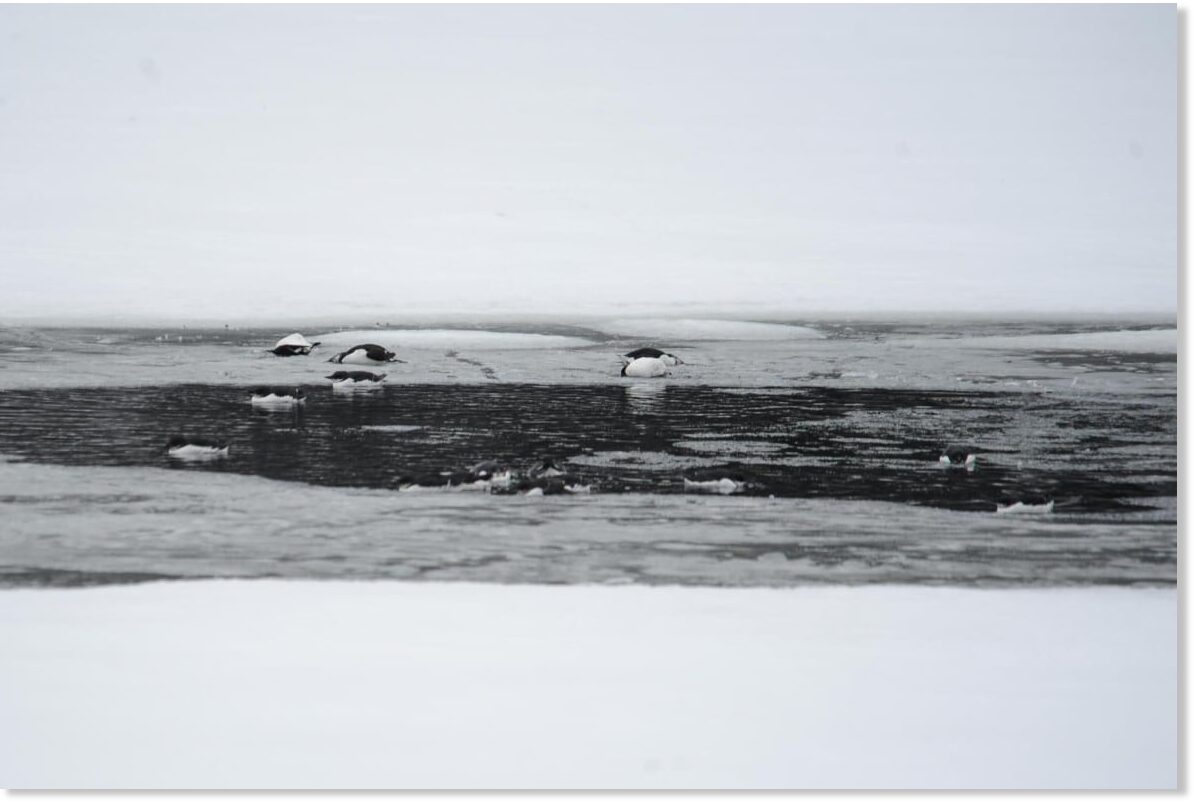
Dead seabirds are showing up by the hundreds on the ice and on shore near the town of Hampden in western Newfoundland, leaving residents and biologists stumped and searching for the reason why.
Longtime resident and murre hunter Gary Gale told CBC News on Friday he has never seen an event of this magnitude before. He said birds began to fly into the bay about a week ago — and within a few days they began to die.
"[It's] unbelievable," Gale said. "Several years ago it was common to see seabirds that would pick up oil if you had an oil spill and die from picking up the oil, but I did make a check on some of the birds close to shore and I didn't see any oil in the feathers."
Gale said residents believe the birds — which so far seem to be entirely murres — are dying of starvation.
Just when everybody thought that winter was over, Mt. Baker Ski Area, WA picked up a casual 51″ of snow over the 48 hours! Baker is describing the conditions as one of "the all time best April storms".
Mt. Baker is still boasting a 198″ snow base, and it just keeps on snowing. The ski area has unofficially totaled 551″ as of April 4th.
We're wishing all of you fortunate to ski/ride this spring storm the best! Have fun out there, friends.
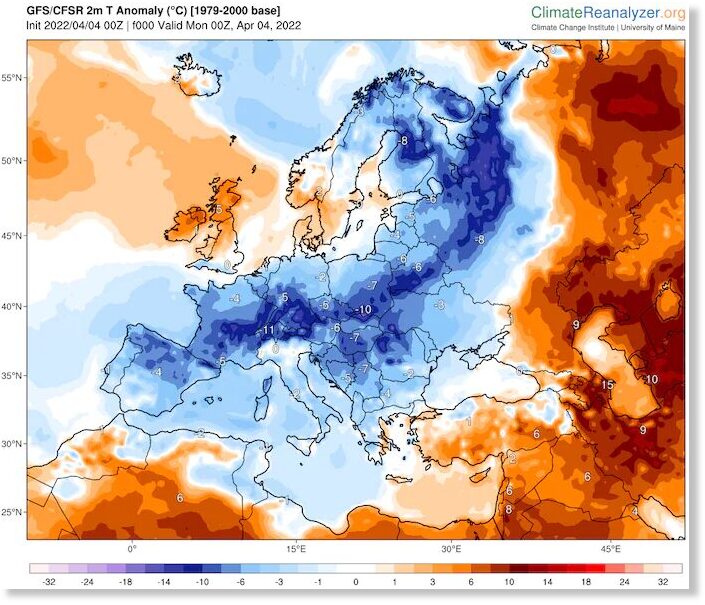
A historically intense April cold snap has descended on Europe, with temperatures plummeting to 20 to 30 degrees (11 to 18 degrees Celsius) below normal. The record-breaking cold has triggered harsh frosts, shocking early-blooming plants and crops in several countries.
The unseasonably cold weather, which arrived over the weekend, follows warmer-than-normal temperatures in previous weeks that caused a rapid greening of flora — particularly in France's agricultural regions.
"It's still difficult to evaluate the [damage] caused by the frost, but orchards ('stone fruits' such as plum trees, apricot, cherry) and vineyards have been impacted," Jean-Marc Touzard, director of research at the French National Research Institute for Agriculture, Food and Environment (INRAE), said in an email.
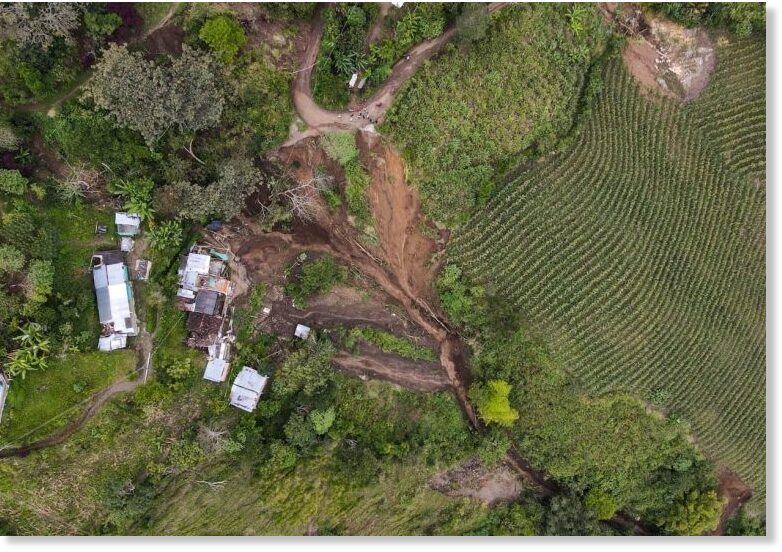
After intense rainfall that began in the early hours of this 02 April 2022, a landslide occurred in the village of Cocha Blanca, in the municipality of Ancuya in western Nariño. Two houses in the village were completely destroyed, killing or injuring the residents inside. According to the preliminary report known by Nariño's Administrative Directorate for Disaster Risk Management (DAGRD), the event left 3 people dead and 5 people injured. Landslides in the area also blocked important roads.
Jhon Rojas, the Governor of Nariño, along with a team from DAGRD Nariño visited the area to support the coordination of an emergency response. The governor said heavy rainfall had increased the risk of landslides in rural areas, putting families at risk. Some have evacuated their homes as a precaution. The governor added that assistance has been provided to affected communities and work on clearing or repairing roads has begun.
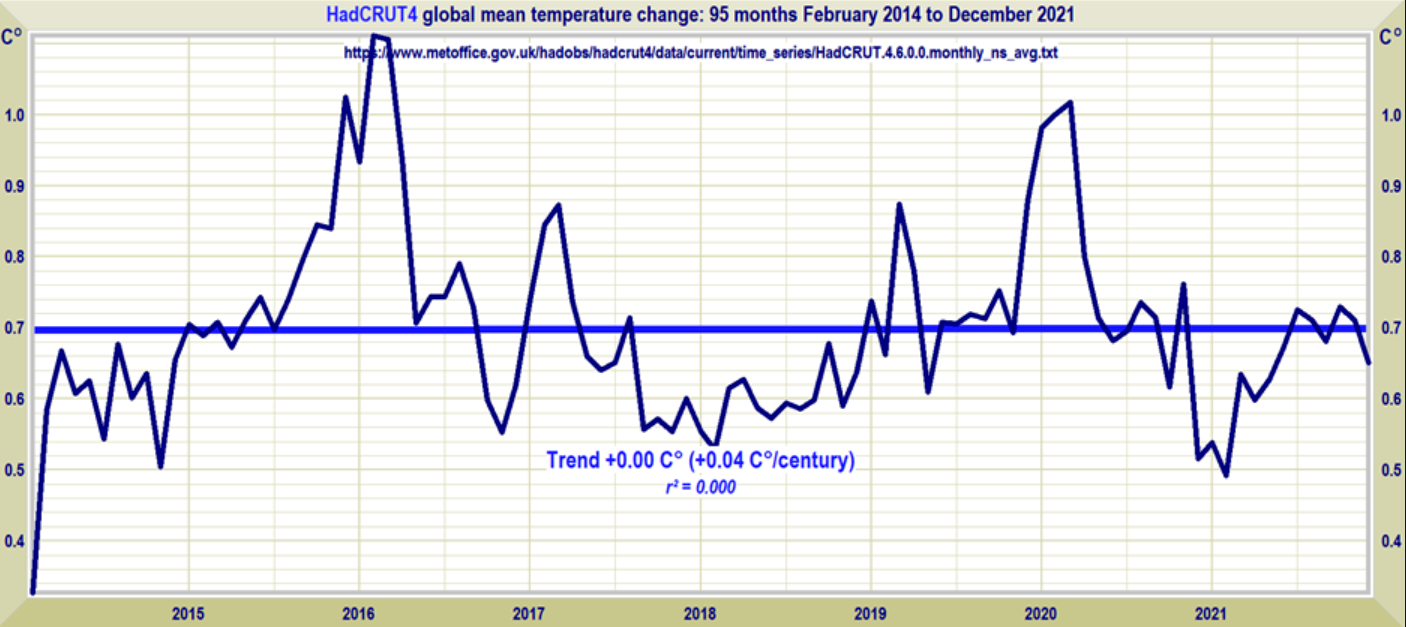
Another month has been added to the standstill in global temperature, according to accurate satellite measurements compiled by the University of Alabama and NASA scientist Dr. Roy Spencer (see above). The pause is now 90 months long. In fact a small downwards movement is now discernible, since the trend measured over the last 90 months is minus-0.01°C, which equates to minus-0.14°C a century. It must be noted, however, that such small movements, although widely used by climate alarmists in the upwards direction, are within the margin of error.
As I have noted in recent articles, the Spencer data has been kicked off Google AdSense for "unreliable and harmful claims". The move demonetised Dr. Spencer's monthly satellite update page by removing all Google-supplied advertising. Google says it will ban all sites that are sceptical of "well established scientific consensus". Agenda-driven commentators almost invariably ignore satellite data, which has consistently shown less warming than surface measurements.
Comment: By the way, that's over SEVEN YEARS of no signs of catastrophic warming. Greta and Gore really need to give it up.
Comment: Mt. Baker in Washington reporting 51 inches of spring snowfall in 48 hours