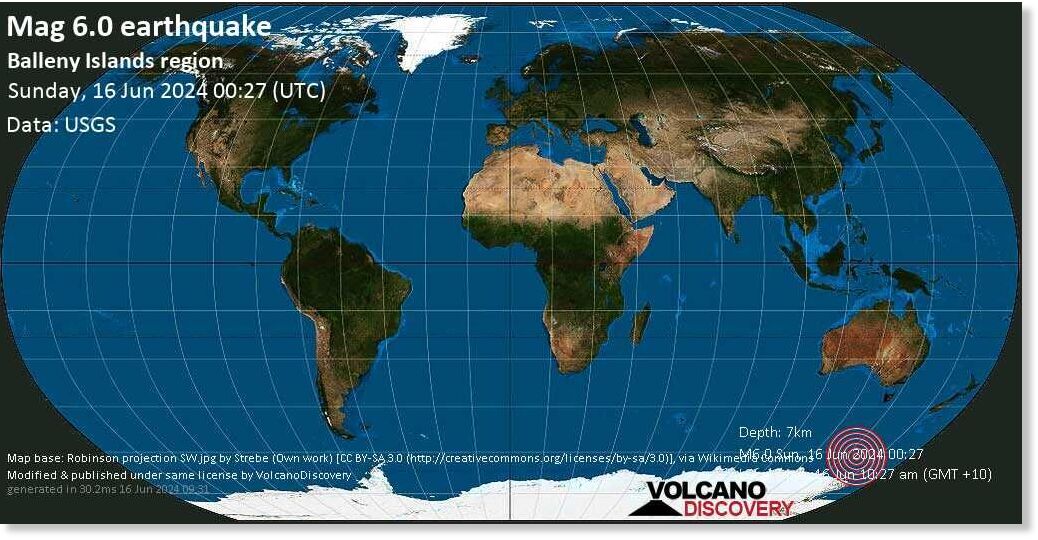
A very strong magnitude 6.0 earthquake occurred in the South Pacific Ocean near the coast of n/a in the morning of Sunday, Jun 16, 2024 at 10.27 am local time (GMT +10). The quake had a very shallow depth of 7 km (4.3 mi) and was not felt (or at least not reported so).
EARTHQUAKE DETAILS
Date & time Jun 16, 2024 00:27:57 UTC - 10 hours ago
Local time at epicenter Sunday, Jun 16, 2024, at 10:27 am (GMT +10)
Status Confirmed (manually revised)
Magnitude 6.0
Depth 7 km Epicenter latitude / longitude 60.9993°S / 154.2552°EInternational Territory (not near any country)
Seismic antipode 60.9993°N / 25.745°W
Shaking intensity VII Very strong shaking near epicenter
Felt 0 reports
Primary data source USGS (United States Geological Survey)
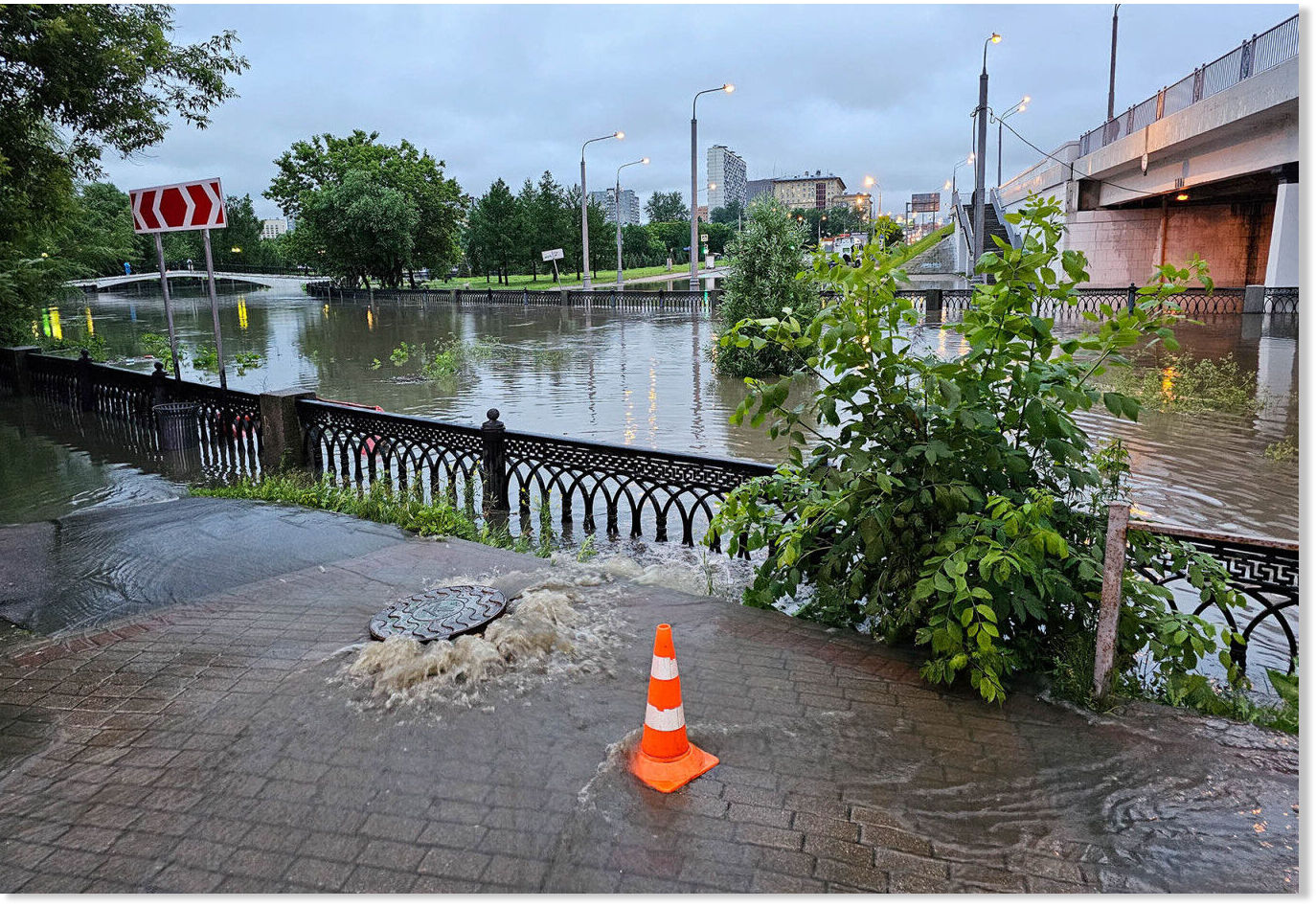
Parts of Moscow were flooded due to heavy rainfall on Thursday, disrupting public transport and submerging cars and homes across the Russian capital.
The rains caused one of the city's rivers, the Yauza, to overflow near Aqueduct Park in northeastern Moscow.
Muscovites could be seen navigating through thigh-deep water, while ducks from the Yauza swam along pedestrian paths, local media reported.
In the Moscow suburb of Shchyolkovo, two people were reportedly killed by a fallen tree.
The Moscow region has been hit by three "abnormally" rainy days in a row, with some districts in the capital receiving nearly a month's worth of rain, the Phobos weather center said.
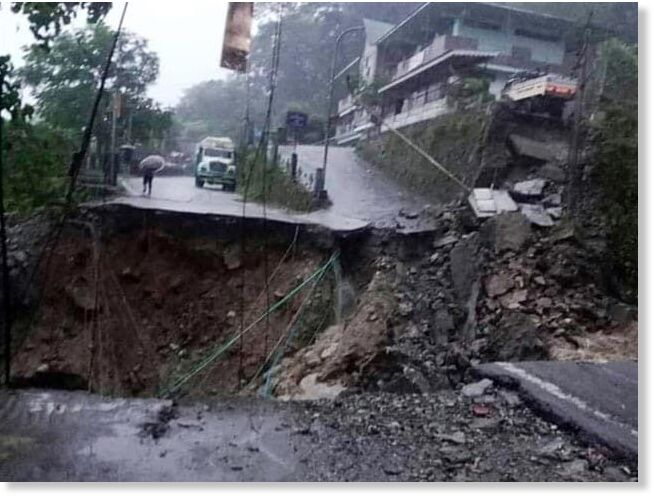
Incessant rains caused by a cloudburst in Sikkim's Mangan district - measuring over 220.1 mm - on Wednesday night killed nine people, the state's government said.
According to the state's tourism department, over 1,200 domestic tourists and 15 foreign nationals - 10 from Bangladesh, three from Nepal, and two from Thailand - are stranded in the Lachung village, some 50 km from Mangan town.
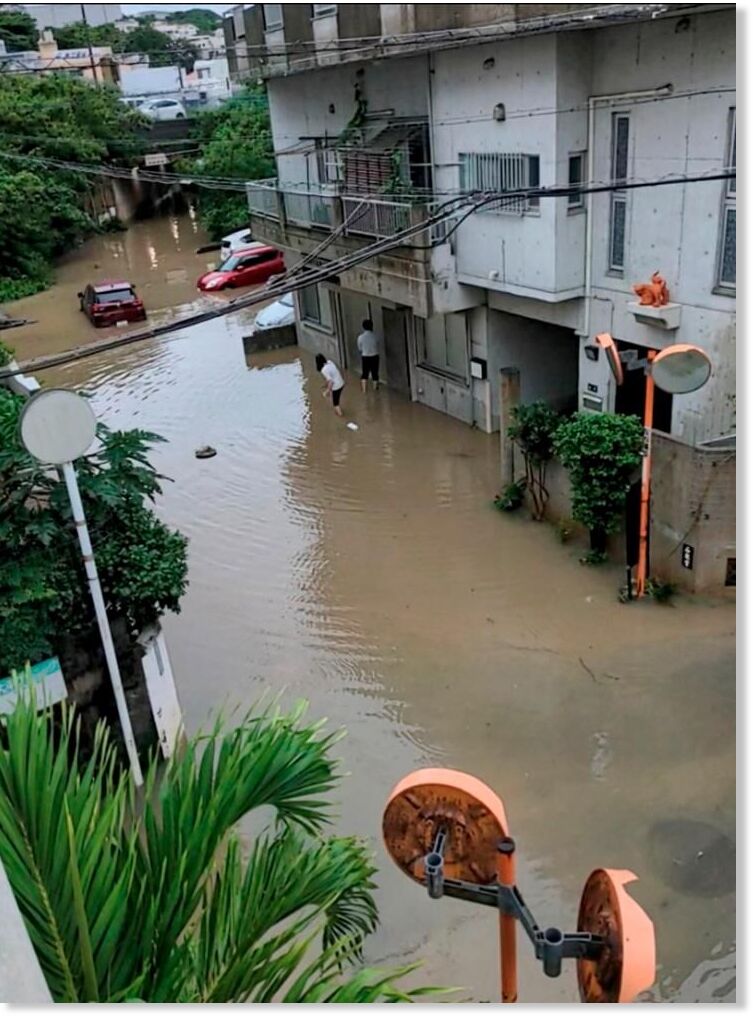
Evacuation for nearly 10,000 Japanese residents due to the threat of landslides amid heavy rain has been announced in the city of Tokunoshima in the south-western Kagoshima Prefecture, reported Sputnik.
According to Japanese news broadcaster NHK on Saturday, a fourth of five possible threat levels has been declared, which means a recommendation to evacuate to a shelter while evacuation is still possible.
The next highest fifth level of danger means that urgent and immediate measures must be taken to save one's own life, even in cases where it is no longer possible to move to an evacuation point for safety reasons. In particular, the population is urged to take shelter above the second floor and choose the safe place without going outside.
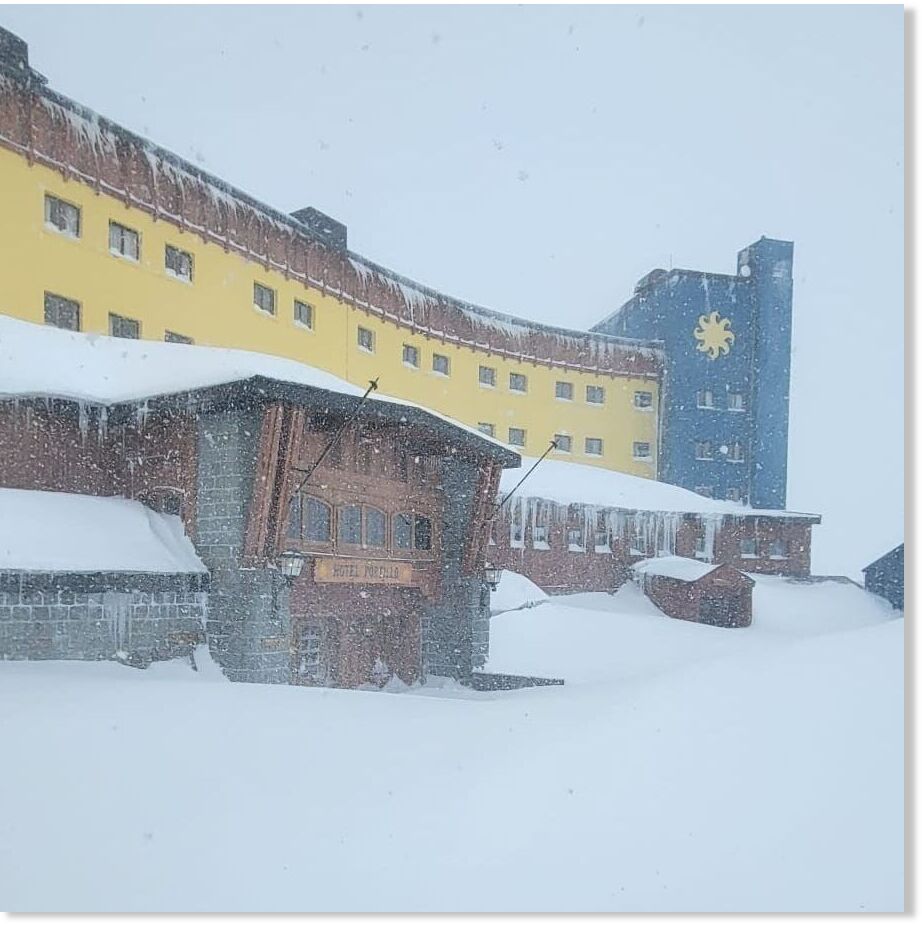
Chile's Portillo has received 113cm (nearly 4 feet) of snowfall in the past 24 hours.
Whilst recently opened ski areas in Australia and New Zealand struggle for snow cover, across the Pacific resorts in Argentina and Chile are reporting more huge snowfalls, with some receiving over a metre (nearly 4 feet) in 24 hours.
The latest falls in the Andes and other mountainous parts of the region are just the latest in what has now been months of cold and snowy weather which means some centres have already seen over 3m (10 feet) of snowfall a week before the season was due to begin, next weekend.
It means its already had more snowfall a week before the season begins than it has received in total in some recent poor snowfall seasons. Because of all the snowfall though, most resorts in the region have open anything between two and five weeks early for the season.
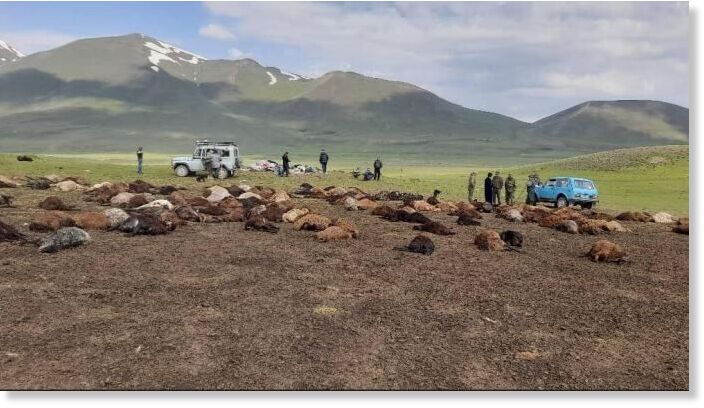
Lightning struck a herd of small cattle in eastern Tajikistan, killing a shepherd and 200 head of sheep and goats, the Emergencies Committee under the Government of Tajikistan said on June 14.
The tragedy reportedly took place at 02:46 am on June 13 in Sangvor district (Rasht Valley in eastern Tajikistan) in the summer pasture located in Karashura area bordering Lakhsh district, where three shepherds from Dousti district of Khatlon province were herding small cattle.
The shepherds pitched a tent and installed a solar photovoltaic panel above it. They reportedly didn't remove it during the storm and it was the panel that became the "conductor" during the thunderstorm and lightning, according to the Emergencies Committee.
One shepherd was reportedly killed and two others sustained various injuries from a lightning strike.
Leonardo Benassatto Reuters Wed, 12 Jun 2024 11:44 UTC
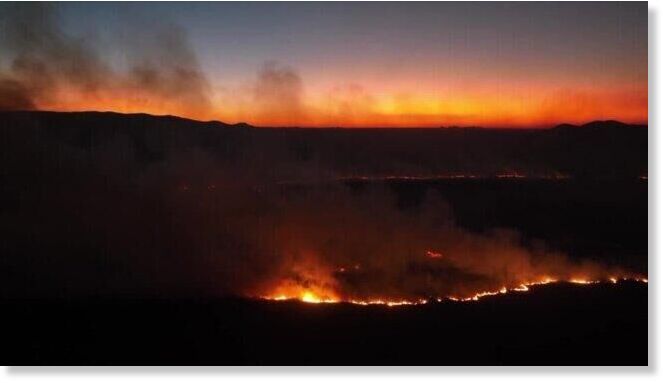
As Jose Cleiton and Brandao Amilton ride their horses into the vastness of the Pantanal grassy wetlands of Brazil, a wall of smoke towers from the horizon far into the sky above.
The worst of the dry season is still far off, but already these Brazilian wetlands are so dry that wildfires are surging.
The number of Pantanal fires so far this year has jumped tenfold from the same period last year according to Brazil's National Institute of Space Research (INPE).
"It's hard to breathe. It's hard for newborn children. The heat gets stronger and stronger," said Amilton, a local fishing guide. "The Pantanal is already hot and it gets hotter, drier, with smoke, the weather gets very bad."
The men guide cattle across the flood plain, hoping for a better chance of survival. "The way the fire is coming, it could surround them and burn them to death," said Cleiton, a farmer.
A cold front crossed Slovenia today, which brought lower temperatures, but also, as forecast by meteorologists, June snow in higher areas.
"Winter in the hills hasn't said goodbye yet. It is snowing at the highest meteorological station in Kredarica.
"Snowman was formed from the new wet snow, which will grace the meteorological camera in the next few days," wrote the meteorologists of the Slovenian Environmental Agency of the RS (Arso) on the social network X.
Despite heavy rainfall and a gloomy start to the week, tomorrow, according to the announcements, it will be sunny in this country, with significantly higher temperatures.