At least 3 people have died and six more are missing after torrential rain and severe flooding in parts of Indonesia since 06 March, 2019.
Flores Island
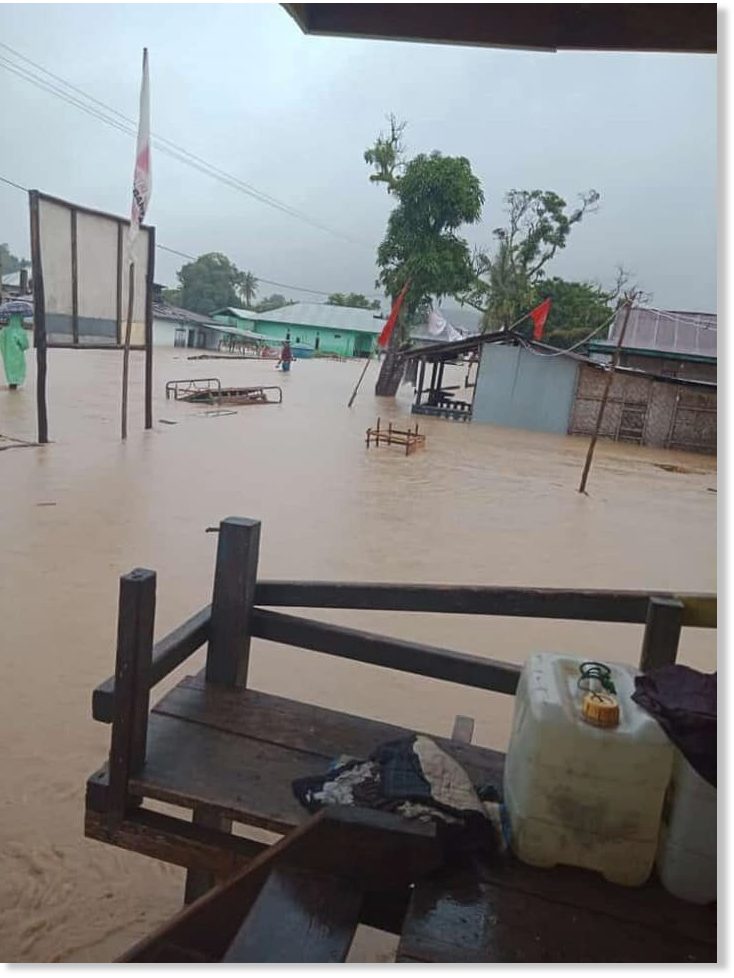
Heavy rain in East Nusa Tenggara Province on Flores Island caused flooding and landslides in the Komodo and Mbliling Districts of West Manggarai Regency early on 07 March, 2019.
According to a report by national disaster agency spokesman Sutopo Purwo Nugroho, at least 2 people have died, 6 are still missing and 3 reported injured.
Three homes and a bridge have also been severely damaged and important transport routes blocked by landslides.
As of 08 March disaster authorities were still carrying out evacuations and damage assessments.
The collapse of an unlicensed gold mine in Indonesia's North Sulawesi province has buried dozens of people, a disaster official said.
Emergency personnel used their bare hands and farm tools in a desperate attempt to reach victims calling for help from beneath the rubble.
Local disaster official Abdul Muin Paputungan said one person was confirmed dead and 14 people with injuries ranging from light to serious had been rescued.
As many as 60 people were buried, he said.
Comment: Update: The New York Times on the 5th of March reports:
A weeklong, round-the-clock search for victims of a landslide that may have buried dozens of miners in Indonesia is still underway, a rescue official said Tuesday, as the confirmed death toll rose to 17.
The landslide, which struck on Feb. 26 on the island of Sulawesi, left an unknown number of miners trapped underground in makeshift holes. As of Tuesday, rescue personnel combing the steep jungle terrain with earth movers had found 18 survivors, and the death toll had risen from nine a day earlier.
"We have no exact number of the people down there, or even how many small holes there are," Yusuf Latif, a spokesman for Indonesia's search and rescue agency, said by telephone.
He added that in addition to 17 dead, the authorities had found body parts that they were working to identify.
They were also searching for the owners of about 50 motorcycles that have been parked near the mining site for days, he said.
Sutopo Purwo Nugroho, the spokesman for Indonesia's disaster management agency, told reporters in a WhatsApp message on Monday that local estimates of the number of miners working at the site ranged from about 30 to 100.
Mr. Sutopo said pinpointing the number of miners buried by the landslide had been difficult partly because some might have been trapped in smaller offshoots of the site's primary mining pit.
Death toll from a landslide in a smallholder mining site in Bakan Village, Bolaang Mongondow District, North Sulawesi Province, rose to 27 as of Wednesday morning.
The joint Search and Rescue (SAR) team found another body on Wednesday at 8:18 a.m. local time and sent it to Kotamobagu Hospital for identification.
Tens of gold miners were buried as a mining site collapsed in Bakan Village on February 27, 2019. Eighteen miners survived the disaster.
"Tens of gold miners are buried by a landslide in an illegal gold mining site on February 27, 2019, at 9 p.m. local time," Sutopo Purwo Nugroho, spokesman of the National Disaster Mitigation Agency (BNPB), noted on his Twitter account, last Wednesday.
Deputy for Operation, Search, and Help of the National Search and Rescue Agency (Basarnas) Nugroho Budi Wiryanto had earlier remarked that the SAR team will continue to evacuate those still trapped in the mining site.
"We will continue to evacuate them using heavy duty equipment," he noted.
Wiryanto said he was unaware of the exact number of people still trapped in the mining site.
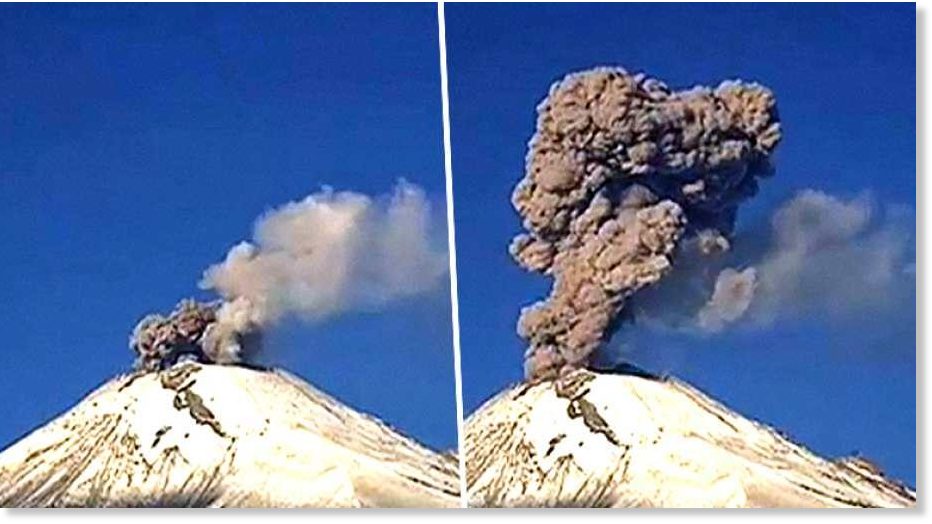
Mexico's mighty Popocatepetl volcano erupted on Wednesday (March 06), sending a plume of gas and ash 1,200 meters (3,937 feet) into the sky, according to Mexico's disaster prevention agency.
Images showed the ash plume being discharged into the sky high above the snow covered slopes of the mountain. The eruption occurred at 8:26 a.m. on Wednesday according to Mexico's National Disaster Prevention Center.
Servando de la Cruz, a researcher at Mexico's National Autonomous University, said the volcano's current activity, while spectacular, was within the limits of recent historical eruptions and the volcano was being monitored by authorities for any heightened activity.
Popocatepetl is 5,426 meters (17,802 feet) tall and is the second highest mountain in Mexico and the fifth highest in North America.
Melanie Steinberg 9and10news.com Wed, 06 Mar 2019 19:22 UTC
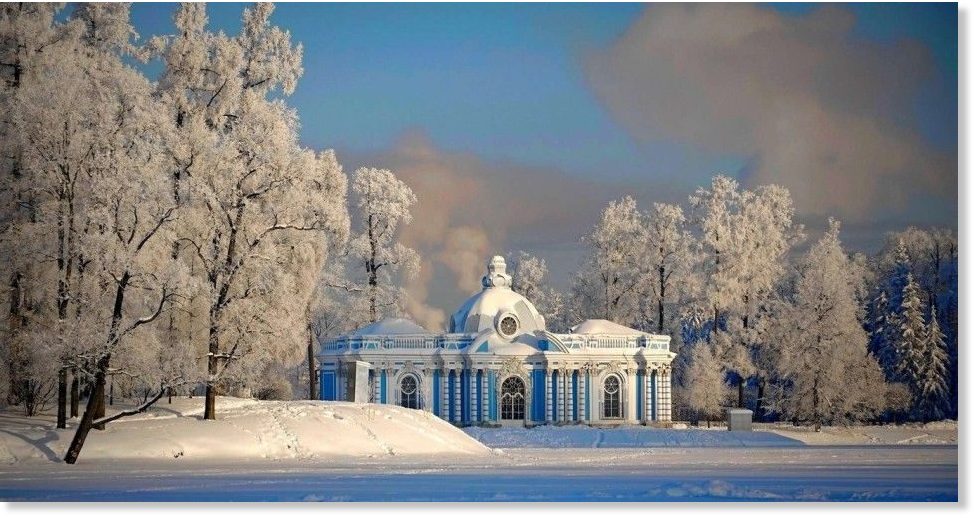
It's only the 6th day of March but records have already been broken because of the cold temperatures across the West, Midwest and Plains!
This cold snap was caused by a blocked jet-stream pattern in the Arctic. That just means an area of high pressure stretching from the Gulf of Alaska to the Canadian Arctic forced the bitter cold air south and into the United States.
Here in Northern Michigan, Houghton Lake set a record low on March 4, 2019 of -11 degrees. This broke the old record of -7 degrees set back in 2016.
Record lows were broken for four different cities in Montana on March 4, 2019. Elk Park saw the coldest temperature with a record breaking low of -46 degrees! Miles City saw -31 degrees, Eureka saw -23 degrees and Livingston saw -27 degrees.
And still growing, compared to its 50% average winter cover.
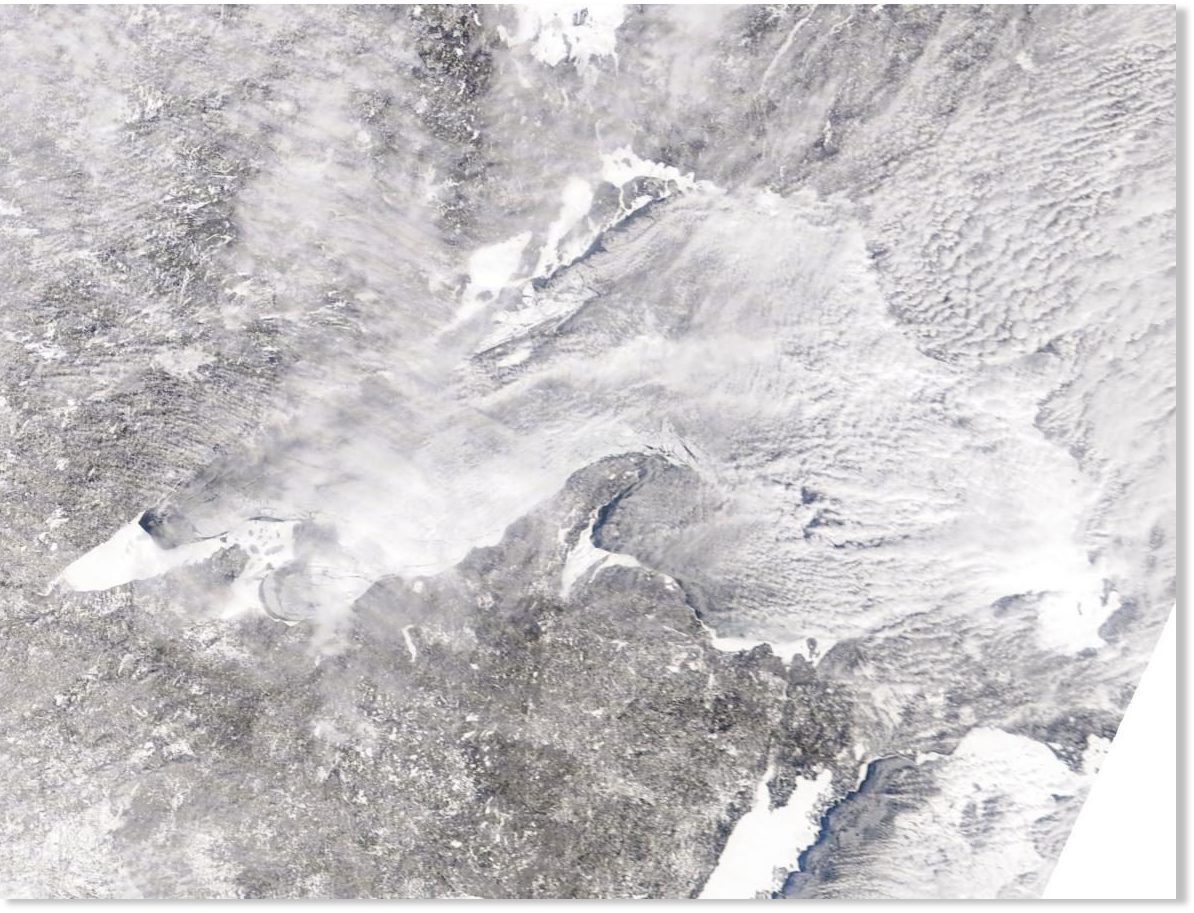
The extreme cold this winter helped cover more than 90 percent of Lake Superior in ice this week. The National Oceanic and Atmospheric Administration reports ice cover approached levels not seen in four years.
Lake Superior was around 91 percent covered in ice Monday, said Jia Wang, ice climatologist with the NOAA Great Lakes Environmental Research Laboratory. Ice cover was only expected to be around average, or about 50 percent, this winter.
"We didn't expect this much ice cover," Wang said.
Last year, maximum ice coverage topped out at 77 percent. Wang noted the polar vortex brought colder temperatures that caused rapid freezing on the lake from late January through February. As of Monday, only the southeastern corner of the lake near Michigan's Upper Peninsula had open water.
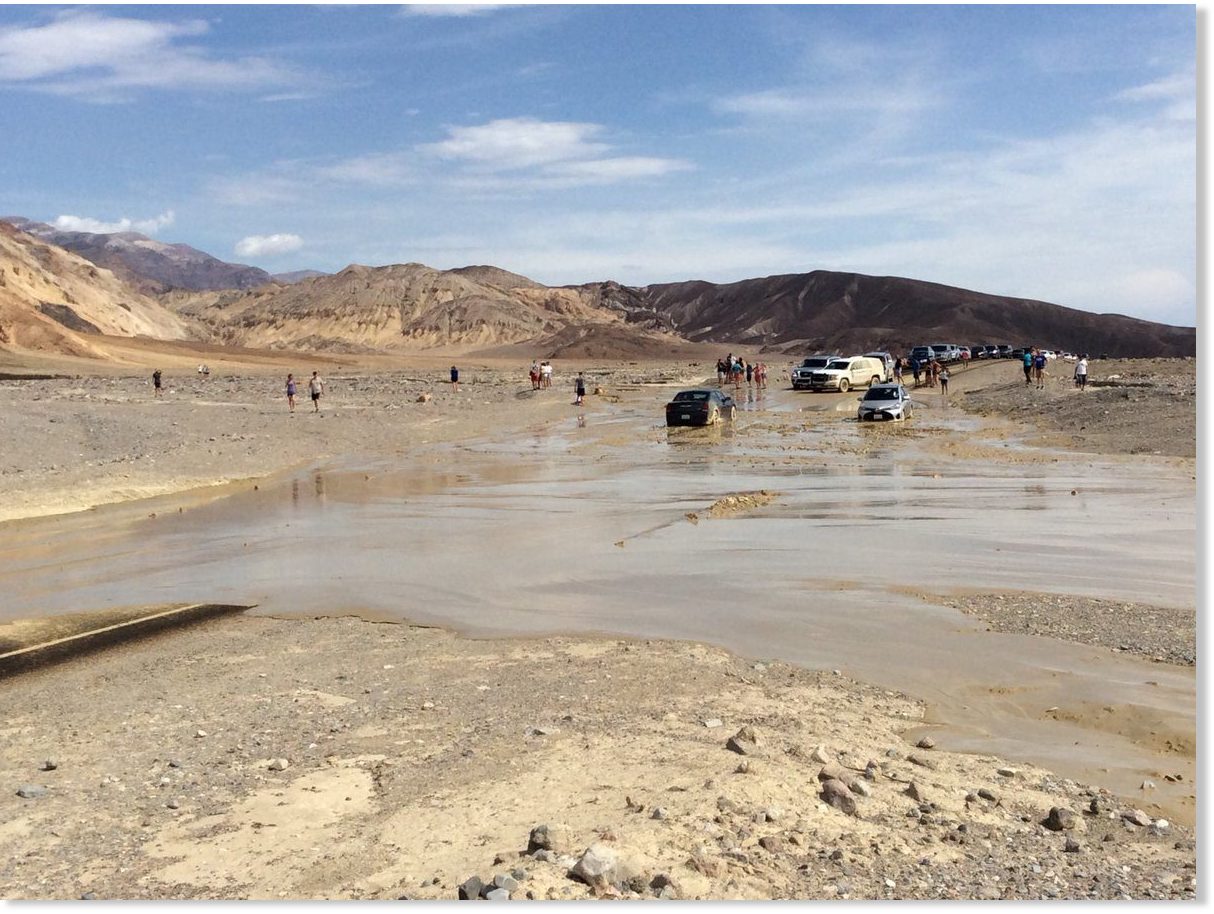
Flooding struck America's driest location, Death Valley, California, on Wednesday morning, and this weather paradox is not as unusual as you might think.
Death Valley averages just 2.36 inches of rain a year. It picked up 0.64 inches of rain in the 24 hours ending 4 a.m. PST on Wednesday, or about 27 percent of its annual average. That 24-hour total is also more than double the park's March average rainfall of 0.3 inches.
The soaking rain came from a storm system tapping an atmospheric river as it moved into California Tuesday night and Wednesday.
Flooding swamped State Route 190 in the park between Furnace Creek and Cow Creek, the California Highway Patrol reported.
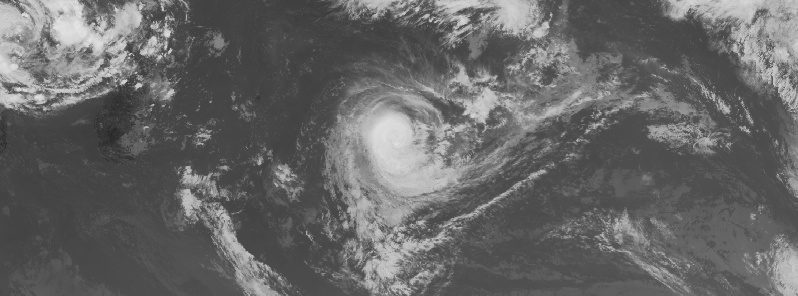
Intense Tropical Cyclone Haleh has helped the 2018-2019 southwest Indian Ocean tropical season move into the record books.
Haleh intensified into an intense tropical cyclone and become the sixth storm to do so this season, tying for the most ever in a single season. This record was previous set by the season of 2006-2007.
As of Monday, Haleh had sustained winds equal to a Category 3 major hurricane in the Atlantic or East Pacific basins.
The good news is that Haleh remains over the open waters of the southwest Indian Ocean and will bring no direct impacts to land in the coming days as it tracks toward the south-southwest.
Haleh will pass safely to the east of Reunion, Mauritius and Rodrigues in the next 24 hours before tracking farther to the south and eventually eastward later this week.
There remains plenty of time for this season to end up in the record book all alone as the season does not official end until April 30.
Comment: Update: The New York Times on the 5th of March reports: Update: ANTARA News on the 6th of March reports: