Robert W. Felix Ice Age Now Fri, 26 Jul 2019 17:45 UTC
The largest number of record low temperatures came in the Magadan region.
On July 24 in Susuman was -4.1°C, the previous record of -3.5°C was observed in 1973.
In Seimtchane was -2.9°C, which is lower than the previous record by 0.5 degrees set 28 years ago.
In Brokhovo, the new absolute low for July 24 is +4°C, which is lower than the previous record by 0.6 for 1973.
In Talon -1.4°C, the former absolute low of -0.6°C was observed in the 1973.
Comment: With most media outlets exclusively and almost hysterically focused on the record-breaking hot temperatures being recorded this July, it's also of equal (or maybe greater?) significance that many new records are also being set at the other (cold) extreme, see these reports for the same month:
The flood situation remained grim in Bihar with the death toll climbing to 127 on Friday, even as the Nitish Kumar government said it will be writing to the Centre for help in the wake of the calamity which has affected over 80 lakh people in the state.
Two deaths each were reported from Darbhanga and Kishanganj districts, the state Disaster Management Department said in a release.
The total number of casualties in Darbhanga now stands at 12 and seven in Kishanganj.
Thirteen districts in the state are hit by the floods, which have affected 82.84 lakh people till date, the release stated.
Hundreds of passengers in India spent over 15 hours without food or drinking water after their train got stuck in a giant lake created by torrential rain. Army and navy units were deployed to the scene.
The long-distance Mahalaxmi Express left Mumbai for Kolhapur in India's western coastal Maharashtra state on Friday night, but managed to travel just 60km before getting stuck in the downpour. Around 700 passengers instantly became stranded as the field in which the train stopped turned into a large lake.
The trapped travelers recorded cellphone videos, pleading for help. They told local media that they had no food or drinking water for 15 hours. The passengers also said the train was surrounded from all sides by five to six feet of water.
Parts of Lincolnshire experienced a ten degree temperature rise in under one hour last night due to a rare atmospheric phenomenon.
The Met Office has said that the so-called 'heat burst' was caused by a thunderstorm collapsing and bringing hot air down to ground level.
This caused the temperature recorded by the Met Office at Donna Nook to increase a staggering 10 degrees in just 38 minutes, jumping from 22C at 8.22pm to 32C just before 9pm.
A spokesperson for the Met Office told Lincolnshire Live: "While heat bursts are not unknown globally, to get that temperature rise so suddenly is much more common in countries with more turbulent weather.
"It doesn't happen very often at all full stop, honestly.
"This sort of weather behaviour is usually seen in regions such as mid-west United States prior to a hurricane or extremely stormy weather."
Comment: While they proffered a possible theory as to what happened, there's no way they could possibly know GIVEN THAT IT WAS THE FIRST TIME SUCH HAD EVER BEEN OBSERVED IN THE UK!
Some people with their instant know-it-all-ism, sheesh!
At least 8 people have been killed and dozens injured after a series of powerful earthquakes struck the northern Philippines archipelago province of Batanes.
Substantial damage is being reported in Itbayat municipality after two consecutive earthquakes measuring 5.4 and 5.9 struck the region around 4:16am and 7:30am local time, followed by an aftershock. Amid ongoing large scale rescue operations a third quake measuring 5.7 struck the same area at 09:24am.
Eight people were killed and 60 others injured, according to preliminary information from Batanes Provincial Disaster Risk Reduction and Management Office.
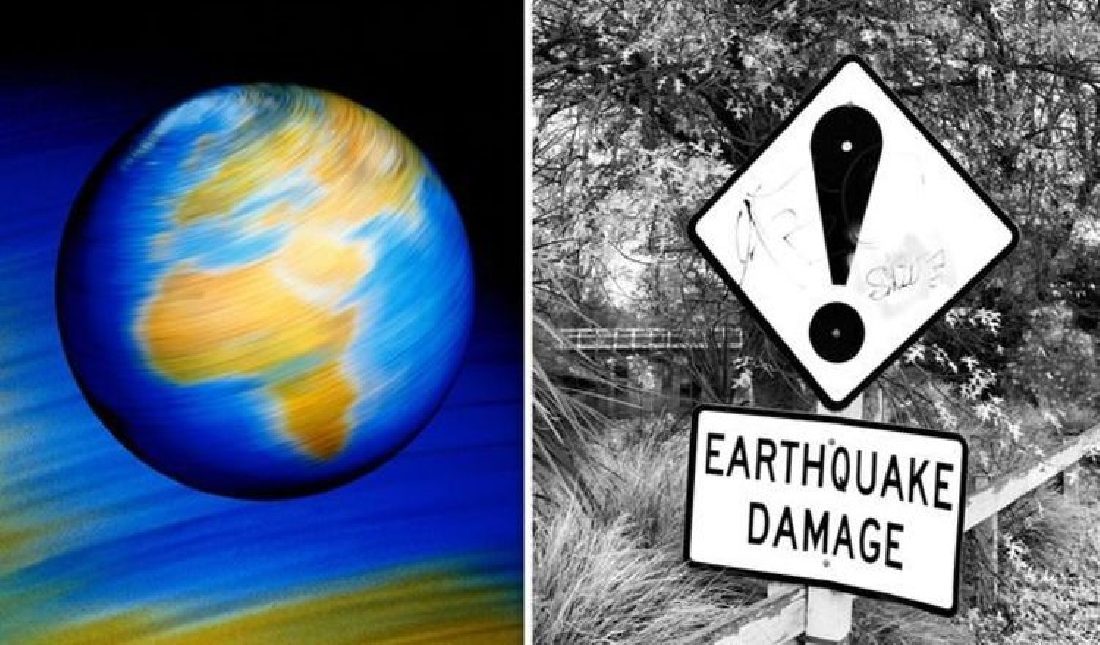
Earth's rotation is slowing down as the Moon moves farther away from the planet - and scientists believe it could cause major earthquakes.
Comment: It already is causing the increase in seismic activity, be it quakes, volcanic eruptions and outgassing events. That's WHY CO2 levels are increasing, and why the oceans are becoming more acidic...
Earth's rotation is slowing as our planet uses energy to keep the tidal bulge ahead of the Moon's orbit. The Moon's gravity keeps Earth's rotation in check, and to do this the lunar satellite's orbit must be slightly ahead of Earth's. As the Moon attempts to regulate Earth's rotation and slow it down, the Moon moves slowly away.
According to Matthew Funke, solar system ambassador for NASA's Jet Propulsion Laboratory, who wrote on Q+A website Quora: "The Moon's gravity creates a tidal bulge on the Earth. This bulge attempts to rotate at the same speed as the rest of the planet.
"As it moves 'ahead' of the Moon, the Moon attempts to pull it back. This slows the Earth's rotation down.
Comment: Billions of years in the future! LOL! In the same breadth they insist climate change is happening NOW!
Earth to climate scientists: THE TWO THINGS ARE CONNECTED!
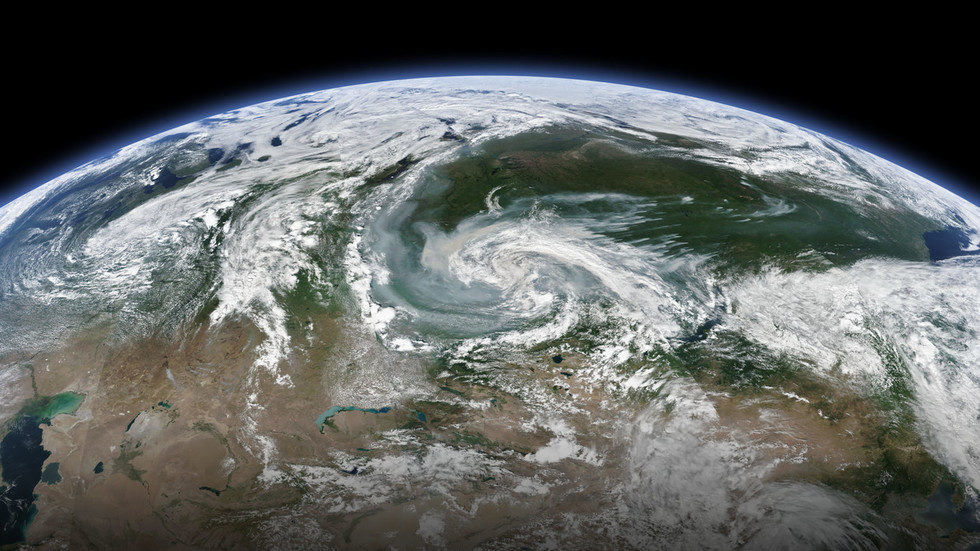
An unprecedented number of wildfires have been ravaging the Arctic for weeks following the hottest June ever recorded on Earth. Now, the fires are so huge and intense, the smoke can literally be seen from space.
Satellite images show more than 100 long-lived wildfires with huge plumes of swirling black smoke covering most of the Arctic Circle including parts of Russia, Siberia, Greenland and Alaska.
The wildfires have now reached "unprecedented levels," according to Mark Parrington of the EU's Copernicus Emergency Management Service, who said the smoke vortex is covering a "mind boggling" two million square kilometers.
Wildfires are burning across 11 regions in Russia with the largest covering Irkutsk, Krasnoyarsk and Buryatia. Likely caused by lightning strikes, as of July 22 they have burned 320 square miles (829 square kilometers), 150 square miles (388 square km) and 41 square miles (106 square km) in the regions, respectively, according to NASA's Earth Observatory.
Comment: It's not that warm in the Arctic.
No, the significant factor behind them is likely to be the 'accelerant' provided by increased outgassings of methane and CO2, in part due to increased seismic activity. Lightning, which is also on the rise, provides the spark. Then the fires themselves produce lots more CO2.
Like, vastly more than humans can produce.
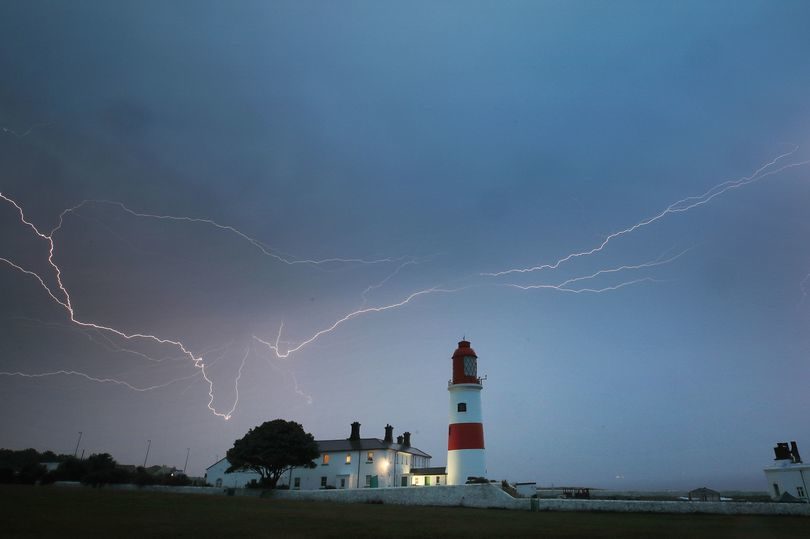
The smoke and other particulates the fires produce are joined by increased dust from increased meteors and increased volcanic eruptions, which all then jointly contribute to the increased dust-load in the atmosphere, which changes its electric charge rebalancing mechanisms, producing more intense storms and precipitation in the form of record rainfall, hail, lightning strikes, etc.
Notice that man-made activity is nowhere to be seen in this naturally intensifying feedback loop...
The 19th stage of the 2019 Tour de France has been brought to a standstill after a torrential hailstorm forced the race to be cut short during the riders' journey from Saint-Jean-De-Maurienne to Tignes.
The hail on the route was so bad it forced race organizers to call a premature stop to the stage before the riders reached the treacherous conditions.
The official Twitter account of the race alerted fans, saying: "The day's course has been called due to adverse weather conditions, rider times have been taken at Col de l'Iseran."
Before the heatwave spread across the country, the Dutch province of Zuid-Holland was battered by hailstones the size of ping pong balls. On Saturday, July 20th, the Royal Netherlands Meteorological Institute (KNMI) issued a code orange for the Province Zuid-Holland, indicating a "high risk of dangerous or extreme weather of which the impact is large, with a risk of damage, injury or excessive discomfort". While the heavy hailstorm didn't last long, it caused quite an upheaval: Trees were uprooted, cars were damaged, roof windows were broken, and small flash floods appeared in people's backyards and in the streets. The hailstones had a diameter of 2 to 4 cm.
See below for a collection of pictures and videos with description:
Harry Howard Daily Mail Thu, 25 Jul 2019 14:33 UTC
A spokesman from the Srok Pang district police station told local media today the soldiers' bodies have yet to be recovered
This is the terrifying moment two motorcyclists were swept away after a bridge collapsed during a flash flood.
Kinak DaLi and Sok Vandy, soldiers from the 1st Light Infantry Division, were riding over the crossing made from logs and mud when it gave way due to the force of the river below.
They both plunged some 10ft into the torrent of water and have been missing since the accident yesterday afternoon in Siem Reap Province, Cambodia.















Comment: With most media outlets exclusively and almost hysterically focused on the record-breaking hot temperatures being recorded this July, it's also of equal (or maybe greater?) significance that many new records are also being set at the other (cold) extreme, see these reports for the same month:
- Record cold in Hungary
- Record cold in Brazil
- Several record temperature lows in the Trans-Baikal territory, Russia
- "There is no heat out there" — Anomalous cold continues across Europe's Nordic nations
- Multiple all-time low temperature records set across Germany - Rare July frosts ravage Saxony
- New all-time July cold record in the Netherlands
- Temperatures sink to -6C in Southern Norway at the height of summer
- Russian city breaks 107-year-old cold record
- 15 cold weather records broken across Queensland, Australia
- Multiple all-time record low temperatures set in NW Russia
Also pertinent: Extreme Heat Dominates Headlines, But Rollercoaster Weather Should Worry us Most - What's Going on?