Science of the SpiritS


Blackbox

Is psychology building a house of cards?

brain puzzle
© Ratoca/Shutterstock
Here's a short quiz concerning several popular findings from different subfields of psychology. True or False?

1. Brain training games strengthen cognitive skills in ways that generalize to everyday life tasks.

2. Selective serotonin reuptake inhibitors or SSRIs, the class of anti-depressants that includes Prozac, Zoloft, and Paxil (among others), are more effective than older anti-depressants, and are significantly better than placebo for most people with mild or moderate depression

3. Standing in a "power pose" prior to a job interview, hands on your hips or interlocked behind your head, increases testosterone production as well as the odds of being selected for the job.

4. The reason most types of psychotherapy are helpful is because they share a set of common factors, such as empathy, not because of specific methods unique to each approach.

5. Girls and women perform better on math tests when they are told the test doesn't really measure anything about their true math ability. This is one variant of the stereotype threat effect.

6. If you are asked to resist eating a freshly baked chocolate cookie on a nearby plate for 15 minutes, your performance on a cognitive test is likely to diminish — a phenomenon called ego-depletion.

7. The Stanford Prison Study, in which participants were randomly assigned to be guards or prisoners in a mock prison, showed definitively that specific contexts can lead people to act sadistically.

And now the answers:

Comment: See also: Undead theories: The sorry state of modern psychology


Info

Human perception of colour doesn't rely entirely on language

Colour Perception
© SIMON MCGILL / GETTY IMAGESDo names shape the way we categorise what we perceive?
The unusual side effect of a stroke has given French neurologists a rare opportunity to study the interaction between language and thought.

A male patient identified only as RDS discovered that while he could identify something as red, blue, green, or any other chromatic hue, he could not name the object's colour.

This gets to the heart of an issue that neuroscientists and philosophers have long debated: do names shape the way we categorise what we perceive, or do they correspond to categories that arise from perception?

"We perceive colours as continuous. There is no sharp boundary between, say, red and blue. And yet conceptually we group colours into categories associated with colour names," says Paolo Bartolomeo from the Brain and Spine Institute in Salpêtrière Hospital in Paris, the senior author of paper in the journal Cell Reports.

Many scientists believe categorising colours depends on top-down input from the language system to the visual cortex. Colour names are believed to be stored in the brain's left hemisphere and to depend on language-related activity in the left side of the brain.

SOTT Logo Radio

SOTT Focus: MindMatters: T.C. Lethbridge And The Psi-Science Of The Pendulum

pendulum
© SOTT
Do we have access to a 'superconscious' part of our minds - that can become, under certain conditions, and with much observation, more or less conscious, or at the very least, made use of? Are there technologies which can, like a psi-powered geiger counter, help us to find things in our environments - and perhaps even assist us to navigate life - from other levels of awareness? Not content to retire as honorary Keeper of Anglo-Saxon Antiquities at the Cambridge University Museum of Archaeology and Ethnology, T.C. Lethbridge devoted the latter part of his life towards answering these questions, and searching for the answers to questions that materialists aren't even aware of.

On this week's MindMatters, we discuss Lethbridge's last and most famous book, The Power of the Pendulum, and take a look at Lethbridge's experience using the pendulum, his thoughts about human perception, as well as his well-informed opinion of orthodox science and the ideas that seek to limit the very types of explorations into mind that he devoted many years to uncovering.


Running Time: 01:01:46

Download: MP3 — 56.6 MB


Bandaid

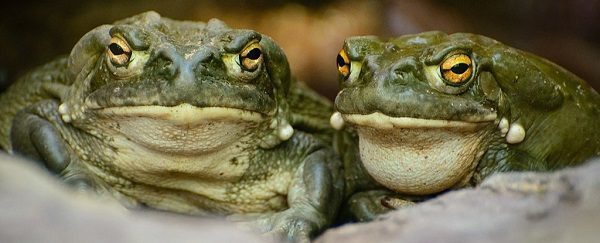
Snorting powdered toad secretions just once is linked to feeling happier for a month

Toads
© kuhnmi/Wikimedia, CC-BY-2.0
In the last few years, evidence has been emerging that several psychedelics seem to alleviate the symptoms of depression. Now scientists have tested a new compound - and early trials indicate that it, too, has potential.

As with many other psychedelics, this one comes from nature, too. Specifically, we're talking 5-methoxy-N,N-dimethyltryptamine (5-MeO-DMT), secreted by the Colorado River toad (Incilius alvarius).

Among a small group of people, researchers led by Maastricht University in the Netherlands found that inhaling dried-and-powdered toad secretions resulted in increased life satisfaction, better mindfulness, and a decrease in psychopathological symptoms for the duration of the four-week-long study.

According to the team, this result shows more research is needed into the potential beneficial effects of 5-MeO-DMT.

Comment: See also: Exploring the frontiers of psychedelics


Blackbox

The humans are waking up (maybe)

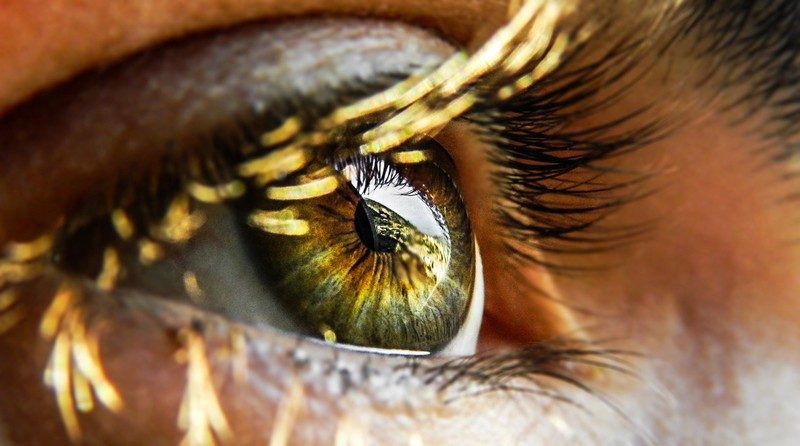
eye closeup
You run into a lot of despair in this line of work. The more you learn about the mechanisms of power, the more hopeless things seem at first glance.

The political system is totally locked down, with anyone who tries to upend the status quo being aggressively sabotaged by the mass media and their own political party.

Technology, which futurists have long heralded as the deus ex machina which will liberate humanity from its self-destructive ways, is owned by plutocrats with a vested interest in maintaining the status quo, and is pervasively infiltrated by murderous intelligence agencies from top to bottom.

Comment: It's hard to say for sure whether this is simply some wishful thinking on the part of Johnstone, or there really is a mass-awakening phenomenon at play here. Keeping a constant eye on the headlines, as we do here at SOTT, certainly doesn't make one optimistic for any kind of evolution in consciousness. It seems quite likely that a good majority of people on this planet aren't ready for any kind of awakening - but what about the ones who are? Regardless, the best approach is to not worry about what everyone else is doing and try evolve yourself. Your efforts may have a currently unknown effect on humanity at large.


Info

Similar brains but mouse studies don't always tell the right story

Human Brain
© SCIENCE PHOTO LIBRARY - ROGER HARRIS/GETTY IMAGES
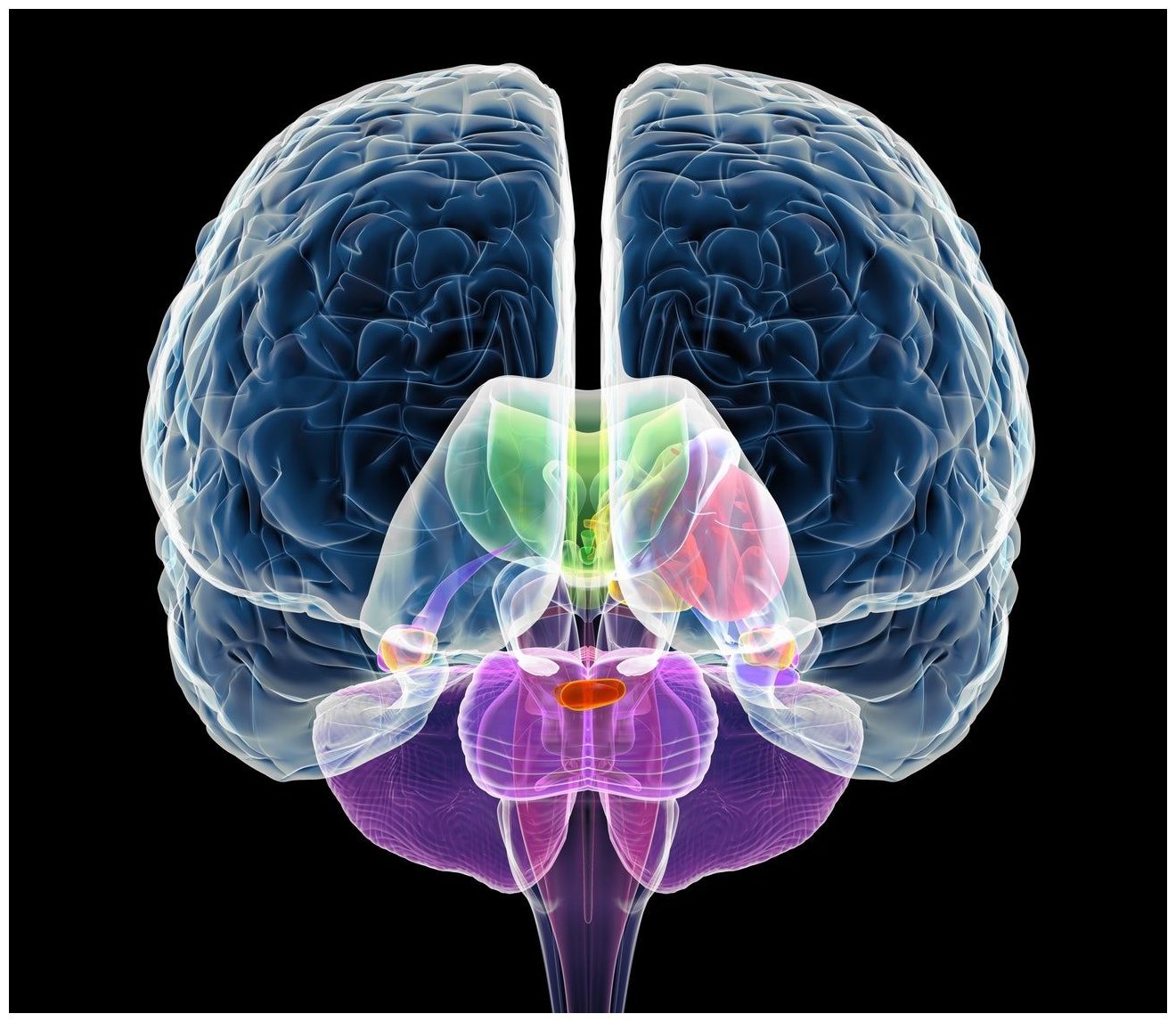
The most detailed study of its kind has found human brains are remarkably similar to mouse brains. But it also found subtle differences that could explain why many psych drugs that show promise in mouse studies don't work in people.

The outer layer of the human brain, called the cortex, is a bona fide biological marvel, playing a leading role in thinking, talking, remembering, moving limbs and, for good measure, consciousness.

Such superpowers call for serious kit.

Our brain boasts 16 billion neurons, the cells that relay messages, and a supporting cast of 61 billion other cells that provide neurons with scaffolding, insulation, nutrition and protection from disease.

In all, the human cortex is 1000 times bigger than that of the mouse, a species we parted company with 65 million years ago when our last common ancestor is believed to have lived.

Despite that evolutionary gulf, research led by Ed Lein from the Allen Institute for Brain Science in Seattle, US, has found that we share a surprising amount of brain architecture with our rodent cousins.

Info

DNA intelligence tests ignore reasons why kids succeed

Child Prodigy
© tournee/AdobeA child prodigy considers a math equation.
It's 2019. Prenatal genetic tests are being used to help parents select from healthy and diseased eggs. Genetic risk profiles are being created for a range of common diseases. And embryonic gene editing has moved into the clinic. The science community is nearly unanimous on the question of whether we should be consulting our genomes as early as possible to create healthy offspring. If you can predict it, let's prevent it, and the sooner, the better.

When it comes to care of our babies, kids, and future generations, we are doing things today that we never even dreamed would be possible. But one area that remains murky is the long fraught question of IQ, and whether to use DNA science to tell us something about it. There are big issues with IQ genetics that should be considered before parents and educators adopt DNA IQ predictions.

IQ tests have been around for over a century. They've been used by doctors, teachers, government officials, and a whole host of institutions as a proxy for intelligence, especially in youth. At times in history, test results have been used to determine whether to allow a person to procreate, remain a part of society, or merely stay alive. These abuses seem to be a distant part of our past, and IQ tests have since garnered their fair share of controversy for exhibiting racial and cultural biases. But they continue to be used across society. Indeed, much of the literature aimed at expecting parents justifies its recommendations (more omegas, less formula, etc.) based on promises of raising a baby's IQ.

This is the power of IQ testing sans DNA science. Until recently, the two were separate entities, with IQ tests indicating a coefficient created from individual responses to written questions and genetic tests indicating some disease susceptibility based on a sequence of one's DNA. Yet in recent years, scientists have begun to unlock the secrets of inherited aspects of intelligence with genetic analyses that scan millions of points of variation in DNA. Both bench scientists and direct-to-consumer companies have used these new technologies to find variants associated with exceptional IQ scores. There are a number of tests on the open market that parents and educators can use at will. These tests purport to reveal whether a child is inherently predisposed to be intelligent, and some suggest ways to track them for success.

Caesar

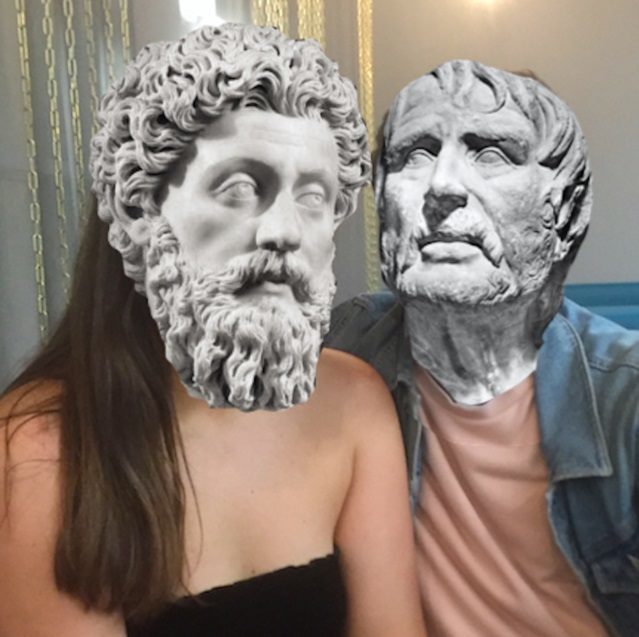
The ancient Roman cure for panic attacks

stoics
© Ewan Morrison
I once suffered badly from panic attacks. At the time I was walking around with dangerously low self-esteem due to seeing myself as a "failure". My inner-critic was working overtime and causing me to have panic attacks in supermarkets, and this prevented me from purchasing food to feed myself with. I would stand in front of a hundred yogurts in the dairy aisle and my thoughts would start to race - a bit like this:
"Why are there are so many flavors and types of yogurt? Should I buy no fat or low fat or full fat? Which one is better for me? Should I buy a flavor that makes me happy or go with bio-active? Will it really make me healthier or it is all a lie? Is all advertising a lie? Do we really have any free will? Are all these happy shoppers around me brainwashed? Why is everyone staring at me? Why is it so hot in here and why is the terrible music getting louder? Why am I always so alone? I'll never fit in, that's why I'm such a failure! My God, why am I even alive?"
Such panic attacks might seem like something from a Woody Allen film but they were powerful enough for me to develop palpitations, sweaty palms, dizziness and nausea and I would invariably set down my empty shopping basket and run out of whatever supermarket I was in in a state physical distress, gasping for air and recoiling from the terrifying happy smiley world in which "normal" people bought dairy products with malicious displays of indifference to my predicament. My attacks were making me ill. After the supermarket panics then came the "eating for one" panics. And the thoughts went: "I can't bear eating alone," "I must stop being so alone," "I am doomed to be alone forever". I was losing a lot of weight and energy and was heading into a dangerous spiral of ill health.

If I had gone to a psychotherapist then we would have explored the incidents in my childhood that had created this "phobia", but this process might have actually made things worse (assuring me that my abnormality was deeply grounded within my personality) and nine months of exploration into my past life certainly would not have saved me from the immediate threat of damage to my internal organs from weight loss. I went down the Cognitive Behavioural route and my CBT therapist, thankfully, dealt with the problem very practically. He got me to (1) keep a diary of my panic attacks, noting times and places (2) look for and take note of places where I did not panic (3) eat in cafes or other places that did not cause me distress (4) observe my own thoughts during a panic attack and ask myself "is any of this happening to anyone else? Or is it just a product of my mind?"

Comment: See also:


Info

Bias against left-handers

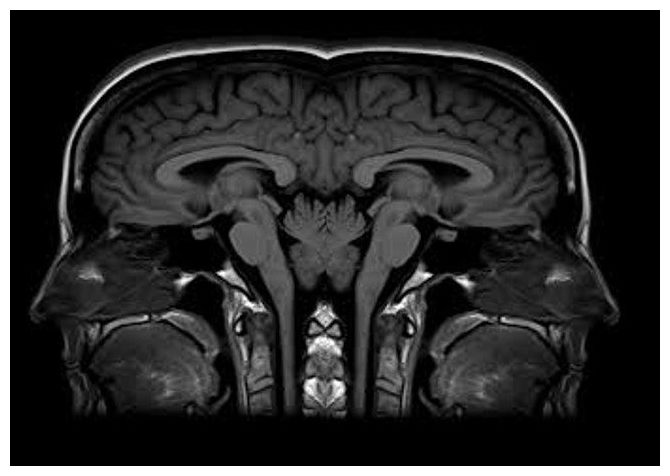
Left Right Brain
© Discover Magazine
Left-handed people are under-represented as volunteers in human neuroimaging studies, according to a new paper from Lyam M. Bailey, Laura E. McMillan, and Aaron J. Newman of Dalhousie University.

Bailey et al. analyzed a sample of 1,031 papers published in 2017, finding that just 3.2% of participants were non-right-handed, even though this group makes up about 10-13% of the general population.

These findings are hardly unexpected. The exclusion of non-right-handed people from neuroimaging (especially fMRI) studies is standard practice in the field. If anything, I was surprised by how high the 3.2% figure was.

The reason usually given for the right-handers-only policy is that non-right-handed people are more likely to have atypical brain lateralization of language.

In most people, language functions are found in the left hemisphere of the brain. About 4% of right-handers show right hemisphere or mixed-hemisphere lateralization of language, while in non-right-handers, the rate is about 30%.

Atypical language lateralization isn't harmful, but it could create difficulties for neuroscientists studying language, by adding variability to the results. So the focus on right-handers makes sense in this context.

Heart - Black

The toll that pathological narcissism takes on loved ones

narcissism
Empirical research quantifies the impact of extreme self-absorption.
Since narcissists deep down feel themselves to be faultless, it is inevitable that when they are in conflict with the world they will invariably perceive the conflict as the world's fault. — M. Scott Peck
Narcissism can be healthy when it's associated with balanced self-love, security, and self-esteem. Healthy narcissism means having a great relationship with oneself and not feeling ashamed of tending to oneself in special ways.

Pathological Narcissism, On the Other Hand, Causes Problems

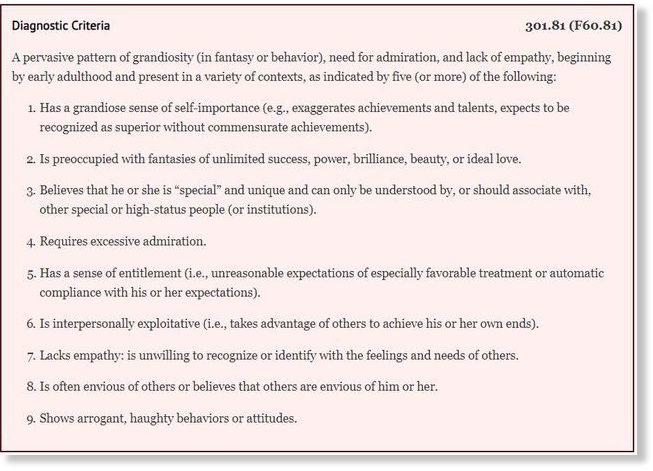
Per the DSM-5, Narcissistic Personality Disorder (NPD) is a long-standing pattern of "inner experience and behavior that deviates markedly from the expectations of the individual's culture," leading to "clinically significant distress or impairment in social, occupational, or other important areas of functioning." All personality disorders may affect 1) cognition, how we think and perceive ourselves, others and the world; 2) affectivity, how we experience and process emotions; 3) interpersonal functioning, the way we think, feel and behavior in relationships; and 4) impulse control. NPD, affecting 0.5 to 1 percent of the US population, the majority (50-70 percent) male, includes:

Diagnostic Criteria
© American Psychiatric Association: Diagnostic and Statistical Manual of Mental Disorders, Fifth Edition. Arlington, VA, American Psychiatric Association, 2013.

Comment: More on the detrimental effects of pathological narcissism: