Science of the SpiritS


USA

The American life is killing you

man with sack on head
I believe we are a species with amnesia, I think we have forgotten our roots and our origins. I think we are quite lost in many ways. And we live in a society that invests huge amounts of money and vast quantities of energy in ensuring that we all stay lost. A society that invests in creating unconsciousness, which invests in keeping people asleep so that we are just passive consumers of products and not really asking any of the questions.

~ Graham Hancock
If you're in the same boat as the typical American, your dilemma might look something like this:

You're enduring some type of chronic illness, over-stressed and rushed, unrewarding job, little or no savings, greatly in debt, fat mortgage, two vehicles in the driveway with a 5 or 7-year loan on each, lots of gadgets and toys to keep you occupied, huge TV, little free time for yourself due to your career and a demanding spouse, weekends filled with church and/or senseless entertainment, and a bathroom cabinet heavily stacked with pharmaceutical tic tacs to help cope with the emptiness of it all.

Apple Green

Babies are willing to give up food, showing altruism begins in infancy, study says

baby food research
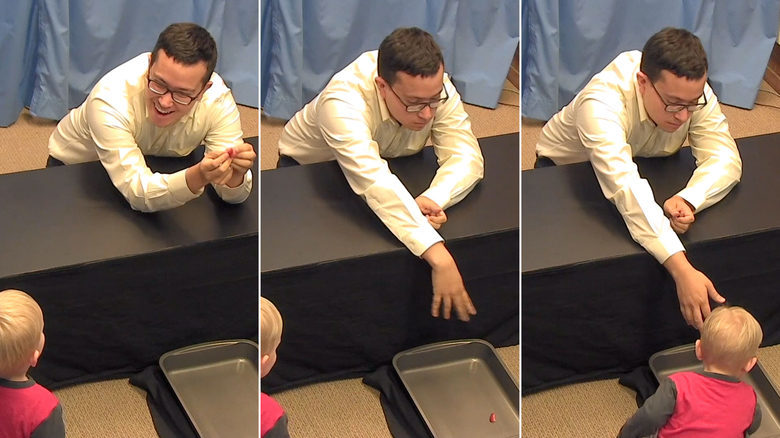
Researcher in the "begging" group acts like he wants the food.
Picture this: a 19-month-old hungry baby picks up a delicious snack, but instead of gobbling it up gives it to an adult who appears to want it, too.

Now imagine dozens of different babies of the same age doing the same. And that's exactly what happened during a study published Tuesday that tests the beginnings of altruism in humans.

The babies "looked longingly at the fruit, and then they gave it away!" said Andrew Meltzoff, co-director of the Institute for Learning & Brain Sciences at the University of Washington, in a statement. "We think this captures a kind of baby-sized version of altruistic helping."

Meltzoff and his team studied nearly 100 babies who were 19 months old, a time when many babies are starting to have temper tantrums, especially when told no, according to the American Academy of Pediatricians (PDF). This is also the age that babies are likely to hit, bite or scratch others when denied what they want, a part of their developmentally appropriate experiments with new behaviors.

Comment: See also:


Magnify

The precise meaning of emotion words is different around the world

word confetti
When you can't quite put your finger on how you're feeling, don't worry — there may be a non-English word that can help you out. There are hundreds of words across the world for emotional states and concepts, from the Spanish word for the desire to eat simply for the taste (gula) to the Sanskrit for revelling in someone else's joy (mudita).

But what about those words that exist across many languages — "anger", for example, or "happiness"? Do they mean the same thing in every language, or do we experience emotions differently based on the culture we are brought up in? Is the experience we call "love" in English emotionally analogous with its direct translation into Hungarian, "szerelem", for example?

In a new paper in Science, Joshua Conrad Jackson from the University of North Carolina at Chapel Hill and colleagues looked at 2,439 distinct concepts (including 24 relating to emotion) from 2,474 languages. The team analysed the similarities and differences between languages based on patterns of "colexification": instances in which multiple concepts are expressed by the same word form.

In Persian, to use the team's example, the word ænduh can be used to express both grief and regret; in the Dargwa dialect, spoken in Dagestan in Russia, dard means grief and anxiety. It follows, therefore, that Persian speakers may understand grief as closer to regret, and Dargwa speakers closer to anxiety.

The analysis allowed the researchers to create networks of concepts that showed, for each language family, how closely different emotional concepts related to each other. These revealed wide variation between language families. For instance, in Tad-Kadai languages, which can be found in Southeast Asia, southern China, and Northeast India, "anxiety" was related to "fear"; in Austroasiatic languages, anxiety was closer to "grief" or "regret". In Nakh Daghestanian languages spoken mainly in parts of Russia, on the other hand, "anger" was related to "envy", but in Austronesian languages it was related to "hate", "bad", and "proud".

But there were some similarities. Words with the same emotional valence — i.e. that were positive or negative — tended to be associated only with other words of the same valence, in all language families across the world. Happiness, for example, was linked to other positive emotions, even if the specific associations were slightly different depending on the language family. (This wasn't always the case though: in some Austronesian languages, "pity" and "love" were associated, suggesting pity may be more positive or love more negative than in other languages). Similarly, low-arousal emotions like sadness were also unlikely to be compared to high-arousal emotions like anger.

And geography also seemed to matter: language families that were geographically closer tended to share more similar associations than those that were far away.

The study's findings suggest that emotional concepts do vary between languages up to a point, raising the question of just how similar supposedly universal experiences are. Of course, it's impossible to know exactly how somebody else is experiencing the world, and language can often be woefully inadequate when it comes to expressing our internal life. And while the research suggests that those emotional experiences may vary in subtle ways across the world, deep down it seems we're not so dissimilar at all.

- Emotion semantics show both cultural variation and universal structure

Comment: See also: How much does our language determine behavior?


SOTT Logo Radio

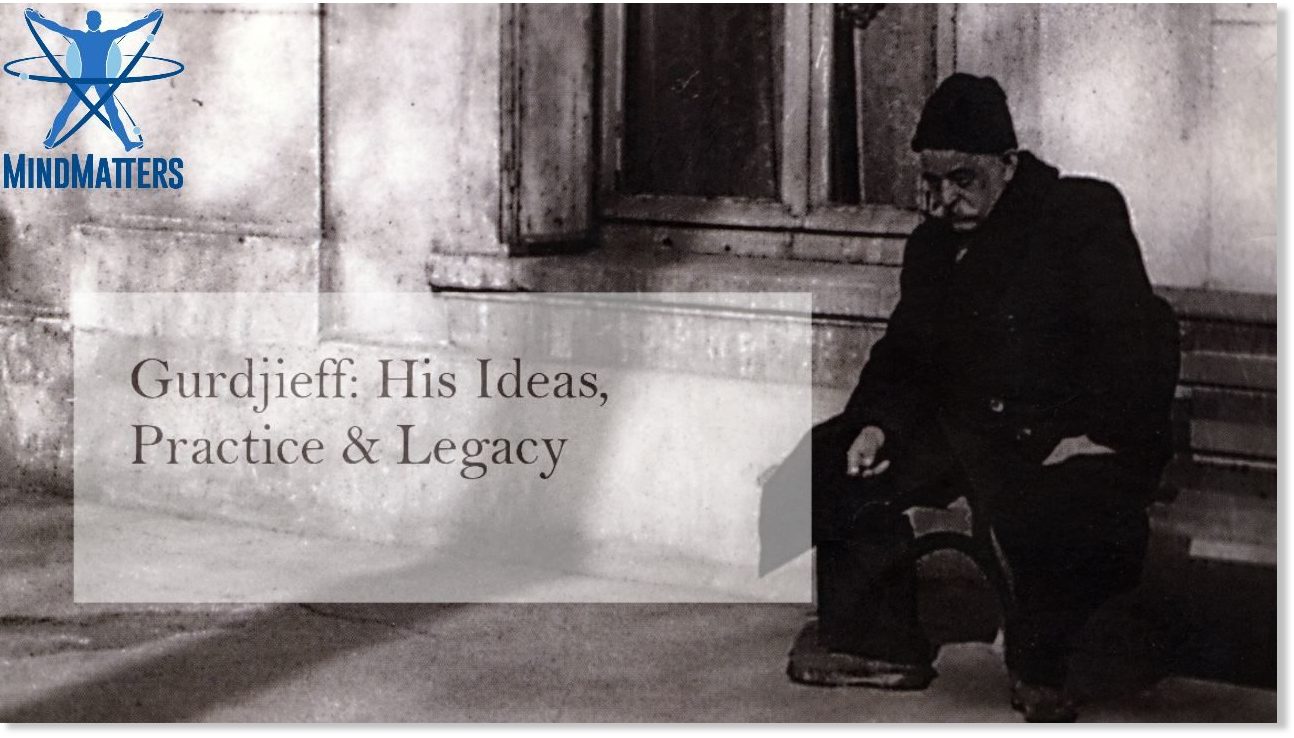
SOTT Focus: MindMatters: Wake Up! Gurdjieff on Sleep, Knowledge and Politics

gurdjieff
In this discussion of G.I. Gurdjieff's central ideas we delve further into the key insights he had on the human individual's state of sleep and the implications that such a condition has for the state of humanity as a whole. 'Self-remembering', 'identification', and 'considering' are just some of the key concepts and terms Gurdjieff used to describe the goals and pitfalls of the individual on the path to self-knowledge. We also discuss what may be Gurdjieff's most lasting legacy: the 'mirror' that he held up to all people in all times and places, and how essential such a mirror is in order to see oneself and thus gain self-knowledge.

This week on MindMatters we also discuss Gurdjieff's cultural legacy: his writings, movements and music, and how his 'successors' have dealt with this legacy.


Running Time: 01:02:21

Download: MP3 — 58 MB


Info

Consciousness cannot have evolved argues Dutch computer scientist and philosopher

Consciousness Problem
© The Institute of Art and Ideas
The overwhelmingly validated theory of evolution tells us that the functions performed by our organs arose from associated increases in survival fitness. For instance, the bile produced by our liver and the insulin produced by our pancreas help us absorb nutrients and thus survive. Insofar as it is produced by the brain, our phenomenal consciousness — i.e. our ability to subjectively experience the world and ourselves — is no exception: it, too, must give us some survival advantage, otherwise natural selection wouldn't have fixed it in our genome. In other words, our sentience — to the extent that it is produced by the brain — must perform a beneficial function, otherwise we would be unconscious zombies.

One problem with this is that, under the premises of materialism, phenomenal consciousness cannot — by definition — have a function. According to materialism, all entities are defined and exhaustively characterised in purely quantitative terms. For instance, elementary subatomic particles are exhaustively characterised in terms of e.g. mass, charge and spin values. Similarly, the behaviour of abstract fields is fully defined in terms of quantities, such as frequencies and amplitudes of oscillation. Particles and fields, in and of themselves, have quantitative properties but no intrinsic qualities, such as colour or flavour. Only our perceptions of them — or so the materialist argument goes — are accompanied by qualities somehow generated by our brain.

Materialism posits that the quantities that characterise physical entities are what allow them to be causally efficacious; that is, to produce effects. For instance, it is the charge values of protons and electrons that produce the effect of their mutual attraction. In nuclear fission reactors, it is the mass value of neutrons that produces the effect of splitting atoms. And so on. All chains of cause and effect in nature must be describable purely in terms of quantities. Whatever isn't a quantity cannot be part of our physical models and therefore — insofar as such models are presumed to be causally-closed — cannot produce effects. According to materialism, all functions rest on quantities.

Post-It Note

"Positive vibes only" is toxic: The danger of New Age spiritualism

"Integrity is choosing courage over comfort; choosing what is right over what is fun, fast, or easy; and choosing to practice our values rather than simply professing them." ~ Brené Brown
new age dangers
A positive vibes only attitude is dangerous.

What we will not look at, will not feel — in ourselves, or in the world — we cannot address.

I think it's safe to say that none of us likes drama — or at least we say we don't — yet drama is part of the human condition.

When we meet the emotional reactivity in others with our own confusion and pain, pain and confusion escalate. Compassion is when we meet confusion and pain with rational thought and skillful means. It is not zoning out on our yoga mat, filling our houses with crystals, and burning sage while the world actually burns.

This is a spiritual bypass, and it is dangerous. The notion that we can simply focus on the positive and effect change is like trying to clean our bathroom blindfolded, while simultaneously convincing ourselves that it's not dirty in the first place.

Comment: See also,


Books

Want spiritual growth? Read more fiction

books
3 reasons why reading, and especially reading fiction, can improve your spiritual life.

Before college, I wasn't much of a reader. C.S. Lewis was the only author I would pick up voluntarily. Even then, it was seldom his works of fiction that intrigued me. I was more interested in his theology. This was true because I thought reading books like Mere Christianity or The Problem of Pain would make me a better Christian - they might give me better reasons or arguments for believing what I do, for example.

Throughout college and most of seminary, the same principle applied. I would occasionally try to pick up fiction if I had heard a certain novel was really good, or was what "everyone" was reading at the time. But largely I stuck to theology, philosophy, and biblical studies. I had questions. I wanted answers.

Following seminary, I still read quite of bit of philosophy and theology, but not as much as I used to. That's because as I learned more, I made two life-changing discoveries. First, all the Christian intellectuals I read and respect necessarily disagree on a great number of things. So whom should I believe? Who has the answers? Even if I decided to only read the Bible, whose interpretation is correct? I began to realize this answer-hungry-enterprise was taking me to a dead end - ultimately, I could read every important Christian text on how to live well as a disciple of Jesus, including biblical texts and commentaries on them, and still not really understand.


Comment: Though not central to the point of this article, we can make at least one recommendation on the subject of biblical text:

Paul's Necessary Sin: The Experience of Liberation


Comment: Of course, and ideally, we want to read novels of some substance - as many of the classics provide - that have stood the test of time and speak to the perennial matters of the mind and heart. At the same time, there are also contemporary novels that address important issues, and that provide great value too.

Any recommendations, SOTT reader?


People

Gratitude helps you cooperate. Does it also make you a sucker?

gratitude
© Rawpixel/Rawpixel and Ash from Modern Afflatus/Unsplash
Be grateful. That's been my science-backed mantra for a good many years. I say science-backed because unlike the rationale your parents relied on when urging you to be appreciative (though they were right!), my advice comes from more than a decade of accumulating empirical evidence showing that gratitude makes life better.

But while it can help combat stress and depression, improve your diet, and even get you to the gym, perhaps one of the most important ways gratitude improves life is through fostering cooperation — a phenomenon so integral to human existence that we would have been hard-pressed to achieve much of what we've accomplished as a species without it.

Cooperation, at base, requires people to share resources over time in order to obtain something that would have been impossible, or at least more difficult, to get on their own. Yet the benefits that arise from sharing knowledge, money, or even elbow grease come with an important caveat: you only get them if your partners are fair.

When it comes to cooperation, it takes two to tango, and if your partners regularly turn out to be cheats, your outcomes will be poor. So when I touted the benefits of gratitude, I had a worry lurking in the back of my mind that I couldn't shake. While it's certainly true that feeling grateful makes people more generous and more honest — both essential features for fostering cooperation — it might also have a downside: Was I setting people up to be suckers?

Comment: See also:


Info

Neural and social factors contribute to ethnic differences, study finds

Racial Discrimination
© ROMAN MELIHHOV / EYEEM, VIA GETTY IMAGESThe stereotype that black people have greater pain tolerance is wrong.
Scientists have found that racial discrimination literally does hurt, showing that African Americans feel more pain and have greater activity in brain areas linked to stress and trauma than other ethnic groups.

The finding has a tragic and conflicted backstory, with stereotypic views abounding that black people have greater pain tolerance than whites, while scientific evidence routinely shows the reverse to be true.

Despite the science, studies have found that black patients, including children, typically get less pain relief in hospital than non-black patients.

The researchers, led by neuroscientist Tor Wager from Dartmouth College in the US, wanted to find out what might be upping the pain levels felt by African Americans.

There are, they explain in a paper published in Nature Human Behaviour, two main suspects.

First, innate biology could play a role, with some evidence African Americans have genetic changes that tweak the workings of the body's inner pain killers, the endogenous opioids.

But social factors also drive pain; perceived discrimination and a heightened sense of threat have been linked to greater pain perception in African Americans.

To untangle these effects the team used MRI brain imaging to examine pain responses in 88 adult Americans of African, Hispanic and non-Hispanic White background.

The pain source was a coin-sized heat disc applied to the inside of the forearm at steadily increasing temperature, from 45 to 47 and finally 49 degrees Celsius.

Info

Text Mining Analysis Study gets up close with near-death experiences

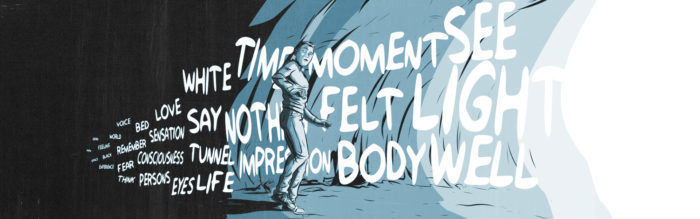
Words from near death experience
Those who momentarily shuffled off this mortal coil returned with positive perceptions of what they discovered on the other side - a finding that encourages researchers to dig deeper into the ways people describe near-death experiences, according to a joint study between Western and the University of Liège (Belgium).

In their written testaments of the great beyond, individuals who had a near-death experience offered positive-toned words like 'see' and 'light' far more frequently than negative-toned ones like 'fear' and 'dead,' according to the study. Researchers are celebrating this quantitative scientific proof that most people respond positively to near death experiences

The study, "Characterization of near death experiences using text mining analyses: A preliminary study", was published today in the journal PLOS ONE.

Comment: See also: