Science of the SpiritS


People

It was me, I did it: Why no one takes accountability anymore

finger pointing
We live in a chaotic world, characterized by roller coaster rides of alternating terror and exhilaration. Our culture has become exponentially more hurried, with a constant drive to camp out in the fast lane despite the well-known consequences of never slowing down. To keep up with this frenzy and avoid being trampled, we have developed an almost undetectable technique of refusing accountability for our actions. No one takes accountability anymore because to do so has somehow become an indication of weakness, a trait avoided at all costs to survive the hectic environment we live in.

Immediate Gratification

The sheer accessibility of information today is a main cause of the chaos. Our ability to ping-pong between current events, health news, and constant entertainment all while simultaneously working and eating our dinner is incredible. We have perfected the art of immediate gratification: if you cannot find something this instant that changes your mood, answers your question, or takes your mind off whatever you are avoiding, you are likely not searching hard enough. The literal world is now at your fingertips, for better or for worse.

Comment: See also:


Pi

The Theory of Positive Disintegration 101: On Becoming Your Authentic Self

On the Edge
Do you ever wonder why some people go through a life-altering crisis only to come out the other side stronger and more at peace with themselves, while others fall apart and struggle to carry on?

It's hard to predict who will rise from a tragedy like a phoenix from the ashes and who will need all of their strength just to keep their heads above water.

We all hope to be in the former category, of course, but it's tough to know how we will respond to a disaster or crisis that causes us to question everything we thought we knew.

One psychological theory aims to clarify how such transformations occur, and the types of people who are likely to take advantage of such an opportunity for growth: the theory of positive disintegration.

Comment: See also:


Life Preserver

Meditation changes the function and structure of the brain in a positive way

Meditation
If you look at most 'masters' in the field of meditation, a common theme that currently exists is a big misconception about meditation, that it has to be done a certain way, that you have to sit a specific way or do something in particular in order to reap the benefits. These masters will be the first to tell you that it doesn't have to be one specific way.

That being said, many spiritual groups, like certain monks for example, are taught different types of meditation in several different ways, so really, there's no correct way to meditate, and the process of connecting with one's higher self and quieting the mind can be done in multiple ways and practiced at various levels.

When meditating, one shouldn't try to "empty" their mind, but instead, try to let ones thoughts, feelings, and whatever emotions end up 'popping' in there, pop in there. There should be no resistance to thoughts, no judgement of them. Simply let them be, don't attach to them and just be at peace with it. You're not doing anything wrong, just focus on your breath.

Comment: Especially in our day and age where we are bombarded with constant stimulation from cell phones and the internet, Western life has become frantic and busier than ever going from one thing to the next. Depression and anxiety are on the rise as never before. That's why it's important to to take a step back, observe and assess where we are, who we are, what we are thinking about and feeling, and where we are going so that we can better navigate this world with more equanimity and balance. Meditation can help this process along. Eiriu-Eolas is one that we highly recommend.


Bulb

Why mushroom-picking is the best form of mindfulness

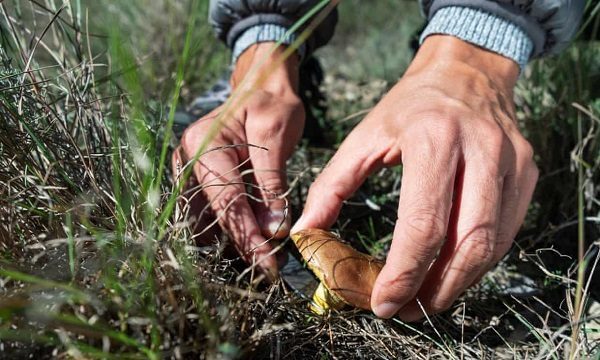
Picking mushrooms
© Juan Moyano/Alamy Stock PhotoRachel Cooke: ‘How on earth did a predilection I always thought of as rather odd suddenly become so hip?’
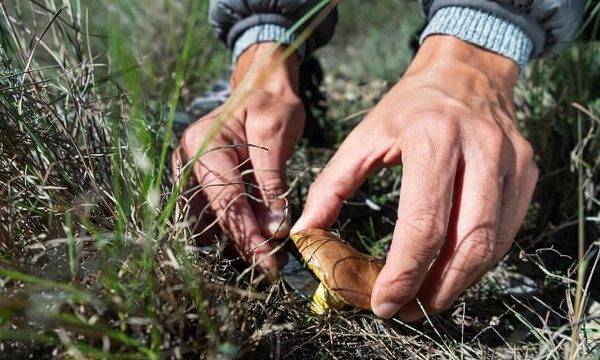
In her new book, The Way Through the Woods, the Norwegian-Malaysian writer Long Litt Woon describes the various sensory pleasures that are involved in the gathering of mushrooms: the beguiling way they yield to the human hand; their different textures, whether velvety or hairy, rubbery or powdery; even the noises they make (some pop when snapped). Above all, there are the different ways that they smell. The prince mushroom comes with top notes of marzipan. The wood blewit brings to mind burnt rubber. The common stinkhorn emits the sweet aroma of rotting flesh.

Smell plays a vital role in a mushroom's popularity as food - though as Loon notes, this isn't always straightforward. Different cultures favour different smells. When the matsutake or pine mushroom was discovered by a Norwegian mycologist in 1905, it was given the name Tricholoma nauseosa on the grounds that its odour was unpleasant (the American mycologist David Arora has since described it as being reminiscent of dirty socks). In Japan, however, where those who pick it wear white gloves and there are poems describing its virtues that date from 759 BC, it is considered to smell divine - which is why, in 1999, when it was discovered that T. nauseosa and the Japanese pine mushroom are the same species, people there lobbied for the right to rename it T. matsutake (the Japanese for pine mushroom).

Long's book, in which she recounts how mycology helped her to recover from the death of her husband, could hardly be better timed. In the UK, we're just coming, thanks to some well-timed rain, to the end of the best mushrooming season in years. Where the British were once distinctly nervous of foraging for fungi, now everyone's signing up for courses and merrily buying field guides. The other day I saw a newspaper headline that read: "THREE TO PICK NOW." Beside it was a picture of a parasol mushroom. It was as if it was sale time, and the fungus was a Burberry trench or a pair of shoes by Jimmy Choo.


Comment: See also:


Info

New research seeks to identify location of brain consciousness

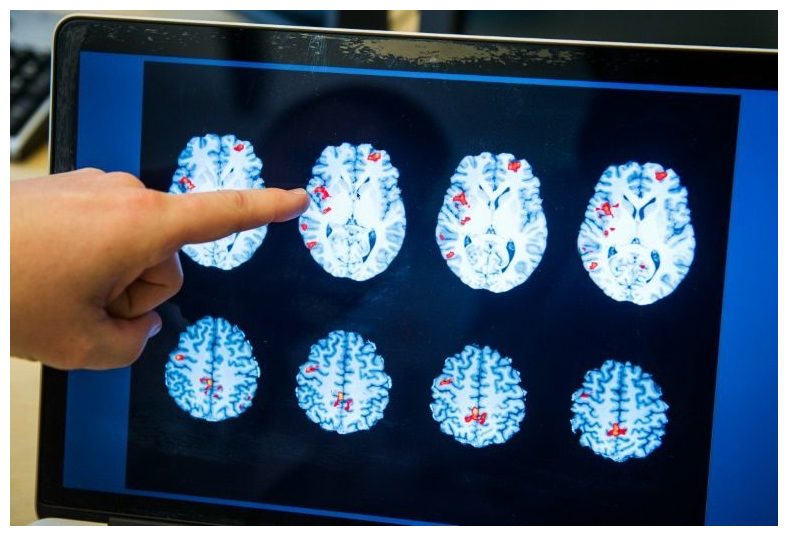
Brain Scan
© Jonathan Nackstrand, AFPA neuropsychologist points to a brain scan showing the brain activity of a paedophile at the Huddinge hospital near Stockholm.
A small amount of electricity delivered at a specific frequency to a particular point in the brain will snap a monkey out of even deep anesthesia, pointing to a circuit of brain activity key to consciousness and suggesting potential treatments for debilitating brain disorders.

Macaques put under with general anesthetic drugs commonly administered to human surgical patients, propofol and isoflurane, could be revived and alert within two or three seconds of applying low current, according to a study published today in the journal Neuron by a team led by University of Wisconsin-Madison brain researchers.

"For as long as you're stimulating their brain, their behavior — full eye opening, reaching for objects in their vicinity, vital sign changes, bodily movements and facial movements — and their brain activity is that of a waking state," says Yuri Saalmann, UW-Madison psychology and neuroscience professor. "Then, within a few seconds of switching off the stimulation, their eyes closed again. The animal is right back into an unconscious state."

Mice have been roused from light anesthesia before with a related method, and humans with severe disorders have improved through electric stimulation applied deep in their brains. But the new study is the first to pull primates in and out of a deep unconscious state, and the results isolate a particular loop of activity in the brain that is crucial to consciousness.

People 2

Help a Darwinist tell the difference between boys and girls

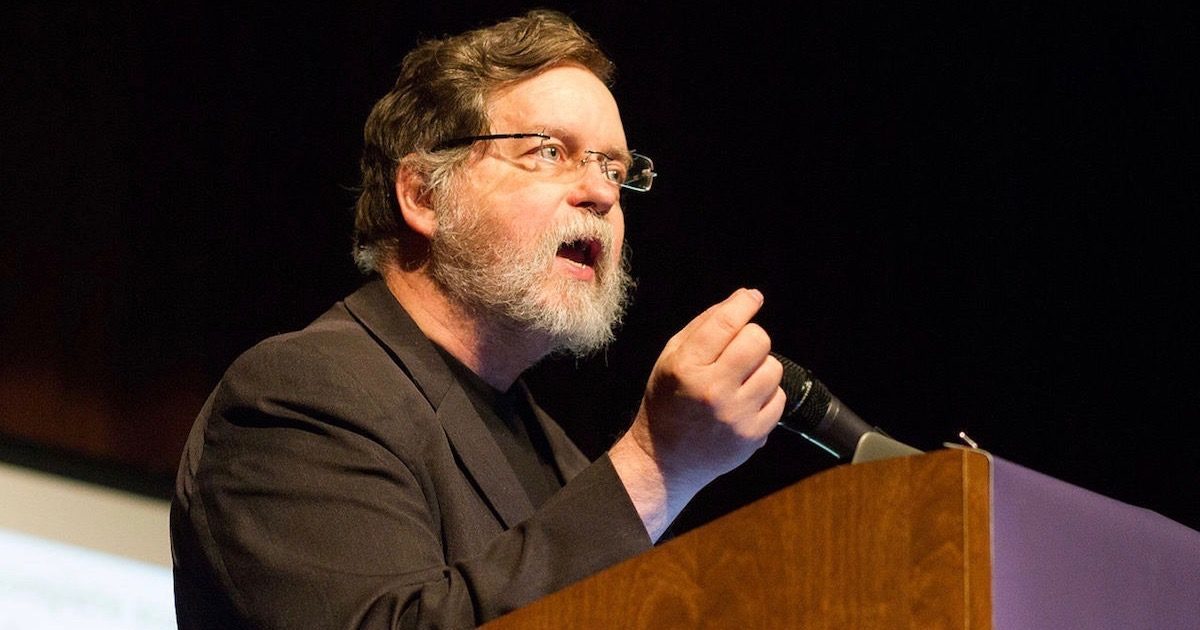
P.Z. Myers darwin evolution
© Mark SchierbeckerP.Z. Myers, atheist and Darwinist
Here's a glimpse into the ideological corruption of modern biology: P.Z. Myers, author of the atheist blog Pharyngula and a leading (and loud) Darwinist, assures us that he infers nothing about human sexual identity:
When I meet people, I don't know anything about their sperm count or their chromosome arrangement or even what their genitals look like (you don't have to show me), so all the sex details are irrelevant to our interactions. Gender matters because we have a huge amount of social capital, some good, some bad, invested in how people present themselves, and also because those gender signifiers are diverse and do a better job of reflecting how people see themselves in society, and how society sees them.

You know, when a population is identified as a discrete binary of two kinds of individuals, male and female, my usual thought is that the next step is to pair up individuals in bottles and do a genetic cross. That's not how we treat human beings in our communities.

Comment: Thank goodness for those members of the scientific community who are pushing back on the nonsense: Just as important as the societal dangers is that men and women must be treated differently in medical situations, such as heart attacks. Lying to oneself and one's practitioner can only complicate matters further and lead to tragedy.


Galaxy

In the "Mathematical Glory" of the Universe, Physicist Discovered the "Truly Divine"

Milky Way Galaxy
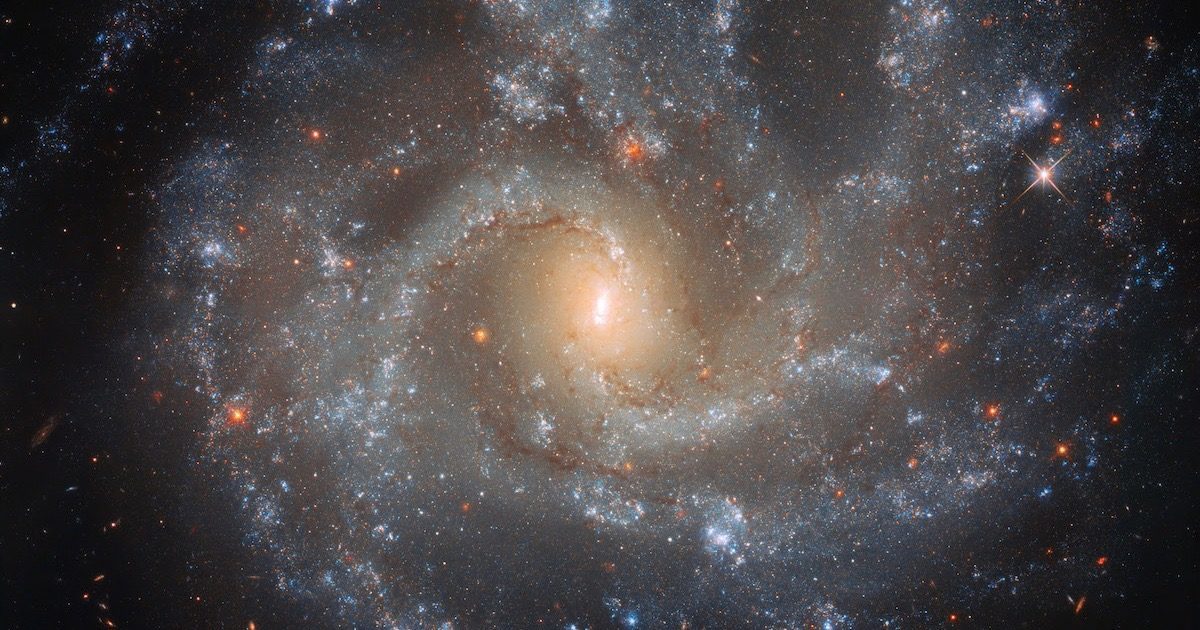
© ESA/Hubble & NASA
How did this slip through? John Horgan with Scientific American interviewed a physicist colleague, Christopher Search. The physicist is appealingly direct in rejecting the atheism associated with Stephen Hawking and other venerated names in the field. More than that, he says it was physics that brought him to a recognition of the "truly divine" in the universe:
Over the years my view of physics has evolved significantly. I no longer believe that physics offers all of the answers. It can't explain why the universe exists or why we are even here. It does though paint a very beautiful and intricate picture of the how the universe works. I actually feel sorry for people that do not understand the laws of physics in their full mathematical glory because they are missing out on something that is truly divine.

The beautiful interlocking connectedness of the laws of physics indicates to me how finely tuned and remarkable the universe is, which for me proves that the universe is more than random chance. Ironically, it was by studying physics that I stopped being an atheist because physics is so perfect and harmonious that it had to come from something. After years of reflecting, I simply could not accept that the universe is random chance as the anthropic principle implies.

Attention

For 'bioethicists', protecting children from dangerous decisions is 'neglectful' parenting

family
© Irina Murza via Unsplash
It's one thing when adults decide to radically alter their bodies to accord with their identified gender. But when these body-altering interventions are performed on children blocking normal puberty, mastectomies on 13-year-olds, etc. — that is a different kettle of fish.

"Treating" gender-dysphoric children via body-altering interventions should be deemed unethical because — among other concerns — children can't decide these things maturely, we don't know the long-term consequences to their health, we don't know how such potentially permanent alterations will impact their wellbeing, and some gender-dysphoric children cease identifying as their non-biological sex as they reach adulthood. Alas, much of mainstream medicine supports such interventions, at least when parents consent.

Comment: Parents are right to follow their instincts with respect to protecting their children from life-long harm. Gender dysphoria most always comes with a plethora of other mental issues, not the least of which is undiagnosed autism in girls. "Affirming care" is an easy, socially celebrated way for lazy doctors to bypass the hard work of coming to grips with a child's true issues.


Blue Planet

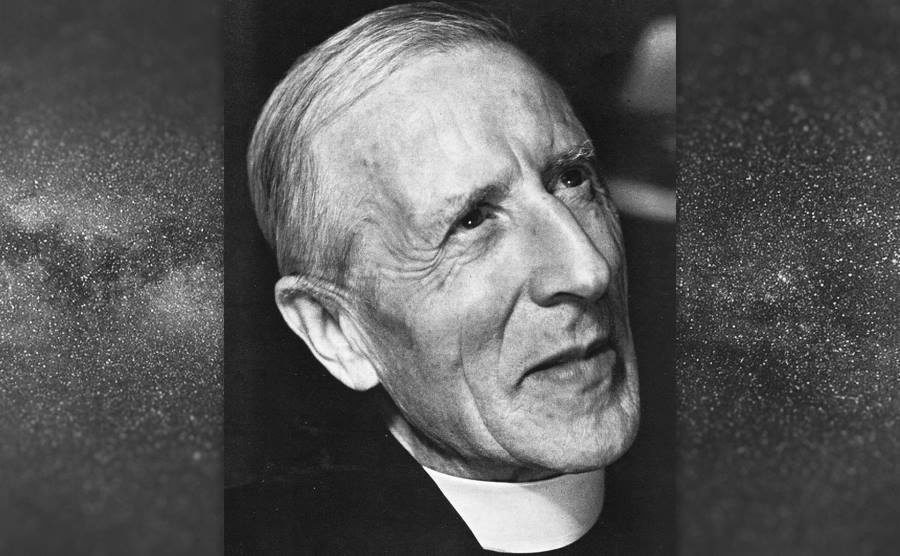
Philosopher and researcher Teilhard de Chardin and the incomplete nature of evolutionary theory

Teilhard de Chardin
Teilhard de Chardin
Why should advocates of intelligent design care about a French Jesuit priest who died more than 60 years ago? Pierre Teilhard de Chardin (1881-1955) along with being a Jesuit priest was also a geologist and paleontologist who made several trips to China to participate in geological and paleontological work (he was part of the team that discovered Piltdown Man, later revealed to be a hoax). But Teilhard is best known for his book The Phenomenon of Man, published in French in the 1930s and in English in 1955. In this book Teilhard lays out a vision for the evolutionary process that is at odds with the established scientific view but is consistent with his own religious convictions.

A Truncated View

Teilhard argued that the science of his time had a truncated view of evolution. Scientists studied the evolutionary process as if it were a movie playing on a screen in front of them with the scientists themselves as mere passive observers. Teilhard thought that evolution needed to be viewed from the inside, viewing humans not only as observers of evolution but also as its products. As such, Teilhard conceived evolution as occurring on four levels, only two of which were acknowledged by establishment scientists.

Handcuffs

Would you stand up to an oppressive regime or would you conform? Here's the science

handmaid's tale
© Jasper Savage/Hulu/Channel 4
Margaret Atwood's novel, The Handmaid's Tale, described the horror of the authoritarian regime of Gilead. In this theocracy, self-preservation was the best people could hope for, being powerless to kick against the system. But her sequel, The Testaments, raises the possibility that individuals, with suitable luck, bravery and cleverness, can fight back.

But can they? There are countless examples of past and present monstrous regimes in the real world. And they all raise the question of why people didn't just rise up against their rulers. Some of us are quick to judge those who conform to such regimes as evil psychopaths - or at least morally inferior to ourselves.

But what are the chances that you would be a heroic rebel in such a scenario, refusing to be complicit in maintaining or even enforcing the system?

Comment: See also: