Science of the SpiritS


Info

Critics fear Yale scientist's breakthrough in brain reanimation

Brain Animation
© Pixabay Composite

What do you want to happen to your brain when you die? A lot of people choose to donate their organs to science - but after learning what a scientist at Yale might do with those brains, those donors may just change their minds.

According to reports, Yale School of Medicine neuroscientist Dr. Nenad Sestan and his team successfully reanimated the brains of hundreds of dead pigs and kept them alive for up to 36 hours. Sestan's system for keeping the brains alive - called BrainEx - uses a network of tubes and reservoirs to circulate fluid and oxygen to key areas.

There was no (recorded) evidence that the brains used in the study regained consciousness but, at a meeting at the National Institutes of Health to discuss ethical concerns, Sestan did say that billions of healthy cells capable of normal activity were "unexpectedly" found in the disembodied brains.


Oscar

Not so dumb after all: Study suggests blondes have slightly higher IQs

Blondes higher IQ, stereotypes blondes
Are stereotypes about hair colour and IQ really true?

The stereotype that blondes are dumb is not true, psychological research has revealed.

Blonde women have slightly higher IQ than other hair colours - although the difference was small and not statistically significant.

The IQ of blonde men was similar to other hair colours.

Dr Jay Zagorsky, its author, argues stereotypes can have real-world implications:
"Research shows that stereotypes often have an impact on hiring, promotions and other social experiences.

This study provides compelling evidence that there shouldn't be any discrimination against blondes based on their intelligence."

Book

Lucid dreaming playbook: How to take charge of your dreams

lucid dreaming
© WikipediaYoung Woman Sleeping by Jean-Baptiste Santerre, Museu Nacional d’Art de Catalunya.
In Tibetan Buddhism, the group of tantric techniques known as milam aim to reveal the illusory nature of waking life by having practitioners perform yoga in their dreams. It's a ritualised version of one of the most mysterious faculties of the human mind: to know that we're dreaming even while asleep, a state known as lucid dreaming.

Lucidity (awareness of the dream) is different to control (having power over the parameters of the experience, which can include summoning up objects and people, attaining superpowers and travelling to fantastic worlds). But the two are closely linked, and many ancient spiritual traditions teach that dreams can yield to us with time and practice. How?

Comment: Lucid dreaming: Unraveling the mystery of consciousness?


Cardboard Box

The DNA - Stress Connection: Heal your brain by reversing intergenerational trauma

trauma
© Eva Bee
The relatively new science of epigenetics is proving that who you are is the culmination of the experiences in your life-and even those of your ancestors-which cause changes in how your genes operate. Modifications occur and genes can switch on or off depending on the environment. In other words, you are born with a certain set of genes, but the events of your life determine which genes get expressed and which genes don't.

The bad news is that trauma can be inherited through epigenetic changes and a multitude of illnesses, behaviors, and health issues have been linked to epigenetic mechanisms. Related conditions include many cancers, autoimmune diseases, neurodegenerative and psychological disorders, addictions, and respiratory, cardiovascular, reproductive, and neurobehavioral illnesses.

But the good news is that science is showing that epigenetic changes can be reversed.

Comment: Do we pass on trauma through our DNA?


Info

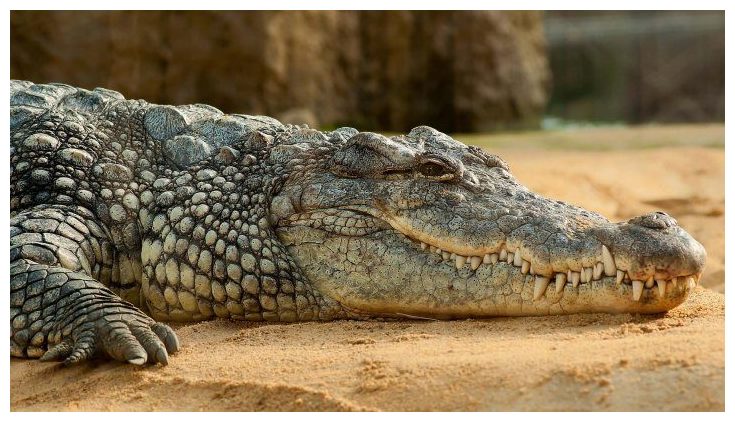
Crocodile placed in an MRI scanner to understand its brain

Crocodile
© Pixabay
"Scientists put a crocodile into an MRI machine with classical music" may sound like somebody playing a game of science Mad Libs, but it's now officially a real experiment that real scientists have run.

And it's for a fairly interesting reason, too. Scientists always want to better understand our brains, which have evolved continuously over the ages as we branched out of past species and developed on our own. But to understand how our brains evolve, we'd need to look at an ancient brain, which isn't possible.

But in the rare case where this is a good thing, crocodiles are old apex predators who haven't needed to evolve much over millions of years, and their brains have seen minimal changes compared to other animals like birds and mammals. They share enough minor similarities with modern mammal and bird brains that researchers led by Felix Ströckens at Ruhr University Bochum, Germany, decided a functional look at crocodile brains is worth the effort.

So that's how Ströckens and his team ended up sticking a Nile crocodile into an fMRI machine (short for "functional magnetic resonance imaging"), the first time the device has been used on cold-blooded animals. This was not easy, for obvious reasons that involve manhandling a croc and less obvious reasons that involve keeping their body temperatures stable inside the machine.

People 2

Understanding how stress can cause premature graying

Grey hair
If you think you have gone grey from the stress of your job, family or relationship you could be right.

Scientists have found stress really does make you a silver fox, like George Clooney or Philip Schofield.

It has been argued that going grey early is an inevitable genetic process that runs in families.

But researchers found that when the body gets stressed - such as by serious illness or from some other shock - this has a dual effect.

As well as our immune system mounting a defensive response, it also triggers changes in the cells in hair follicles which produce colour.

Brain

Why VR and information processing are not good analogies for the conscious universe

virtual reality
© Natural Cycles
I've been thinking about various issues relating to postmortem survival and the evolution of consciousness. Well, I guess I'm always sort of thinking about that. But lately I've been thinking that I've probably gotten off on the wrong track with my focus on information processing and my attempted analogies to computer systems and virtual reality.

All analogies will break down at some point (this is inevitable when comparing qualitatively different things), but in this case the analogies seem to fail pretty quickly. Trying to compare consciousness to a laser beam reading a disk just doesn't seem to work, because a laser beam is not aware, let alone self-aware. And then what is the render engine (the thing that converts bits of data into a graphical environment)? Is that also consciousness, or is it something else?

If we say that consciousness can choose which data path to follow, then it's not really like a laser beam (which can't choose anything); it's more like the person using the computer, whose choices control the direction of the game. But then the analogy fails in a different way, because we are attempting to explain consciousness by comparing it to the (conscious) computer user - which explains nothing. It's like explaining an orange by comparing it to another orange.

Or if we say there are no free-will choices and the program just plays out inexorably, then what is the role of consciousness? At best it is a merely passive observer.

Pumpkin

Researcher looks into the down side of children being labeled 'class clown'

Lynn Barnett
© L. Brian StaufferUniversity of Illinois recreation, sport and tourism professor Lynn Barnett found in a new study that being labeled a “class clown” by teachers and classmates may have negative repercussions for boys that become evident by third grade and could affect their long-term social and educational success.
Class clowns' off-task antics amuse and delight their classmates during first and second grades, making them the most sought-after playmates on the playground in early elementary school.

But by the time these mischievous boys are promoted to third grade, they plummet to the bottom of the social circle as classmates' disapproval of their behavior grows, a new study found.

Perhaps most worrisome is that by third grade, playful boys may be internalizing others' negative assessments and begin viewing themselves as social failures, possibly setting them on a course for a host of poor academic and developmental outcomes, said researcher Lynn A. Barnett, an educational psychologist and professor of recreation, sport and tourism at the University of Illinois.

These sudden reversals in playful boys' social fortunes from first to third grade may be classmates' mirroring of teachers' responses to behavior that they find disruptive, Barnett said.

Barnett followed 278 kindergarteners through their first three years of school to explore how playful children viewed themselves and how they were perceived by their classmates and teachers. The study was published in the journal Frontiers in Psychology.

Comment: Though labels can be very powerful - for good or ill - It would be interesting to know how those dubbed class clown did socially and academically beyond the third grade. For all we know, the dip seen in popularity and social competence may only be a temporary one.


People

Loneliness at epidemic levels in America - Cigna study recommends meaningful interactions, good sleep, family, friends

loneliness
© Getty images
Today, global health service company Cigna (NYSE: CI) released results from a national survey exploring the impact of loneliness in the United States. The survey, conducted in partnership with market research firm, Ipsos, revealed that most American adults are considered lonely.

Experience the interactive Multichannel News Release here: www.multivu.com

The evaluation of loneliness was measured by a score of 43 or higher on the UCLA Loneliness Scale, a 20-item questionnaire developed to assess subjective feelings of loneliness, as well as social isolation. The UCLA Loneliness Scale is a frequently referenced and acknowledged academic measure used to gauge loneliness.

The survey of more than 20,000 U.S. adults ages 18 years and older revealed some alarming findings:
  • Nearly half of Americans report sometimes or always feeling alone (46 percent) or left out (47 percent).
  • One in four Americans (27 percent) rarely or never feel as though there are people who really understand them.
  • Two in five Americans sometimes or always feel that their relationships are not meaningful (43 percent) and that they are isolated from others (43 percent).
  • One in five people report they rarely or never feel close to people (20 percent) or feel like there are people they can talk to (18 percent).
  • Americans who live with others are less likely to be lonely (average loneliness score of 43.5) compared to those who live alone (46.4). However, this does not apply to single parents/guardians (average loneliness score of 48.2) - even though they live with children, they are more likely to be lonely.
  • Only around half of Americans (53 percent) have meaningful in-person social interactions, such as having an extended conversation with a friend or spending quality time with family, on a daily basis.
  • Generation Z (adults ages 18-22) is the loneliest generation and claims to be in worse health than older generations.
  • Social media use alone is not a predictor of loneliness; respondents defined as very heavy users of social media have a loneliness score (43.5) that is not markedly different from the score of those who never use social media (41.7).

Cheese

Fermented foods may help reduce social anxiety

anxious woman
© Shutterstock
People who are particularly neurotic may benefit from this group of common foods - plus exercise.

People who eat more fermented foods have lower social anxiety, a new study finds.

The benefit is particularly noticeable amongst people who are highly neurotic.

Neurotic people are prone to anxiety.

Fermented foods that are a regular part of the Western diet include milk, cheese, yoghurt and bread.

Comment: See also: Probiotics don't just benefit the gut