
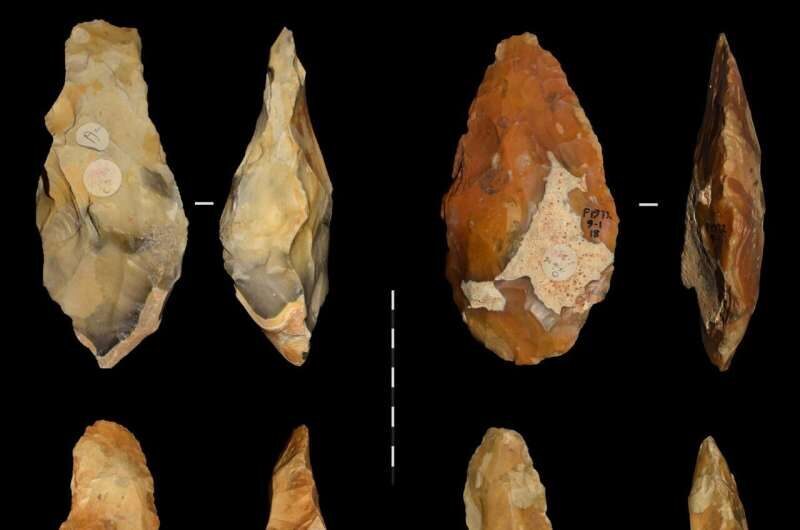
© University of CambridgeA selection of handaxes discovered in the 1920s. Image: authors of the research.
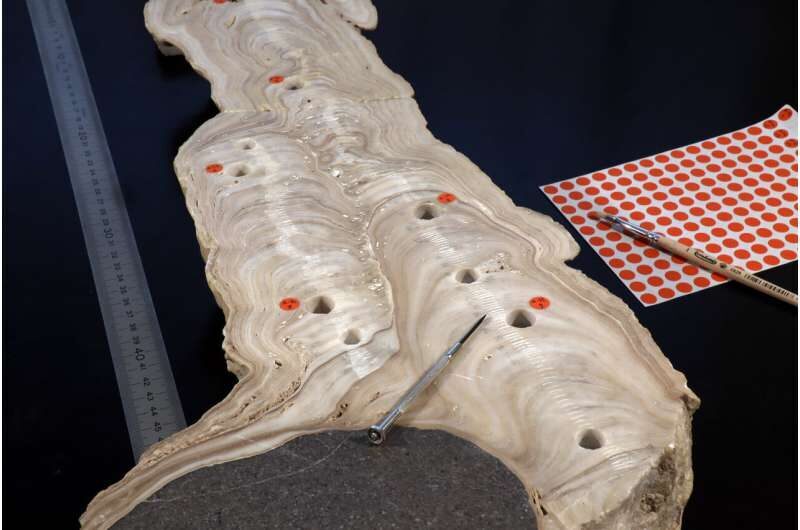
The breakthrough, involving controlled excavations and radiometric dating, comes a century after stone tool artifacts were first uncovered at the site.
The research, led by archaeologists at the University of Cambridge, confirms that Homo heidelbergensis, an ancestor of Neanderthals, occupied southern Britain in this period (when it was still attached to Europe) and gives tantalizing evidence hinting at some of the earliest animal hide processing in European prehistory.
Located in an ancient riverbed, the Canterbury site was originally discovered in the 1920s when local laborers unearthed artifacts known as handaxes (most now in the British Museum), but by applying modern dating techniques to new excavations their age has finally been determined.



















Comment: See also: