OF THE
TIMES
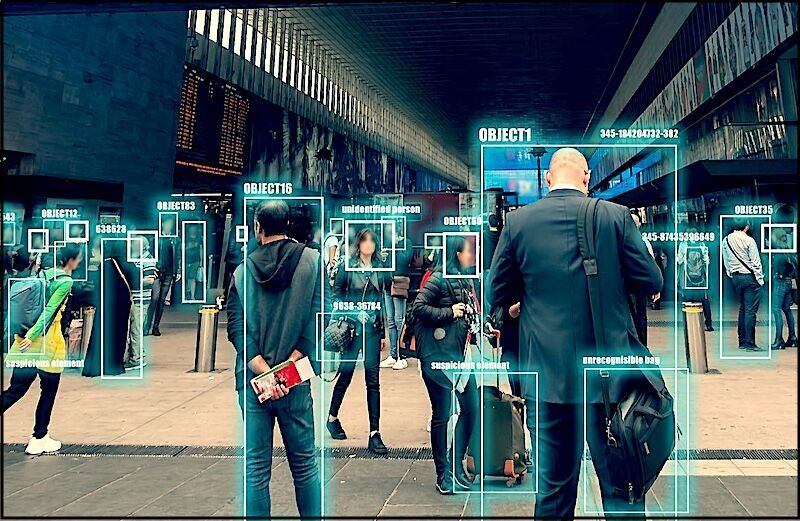
21 Apr 2026 The High Court has dismissed a judicial review challenge to the Metropolitan Police Service's revised policy governing the overt use of live facial recognition technology (LFR), finding that it complies with Articles 8, 10 and 11 of the European Convention on Human Rights.
The court rejected arguments that the September 2024 policy leaves police officers with unlawfully broad discretion as to when, where and against whom LFR may be deployed.
The claim concerned the lawfulness of the MPS's current LFR policy, adopted on 11 September 2024 following a review of earlier iterations. The claimants did not argue that the use of LFR is unlawful in principle, nor that the police lack powers to deploy it. Instead, they contended that the policy fails to meet the required "quality of law", because it does not sufficiently constrain discretion, rendering interferences with Convention rights not "in accordance with the law" or "prescribed by law".LFR is used by the police to assist in the prevention and detection of crime, the location of wanted or missing persons, and the protection of the public. It operates by scanning faces in public places and comparing biometric data with images held on police watchlists. Where no match is generated, biometric data is deleted immediately.It was common ground that both grounds raised the same core issue: whether the policy provides sufficient clarity, foreseeability and safeguards to prevent arbitrary decision making.
The first claimant, Shaun Thompson, was mistakenly identified during an LFR deployment near London Bridge in February 2024, when he was matched to an image of his brother. He was stopped, questioned and asked to prove his identity.
The second claimant, Silkie Carlo, argued that LFR deployments risk deterring lawful protest and expression.
The September 2024 policy restricts the use of LFR to three defined "Use Cases":- crime hotspots and missing person hotspots;Outside those use cases, LFR cannot be deployed. The policy also contains detailed criteria governing watchlists, geographical limits, senior authorisation, oversight and review. All deployments are subject to a mandatory proportionality assessment, requiring express consideration of the impact on Convention rights, including the risk of chilling lawful protest.
- protective security operations, including major events; and
- deployments based on specific intelligence indicating that a sought person is likely to be present at a particular location.
The court held that the policy, read fairly and as a whole, contains "clear, interlocking and cumulative constraints" on the use of LFR. The strict limitation to specified use cases, the detailed rules on watchlists and locations, and the requirements for senior authorisation and oversight meant that decision making was governed by the policy rather than individual "whim".
While acknowledging that the policy confers discretion, the question is whether it is sufficiently constrained to guard against arbitrariness. In the court's view, the MPS framework met that standard. Properly construed, the phrase "operational experience" referred to corporate, evidence based operational judgement applied alongside crime data and intelligence, not the personal instincts of individual officers.
----------------------------------------------------------------------------------------------------------------------------------
According to Silkie Carlo:"There has never been a more important time to stand up for the public's rights against dystopian surveillance tech that turns us into walking ID cards and treats us like a nation of suspects.
"Innocent people deserve clear and strict protections from live facial recognition cameras, which should be reserved for the most serious cases rather than used to scan millions of people, and that is what the appeal will seek to achieve.
"This legal challenge, which was made possible by concerned members of the public, has already led to a change in the Met's facial recognition policy and to a payment awarded to Mr Thompson who was misidentified by the tech and threatened with arrest.
"He has been courageous in challenging the police, defending his rights and now standing up for the rights of millions of others in the country."


The family of Joshua LeBlanc, a New Iberia native and NASA electrical engineer, is searching for answers after his car was found abandoned and burned beyond recognition two hours away from his home in Huntsville, Alabama.
LeBlanc, 29, was reported missing earlier this week after he failed to show up for work Tuesday morning. According to family members, his last communication came at 4:32 a.m. that day.
Originally from New Iberia, LeBlanc graduated from Catholic High and later earned his degree from the University of Louisiana at Lafayette. He had relocated to Huntsville, where he worked at NASA's Marshall Space Flight Center.
Authorities in Alabama tracked LeBlanc's blue Tesla Model 3 using vehicle data. The car reportedly sat at the Huntsville International Airport for four hours early Tuesday morning, just 12 minutes from his apartment, before traveling west along rural backroads.
By 2 p.m. Tuesday, the vehicle was discovered in Florence, Alabama, crashed and destroyed. A body was found inside, but according to family members, it was burned beyond recognition.
What has concerned his family even more are the details left behind. LeBlanc's phone, wallet, and even his dog were still at his apartment. Family members said the unexpected detour and lack of communication do not match any of Joshua's plans for the day.
Now, they fear he may have been abducted from his home.
The family is urging Tesla to release video from the car's Sentry Mode system, which may have captured crucial footage. So far, however, they say progress has been slow due to delays between the company and law enforcement agencies.
Late Thursday, Alabama State Highway Patrol confirmed it is now leading the investigation into LeBlanc's disappearance.


- Global trade is shifting away from vulnerable maritime chokepoints toward overland routes like the Middle Corridor amid rising geopolitical instabilityWhile diplomatic efforts struggle to stabilize access to the Strait of Hormuz amid tensions between the United States and Iran, Eurasian trade is increasingly being redirected toward overland alternatives, with the Trans-Caspian Transport Route, also known as the Middle Corridor, emerging as a key diversification route in Eurasian logistics.
- A $3.3 billion World Bank-backed investment push aims to address infrastructure gaps and unlock the corridor's long-term potential
- While promising, the route still faces major capacity and coordination constraints before it can rival established northern trade flows
Comment: Considering the chain of production reaches back to basic ingredients from near or far locations, the choke points of any global disruption leaves pharmaceutical companies in limbo and production quotas unmet, neither cost-effective to the producer nor the public.