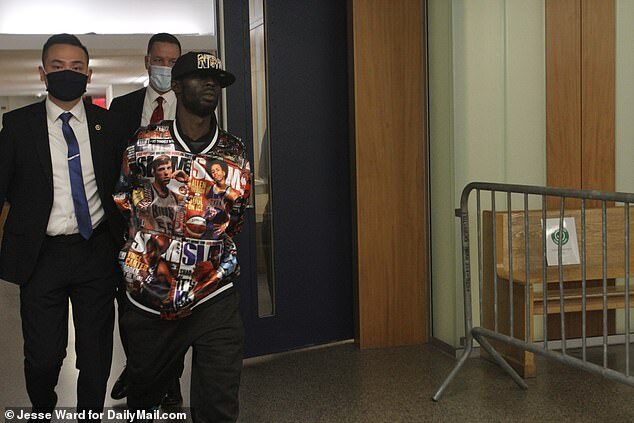
© Jesse Ward/Daily MailFrank Abrokwa, 37, whose record includes more than 44 arrests, was arraigned on charges stemming from the feces attack on March 1 (pictured), but a judge released him
The NYPD's new anti-gun units hit the streets last week and not a moment too soon. New York City is in the midst of a staggering crime wave. Over the past weekend, 29 people were shot in 24 separate incidents, the
Daily News reported. According to the latest NYPD statistics,
major felonies in the city increased 58% in February 2022, in year over year comparisons to February 2021. Murders rose 10%. Felony assaults rose 22%. Rapes increased 35%. Robberies increased 56%. Hate crimes — largely against Jews and Asian-Americans — surged 189%. Crimes in the transit systems — mainly the subways — were up 73%.
New York is a city under siege. Every day brings a new horror story. A child is assaulted in Times Square. A young woman is stabbed to death in her Chinatown apartment. A senior citizen is hacked to death by a wheelchair-bound transgender two-time
convicted murderer. A madman smears feces on a woman's face in a subway station, is released on bail, and
arrested again after hurling a dumbbell through a window. A woman is shoved in front of a subway train and killed. Another woman is attacked with a hammer. A teen is shot to death in front of a Brooklyn high school. A baby is shot in the face in the Bronx. A teenage cashier at a Burger King in Manhattan is shot and killed during a robbery. Two police officers are
killed by gunfire in Harlem.













Comment: See also: