A mysterious boom shook, rattled and rolled many residents of Gibraltar early Thursday afternoon.
The resonant sound was first mentioned by a resident who posted a comment on the Gibraltar Life Facebook group page, with numerous people saying they heard and felt it, as well.
Several people said it sounded like thunder, but the sun was shining brightly, with no storm clouds in sight.
One person said it felt like a minor earthquake, but none were reported.
Others surmised that the sound could have resulted from blasting at a nearby quarry. Many residents said the boom shook their entire house.
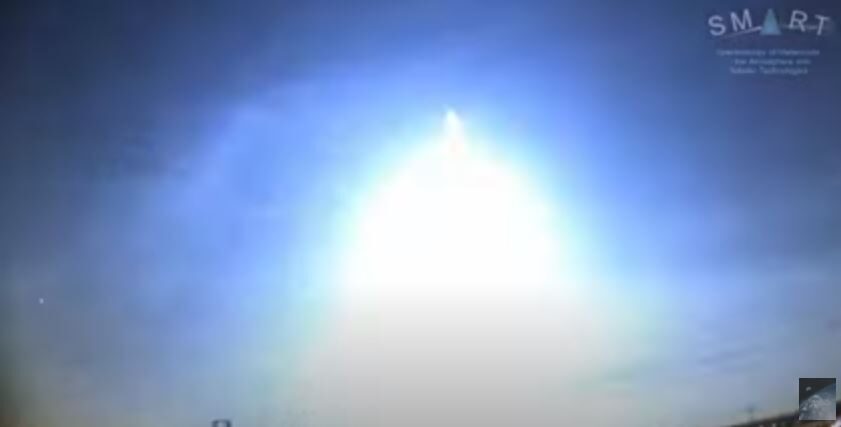
Three bright meteors overflew Spain on November 21. The brightest of them (Event # 1 on video) was spotted at about 2:32 local time (equivalent to 1:32universal time). It was generated by a rock (a meteoroid) from Comet Encke that hit the atmosphere at around 101,000 km / h. It began at an altitude of about 105 km over the province of Jaén (Andalusia), and ended at a height of around 52 km.
Previously, other two fireballs were recorded, at1:47 and 2:21local time, respectively (Events # 2 and # 3 on video). The first of these (Event # 2 on video) was generated by a rock from another comet that entered the atmosphere at 202,000 km / h. It began at a height of 108 km over the Mediterranean Sea and ended at an altitude or around 72 km off the coast of the province of Almería (Andalusia).
Finally, the bolide recorded at2:21h (Event # 3 on video) was also produced by a rock from Comet Encke entering the atmosphere at 101,000 km / h. It began at an altitude of around 111 over the province of Ciudad Real, and ended at a height of about 71 km. These events were recorded in the framework of the SMART project, which is being conducted by the Southwestern Europe Meteor Network (SWEMN). These meteors were spotted from the meteor-observing stations located at Sevilla, La Sagra (Granada), La Hita (Toledo), Sierra Nevada (Granada), and Calar Alto.
Dublin residents have been left spooked after a massive mysterious bang shook houses and woke locals late last night.
Baffled northsiders took to social media to first see if they were imaging what had happened, asking others if they had heard the noise too, before trying to figure out what the colossal clang was.
And Royal Oak, Santry Court and Woodlawn residents are still none the wiser almost 12 hours after the big boom.
The thud had affects on houses in a 2km radius along the M50 in the area with many fearing it may have been coming from the motorway.
A bright meteor illuminated the night sky over southern Texas as part of the anticipated Leonids meteor shower, experts said.
The fireball was caught on camera Thursday night across the Rio Grande Valley, an area of southern Texas and northern Mexico, including at the National Weather Service's Brownsville station.
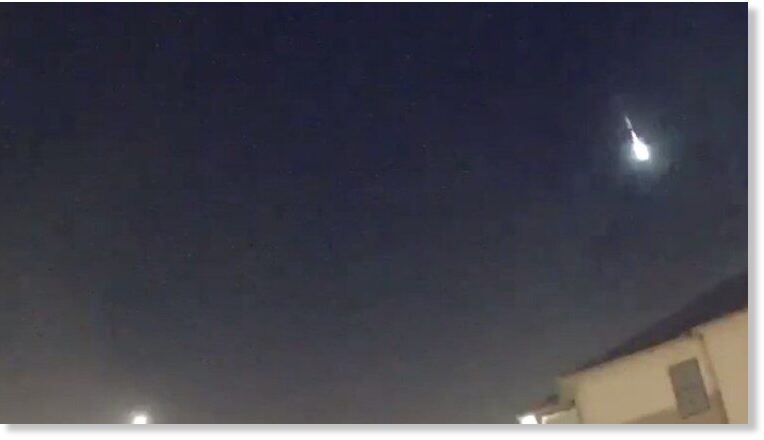
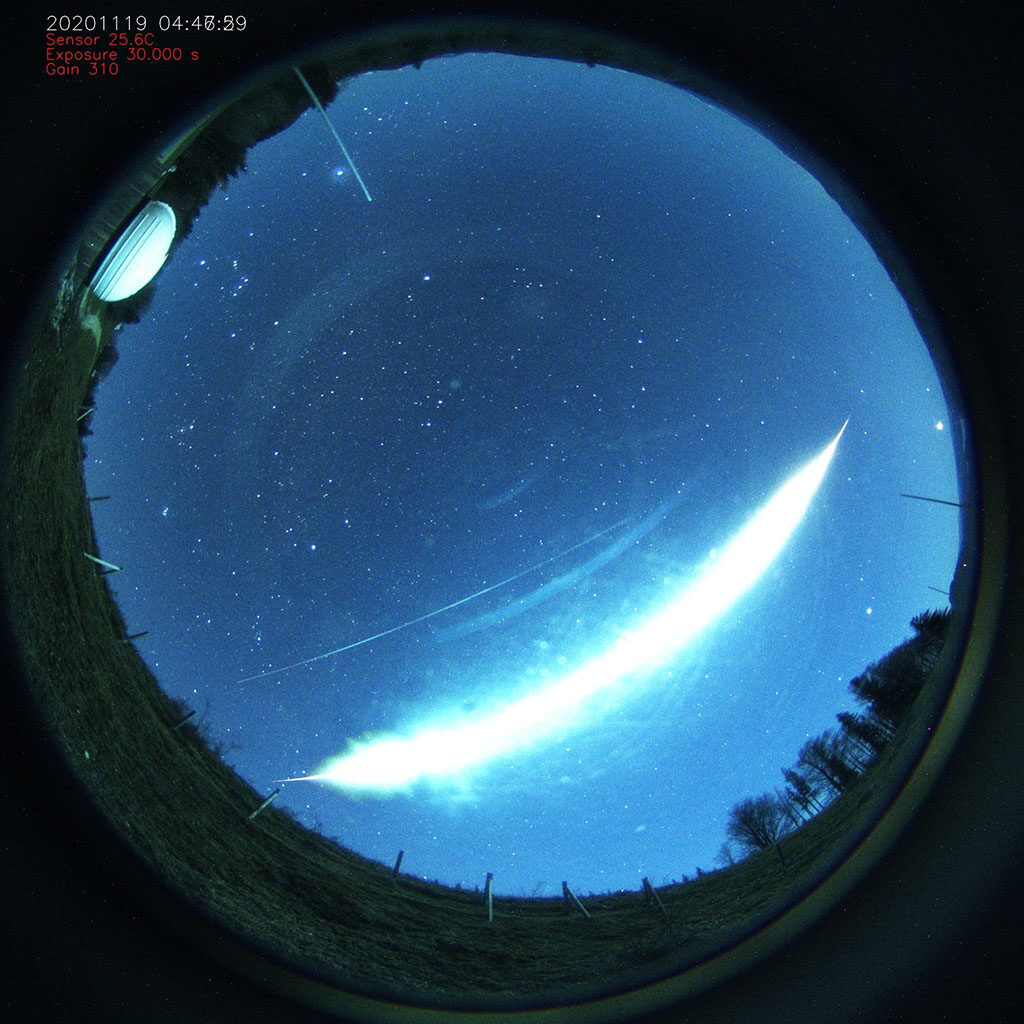
The American Meteor Society (AMS) has received 34 reports (event 6819-2020) about a meteor fireball seen over Baden-Württemberg, Bayern, Friuli-Venezia Giulia, Oberösterreich, Sachsen, Salzburg, Saxony, Tirol, Upper Austria and Veneto on Thursday, November 19th 2020 around 03:46 UT.
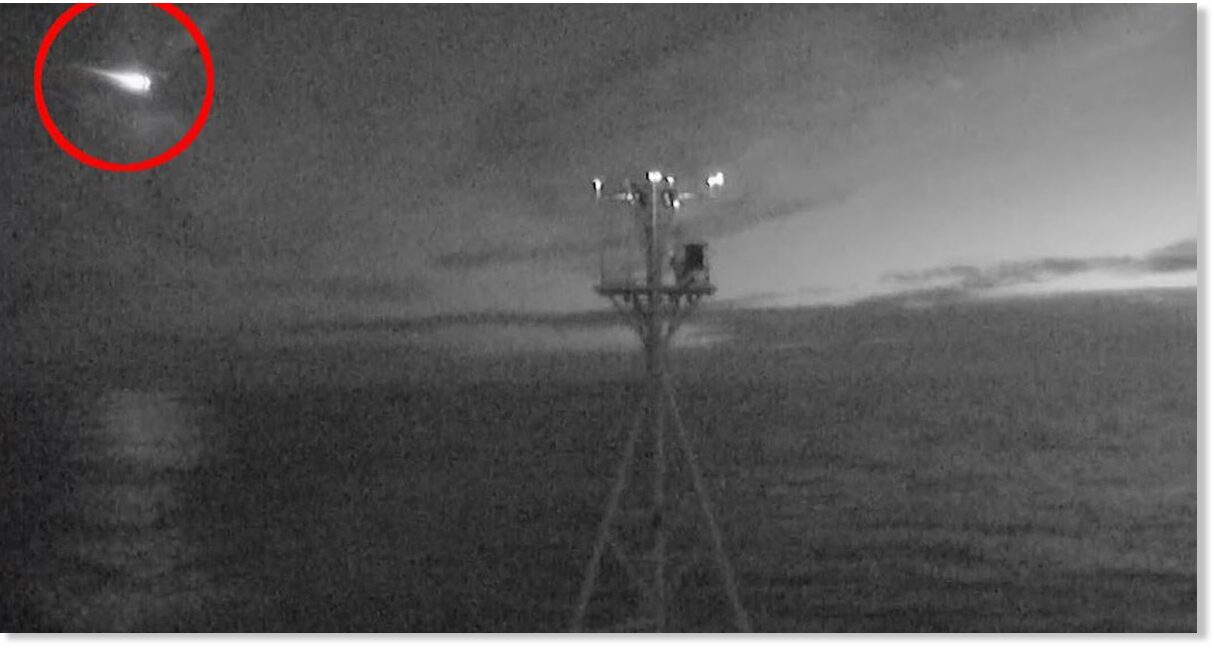
An enormous, spectacular fireball blazing a trail across the sky off the southern coast of Tasmania, Australia, has been captured on film.
A livestream camera fitted to the research vessel Investigator, operated by Australia's national science agency CSIRO, spotted the fireball at 9:21 p.m. local time on Nov. 18. The vessel is designed to "look" down, performing mapping of the seafloor and conducting oceanographic studies about 60 miles south of Australia, but it was the meteor that flew by overhead that excited the crew on Wednesday.
"What we saw on reviewing the livestream footage astounded us, the size and brightness of the meteor was incredible," John Hooper, voyage manager onboard the vessel, said in a press release.
The American Meteor Society (AMS) received 54 reports (event 6742-2020) about a meteor fireball seen over AR, IA, IL, IN, KS, KY, MI, MO, NE, OH, TN and WI on Wednesday, November 18th 2020 around 11:24 UT.
A disturbing new record for the closest asteroid flyby of the Earth has been set, after a space rock named 2020 VT4 came within 400 kilometers (250 miles) of the planet on Friday the 13th. And our planetary defenses missed it.
The asteroid was spotted by the Asteroid Terrestrial-impact Last Alert System (ATLAS) survey at the Mauna Loa Observatory in Hawaii some 15 hours after it made its close approach from our sun-facing blind spot.
Estimated to measure between five and 10 meters (16-32 feet) in diameter (about 5.5 refrigerators stacked on top of one another), 2020 VT4 made its closest approach at 17:20 Universal Time (UT) on Friday November 13 over the South Pacific, near the Pitcairn Islands.
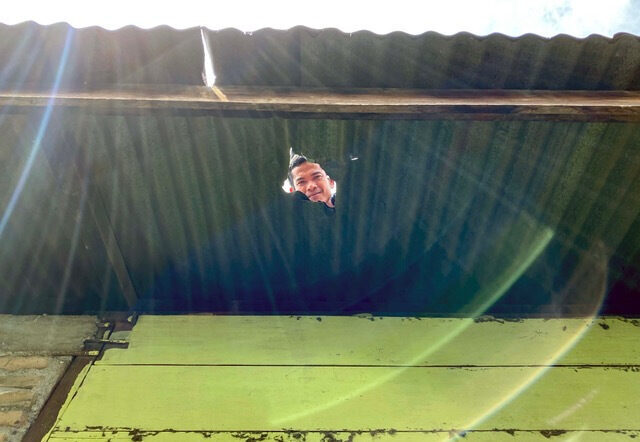
A coffin maker in Indonesia became an instant millionaire - when a £1.4million lump of space rock crashed through his roof.
Josua Hutagalung, 33, was at home when the football-sized meteorite smashed through the veranda at the edge of his living room.
The lump of space rock is worth £1.4millionCredit: East News Press Agency
Experts have hailed the 4.5billion-year-old space rock as one of the most significant meteorite finds ever - saying it could contain elements which give clues to the origins of life.
On 16 November 2020, at about 3:49 local time, a beautiful and very bright fireball was spotted over the south of Spain. This bolide was generated by a rock from a comet that hit the atmosphere at about 227,000 km/h. The fireball began at an altitude of about 132 km over Andalusia (south of Spain), and ended at a height of around 61 km over the south of Portugal.
This bright meteor was recorded in the framework of the SMART project, operated by the Southwestern Europe Meteor Network (SWEMN) from the meteor-observing stations located at Sevilla, La Hita (Toledo) and Calar Alto (Almería). The event has been analyzed by the principal investigator of the SMART project: Dr. Jose M. Madiedo, from the Institute of Astrophysics of Andalusia (IAA-CSIC).