Puppet MastersS


Attention

The 'inside track' of Putin-Xi Jinping talks

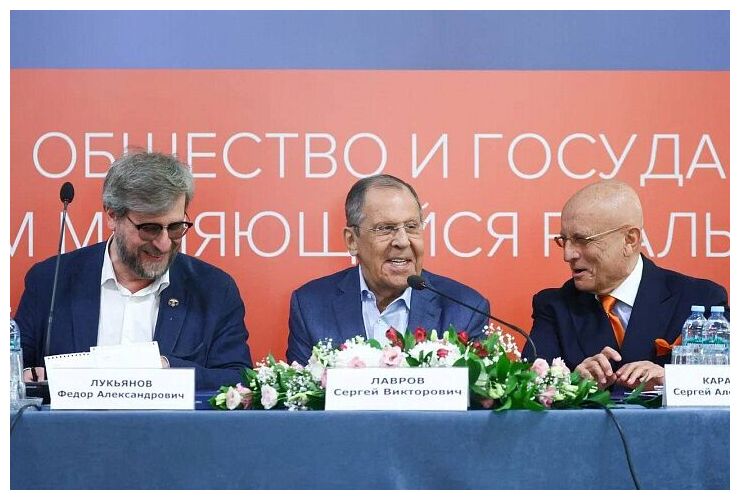
Sergey Lavrov
© Indian PunchlineRussian Foreign Minister Sergey Lavrov (C) addressing the Council for Foreign and Defence Policy, Moscow, May 18, 2024.
In international diplomacy, summit meetings stand apart from regular high-level meetings when they are held at key moments or important junctures to reinforce partnerships and/or launch major initiatives.

The summit meeting at Beijing last Thursday between Chinese President Xi Jinping and Russian President Vladimir Putin last falls into such a category, taking place at a momentous juncture when a great shift in the global power dynamic is happening and the breathtaking spectacle of history in the making playing out in real time. (Read my article in NewsClick titled Sino-Russian Entente Shifts Tectonic Plates of World Politics.)

The two statesmen spent an entire Thursday together after Putin's presidential jet landed at the crack of dawn in Beijing. Extensive and very detailed discussions indeed took place. As Putin said later, this was a state visit which turned into a "working visit."

The "debriefing" on Saturday by Russian Foreign Minister Sergey Lavrov for the foreign and security policy elite in Moscow at the annual plenary of the Council on Foreign and Defense Policy — Russia's equivalent of the Council of Foreign Relations headquartered in New York — soon after Putin's entourage returned from China gives some invaluable glimpses into the 'inside track' of the closed-door discussions in Beijing.

At the most obvious level, Lavrov hit hard in his speech at the US and its NATO Allies with exceptional bluntness that their agenda to inflict a "strategic defeat" on Russia militarily and otherwise — to "decolonise'' or "dismember" Russia, et al — is pure fantasy and it will be resolutely countered. Lavrov predicted that the escalation in western weapon supplies to Ukraine only highlights the ground reality that "the acute phase of the military-political confrontation with the West" will continue in "full swing".

The western thought processes are veering round dangerously to "the contours of the formation of a European military alliance with a nuclear component," Lavrov said. In particular, France and Germany are still struggling with the demons in their attics — the crushing defeat France suffered at the hands of the Russian army in the Napoleonic war and the destruction of Hitler's Wehrmacht by the Red Army.

The big picture is that the West is not ready for a serious conversation. Lavrov lamented that "they have made a choice in favour of a showdown on the battlefield. We are ready for this. And always." That Lavrov spoke in such exceptionally tough tone suggests that Moscow is supremely confident of Beijing's support in the crucial phase of the Ukraine war going forward. This is the first thing.


Info

2024 and the inevitable rise of biometrics

Biometrics
© Off-Guardian
Have you noticed a lot of two-factor authentication prompts lately? Are you getting emailed verification codes that take forever to arrive, so you have to request another?

Perhaps you are asked to do captchas to "prove you're human" and they seem to be getting more complex all the time or simply not working at all?

Why do you think that might be?

We'll come back to that.

Did you know we're in a "breakthrough year" for biometric payment systems?

According to this story from CNBC, JPMorgan and Mastercard are on board with the technology and intend a wide rollout in the near future, following successful trials.

In March this year, JPMorgan signed a deal with PopID to begin a broad release of biometric payment systems in 2025.

A Mastercard spokesman told CNBC:
Our focus on biometrics as a secure way to verify identity, replacing the password with the person, is at the heart of our efforts in this area,"
Apple Pay already lets you pay with a face scan, while Amazon have introduced pay-by-palm in many of their real-world stores.

VISA showcased their latest palm biometric payment set-up at an event in Singapore earlier this year.

As we covered in a recent This Week, PayPal is pushing out its own biometric payment systems in the name of "preventing fraud".

As always, this is not just an issue in "the West".

Pharoah

Klaus Schwab steps down as World Economic Forum executive chairman

Schwab
'You'll own nothing in retirement and be happy'...

Wit the organization he founded 50 years ago bringing in nearly $500 million in revenue in the year ending March 2023 (and sitting on a neat pile of 200 million Swiss francs cash), Klaus Schwab will own some things as he reportedly steps back from his role running the World Economic Forum has has headed since 1971.

Semafor reports that Schwab announced his intentions to step down as executive chairman in an email to staff on Tuesday that was shared with Semafor by a person connected to the organization.

Comment: Don't worry, his legacy will live on! In the meantime though, let's look back fondly at a few highlights in Schwab's career as a schizoid world leader helping to bring humanity towards a technocratic, dehumanizing and ultimately genocidal end:


Pirates

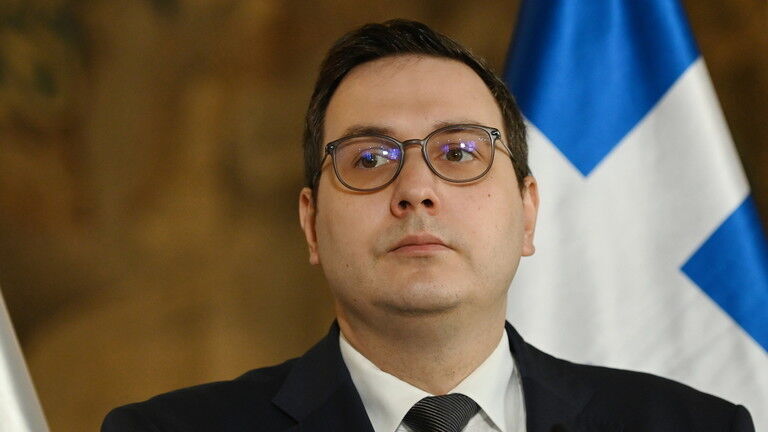
EU approves sending Russian money to Ukraine - Czech FM

Czech Foreign Minister Jan Lipavsky.
© Tomas Tkacik / SOPA Images / LightRocket via Getty ImagesCzech Foreign Minister Jan Lipavsky.
The West has for weeks debated a proposal to use interest earned on Moscow's frozen funds to aid Kiev

The EU has agreed to use the proceeds from Russian assets that the bloc has frozen to aid Ukraine, Czech Foreign Minister Jan Lipavsky has said. The annual revenue from these funds is expected to be around $3 billion.

After the start of Moscow's military campaign against Kiev in February 2022, Western states blocked around $300 billion in Russian state assets, the bulk of which is concentrated in EU countries. Moscow has denounced this latest move as "theft" and has warned of retaliation if the funds are seized or used in any way to help Ukraine.

Western officials have floated various ideas for using the funds, ranging from outright seizure to using them as collateral to secure loans for Kiev. Another idea was to use profits from Russian assets to support Ukraine's procurement of weapons.

Comment: It appears that the European Union has once again shot itself in the foot.

See also:


Heart - Black

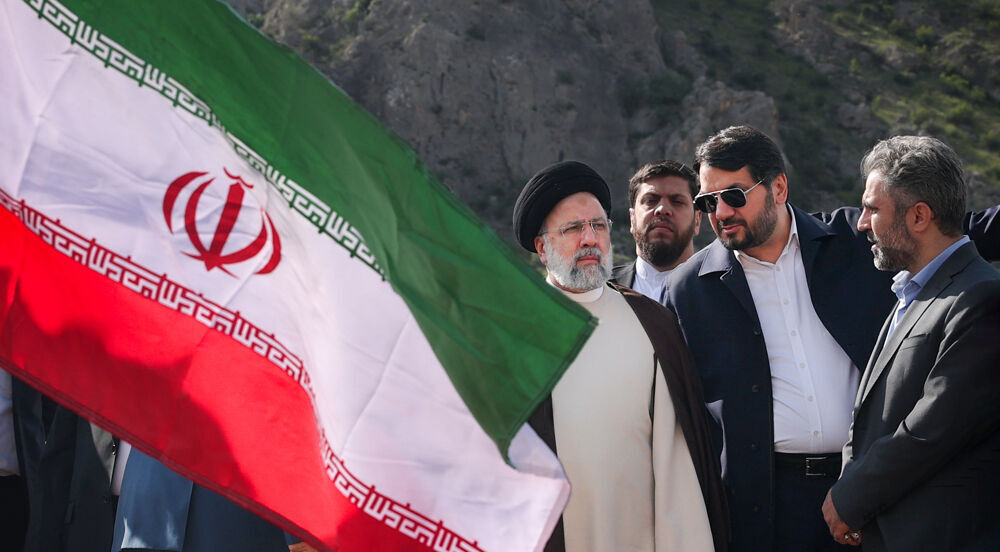
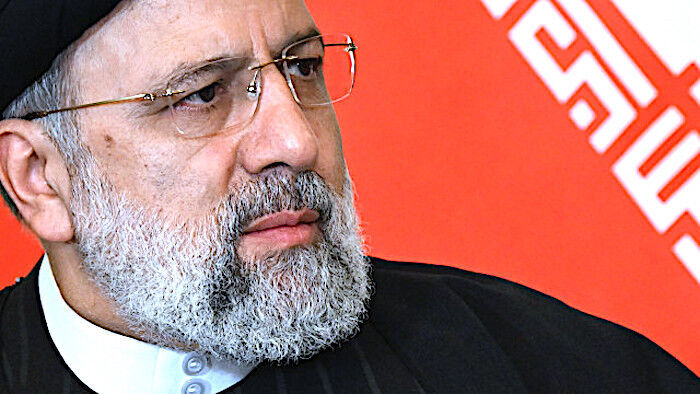
'Saddened and shocked': World leaders extend condolences after President Raeisi's martyrdom

Iran’s President Ebrahim Raeisi visits a road and rail project in East Azarbaijan Province on May 19, 2024.
© Photo by president.irIran’s President Ebrahim Raeisi visits a road and rail project in East Azarbaijan Province on May 19, 2024.
World leaders have extended condolences to the Iranian government and nation over the martyrdom of President Ebrahim Raeisi in a helicopter crash in the country's northwest.

Raeisi died alongside his accompanying delegation, including Foreign Minister Hossein Amir-Abdollahian, after their chopper crashed in the Dizmar forest in East Azarbaijan Province on Sunday.

Following an hours-long search hampered by poor weather conditions, rescuers found the burnt-out wreckage of the helicopter and its passengers were confirmed dead.

Comment: See also:


Russian Flag

A new Russian offensive is stretching Ukrainian forces. Possibly to the breaking point

Vovchansk ukraine russian offensive may 2024
© George Ivanchenko/EPA-EFEVovchansk, a village in Ukraine's northern Kharkiv region, has been the site of the fiercest fighting in the latest Russian offensive of May, 2024.
Ukrainian civilians evacuated from border regions with Russia. An important east-west highway in the eastern Donetsk region threatened by encroaching Russian forces. A village captured by Ukraine during last year's counteroffensive about to return to Russian control. Ukraine's president cancels all foreign trips.

The news from Ukraine's battlefield these days is grim: Russia is advancing. Ukraine is struggling to hold its positions, if not outright retreating.

Ukrainian forces were already under severe pressure in several locations along the 1,100-kilometer front line even before Russia launched a localized offensive north of Ukraine's second largest city, Kharkiv, last week. Troops moved into a "gray zone" -- Ukrainian territory that's not fully controlled by either Ukrainian or Russian forces. On May 16, Russian units appeared to have entered the town of Vovchansk, about 5 kilometers from the border, and the site of the fiercest fighting in the north.

Comment: Nice effort by Mr. Eckel, but the reality on the ground can be subjected to only so much spin.


Alarm Clock

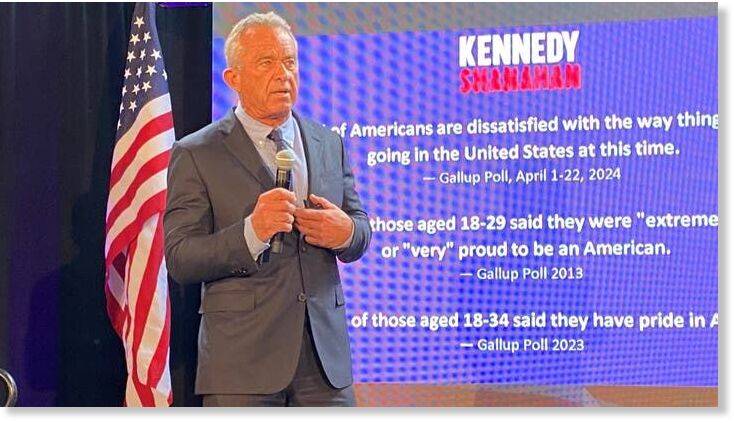
'Afraid I would win': RFK Jr. accuses opponents of 'colluding' to exclude him from debates

kennedy
© Fox News - Paul SteinhauserRobert F. Kennedy, Jr. holds a news conference in Brooklyn on May 1, 2024.
Democrat turned independent presidential candidate Robert F. Kennedy, Jr. charges that President Biden and former President Trump "are trying to exclude me from their debate because they are afraid I would win."

Kennedy fired back in a social media posting hours after the Democratic president and his Republican predecessor in the White House agreed to face off in showdowns in June and early September.

A debate proposal from Biden that triggered the cascade of developments on Wednesday morning stated that "the debates should be one-on-one, allowing voters to compare the only two candidates with any statistical chance of prevailing in the Electoral College."

Sherlock

Was Israeli intelligence behind death of Iranian President Ebrahim Raisi?

Due to the long-standing hostility between Iran and Israel, some Iranians are speculating if Israeli intelligence was behind the assassination of Iranian President Ebrahim Raisi, but an Israeli official has denied that claim, and experts believe the hypothesis of Israeli involvement to be improbable.
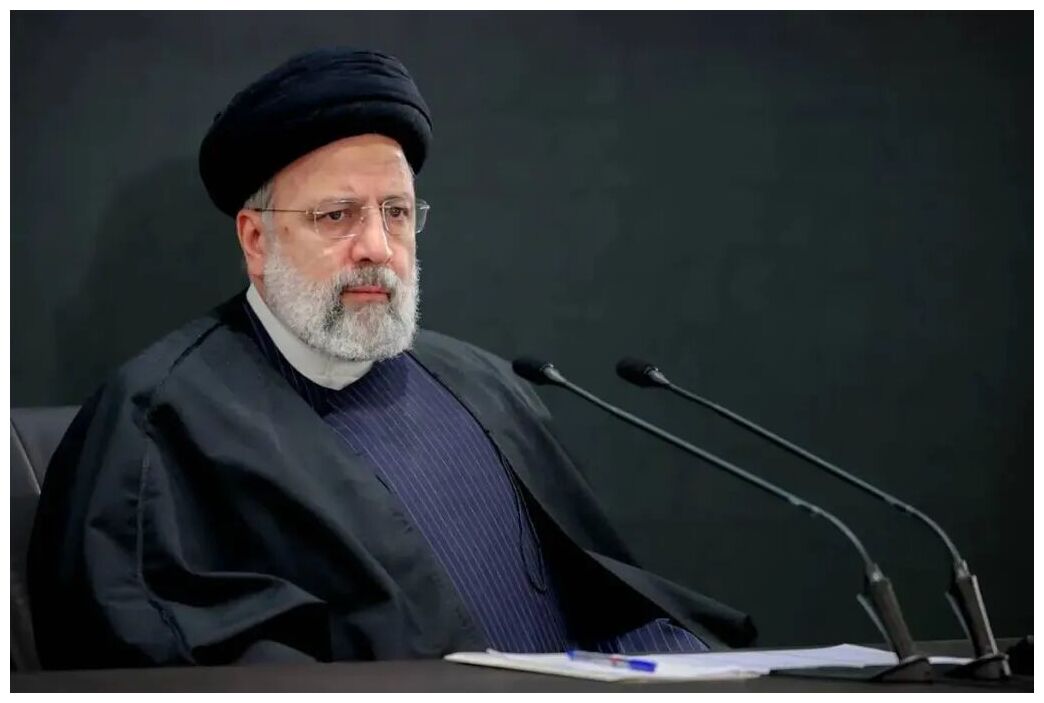
Iranian President Ebrahim Raisi
© GreatGameIndia
Israel denied any role on Monday in the death of Iranian President Ebrahim Raisi, who was killed along with many members of his entourage in a helicopter crash.

"It wasn't us," an official who wished to remain anonymous was cited by news agency Reuters.

At the age of sixty-three, Iranian President Ebrahim Raisi, who was well-known for his strict policies and strong relationship with the nation's top leader, departed from this life. Raisi was involved in the 1988 mass killings of thousands of people. He then led Iran's pursuit of uranium enrichment to levels close to weapons-grade and launched a massive drone and missile offensive against Israel.

Raisi unexpectedly died on Sunday in a helicopter crash in northwest Iran, along with the country's foreign minister and other officials.

Regarding the circumstances surrounding Raisi's helicopter crash, concerns and conjecture have been raised. Iran is facing a period of uncertainty with the death of its president, which could have far-reaching effects throughout the Middle East.

President Raisi's passing is probably going to have a big impact on the area in addition to starting a high-stakes power struggle inside Iran. The abrupt withdrawal of a significant political figure like Raisi might upset the delicate balance of power within Iran and internationally in the context of rising tensions and conflicts.

Although poor weather, including rain and fog, which made visibility during the flight difficult, is the official explanation for the tragedy, rumors of foul play have surfaced. Questions have been raised over the possible involvement of local enemies or even external entities like Israel given Raisi's contentious tenure and the issues Iran faces on the inside as well as the outside.

Cloud Precipitation

Search for Iranian president's downed helicopter hampered by rain, fog

Raisi
© EPA/Pavel Bednaakov/Krermlin PoolIranian President Ebrahim Raisi
Rescue crews searched into the night on May 19 for a downed helicopter carrying Iranian President Ebrahim Raisi, Foreign Minister Hossein Amir-Abdollahian, and other government officials that Iranian official news agency IRNA said was involved in a "hard landing" in foggy weather in a remote area of northwestern Iran.

The Iranian government said earlier on May 19 that the helicopter was one of three flying in a convoy that was traveling near the border with Azerbaijan.


Two of the helicopters reportedly landed safely in the city of Tabriz, but the third helicopter carrying the president and the other officials did not, setting off a massive search operation that continued after darkness fell in the mountainous and forested area where the helicopter went down.

Comment: See also: Iranian president confirmed dead in helicopter crash


Handcuffs

Best of the Web: ICC prosecutor seeks arrest warrants for Netanyahu and Hamas leaders


Comment: To be clear, this is an application by the ICC prosecutor for an arrest warrant for the Israeli and Hamas Palestinian leaders. A panel of judges will rule on its validity. And then arrest warrants will be formally issued, though of course their enforcement is unlikely. What is significant about this is that the Israeli regime, despite its genocidal history, has become so bad now that even its powerful global network can't prevent such a potential development from occurring, and the 'negative optics' that come along with it.


Benji
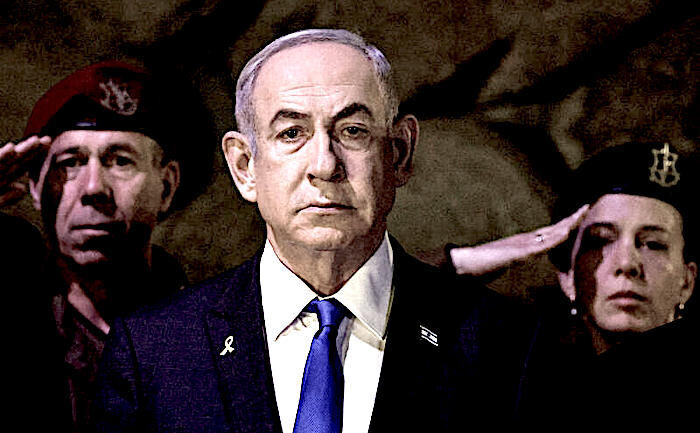
© Amir Cohen/ReutersIsraeli Prime Minister Benjamin Netanyahu • Yad Vashem, the World Holocaust Remembrance Centre, Jerusalem • May 6, 2024
The chief prosecutor of the International Criminal Court is seeking arrest warrants for Israeli and Hamas leaders, including Israeli Prime Minister Benjamin Netanyahu, in connection with their actions during the seven-month war that began on October 7.

Karim Khan said that he believes Netanyahu, his defense minister Yoav Gallant and three Hamas leaders - Yehia Sinwar, Mohammed Deif and Ismail Haniyeh - are responsible for war crimes and crimes against humanity in the Gaza Strip and Israel.

Speaking of the Israeli actions, Khan said in a statement:
"The effects of the use of starvation as a method of warfare, together with other attacks and collective punishment against the civilian population of Gaza are acute, visible and widely known. (...) They include malnutrition, dehydration, profound suffering and an increasing number of deaths among the Palestinian population, including babies, other children, and women."

Comment: RFE/RL has more:
The ICC's three pretrial judges will determine whether there is sufficient evidence to issue warrants. ICC spokesman Fadi Al-Abdallah told RFE/RL in an e-mail that the ICC judges "will issue their decision in due course" but did not offer a specific time frame.

Louis Charbonneau, United Nations director at Human Rights Watch said:
"Karim Khan's decision to seek arrest warrants for five people for grave international crimes committed in Israel and Palestine since October 7 in the face of pressure from U.S. lawmakers and others reaffirms the crucial role of the [court]. Victims of serious abuses in Israel and Palestine have faced a wall of impunity for decades. This principled first step by the prosecutor opens the door to those responsible for the atrocities committed in recent months to answer for their actions at a fair trial."
David Bosco, a professor at Indiana University-Bloomington and an expert on the ICC, said:
"One thing that's important to note is that over the years that the ICC has been operating, the judges and the prosecutor do not always agree. So it's not a foregone conclusion that the prosecutor will get all the arrest warrants that he wants, or for the precise charges that he wants. I think the arrest warrants for Hamas are probably more straightforward in the sense that you have...the October 7 attack that seemed to be aimed primarily at civilians.

"With Israel, you've got a more complicated situation involving humanitarian aid and whether Israel has been allowing enough humanitarian aid in and has it actually been trying to use starvation as a weapon? Those are somewhat more complicated cases, I would say, from a legal perspective."
Anthony Dworkin, a senior fellow at the European Council on Foreign Relations and former executive director of the Crimes of War Project, said:
"The warrants represent a significant moment, both in the evolution of the International Criminal Court and the conflict in the Middle East."

"We've seen before many countries, a number of leaders, being indicted by the ICC or having arrest warrants issued against them, but this is the first time a country that's an ally of the West in Europe and the United States has had an arrest warrant against them.

"I think even the fact that the prosecutor is seeking arrest warrants is likely to step up pressure on those countries that are particularly supporting Israel militarily to really review the kind of support that they're giving [and] to investigate whether they believe that military assistance is being used to commit war crimes."
The Rome Statute, the 1998 treaty establishing the International Criminal Court, has been signed by 124 countries.

The six-member panel wrote in an opinion article for the Financial Times on May 20:
"It is important to understand that the charges have nothing to do with the reasons for the conflict. The charges concern waging war in a manner that violates the long-established rules of international law that apply to armed groups and the armed forces in every state in the world."
ICC prosecutor Karim Khan's interview with CNN is worth listening to in full: