
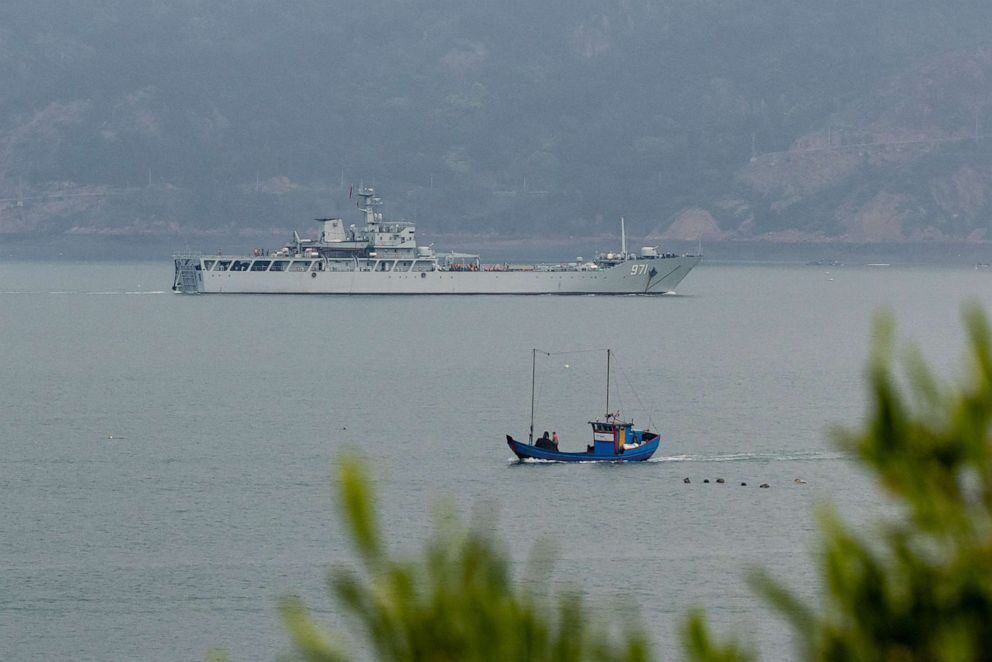
© Thomas Peter/ReutersFILE: A Chinese warship takes part in a military drill off the Chinese coast near Fuzhou, Fujian Province, across from the Taiwan-controlled Matsu Islands, China, April 11, 2023. Exercises begin three days after William Lai Ching-te took his oath as president of the island China claims as its own.
The state-run Xinhua news agency said the Eastern Theatre Command of the People's Liberation Army started the drills at 7:45am (23:45 GMT) on Thursday in the Taiwan Strait, the north, south and east of Taiwan, as well as areas around the islands of Kinmen, Matsu, Wuqiu and Dongyin.
Military spokesman Colonel Li Xi said the joint exercises involving the army, navy, air force, and rocket force were a "strong punishment for the separatist acts of 'Taiwan independence' forces and a stern warning against interference and provocation by external forces", according to a post on China's Weibo messaging platform.












Comment: Meanwhile in Taiwan's parliament: Lawmakers exchange blows in bitter dispute over parliament reforms
And over in Russia: Russia begins 'non-strategic' nuclear weapons drills
Footage of the drills: