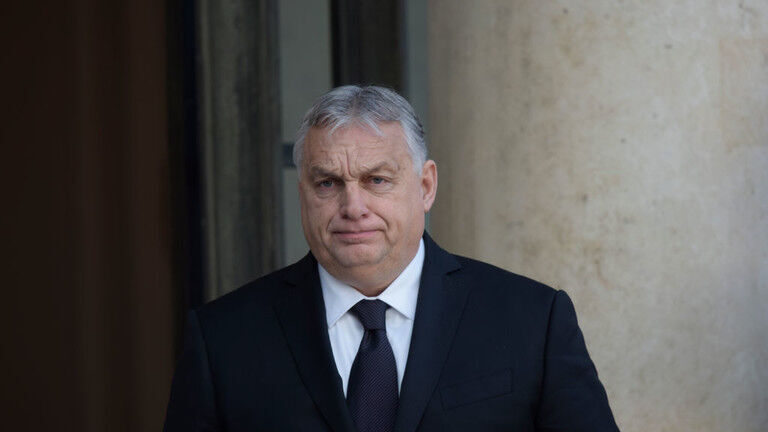
© Getty Images / NurPhotoHungarian Prime Minister Viktor Orban
Hungary is reassessing its role within the bloc as it has no wish to take part in a conflict against Moscow, the PM has said
Hungary is reevaluating its role in NATO, as it has no intention of taking part in actions that could involve member states in the Ukraine conflict and lead to a direct clash with Russia, Prime Minister Viktor Orban said on Friday.Speaking on local Kossuth Radio,
Orban stated that his country has already been relegated to the role of a non-participant within the US-led military bloc due to its stance on Ukraine, and Budapest is now working on legal ways to retain its membership but reserve the right to abstain from joining NATO operations it disagrees with.
Comment: Orban is one European leader that clearly sees there is an uptick in, or a quickening of, processes that could lead to more military conflict engagements in Europe, and trying to oppose it.
For more on the uptick, see also:
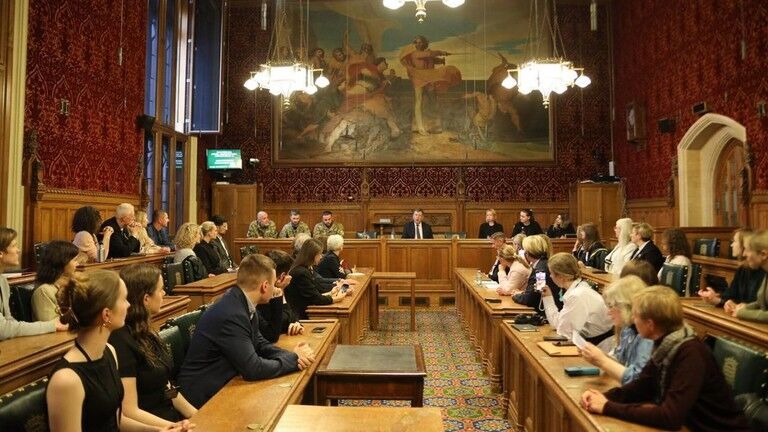
Russia reacts to UK MPs applauding Ukrainian neo-Nazis.
At the moment several countries have signed bilateral agreement with Ukraine. This might be a step to allow for military engagement in Ukraine, and outside it, even without NATO being involved, just as Hungary would like it.
Doing a search for «Agreement on security cooperation and long-term support between Ukraine» on the page of the President of Ukraine gave 26 results. Going through these, without directly linking, below is a list of countries that already have concluded bilateral agreements with Ukraine and excluding mere talks about it.
1) UK: 12 January 2024 - 16:57 Agreement on Security Co-operation between the United Kingdom of Great Britain & Northern Ireland and Ukraine
2) Germany:16 February 2024 - 14:16 Agreement on security cooperation and long-term support between Ukraine and the Federal Republic of Germany
3) France: 16 February 2024 - 22:15 Agreement on security cooperation between Ukraine and France
4) Denmark: 23 February 2024 14:38 Agreement on security cooperation and long-term support between Ukraine and Denmark
5) Canada: 24 February 2024 - 17:05 Agreement on security cooperation between Ukraine And Canada
6) Italy: 24 February 2024 - 17:58 Agreement on security cooperation between Ukraine and Italy
7) The Netherlands: 1 March 2024 - 17:07 Agreement on security cooperation between Ukraine and the Netherlands
8) Finland: 3 April 2024 - 14:17 Agreement on security cooperation and long-term support between Ukraine and the Republic of Finland
9) Latvia: 11 April 2024 - 14:30 Agreement between Ukraine and the Republic of Latvia on long-term support and security commitments
The background for these agreements is explained on the page of the Estonian Embassy in Kiev
Posted on: 09.02.2024 "Estonia reaffirms its long-term support to Ukraine and begins signing a bilateral agreement"
Estonia affirmed its readiness to sign a bilateral agreement between Estonia and Ukraine as a follow-up to the G7's Vilnius Declaration signed last summer in support of Ukraine. "More than 30 countries have now joined the G7's Vilnius Declaration from last summer and are signing bilateral agreements. The agreement between Estonia and Ukraine covers all the areas where we are supporting Ukraine and shows our long-term commitment to continuing this support," the undersecretary explained.
The impression is that so far only intentions have been signed between Estonia and Ukraine, but it is possible that the signing of some bilateral agreements are not made public beyond the strictly necessary, or that they are signed at the level of declarations and promises, but do not progress beyond that. In the case of Estonia for instance, there is the above document expressing "readiness to sign a bilateral agreement" but so far no result when searching for the agreement. The same is the case for Romania, who fielded the largest foreign army for Hitler during WWII.
The
Polish Centre for Eastern Studies published a short analysis of the then recently concluded agreement between Ukraine and the UK. They say:
The first country to start negotiations with Kyiv was the US, the UK being the second. Subsequently, 24 countries have announced their readiness to join the G7 framework. These include, among others, the Baltic and Nordic countries, the Czech Republic, Bulgaria and Romania, as well as the Benelux countries, Spain and Portugal. Negotiations with Germany, France, Italy, the Netherlands, the US, Canada, Japan, Lithuania and Romania are underway.
The provisions of the agreement entitled "cooperation in the event of future armed attack do not obligate the UK government to become directly involved in repelling Russian aggression on Kyiv's side.
There is no obligation, but that does not mean they will not choose to do so. It is on the level of ambiguity that Emmanuel Macron has talked about.














Comment: Orban is one European leader that clearly sees there is an uptick in, or a quickening of, processes that could lead to more military conflict engagements in Europe, and trying to oppose it.
For more on the uptick, see also: Russia reacts to UK MPs applauding Ukrainian neo-Nazis.
At the moment several countries have signed bilateral agreement with Ukraine. This might be a step to allow for military engagement in Ukraine, and outside it, even without NATO being involved, just as Hungary would like it.
Doing a search for «Agreement on security cooperation and long-term support between Ukraine» on the page of the President of Ukraine gave 26 results. Going through these, without directly linking, below is a list of countries that already have concluded bilateral agreements with Ukraine and excluding mere talks about it.
1) UK: 12 January 2024 - 16:57 Agreement on Security Co-operation between the United Kingdom of Great Britain & Northern Ireland and Ukraine
2) Germany:16 February 2024 - 14:16 Agreement on security cooperation and long-term support between Ukraine and the Federal Republic of Germany
3) France: 16 February 2024 - 22:15 Agreement on security cooperation between Ukraine and France
4) Denmark: 23 February 2024 14:38 Agreement on security cooperation and long-term support between Ukraine and Denmark
5) Canada: 24 February 2024 - 17:05 Agreement on security cooperation between Ukraine And Canada
6) Italy: 24 February 2024 - 17:58 Agreement on security cooperation between Ukraine and Italy
7) The Netherlands: 1 March 2024 - 17:07 Agreement on security cooperation between Ukraine and the Netherlands
8) Finland: 3 April 2024 - 14:17 Agreement on security cooperation and long-term support between Ukraine and the Republic of Finland
9) Latvia: 11 April 2024 - 14:30 Agreement between Ukraine and the Republic of Latvia on long-term support and security commitments
The background for these agreements is explained on the page of the Estonian Embassy in Kiev
Posted on: 09.02.2024 "Estonia reaffirms its long-term support to Ukraine and begins signing a bilateral agreement" The impression is that so far only intentions have been signed between Estonia and Ukraine, but it is possible that the signing of some bilateral agreements are not made public beyond the strictly necessary, or that they are signed at the level of declarations and promises, but do not progress beyond that. In the case of Estonia for instance, there is the above document expressing "readiness to sign a bilateral agreement" but so far no result when searching for the agreement. The same is the case for Romania, who fielded the largest foreign army for Hitler during WWII.
The Polish Centre for Eastern Studies published a short analysis of the then recently concluded agreement between Ukraine and the UK. They say: There is no obligation, but that does not mean they will not choose to do so. It is on the level of ambiguity that Emmanuel Macron has talked about.