Puppet MastersS


Eiffel Tower

France: PM urges calm after assaults in run-up to second round vote

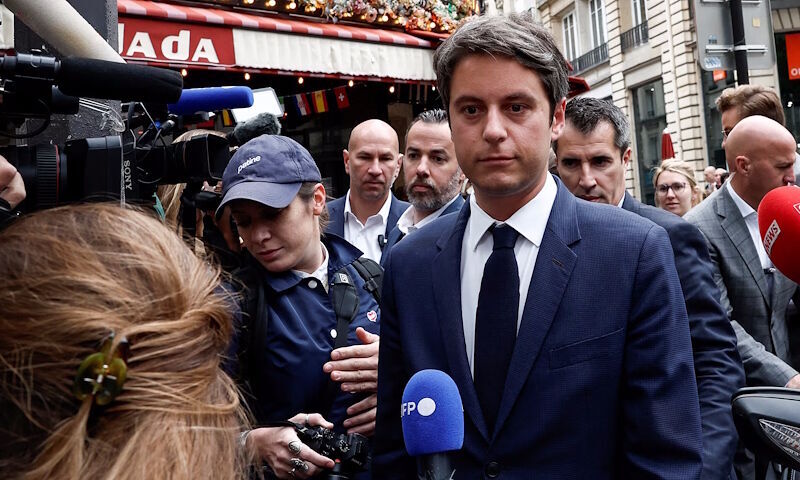
French Prime Minister Gabriel Attal
© Benoît Tessier/ReutersFrench Prime Minister Gabriel Attal said ‘violence and intimidation have no place in our society’ as 30,000 police prepare to deploy after results are declared on Sunday, June 30, 2024
Gabriel Attal's call comes on tense last day of campaigning after more than 50 candidates and canvassers attacked

The French prime minister, Gabriel Attal, has urged all political parties to call for calm on a tense last day of campaigning for a snap election in which the far right hopes to win a majority in parliament.

"Violence and intimidation have no place in our society," Attal wrote in a social media post.

The interior minister, Gérald Darmanin, said: "This campaign is short and yet we already have 51 candidates, substitutes and activists who have been physically assaulted."

Darmanin told BFM TV that some of the assaults had been extremely serious and led to people being admitted to hospital. He said more than 30 arrests had been made across France and denounced what he called "a climate of great violence towards politics and all that it represents".

Cow Skull

Best of the Web: UK: Labour's Potemkin landslide

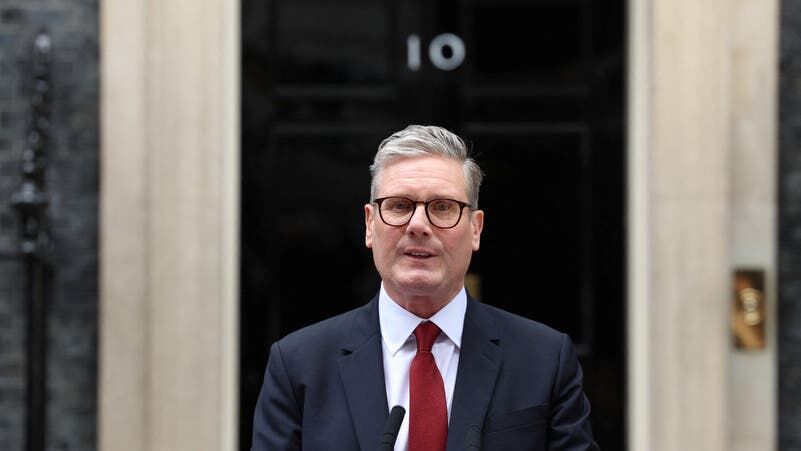
Keir Starmer
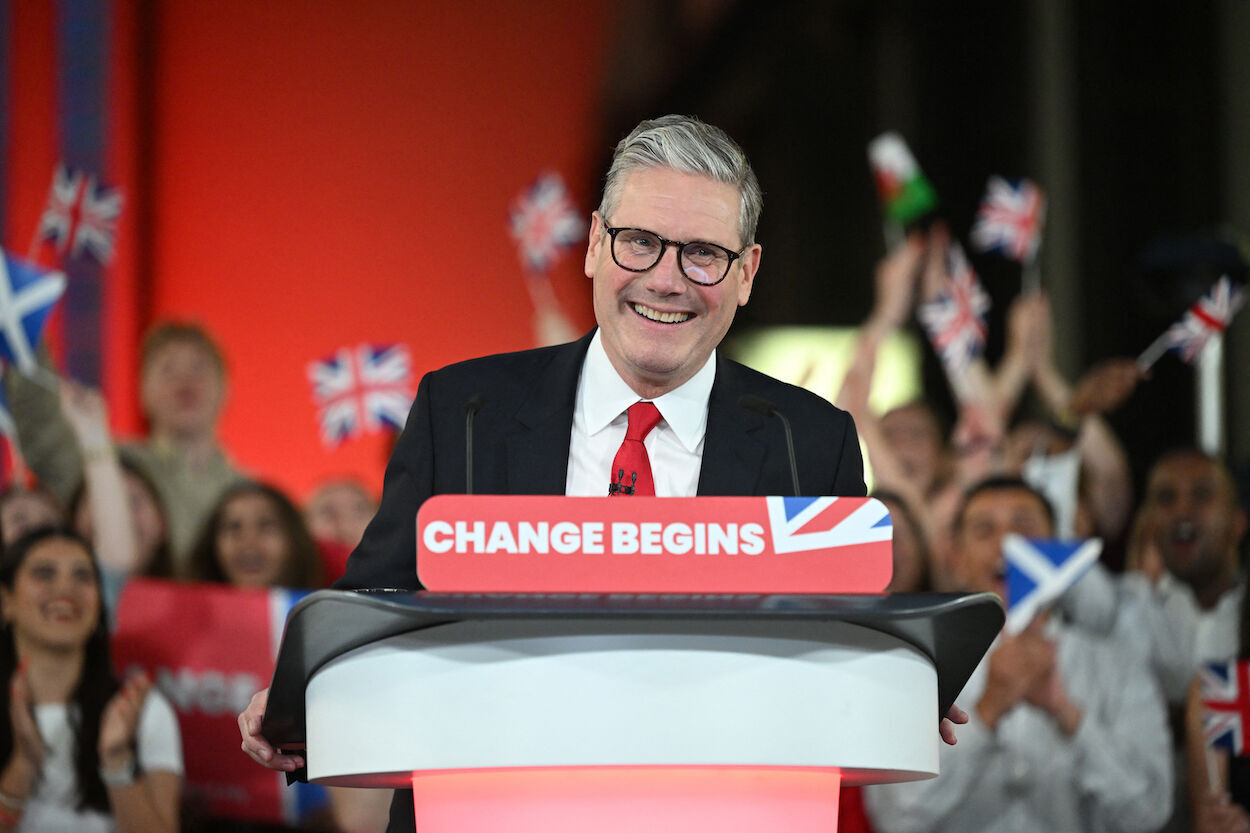
© Justin Tallis/AFPKeir Starmer delivers a speech during a victory rally early on July 5, 2024.
Something pretty big is missing from Labour's historic landslide: voters. Keir Starmer is set to win 64 per cent of the seats but on only 33.8 per cent of the votes, the smallest vote share of any modern PM. Lower than the any of the (many) pollsters predicted. So Labour in 2024 has achieved just 1.6 percentage points higher than the Jeremy Corbyn calamity in 2019 - and less than Corbyn managed in 2017. 'But for the rise of the Labour party in Scotland,' says professor John Curtice, 'we would be reporting that basically Labour's vote has not changed from what it was in 2019.' And that's on the second-lowest turnout in democratic history. So where, then, is the supposed Starmer tsunami?

There certainly has been a Tory meltdown. Its vote share dropped from 44 to 24 per cent - by far the lowest in the party's history. But remarkably, almost none of this seems to have gone to Labour. It went to parties that had no chance of winning seats outright (mainly Reform) but this means that Labour has been the main beneficiary. Let's look at the share of the vote by election-winning parties.

Brick Wall

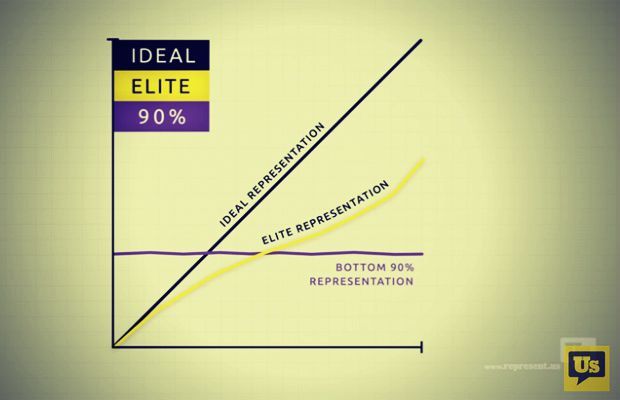
Flashback Best of the Web: 20-year study of US legislation reveals bottom 90% of Americans have ZERO impact on what becomes law

congress representation graph
"When the preferences of economic elites and the stands of organized interest groups are controlled for, the preferences of the average American appear to have only a minuscule, near-zero, statistically non-significant impact upon public policy." - Gilens & Page (2014)
Remember the two guys that did the study which proved America is a oligarchy? (Not that those of us paying attention really needed a study to verify that.)

Vermont Senator Bernie Sanders later even asked Fed Head Janet Yellen during a hearing on Capitol Hill if she thought America was an oligarchy; even she couldn't deny it.

Comment: Most politicians are owned by a handful of oligarchs, whose primary mission is the advancement of their interests regardless of the social consequences. Washington's elites also have a low opinion of the average American, believing that most are uninformed, misguided and that policy-makers should ignore them.

Democracy is just a word that politicians use freely to keep the wool pulled over the eyes of the unsuspecting sheeple, insuring that few realize the evil nature of those whose power and control keep them enslaved.


Bullseye

Best of the Web: Keir Starmer becomes new UK prime minister as Nigel Farage finally elected to Parliament

Starmer
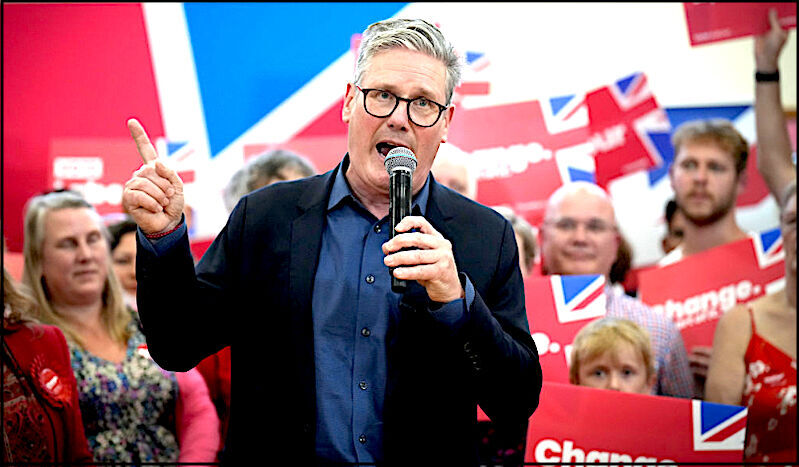
© Christopher Furlong/Getty ImagesLabour leader Sir Keir Starmer delivers a speech to supporters during a visit to a community centre • July 3, 2024 • Redditch, England
Britain has a Labour government with a historic majority of over 150 seats, following exit poll projections of the U.K. general election. Thursday's July 4 vote saw the second lowest voter turnout since 1885, with only an estimated 60 percent of registered voters taking part.

Former lawyer Sir Keir Starmer is set to become prime minister when announced by King Charles today, having purged his party of left-wingers in a successful move to mimic the electoral success of Tony Blair.

4 seats for 4 million votes

Current projections say the Labour Party won 9.6 million votes and an estimated 412 seats, with the Conservative Party second with 6.6 million votes and 120 parliamentary seats. Nigel Farage's Reform UK took over 4 million votes, making his insurgent populist party the third force in U.K. politics by the popular vote.

Due to the workings of the British electoral system, however, Reform gained only four seats at the time of writing. This result still sees Nigel Farage finally enter Parliament as the MP for Clacton, having failed to win in previous elections.

Hopes for "zero seats" for a Conservative Party widely acknowledged to have conserved nothing were dashed, yet the Labour landslide - the greatest since 1945 - sees the Tories lose over 250 seats in what could be their worst result since their party was founded in 1830.

Attention

Why the SCO summit in Kazakhstan was a game-changer

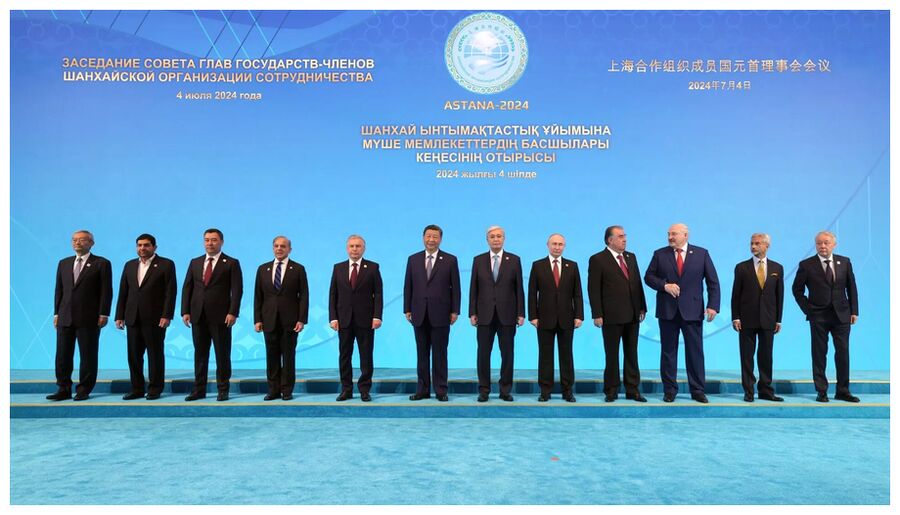
SCO Summit Leaders
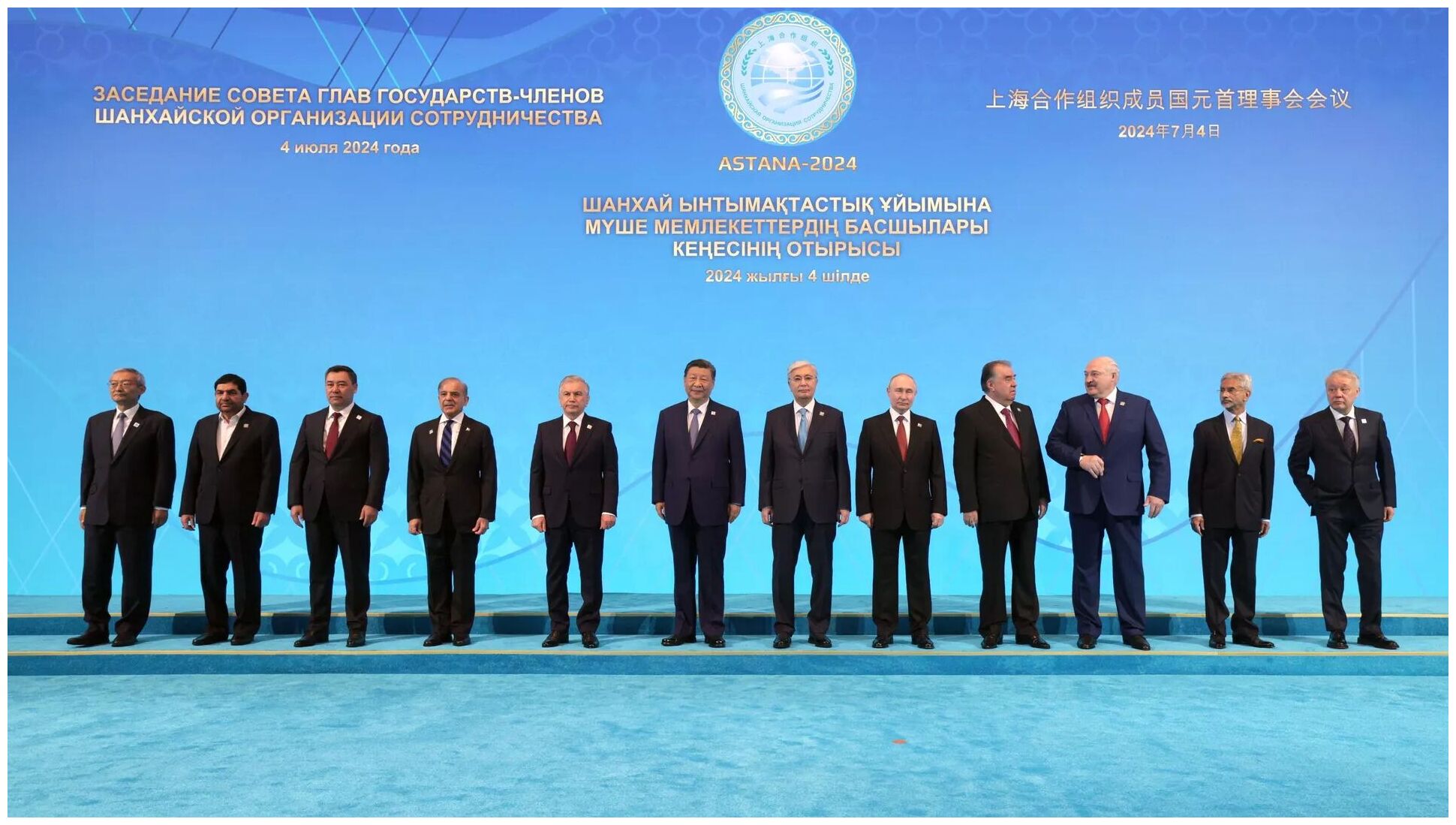
© Sputnik / POOL /
It's impossible to overstate the importance of the 2024 summit of the Shanghai Cooperation Organization (SCO) this week in Astana, Kazakhstan. It can certainly be interpreted as the antechamber to the crucial BRICS annual summit, under the Russian presidency, next October in Kazan.

Let's start with the final declaration. As much as SCO members state "tectonic shifts are underway" in geopolitics and geoeconomics, as "the use of power methods is increasing, with norms of international law being systematically violated", they are fully engaged to "increase the SCO's role in the creation of a new democratic, fair, political and economic international order."

Well, there could not be a sharper contrast with the unilaterally-imposed "rules-based international order".

The SCO 10 - with new member Belarus - are explicitly in favor of "a fair solution to the Palestinian issue". They "oppose unilateral sanctions". They want to create a SCO investment fund (Iran, via acting President Mohammad Mokhber, supports the creation of a SCO common bank, just like the NDB in BRICS).

Additionally, members that "are parties to the nuclear Non-Proliferation Treaty stand for compliance with its provisions". And crucially, they agree that "interaction within the SCO may become the basis for building a new security architecture in Eurasia."

The last point is actually the heart of the matter. That's proof that Putin's proposal last month in front of key Russian diplomats was fully debated in Astana - following Russia's strategic deal with the DPRK de facto linking security in Asia as indivisible with security in Europe. That is something that remains - and will continue to remain - incomprehensible for the collective West.

A new Eurasia-wide security architecture is an upgrade of the Russian concept of Greater Eurasia Partnership - involving a series of bilateral and multilateral guarantees and, in Putin's own words, open to "all Eurasian countries that wish to participate", including NATO members.

The SCO should become one of the key drivers of this new security arrangement - in total contrast with the "rules-based order" - alongside the CSTO, the CIS and the Eurasia Economic Union (EAEU).

The road map ahead of course includes socio-economic integration and the development of international transportation corridors - from the INSTC (Russia-Iran-India) to the China-supported "Middle Corridor".

But the two crucial points are military and financial: "To gradually phase out the military presence of external powers" in Eurasia; and to establish alternatives to "Western-controlled economic mechanisms, expanding the use of national currencies in settlements, and establishing independent payment systems."

Translation: the meticulous process conducted by Russia to deliver a fatal blow to Pax Americana is essentially shared by all SCO members.

NPC

Best of the Web: UK's new PM Starmer says country needs a 'bigger reset' - Labour party received record low 34% of votes

British Prime Minister Keir Starmer
© ReutersIncoming British Prime Minister Keir Starmer delivers a speech at Number 10 Downing Street, following the results of the election, in London, Britain, July 5, 2024.
New Prime Minister Keir Starmer said Britain needed to rediscover its identity and undergo a wider reset, in his first words outside his new office at 10 Downing Street, promising to fight to restore trust in politics and serve all voters.

Greeted in Downing Street by a large crowd of cheering aides and supporters after formally accepting the King's invitation to become prime minister, Starmer's first address made the case for a moderate politics to repair voters' broken trust.

"It is surely clear to everyone that our country needs a bigger reset, a rediscovery of who we are, because no matter how fierce the storms of history, one of the greatest strengths of this nation has always been our ability to navigate a way to calmer waters," he said.

Comment: Zerohedge reports:
Tories Crushed In Landslide (Low Turnout) UK Election Victory For Labour, Farage's Reform Party 'Real Winners'

Update (0730ET): As exit polls suggested, the Labour Party won a landslide victory in the UK election, dramatically reshaping the political landscape after the Conservatives imploded following 14 years of rule that became defined by turmoil.

With only two results outstanding, Keir Starmer's Labour took 412 of the 650 seats in the House of Commons, the most since Tony Blair's 1997 triumph (second largest since WWII) and a remarkable turnaround less than five years since being trounced at the last election. The Tories garnered 121 seats, their worst ever performance.


Sky News reported that, overall, he got a lower proportion than Blair, and even lower than Corbyn; the Labour leader whom he worked under, and whom he conspired to oust with the help of Zionist linked groups, with baseless 'antisemitic' smears.


However, Labour's victory was based on the backing of only 34% of voters (the lowest-ever winning share) as the populist Reform UK party led by Brexit campaigner Nigel Farage took chunks of the right-wing Conservative vote across the country.


There's a significant amount of criticism online regarding the UK's archaic 'First Past the Post' system, and there's a dispute as to just what proportion of votes Labour actually got:


"This looks more like an election the Conservatives have lost than one Labour have won," pollster Sir John Curtice told the BBC.


Indeed; one poll shows just that:


Indeed, as Morning Porridge's Bill Blain wrote this morning, Labour got 3 times as many seats, but did not win - the Conservatives lost, and lost badly, punished by the electorate. Reform were the real winners - although they only got 4 seats.
The rise of Reform, the UK's most successful populist party, will be the critical factor to consider in terms of the UK's future political slant. Addressing the very real concerns of Reform Voters should be at the forefront of all the traditional parties' thinking and policy decisions ahead of the next election. How do they claim back disaffected populist voters? By addressing their concerns. [...]
From a markets/economy perspective, Goldman Sachs sees only modest impacts from Labour's landslide win, providing political stability and marginally higher growth.

[...]

However, as TS Lombard's Christopher Granville , MD, Global Political Research, highlighted in a note this morning:
"The Labour Party's expected big election win lacks the political seed capital typically required to implement the kind of structural reforms that might improve the UK's long - run economic performance.

The challenge laid down by this result was summed up by the new prime minister Keir Starmer in his victory speech as a "battle for trust" .

This was echoed in the declaration by the incoming Finance Minister Rachel Reeves that investors should now regard the UK as a "safe haven" . Her campaign mantra of stability as the antidote to "Tory chaos" and the key to dynamism may be borne out by an uptick in business investment and consumer confidence on the back of reduced uncertainty. But as the former BoE Chief Economist Andy Haldane has remarked , this kind of "growth fairy" cannot be a sustainable substitute for a growth strategy hemmed in by Reeves's commitment to stick to existing fiscal rules."
Which brings us to the last, but perhaps most important fact: turnout was just 60%, the lowest for more than 20 years.

That suggests a rejection of the Conservatives, but also a lingering discontent over the traditional duopoly in British politics.

In his resignation speech, outgoing PM Sunak said:
"To the country, I would like to say first and foremost, I am sorry. I have given this job my all, but you have sent a clear signal that the government of the United Kingdom must change."

"I have heard your anger and disappointment and I take responsibility for this loss."


It was clear to a number of analysts, months ago, that Starmer was the establishment candidate. And the election campaigns and legacy media coverage reflected this intent.


And incoming PM Starmer was managing expectations:
"I don't promise you it will be easy," Starmer said in his victory speech early Friday.

"Changing a country is not like flicking a switch."

Except when it comes to lockdowns - which Starmer supported with tyrannical gusto - and then it's possible.


The result, according to the FT, is "momentous for Britain and will resonate around the world" because at a time when right-wing populists are advancing in many countries, political power in the UK has swung back to a liberal, internationalist, centre-left party.

But Labour's victory was projected to be delivered on a smaller share of the vote than the 40% secured by leftwing Labour leader Jeremy Corbyn in his 2017 general election defeat — suggesting the public remains sceptical.

[...]

The UK has been under Conservative rule for 14 years, during which time there have been five prime ministers, with a near catastrophic banking and bond market crisis erupting during the brief reign of Liz Truss. The period was marked by economic austerity, Brexit, the coronavirus pandemic and an energy price shock.

[...]

Far-right parties have performed strongly in recent elections for the European and French parliaments, while in the US, Donald Trump is leading in polls for the presidential race.

Labour's chancellor-in-waiting Rachel Reeves has said she hopes investors will now see the UK as a "safe haven" although once the UK unleashes the next spending spree to fund all the various welfare projects, we fully expect another quick funding crisis and even more QE.


A practice that became infamous following the casino banking collapse of 2008, whereby the government used taxpayers money to bail out the banks to the tune of £800+ billion in QE.

Since then, society has suffered under the governments QE austerity measures - it slashed public spending and hiked taxes - which has resulted in soaring poverty and caused life expectancy to fall for the first time in decades.


Starmer has promised to work with business to stimulate growth, with an agenda that includes planning reform and state investment in green technology. Labour will also pursue a traditional agenda of reforms to worker rights.

As for outgoing PM Sunak, the result is a personal disaster. He chose to hold an early election on July 4 — against the advice of his campaign chief Isaac Levido — and ran an error-strewn six-week attempt to turn around his party's fortunes.
In one of PM Starmer's celebratory speeches (posted below) it included the profound lines:
"Change begins now... we spent four and a half years changing the party. This is what it is for: a changed Labour party"
Indeed. That vague, elusive, amorphous, and ominous, 'change'; a mantra oft repeated by career and establishment politicians, made most famous by Obama.


And for further insight into the character of the new UK PM - although this is far from exhaustive - see:

What is a woman?


Israel 'has the right' to cut off power and water from Gaza:


And Double Down News' compilation:


Penis Pump

Biden proud to be the first black woman to serve with a black president

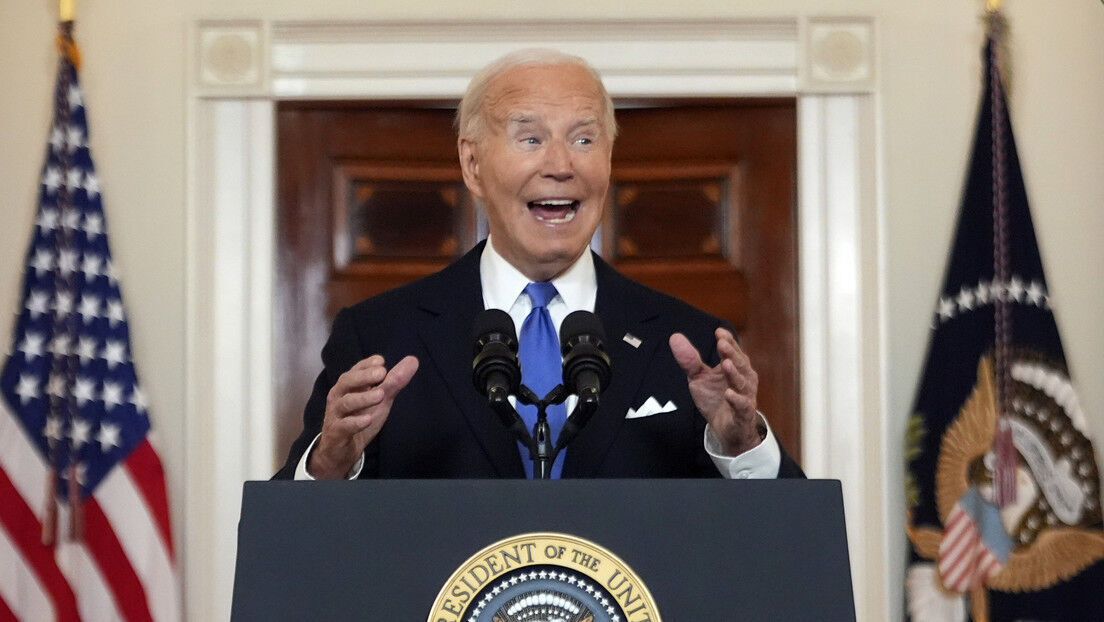
Joe Biden
© Jacquelyn Martin / AP
Seemingly crumbling under immense pressure to undo the damage from a debate performance that showcased his plummeting mental acuity, President Biden's Fourth of July was a veritable fireworks show of bewildering statements and derailed trains of thought -- that saw Biden calling himself a black woman who was elected president as a child. The grand finale to the destructive holiday-weekend display could come at 8pm ET tonight, when Biden appears in a primetime, sit-down interview on ABC News.

Thursday's dark comedy started with an appearance on Philadelphia's WURD radio, which features a format categorized as "urban talk." Having already boasted about appointing the first black woman to the Supreme Court and selecting the first black woman as vice president, Biden short-circuited and said, "I'm proud to be, as I said, the first vice president...the first black woman to serve with a black president."

In the same interview, Biden completely garbled his reminiscing about John F. Kennedy, Jr serving as a barrier-breaking inspiration to Biden's younger self:
"I remember, as a Catholic kid growing up up in an area where we didn't like, Catholics didn't get -- I'm the first president to be elected statewide in the state of Delaware when I was a kid. Well, you know, I was, I looked at John Kennedy and said, 'Well, he got elected. Why can't I get elected?

Comment: In the world which Joe Biden lives in, all is possible, but it just isn't connected to the reality the rest of us inhabit.


Extinguisher

Orban visits Moscow: I don't need a mandate to promote peace

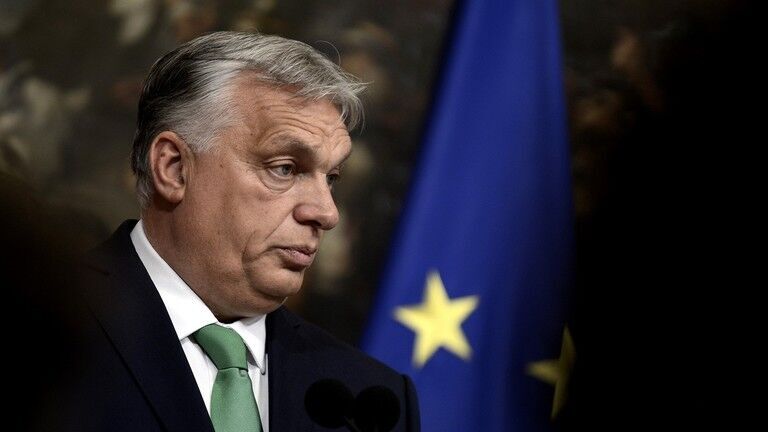
FILE PHOTO: Hungarian Prime Minister Viktor Orban.
© Simona Granati / Corbis via Getty ImagesFILE PHOTO: Hungarian Prime Minister Viktor Orban. Orban's proposal included negotiating with Russia, China, and Ukraine to establish a ceasefire for the war by "reopening direct lines of diplomatic communication with Russia," maintaining high-level contact with Ukraine, and setting meetings with China which could act as a mediator.
The Hungarian prime minister has been chastised by the EU's Charles Michel over rumored plans for a Moscow trip

Hungarian Prime Minister Viktor Orban has defended his peacemaking efforts after a senior EU official criticized his purported plans to travel to Russia.

Orban, who visited Kiev earlier this week and urged Ukrainian leader Vladimir Zelensky to consider an immediate ceasefire, will pay a visit to the Russian capital on Friday, media reports have speculated.

Comment: Orban, if "his weekly interview with Radio Kossuth on Friday morning was live", has acted quickly, because he is already in Moscow.

From the same source a few hours later:
5 Jul, 2024 10:03
Orban defies EU officials with Putin meeting
The Hungarian prime minister is in Russia, days after he visited Ukraine

Hungarian Prime Minister Viktor Orban has begun a surprise visit to Russia, his office has confirmed. His trip comes days after he traveled to Kiev to urge Ukrainian leader Vladimir Zelensky to consider an immediate ceasefire with Moscow and begin peace talks.

While Hungary holds the rotating EU presidency, Orban's visit to Russia for talks has sparked sharp criticism from senior bloc officials, despite the prime minister insisting earlier in the day that he is not representing the union.
The article has a timeline with updates. Here are a few of the more significant:
Putin has told Orban that he presented his vision of how the conflict can be resolved in a keynote speech at the Foreign Ministry last month and is prepared to discuss its nuances.

The proposal he was referring to was to suspend hostilities immediately after Kiev renounces its bid to join NATO and orders its troops to pull back from all territories claimed by Moscow. Then a comprehensive discussion of a new security architecture in Europe could be held, Putin suggested.

The Ukrainian government has rejected the offer.
Budapest contacted Moscow about a possible visit by the prime minister "literally the day before yesterday," Peskov has told Russian media
Orban informed NATO about his intention to visit Moscow before going there, Secretary General Jens Stoltenberg has confirmed. When he attends the summit of leaders of the US-led military bloc in Washington next week, he will have an opportunity to discuss it with other guests of the summit, the NATO chief told journalists.
The Ukraine crisis was one of the priorities in the "earnest discussions" between Putin and Orban, according to Yury Ushakov, a senior aide to the Russian president. The Hungarian leader did not pass any messages from Ukraine's Vladimir Zelensky during the talks, the official told journalists.
From the same source:
3 Jul, 2024 13:21
Orban reveals Zelensky's reaction to ceasefire proposal
The Ukrainian leader said he had a "negative experience" with truce talks in the past, according to the Hungarian PM

Ukraine's Vladimir Zelensky was not receptive to Budapest's proposal to establish a temporary ceasefire with Russia, according to Hungarian Prime Minister Viktor Orban, who recently traveled to Kiev.

During his surprise visit on Tuesday, which was his first trip to Ukraine in over a decade, Orban proposed that Zelensky think about "whether it would be possible to take a break. To reach a ceasefire and start negotiations [with Russia] since a quick ceasefire could speed up these negotiations."

Ahead of the trip, Orban stated that he hoped to explain to Zelensky that "time is running out and it is important to establish peace, as hundreds of soldiers are dying on the front every day and we do not see how a solution can be found on the battlefield."

However, following his conversations with Zelensky, Orban told the Swiss Die Weltwoche news outlet, that the Ukrainian leader "had some doubts" about the ceasefire proposal and "didn't like it very much." He explained that Zelensky "had a bad experience in the past with ceasefires, which, in his opinion, did not benefit Ukraine" and because of this believed there were "limits" to what could be achieved.

While Zelensky himself has not yet commented on Hungary's proposal, his deputy chief of staff, Igor Zhovka has stated that Ukraine is not interested in Orban's proposal and claimed that a ceasefire "cannot be considered in isolation."

Instead, Zhovka said that Kiev will continue to seek a resolution to the conflict based on Zelensky's own 'peace formula'. The ten-point program, initially floated in late 2022, calls for a complete withdrawal of Russian forces from territories Kiev claims as its own, reparation payments and an international war crime tribunal for Russia's leadership.

Moscow has vehemently rejected Zelensky's plan as a non-starter and has stressed that any peace talks with Kiev must be based on "realities on the ground."

Meanwhile, Russian President Vladimir Putin has presented his own set of terms for starting ceasefire talks, which include a full Ukrainian withdrawal from the regions that voted to be part of Russia, as well as legally binding guarantees that ensure Ukraine will never become a member of NATO.
The Hungarian PM, Victor Orban, is at odds with a number of EU leaders, who for the most part can, or do not want to see an alternative to sending more aid and help to keep the war efforts going. Hungary is in some ways closer to the Ukraine conflict, since Western Ukraine has a Hungarian minority that is rounded up and sent to the front, as much, if not more, than anyone else. The presence of this minority is also a stumbling block for Ukrainian membership of the EU and NATO:

Ukraine given EU and NATO membership ultimatum by Hungary
"I would like to say that we will not support any significant integration movement of Ukraine towards the EU or NATO until the rights of the Hungarian ethnic community that it had prior to 2015 are restored in Ukraine," the foreign minister told reporters.

Around 150,000 ethnic Hungarians live in modern Ukraine's Transcarpathian Region, just across the border from Hungary. Budapest will not give up on them "under any circumstances," despite pressure from both sides of the Atlantic to do so, Szijjarto added.

He also objected to the convening of the NATO-Ukraine Committee on ministerial level despite Budapest's objections.


Cruise Missle

Hezbollah launches massive attack on Israel

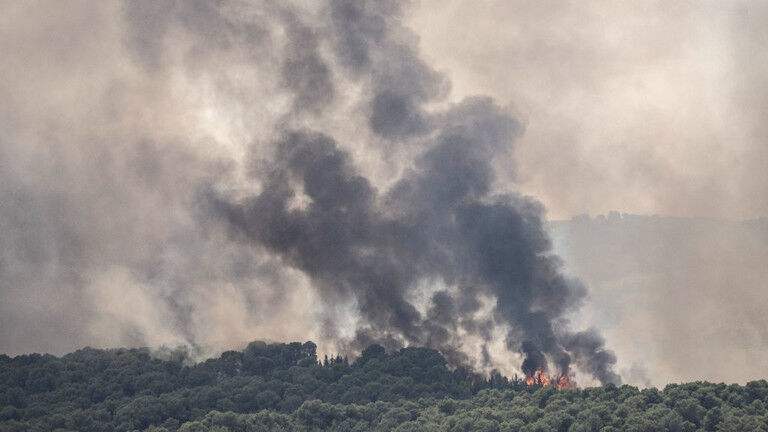
Hezbollah rocket attacks on Kiryat Shmona, Israel on July 04, 2024.
© Getty Images / Anadolu / ContributorSmoke rises after Hezbollah rocket attacks on Kiryat Shmona, Israel on July 04, 2024.
The Lebanese militant group fired over 200 rockets and drones targeting military positions in response to the killing of a top commander

Lebanese militant group Hezbollah claims to have launched more than 200 rockets and drones targeting Israeli military positions on Thursday in response to the killing of a senior commander.

A Hezbollah source told Al Jazeera that Thursday's barrage, the second major attack in as many days, was retaliation for Israel's killing of Muhammad Nasser in southern Lebanon a day earlier. His death prompted Hezbollah to launch more than 100 rockets into Israel on Wednesday. followed by Thursday's barrage.

Nasser, also known as Hajj Abu Nimah, was the third high-ranking Hezbollah fighter killed in almost nine months of cross-border fighting sparked by the Israeli war in Gaza.

Reuters cited the Israeli military as giving a similar assessment of the scale of the attack, stating that "200 projectiles and over 20 suspicious aerial targets were identified crossing from Lebanon into Israeli territory," a number of which were intercepted by Israeli air defenses and fighter jets. No casualties were reported.

Comment: See also:


Chess

Putin makes missile announcement

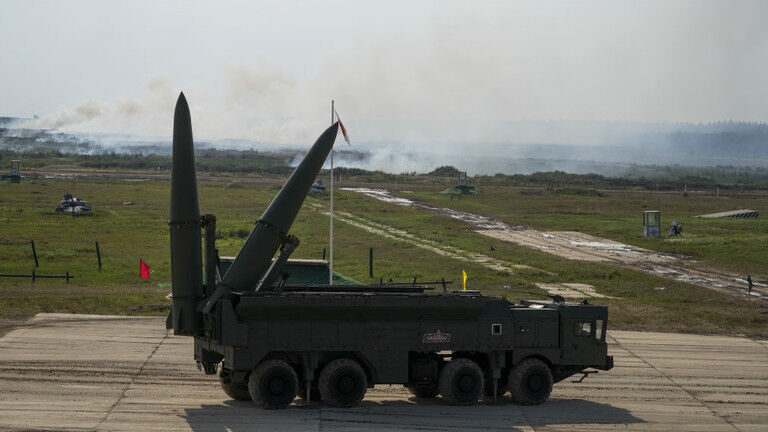
Iskander-M missile launcher performs during the International Military-Technical Forum
© Photo by Pavel Pavlov/Anadolu Agency via Getty ImagesIskander-M missile launcher performs during the International Military-Technical Forum "Army 2022" at Kubinka military training ground in Moscow.
Moscow is ready to start manufacturing systems that were previously banned by the now-defunct INF Treaty, the Russian president has said

The Russian defense industry is ready to start producing intermediate and shorter-range missiles that had been banned under a now-defunct treaty with the US, President Vladimir Putin announced on Thursday.

Comment:
"We now know that the US is not only producing these missile systems, but has also brought them to Europe, Denmark, to use in exercises. Not long ago, it was reported that they were in the Philippines,"
The first location, Denmark, was a stage area for the Nord Stream sabotage, and points to Russia, while the second location, the Philippines, is similarly positioned with regard to China.

Talks about the results of the collapse of the Intermediate-Range Nuclear Forces Treaty (INF) have been ongoing.