Puppet MastersS


Warning

How far could the Gulf conflict spread? A Kremlin aide has a warning

Patrushev
© RT/Sputnik/Victor Tolochko/Getty Images/Gallo Images/Orbital Horizon/Copernicus Sentinel Data 2025Nikolay Patrushev • Strait of Hormuz
Oil, shipping, and supply chains: the widening fallout of the Iran war

Nikolay Patrushev, assistant to the president of the Russian Federation, has a stark assessment of the Iran war as it begins to ripple far beyond the Middle East. With shipping disrupted in the Strait of Hormuz, energy markets under strain, and maritime security deteriorating, the consequences are already being felt across global supply chains.

In an interview with Kommersant special correspondent Elena Chernenko, Patrushev outlines how the conflict is reshaping trade routes, testing alliances, and accelerating a broader reordering of the global economy.

Q: Kevin Hassett, the US president's economic adviser, recently announced that oil tankers are once again passing through the Strait of Hormuz. However, shipping volumes through the strait remain far below the levels seen prior to the US and Israel's war against Iran. What is your assessment of the situation in the region, particularly around the Strait of Hormuz?

Nikolay Patrushev: For years, the Strait of Hormuz has been a vital link in global supply chains, but these have now been largely disrupted. The area is becoming a zone of conflict, posing a danger to shipping. The current conflict appears ready to set back the established system of global trade and economic relations by years. Operation 'Epic Fury' has indeed become the catalyst for a reshuffling of the global energy market and the collapse of maritime logistics. There is nothing 'epic' about this 'fury', the world is instead witnessing a tragedy with unpredictable humanitarian and economic consequences. Oil and gas equipment has been damaged, the waters of the Persian Gulf have been severely polluted, port infrastructure has been destroyed, populations are suffering and cultural and historical treasures are being lost. Merchant ships from many different countries have been damaged or destroyed by the hostilities. Prices for energy resources, freight rates for the largest maritime container lines and insurance costs are rising. Global exports of fertilizers are declining, negatively impacting the agro-industrial complex in Asia, Africa, and Europe.

Footprints

Ukraine actively involved in US-Israeli aggression against Iran: Envoy to UN

Amir Saeid Iravani
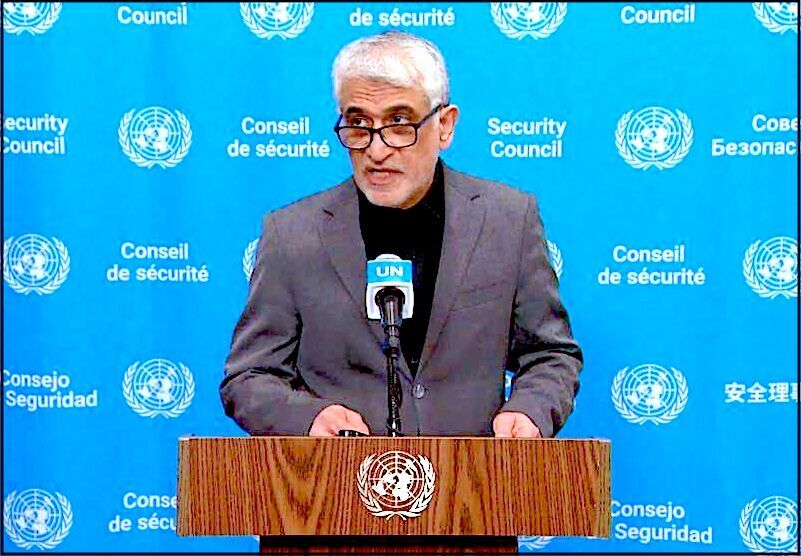
© UnknownIranian Ambassador and Permanent Representative to the United Nations Amir Saeid Iravani
A senior Iranian diplomat condemns Ukraine's admission to the dispatch of "hundreds of experts" to the region to confront Iran, saying Kiev is actively participating in the military aggression launched by the United State and the Israeli regime against the Islamic Republic.

Iranian Ambassador and Permanent Representative to the United Nations Amir Saeid Iravani made the remark in a letter to Secretary General of the United Nations Antonio Guterres and president of the UN Security Council on Monday:
"Ukraine's admission that it has dispatched 'hundreds of experts' to the region apparently to help some Persian Gulf governments to confront Iran is in its essence considered to be providing financial and operative support for an unlawful military aggression, led by the United States of America and the Israeli regime, against Iran, which began on February 28, 2026."
He said Iran rejects all unfounded accusations leveled by the Ukrainian ambassador to the UN which are devoid of any credible evidence and have been made with the clear aim of diverting attention from the ongoing US-Israeli war of aggression against Iran's sovereignty and territorial integrity.

Comment: Meanwhile, Yemen's entry is a different story:
Israeli regime's military strategy, designed to prevent the formation of a unified resistance front, has ended in failure following Yemen's entry into the war against the Washington-Tel Aviv war coalition, according to a report.

A concerted effort had been made by Washington, Tel Aviv, and some regional monarchies following the launch of the war against the Islamic Republic of Iran to create divisions within the Axis of Resistance. However, with the consolidation of Iran's power and that of its regional partners, the plot ultimately collapsed.

The source further indicated that the Israeli regime's primary fear now centers on the potential closure of the Bab al-Mandeb Strait, a strategic chokepoint whose disruption would sever vital shipping routes for some Arab governments aligned with the enemy, while generating significant military challenges for Israel itself.

"Further surprises from the unity of fronts are on the way," the source warned, hinting at escalating coordination among resistance forces across the region.
Yemeni military has carried out two operations against the Israeli regime in the past two days after joining the war front, alongside Iran, Hezbollah and the Iraqi resistance.

The first military operation was carried out with a barrage of ballistic missiles targeting sensitive Israeli military sites in southern occupied Palestine on Saturday.

In the second operation on Sunday, they fired a barrage of cruise missiles and drones targeting vital military sites belonging to the Zionist enemy in southern occupied Palestine.

The development underscores a growing strategic realignment, with Yemen's active participation marking a significant expansion of the battlefield against the aggressors.

Analysts suggest that the failure to isolate the various resistance fronts has fundamentally altered the calculus for both Israeli and American military planners, who now face the prospect of a coordinated, multi-front confrontation.


Attention

The China-Pakistan-GCC riddle

Ministers Meeting
© Public Domain
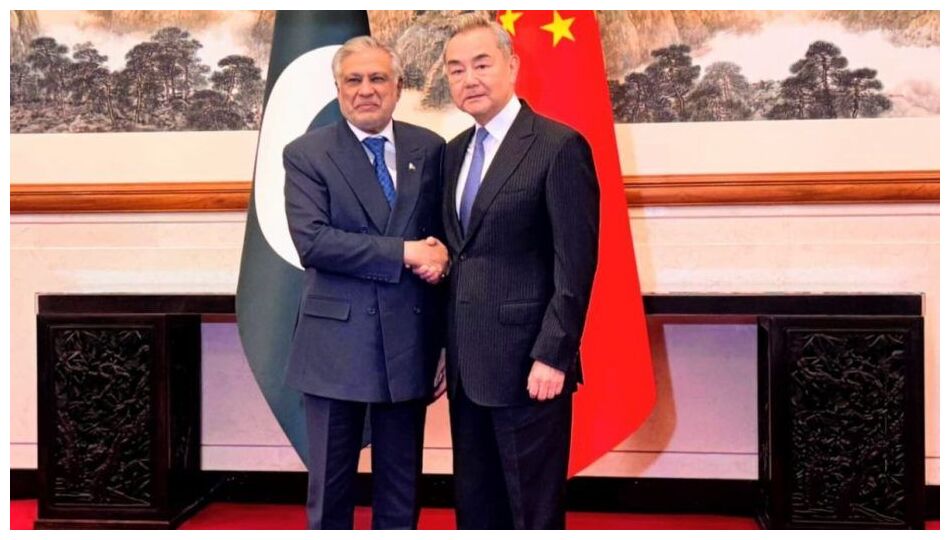
China and Pakistan released a joint 5-points statement on the war on Iran that at face value might be considered as lame as it gets.
  1. Immediate ceasefire & humanitarian access to all affected areas.
  2. Early peace talks; respect for sovereignty of Iran & Gulf states; diplomacy over force.
  3. Protection of civilians & non-military infrastructure under international law.
  4. Security of shipping lanes, especially the Strait of Hormuz.
  5. Strengthening role of the United Nations and a UN Charter-based peace framework.
For all of Pakistan's Foreign Minister Ishaq Dar's unbounded enthusiasm, this sounds like a cliché collection with no bite. Dar heavily spun that both the US and Iran expressed their "confidence" in Pakistan's mediation. That's extremely debatable.

A feasible scenario: China was not convinced at all by anything discussed by a Quad - the Foreign Ministers of Pakistan, Turkiye, Saudi Arabia and Egypt - meeting in Islamabad. So Dar had to rush to Beijing to answer some tough questions.

Most of all, China could not possibly risk becoming the guarantor of a non-plan which will certainly be bombed by the Baboon of Barbaria in no time.

Of course there's way more to it. But that will have to be discussed strictly between China and Iran. Dar had to run to Beijing because Tehran simply does not entirely trust Pakistan, not to mention the Turks and the Arabs. For anything meaningful to happen, Iran needs serious guarantees from China.

Previously, the Iranian government - with all its ministers - had responded to the 15-point US letter sent via Pakistan (in fact another intimation to surrender). They rejected all the US points and asserted the right to enrich uranium; continue developing its missile systems; request compensation for the unlawful war; and a lasting end of the war guaranteed by the UN.

Then there's another intriguing scenario. The vague final statement might be interpreted as an opening for China to step in and mould the post-American Persian Gulf.

Pakistan's Army Chief, Field Marshal Asim Munir, the strongman of the current regime, has the Baboon of Barbaria on speed dial. This was Ishaq Dar's second trip to China in 3 months. He was on the phone several times recently with Chinese Foreign Minister Wang Yi.

So how did we get here?

Star of David

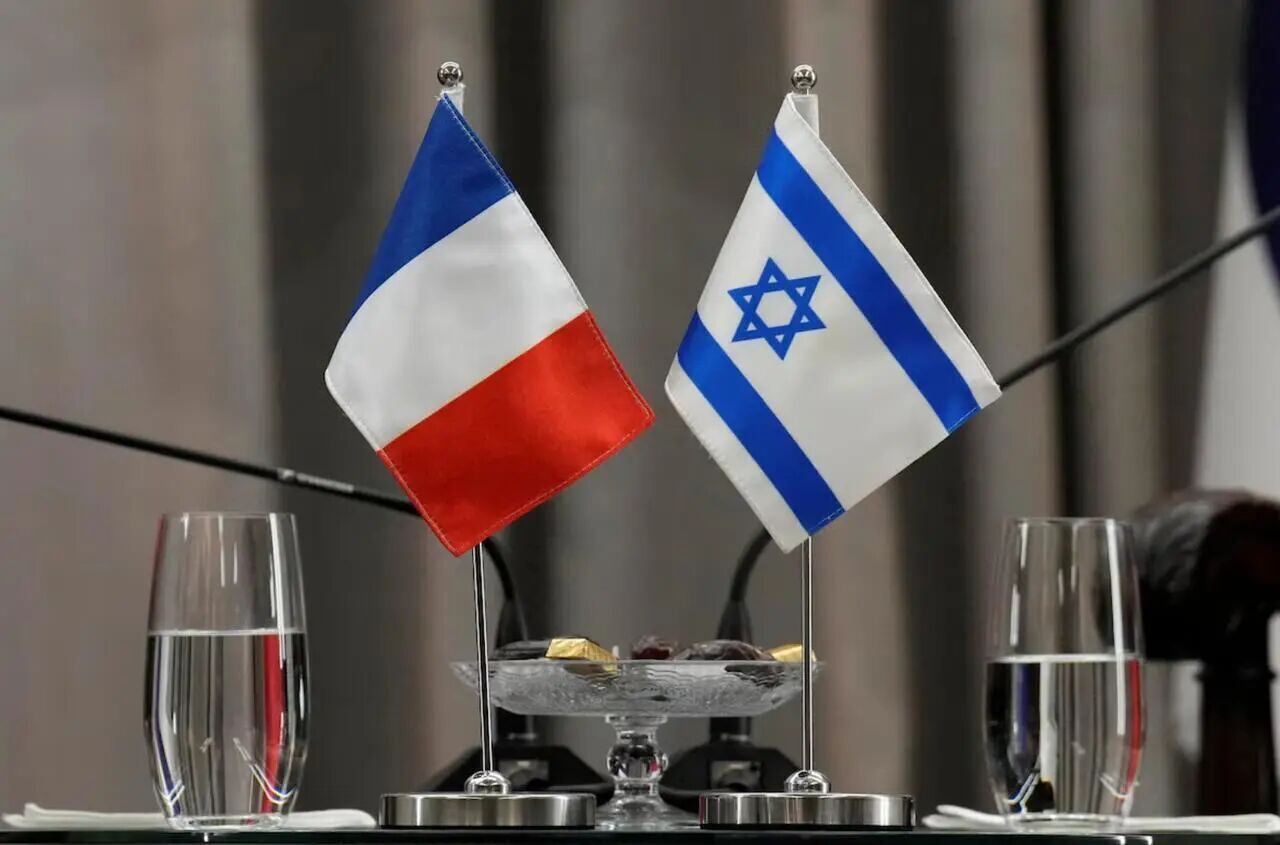
Israel Halts Arms Purchases From France In Rebuke For Iran War Stance

France and Israel desk flags
© Reuters
Israel on Tuesday took the drastic step of announcing that it will halt the acquisition of defense-related goods and services from France, according to an Israeli Defense Ministry announcement.

"The Director General of the Israel Ministry of Defense. Maj. Gen. (Res.) Amir Baram has decided to reduce all defense procurement from France to zero, replacing it with domestic Israeli procurement or purchases from allied countries," a Defense Ministry spokesperson confirmed.

The move is being done in direct rebuke to France's decision to not allow flights in its airspace which transport military items to Israel, or also American military flights which are directly connected to Iran war operations. A growing number of NATO and EU countries are doing this, also Italy, Spain, and Switzerland.

Attention

Collapsing Empire: The Resistance Disarms Israel

Tel Aviv Bombed
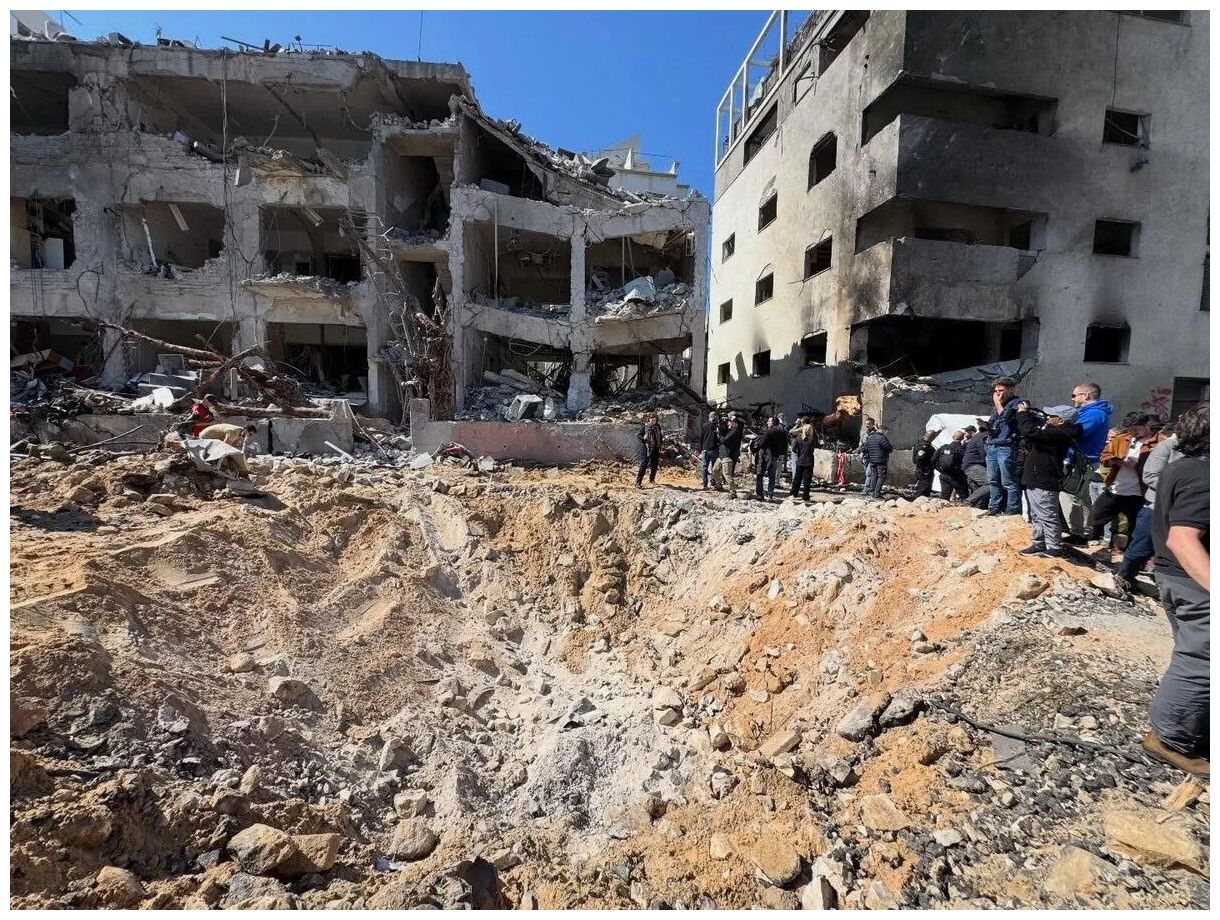
© Global DelinquentsAftermath of an Iranian strike on Tel Aviv, February 28th.
As the criminal Zionist-American war on Iran enters its second month, the conflict has proven so ruinous for the aggressors that dire alarm is being widely sounded. Embarrassing failure to subdue the Islamic Republic from the air has raised the prospect of a US ground operation of some kind, widely perceived as a suicide mission. Washington has also burned through over 850 Tomahawk missiles and 1,000 air-defense interceptors, at a rate the Pentagon finds "alarming". In the process, Israel is rapidly approaching total disarmament.

On March 24th, elite British state-connected 'think tank' RUSI published a withering post mortem of the war's first 16 days. An in-house "ledger tool" tracking the "intense consumption of advanced munitions" by the US and Zionist entity calculates 11,294 fires over this period, which cost a total of approximately $26 billion to produce. Resultantly, US - and thus Israeli - inventories of long-range interceptors and precision strike weapons "are nearing exhaustion." And it will perhaps cost double that staggering amount to replenish what has been lost.

The Resistance shows no signs of slowing its onslaught, with every indication Tehran's munitions production continues apace in wartime. Even the Western media has acknowledged Iran's drone and missile arsenal costs a fraction to produce of the past and future outlay involved in shooting them down. Per RUSI, the war on Iran has exposed a "critical vulnerability" at the core of the Empire's warfighting capabilities: a "strategically ruinous cost-exchange ratio that the West's industrial capacity is not prepared to sustain."

Over a dozen different munitions were fired by the US and Israel over the conflict's first 16 days, "at a rate that appears to be unsustainable." Now, Tehran's relentless barrage "continues to drain the coalition's most critical assets" - RUSI calculates missile and drone attacks have averaged 33 and 94 strikes daily, on average. By contrast, the organisation's analysis shows "the magazine abyss" for Washington and Tel Aviv is "coming soon". Moreover, Rheinmetall's CEO has cautioned the Empire's global munitions stockpiles are "empty or nearly empty."

The Zionist-American war on Iran has thus become "a contest of endurance," in which "the decisive advantage shifts to the actor that can sustain its defensive economy and replenish its most critical assets." Based on current battle trends, the Islamic Republic firmly holds that advantage, and will continue to do so. The US could be mere weeks away from running out of ground-attack missiles - including much-vaunted ATACMS - and THAAD interceptors. RUSI similarly forecasts Israel's Arrow interceptors will "likely" be "completely expended" come April.

On top of enormous expense, even at pre-war production levels, it would take years to replace what was spent in just over two weeks against Iran. As this journalist documented on March 24th, Tehran's closure of the Strait of Hormuz has thrown the Empire's already shattered defence industrial base into total disarray. Commodities and components central to constructing and maintaining digital and electronic systems, and precision-guided munitions, which hitherto transited the Strait daily in abundance are now scarcer and ever-rising in cost.

Chess

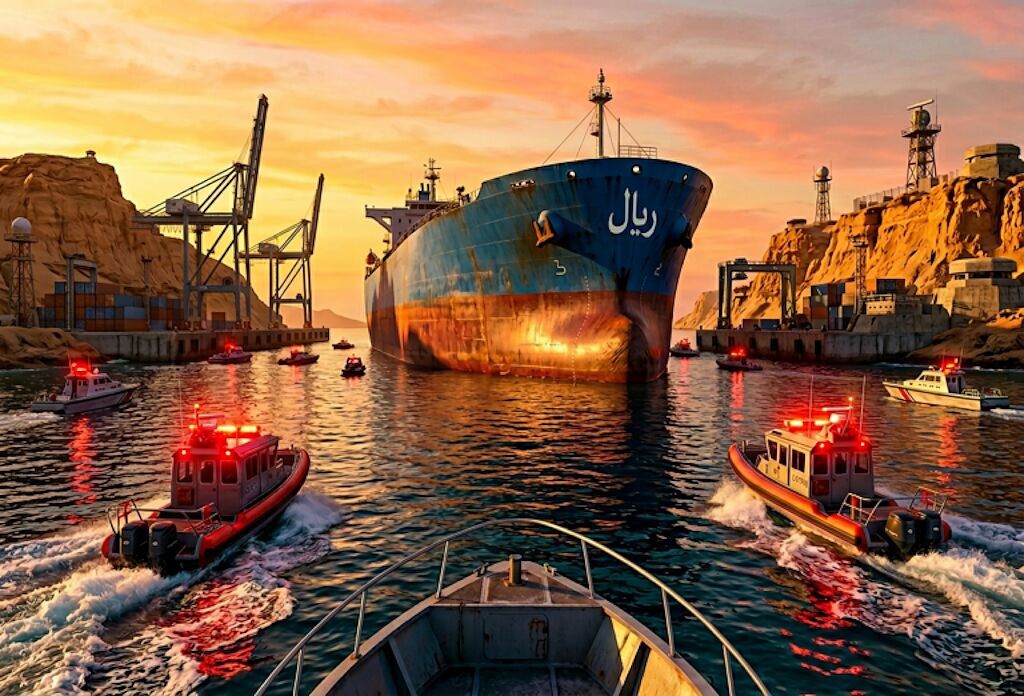
Best of the Web: The Larak Corridor: Iran's Rial Gate with no US, no Israel, and no way around

larak corridor hormuz iran control graphic
© 21st Century Wire
While MOW Secretary Pete Hegseth was telling other nations to "step up" in the Strait of Hormuz, Donald Trump was already backing away, insisting its security was "not for us." In between those contradictions, Washington dumped a fog of conflicting slogans on the public — slogans that never looked like strategy so much as panicked improvisation. That confusion is not a sideshow to the war, but the political static masking a brutal reality. While the White House and its zionist neocon war camp lurch between bluff and retreat, Iran has been moving with cold discipline, quietly building what Iranian reporting calls the Larak Corridor and what maritime trackers have identified as a tightly managed lane through the Qeshm-Larak gap inside Iranian waters.

Around Larak, Tehran is no longer just reacting to an illegal war launched against it. It is turning battlefield pressure into procedure, selective access, and proposed law, using a controlled corridor and a wider Hormuz management plan to show that the old fantasy of automatic Western command over this chokepoint is breaking down in real time. The truth of the war is not found in the bombast coming out of Washington; instead you will find it in the places where power is actually shifting, and right now, one of those places is a narrow strip of water off Larak, where Iran looks calmer, more deliberate, and more in command of events than the people who thought they could bomb it into submission.

USA

We destroy, you clean up: Future of NATO uncertain - Hegseth

Hegseth
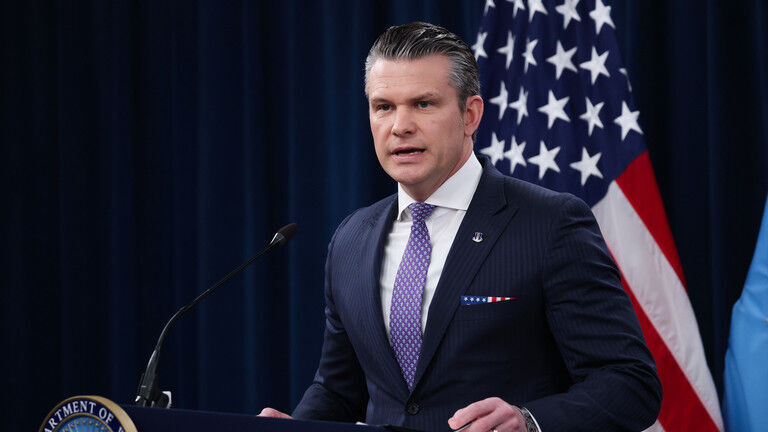
US war minister aka 'dollar store templar', Pete Hegseth
US President Donald Trump will decide what to do regarding the bloc after ending the war with Iran, the Pentagon chief has said

US War Secretary Pete Hegseth has refused to reaffirm Washington's commitment to NATO's collective defense, pointing to the bloc's refusal to assist or participate in the American-Israeli war on Iran.

Speaking at a Pentagon press briefing on Tuesday, Hegseth stated that the future of US involvement in NATO will ultimately be decided by President Donald Trump, but noted that many issues with the bloc have been "laid bare" in the Iran conflict.

"A lot has been shown to the world about what our allies would be willing to do for the US when we undertake an effort of this scope on behalf of the free world," Hegseth said. He argued that Iranian missiles did not pose a threat to the US, but to its "allies and others," who responded to Washington's request for assistance with "questions, or roadblocks, or hesitations."

"The President is pointing out that you don't have much of an alliance if you have countries that are not willing to stand with you when you need them," Hegseth said.


Comment: So the US thought that NATO countries would come and help every war the US starts? Well, in the past that has been the case though that was not really the facade that NATO presented to its member states. Thanks to the US /Israeli war on Iran, Europe will suffer greatly in the years to come which the EU elite has a great responsibility for too.


Gold Coins

China makes quiet gains during US-Israel war on Iran

China flag
© Hirose Masaki / EyeEm / Gettyimages.ru
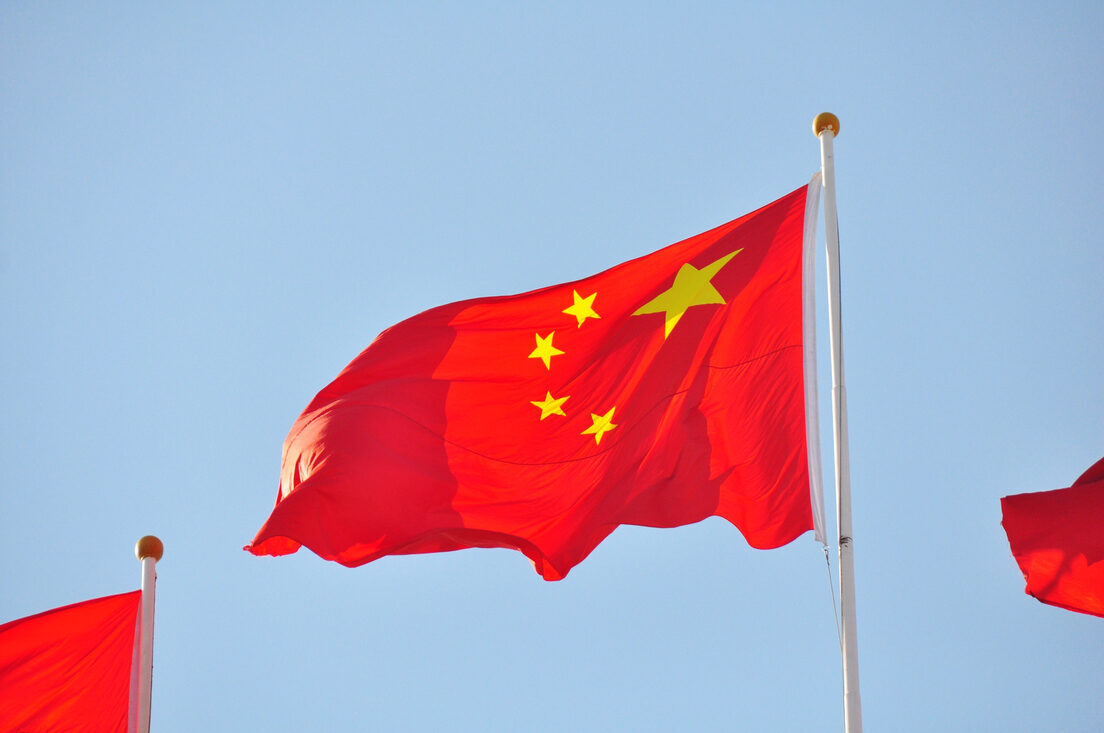
The Iran conflict continues to protract despite President Trump's assumption of a quick and easy victory. The goals of regime change and the decimation of the Iranian ballistic missile program remain unfulfilled, and the closure of the Strait of Hormuz further adds to the strategic qualms of the Western powers. The GCC states are also facing significant damage to their services industry, transport infrastructure and energy sector. While both sides suffer great losses in this protracted conflict, America's biggest geopolitical rival - China - seems to be gaining palpable economic and strategic benefits from the ongoing conflict in the Middle East.

Challenges to Petrodollar and Yuan's Rise against U.S. Dollar

Iranian strikes on GCC energy infrastructure, in retaliation for Israeli strikes on Iranian oil refineries and gas infrastructure, sent shockwaves through global energy supply chains. This resulted in supply chain disruptions, shortages, rationing and price hikes. These energy supplies are traded in U.S. dollars and constitute a discernible source of demand for the U.S. dollar. The closure of the Strait of Hormuz further amplifies supply chain disruption, forcing buyers to choose alternative sources, including Russia. Iran's announcement of a safe passage for oil tankers in exchange for payment in Yuan is being hailed as a direct assault on the primacy of the U.S. dollar and the petrodollar system.

Headphones

Hungarian FM slams opposition 'bombshell' of old news gained via illegal wiretap

Hungarian Foreign Minister Peter Szijjarto
© Getty Images / Sefa Karacan/AnadoluHungarian Foreign Minister Peter Szijjarto
'They proved that I say the same publicly as I do on the phone. Nice work!' Meanwhile, the foreign-funded journalist in question potentially faces life imprisonment for espionage and treason

Last week, anti-Orban journalist Szabolcs Pannyi made headlines for claiming Hungarian Foreign Minister Péter Szijjártó had violated confidentiality agreements with the EU Council for speaking between meetings with his counterpart in Brussels. The problem? As foreign minister, Szijjártó speaks to counterparts in many multiple countries, as is the norm for someone in his position and presumably other council members, with colleagues being more in favor or less in favor of the aims of those discussions. The EU is a political entity that engages other political entities, even those with whom it may disagree, so the premise that one member may not do so is a tad far-fetched.

The bigger problem was that Pannyi allegedly obtained recordings of these "illegal" discussions via a very illegal wiretap, reportedly with the assistance of another EU member, rumored to be Poland, whose Foreign Minister Sikorski has long been known to be keen on replacing Orbán and whose wife is American journalist Anne Applebaum, who has long made a career of animosity towards Orbán.

Comment: Hungary has indeed been a thorn in the side of Ukraine and Brussels, being the one voice of sanity in the EU's collective madness.


Bizarro Earth

Losing friends: AfD co-leader Chrupalla recommends US should start removing its troops from Germany

AfD's Tino Chrupalla German right wing
© AP Photo/Michael ProbstAfD's top candidate Tino Chrupalla follows the first forecasts on the outcome of the election at the Alternative for Germany party, AfD, election event in Berlin.
"Let's start implementing this program by withdrawing U.S. troops"


Comment: Subtext: "We don't want to be a target."


Alternative for Germany (AfD) co-chair Tino Chrupalla spoke out in favor of withdrawing American troops from Germany. During a party congress in Saxony, he stressed that, if AfD comes to power, this should be the first step in implementing the party's program, which calls for the removal of all allied forces from Germany and a withdrawal from NATO's nuclear weapons sharing system.

"Let's start implementing this program by withdrawing U.S. troops," he said, as reported by the Frankfurter Allgemeine Zeitung, cited by Do Rzeczy.

The proposal received loud applause by the audience.

Chrupalla also argued that Germany should not be involved in international military operations, praising Spain for opposing U.S. use of its bases for its conflict with Iran.

"And that is exactly right. Spain is not interfering in this war," he said.