Puppet MastersS


Big Bomb

Beirut, southern areas suffer huge Israeli airstrikes as Trump and Bibi insist Iran ceasefire doesn't apply to Lebanon

israel airstrike lebanon
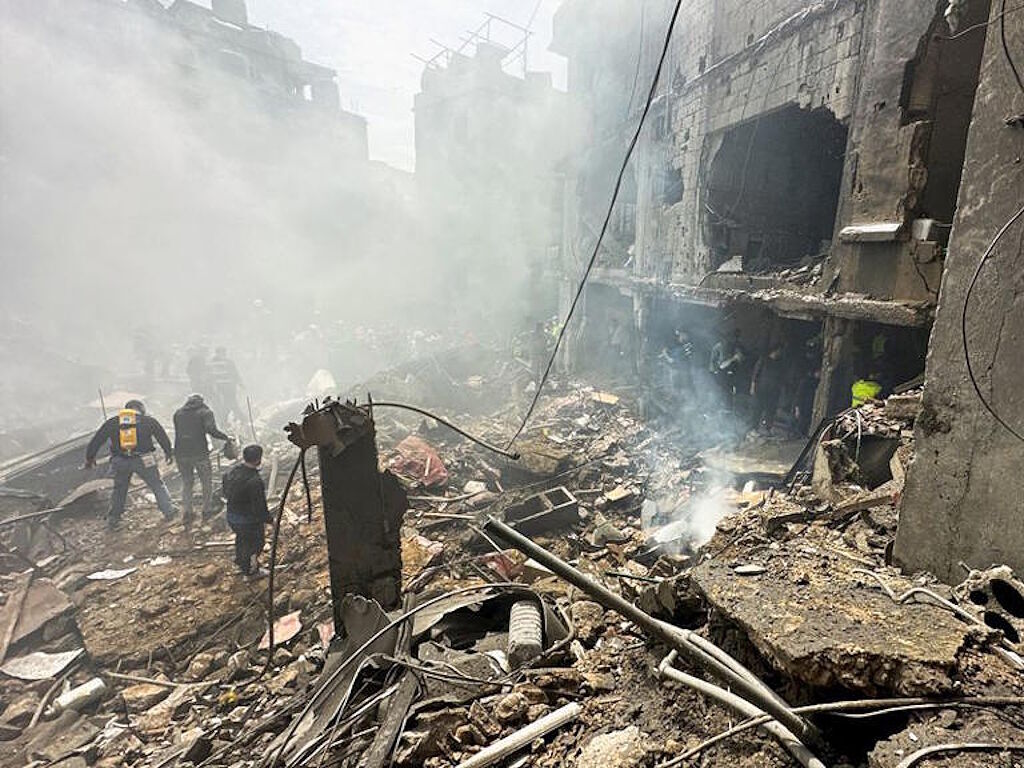
© Stringer/Thomson ReutersPeople gather as rescuers work at the site of an Israeli strike,in the Jnah area in Beirut April 5, 2026.
Israel has made clear that it doesn't see the newly declared US-Iran ceasefire as applying to its war in Lebanon, where it is still trying to destroy Hezbollah. The White House too has made its stance clear that it doesn't apply, but President Trump has stated his intent to take care of a Lebanon ceasefire separately.

The military has unleashed hell on Beirut, southern Lebanon, and the eastern Bekaa valley overnight and through Wednesday - with Beirut suffering some of the worst aerial bombardments of the war.

Pakistan, however, has said that the ceasefire does extend to the Israel-Hezbollah conflict. But the Israeli military (IDF) is as usual letting the bombs do the talking, and is largely ignoring the diplomatic side of things.

Israel on Wednesday reportedly struck over 100 Hezbollah (and civilian) targets within a mere 10 minutes across Beirut, the south of the country, and Bekaa.

Comment: Israel is now focused on securing all the territory south of Lebanon's Latini river, which water it covets.
lebanon litani river map israel new border
© CopyrightIsrael intends to extend its "border" up to the Litani River in Lebanon
Accomplishing that theft means the Lebanese civilians who have evacuated north to avoid the fighting can never return to their homes. So southern Lebanon is receiving the Gaza treatment.

Psychopaths.


They aren't even trying to hide it:


Attention

Trump faces impeachment push over Iran conflict

Trump
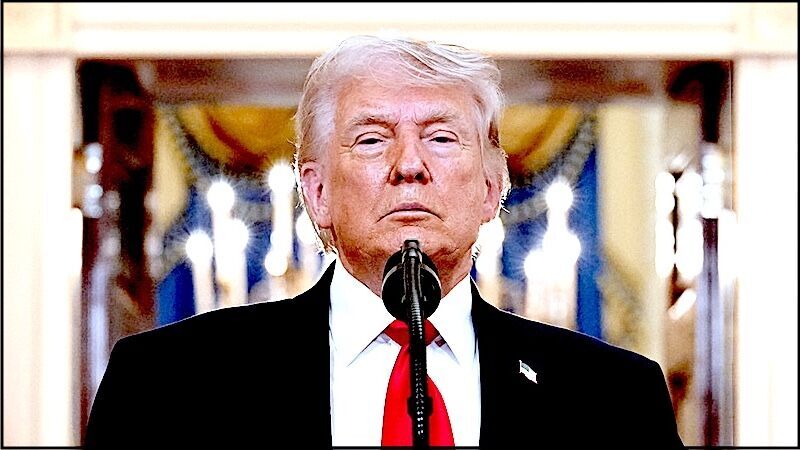
© Alex Brandon-Post/Getty ImagesUS President Donald Trump
Congressman John Larson has accused the president of waging an "illegal war," saying the US leader is becoming "unhinged".

Democratic congressman John Larson has filed articles of impeachment against US President Donald Trump over his actions connected with the Iran war.

Larson, a Connecticut Democrat, said on Tuesday he had filed 13 charges, accusing Trump of waging an "illegal war" and escalating threats against Iran that endangered US security and American lives. He added that Trump is becoming "more unhinged" and "more unstable by the day."

"Donald Trump has blown past every requirement to be removed from office. And it's getting worse," Larson said in a statement.

Larson also pointed to threats, including "open the Strait ... or you'll be living in hell," saying such remarks "foreshadow war crimes." He said Trump was "unable or unwilling" to faithfully execute his duties.

About 70 Democrats, including former Speaker Nancy Pelosi and Senator Chris Murphy, have called for Trump's cabinet to invoke the 25th Amendment to remove him from office, arguing he is unfit to serve. The amendment allows the vice president and a majority of the cabinet to declare a president unable to perform his duties, triggering a transfer of power.

"They have an obligation to put patriotism over politics and invoke the 25th Amendment," Larson said.

Comment: Trump is in the danger zone, having walked and talked his way right into it. His sentence will be activated by whomever in Congress Israel can't purchase and only if his usefulness to Israel has expired. Hubris has a price and this one promises to be extremely high.


Stormtrooper

International law or foreign military bases: a choice must be made

Security Council meeting
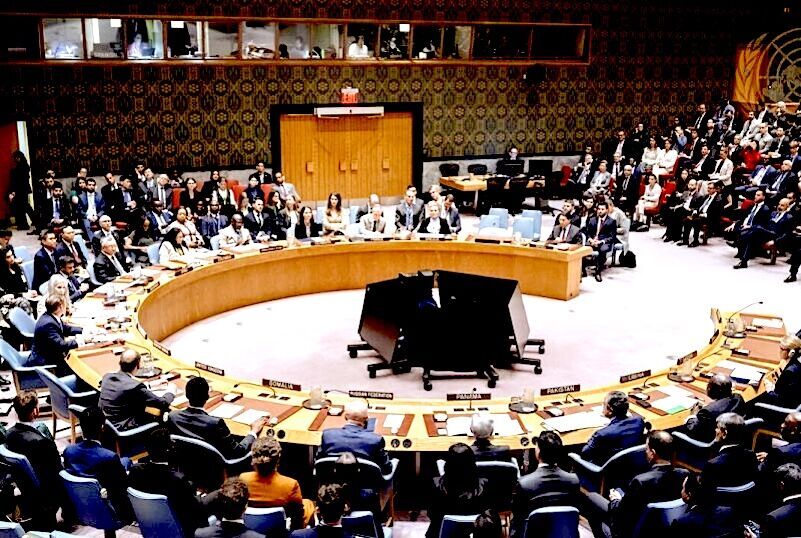
© UnknownSecurity Council adopted a resolution on war against Iran, in total contradiction with the UN definition of 'aggression' • March 11, 2026
The war waged by Israel, the United States, and the United Kingdom against Iran has called into question international law. Even the Security Council had forgotten its own definition of aggression. It ruled against itself. There has never been a precedent for this situation. All UN member states must now choose between international law and the alliance system devised by the United States.

The Israeli-American-British war [ 1 ] against Iran profoundly impacted the United Nations and revolutionized the way international law was approached. Until then, everyone believed that this law was based solely on respect for one's signature and the right of peoples to self-determination. However, over time, everyone had also become accustomed to the idea that Israel and the United States would never be considered outside the law.

Although he invoked "collective self-defense" by Israel, this point was swept aside by the astonishing candor of US President Donald Trump, who stated that Iran did not threaten his country [ 2 ] . Until now, Washington had lied shamelessly to maintain the illusion that it respected international law. We remember the lies of George W. Bush and Barack Obama regarding the 9/11 attacks, Iraqi weapons of mass destruction, the Libyan and Syrian massacres, and the wars that followed.

Attention

Worse than John McCain?

McCain • Trump
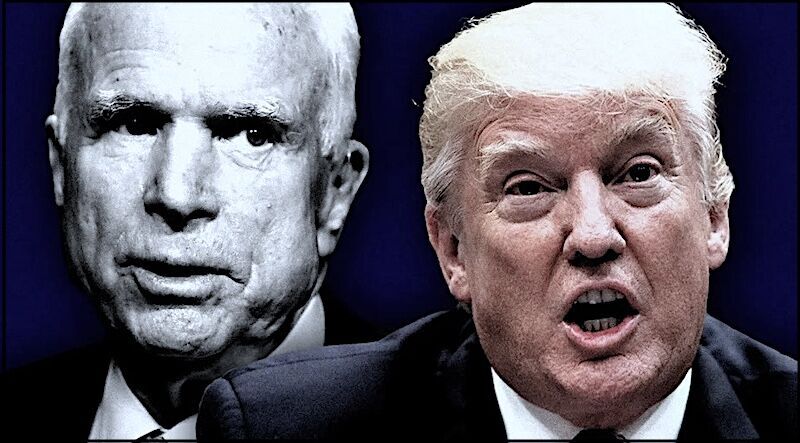
© rothbardbrazil.comUS President Donald Trump • John McCain
Following President Trump's address to the nation on Wednesday about the Iran War, stock markets suffered losses while oil prices rose. The decline in stocks and increase in oil prices reflected disappointment over President Trump's failure to articulate a plan to end the Iran War and the related restraint of shipping through of the Strait of Hormuz.

The average gas price in America has risen to over four dollars per gallon since the US and Israel launched their war against Iran at the end of February. The increased cost of gas is raising prices at the pump and, by increasing shipping costs, resulting in higher prices at grocery stores and even on Amazon.

According to media reports, President Trump and his advisers dismissed the possibility that Iran would use its ability to limit or even cease oil shipments through the Strait of Hormuz in order to drive up fuel prices. They dismissed the possibility even though disrupting oil shipments is the best way Iran can damage the US economy and make even America's staunchest allies unwilling to take any action that could be seen as supporting the war. Fear of Iranian retribution may be why NATO countries rejected the president's request that they send military support to the Strait of Hormuz to protect the free transport of oil.

Arrow Up

Iran has prevailed, and the Middle East has changed

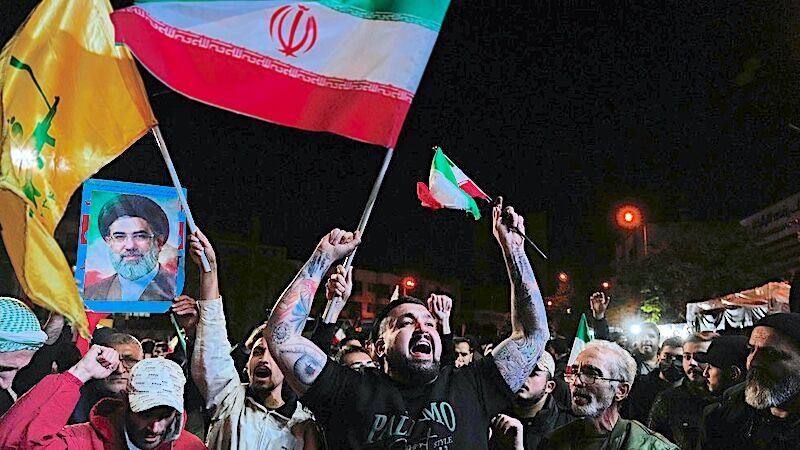
Iranians celebrating
© Vahid Salemi/APIranians celebrate
Four lessons from a war Tehran didn't lose.

US President Donald Trump has, in the end, found a way out of the situation he created by embarking on a reckless war against Iran. The threat of destroying an entire civilization provided him with the pretext to step back.

Indirect negotiations between Tehran and Washington, conducted through intermediaries, primarily Pakistan and, behind it, China, have produced a ceasefire. Trump may claim that Iran was cowed by his threats, but the reality is different.

A ceasefire under conditions where the Strait of Hormuz remains under Iranian control suggests that Tehran has not backed down. Washington, in effect, has.

It is too early to speak of any "golden age" emerging from these talks. But the outlines of the conflict's outcome are already visible.

Bomb

War in Iran, Season 1: Trump 0 - Iran 1

While more at home on the golf course than in the Persian Gulf, Donald Trump had initially presented the war against Iran as a "little excursion." Not known for his strategic patience, he wanted results fast. The original objectives were the fall of the Islamic regime and the complete destruction of its military capabilities. Now, four weeks since hostilities began, none of that has come to pass.
War in Iran
© Arktos Journal
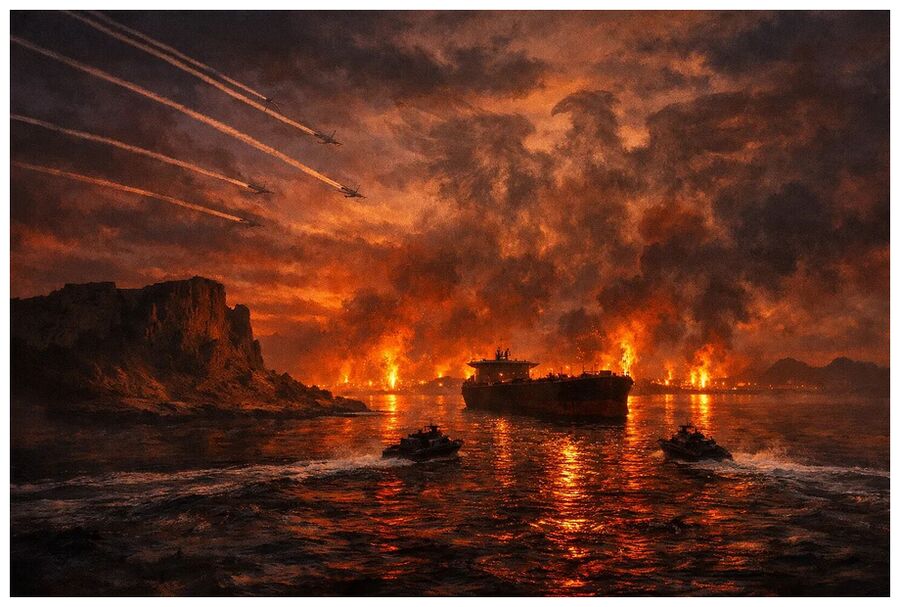
The Iranians have taken control of the Strait of Hormuz, and their coastline — stretching 1,600 kilometers — is bristling with missiles, drones, and military speedboats. The Houthis of Yemen are threatening to close in turn the Strait of Bab-el-Mandeb, which locks access to the Red Sea. In Lebanon, where one million people have been displaced (one in ten inhabitants), the Israelis make no secret of their intention to militarily occupy the south of the country up to the Litani River. The price of crude oil has surpassed 100 dollars a barrel, a rise from which Vladimir Putin is the principal beneficiary. European countries, which the European Commission forced to cut themselves off from Russian hydrocarbons, are now facing gas and oil shortages that are driving a surge in petrol prices at the pump.

Though severely and lastingly weakened by the massive bombardments they have endured, the Iranians have not yielded — quite the contrary. What we have witnessed is an escalation that looks very much like a headlong rush. The American-Israeli military movements, the contradictory statements from the White House, the continued Iranian strikes, the destabilization of energy markets, the announcement of a ground invasion (special forces?) — all of this sketches out a scenario whose consequences no one can foresee, but which evokes the "oil shocks" of 1974 and 1979: economic and financial crisis, global recession.

The United States, which had hoped for a lightning victory, no longer knows how to extract itself from this hornet's nest. The Iranians, who were supposed to collapse within days, are holding the initiative in every domain. The balance sheet of Operation "Epic Fury" is a disaster.

Bomb

Evidence pointing to Ukraine being behind TurkStream attempted sabotage

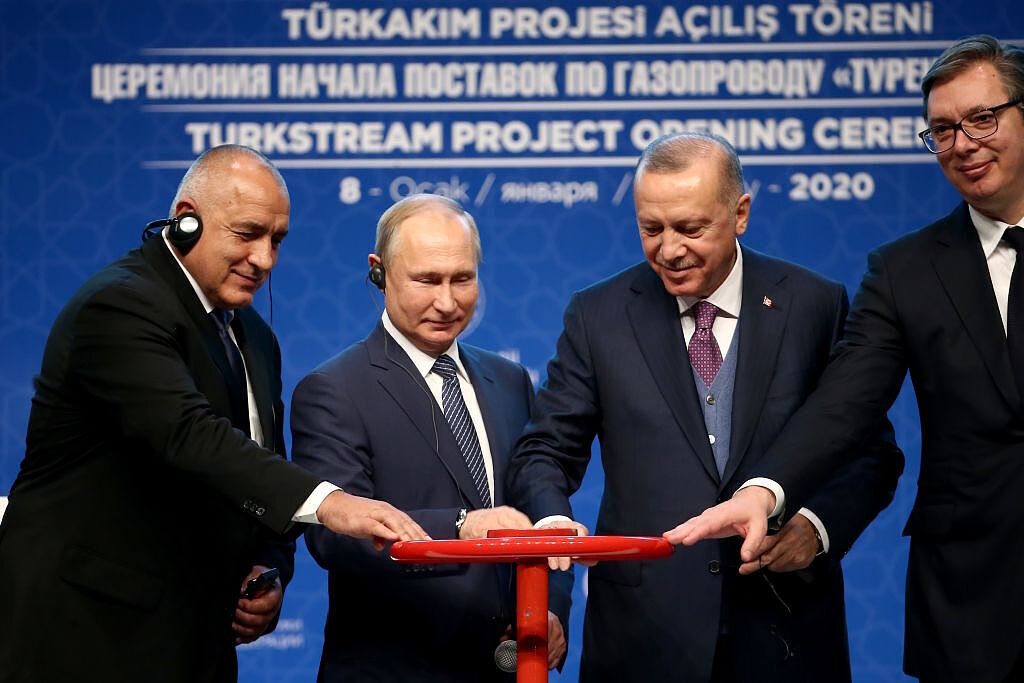
turkstream pipeline opening ceremony
© Onur Coban/Anadolu Agency via Getty ImagesPresident of Turkey Recep Tayyip Erdogan (2nd R) and his Russian counterpart Vladimir Putin (2nd L) open the valve during the opening ceremony of TurkStream natural gas pipeline project, at Halic Congress Center in Istanbul, Turkey on January 08, 2020.
That should come as no surprise

In September 2022, when the Ukrainians destroyed Nord Stream, they were allegedly planning a double attack, with the other target being the TurkStream

Secret service documents allegedly prove that the Ukrainians planned to blow up the Turkish and Blue Stream pipelines years ago, permanently cutting Europe off from cheap Russian gas, reports Magyar Nemzet, citing a report out of Ellenpont.

However, Serbia's intelligence chief is denying that Ukrainians were the perpetrators, instead claiming that they had reports of a possible attack planned by a certain migrant gang group of radical muslims but had not considered it legitimate intel. However, this same chief also does not rule out that Ukraine was the contractor behind the scheme.

The Serbian section of the Turkish Stream gas pipeline was set on fire in a sabotage operation on Sunday. Since this pipeline supplies Hungary with gas, blowing up the pipeline would have put the country's gas supply at risk.

Comment: The Ukrainians didn't (and don't) have the chops to destroy Nordstream. That was a Western-led op through and through. No reason to think this attempt isn't one either, with proxy/patsy Ukraine taking the blame.


Star of David

Israel 'completely destroys' Tehran synagogue in missile attack

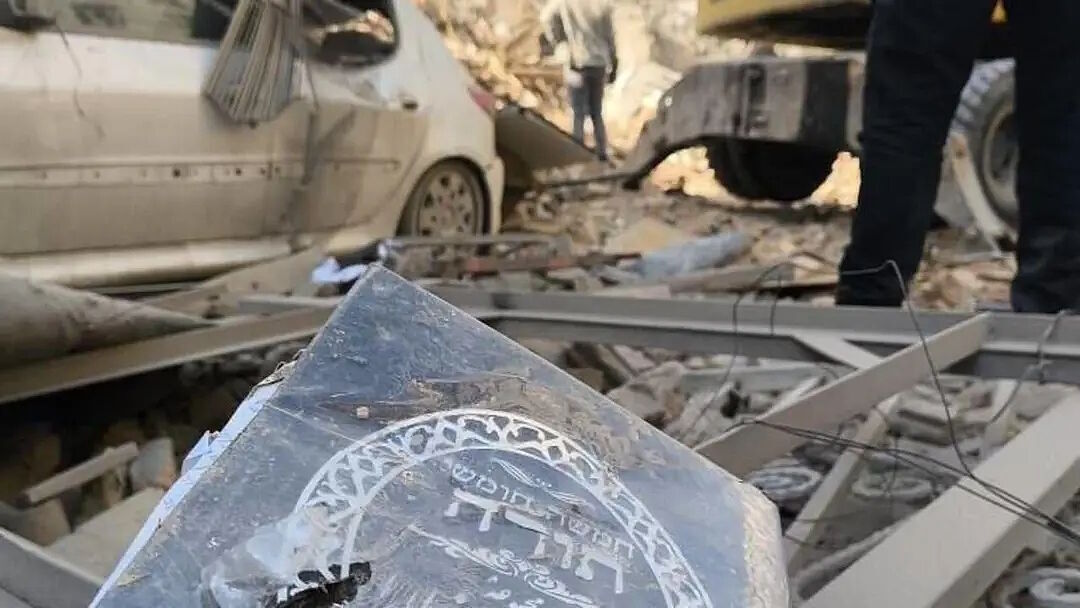
Rafi Niya Synagogue bombed by israel
© Jerusalem PostA reported photo of the damage to the Rafi Niya Synagogue as the result of a strike in Tehran.
The AP, AFP, and others have cited Iranian state media to say that US-Israeli strikes have "completely destroyed" a synagogue in Tehran, as attacks have intensified overnight and into Tuesday.

"According to preliminary information, the Rafi-Nia Synagogue ... was completely destroyed in this morning's attacks," the Shargh newspaper reported. Mehr news agency describes the synagogue was destroyed when an adjacent residential building in central Tehran was bombed in an aerial attacks.

Footage from the scene showed Hebrew-language books scattered on the ground and amid the rubble. Rescue efforts searching for bystanders ensued in the area. There have been no initial reports of casualties.

Israeli media, specifically the Jerusalem Post, has actually confirmed the destruction, noting that both Iran's Jewish parliament representative as well as the synagogue's Persian Jewish rabbi have condemned the attack in visits to the scene:

Comment:


So much for Israel's claim to be protecting the 'jewish people'. Only if you live in Israel apparently. But then again, they are doing a very bad job of that too.


Attention

China in a post-hegemonic era: Testing the limits of diplomatic power

Xi Jinping
Chinese President Xi Jinping
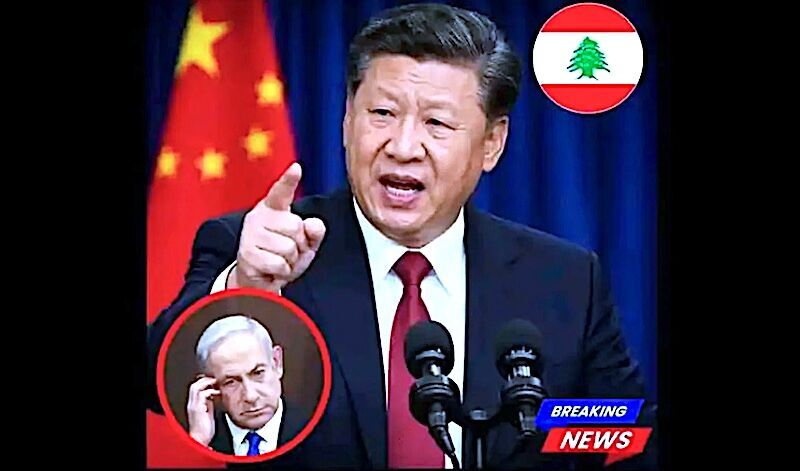
China's call for Israeli withdrawal from southern Lebanon and its proposal for a multilateral peace initiative signal more than a diplomatic intervention. They reflect Beijing's gradual emergence as a geopolitical actor seeking to shape conflict management in a context of declining hegemonic coordination and increasing fragmentation of the international order.

Chinese President Xi Jinping's recent statement calling for the immediate withdrawal of Israeli forces from southern Lebanon — and warning against the risk of the region "becoming another Gaza" — should not be read merely as rhetorical positioning. Rather, it signals a calibrated step in Beijing's gradual insertion into Middle Eastern diplomacy, reflecting both normative framing and strategic intent, as I will try to explain below.

At the normative level, China's emphasis on sovereignty and territorial integrity is consistent with its long-standing foreign policy doctrine. By framing the situation as a violation of Lebanon's sovereignty, Beijing aligns itself with principles embedded in the United Nations system while simultaneously appealing to a broader Global South audience that remains sensitive to issues of external intervention and colonialism.

Oil Pipeline

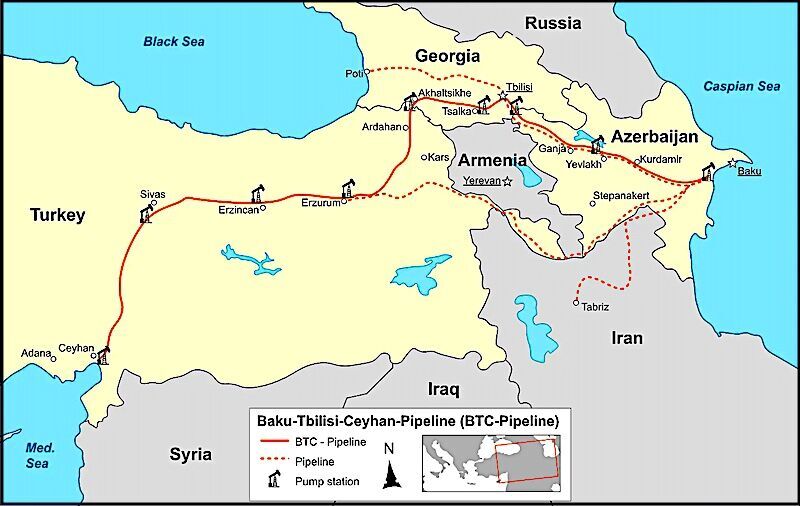
Slippery slope of oil smuggling operations - Turkey, Georgia and Israel, 4-starters

Oil pipeline map
© Unknown
The shadow infrastructure of oil flows in Eurasia reveals hidden mechanisms where economics, politics, and intelligence intersect more deeply than is commonly acknowledged.

Much of the oil from the Caspian Basin, the Caucasus, and Northern Iraq and Iran finds its way to global markets through Georgia and Turkey. That is the known reality. But as former U.S. officials have noted, the real story lies in the "known unknowns" and the "unknown unknowns" — the shadow networks, shady deals, and covert routes that shape the region's energy trade.

Nonetheless, amid escalating rhetoric and renewed arm-twisting campaigns, the topic of oil is again front and center. With Donald Trump signaling a tougher approach, he thought he could impose a Venezuela-style blockade against Iran, not to mention starting the war, pretty much on his mood at the time and advice from some clown advisors. The stakes are rising, and few are willing to stand in his corner, provide ships to back him up, or close ranks as he had expected. His strategy and tactics are backfiring. If such tactics were pursued successfully, making a case for war, gaining the support of allies, and protecting those in the direct line of fire, it could have reshaped energy flows and deepened divisions among Russia, India, and China — with consequences far beyond the region.