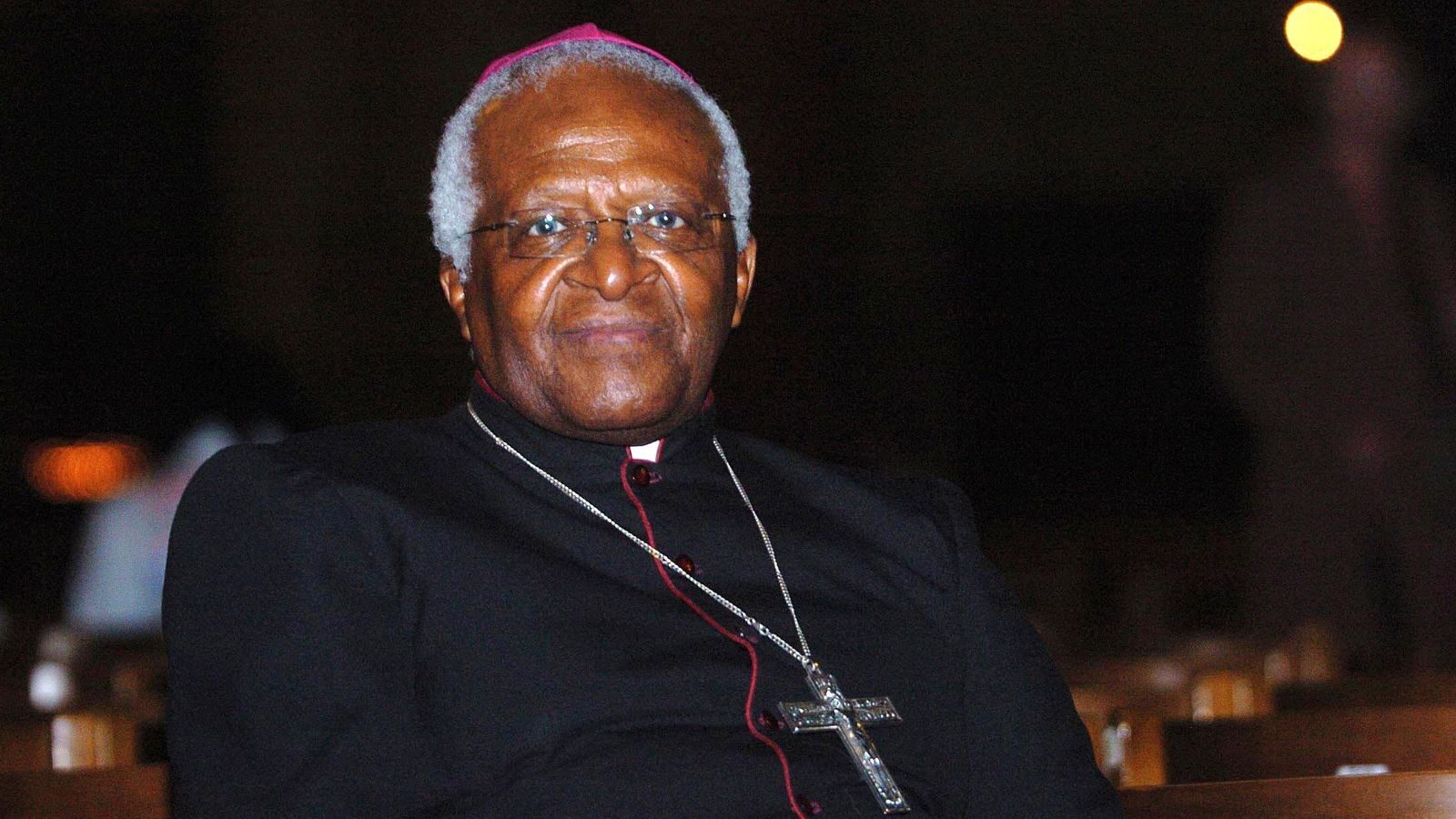
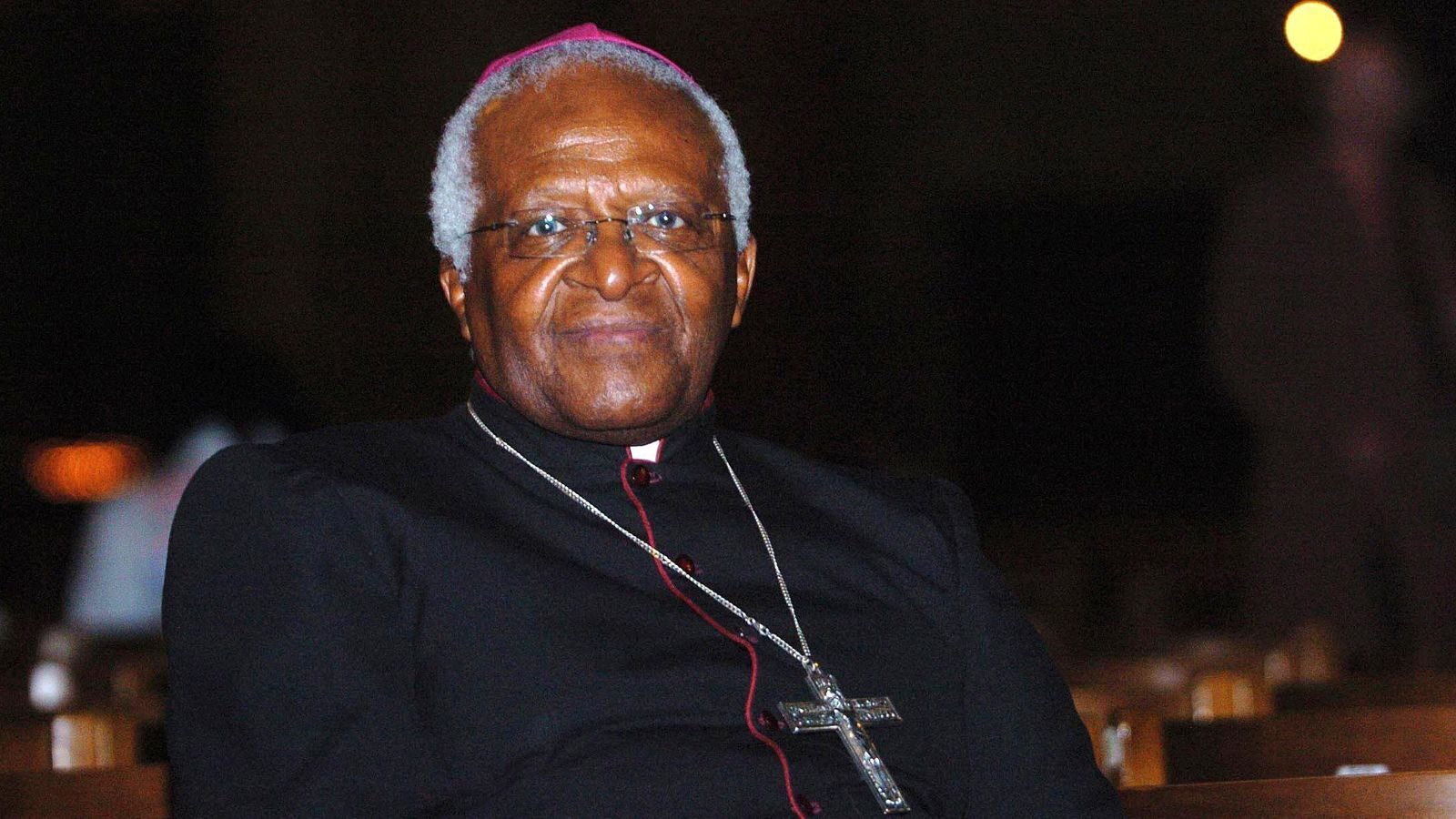
South African Bishop Desmond Tutu (1931-2021)
The Nelson Mandela Foundation said Tutu "was an extraordinary human being." Tutu was a key ally to Mandela in the fight against apartheid and chaired the Truth and Reconciliation Commission in the post-apartheid era.
Nobel Peace Prize laureate Desmond Tutu, 90, has died in Cape Town, South African President Cyril Ramaphosa announced in a statement on Sunday.
Alongside late Nelson Mandela, Tutu was one of the most important voices against the old system of white minority rule known as
apartheid. The Anglican cleric also headed the country's Truth and Reconciliation Commission in the
post-apartheid era, and was seen by many as the conscience of the troubled nation.
Comment: From
Sky News:
They stood hand in hand on the day Nelson Mandela became South Africa's first democratically elected president, for the pair had changed the nation.
Desmond Tutu was ordained a few months after the Sharpeville massacre when 69 black South Africans were shot and killed in 1960.
It was a turning point for the country - and the man - and he used his position in the church as a platform to advocate and argue for the oppressed.
He campaigned for the release of political prisoners and intervened personally - even physically in numerous violent clashes.
When the black community began to turn on itself, he condemned the violence and the brutal forms of killing deployed.
Tutu was awarded the Nobel Peace Prize in 1984 and used the praise and recognition as a vehicle to increase pressure for change at home.
Ten years later, he finally got the chance to vote - at the age of 68, he couldn't contain his joy.
Desmond Tutu (1931-2021)
Desmond Mpilo Tutu was born on 7 October 1931 in Klerksdorp, northwest South Africa, where his father, Zacheriah Zililo Tutu worked as a teacher.
He wanted to be a physician but that was beyond his family's means and he became a teacher instead.
In 1953, Tutu left the teaching profession and he was ordained as an Anglican priest in 1960, becoming chaplain at the University of Fort Hare.
In 1955, Tutu married Nomalizo Leah Shenxane, a teacher who he met while at college. They had four children together: Trevor Thamsanqa, Theresa Thandeka, Naomi Nontombi and Mpho Andrea, who all studied in Swaziland (Eswatini).
He left that post in 1962 and travelled to King's College London, where he received degrees in theology. Tutu returned to South Africa in 1967 and, until 1972, used his lectures to highlight the plight of the African population.
He denounced terrorism and Communism and was awarded the Nobel Peace Prize in October 1984 for his "role as a unifying leader figure in the campaign to resolve the problem of apartheid in South Africa".
Tutu and Mandela met for the first time in 35 years in 1990, as the apartheid movement was coming to an end.
As well as English, Tutu could speak Zulu, Sotho, Tswana, and Xhosa.
When the newly-elected government decided to investigate the crimes of the apartheid era, Tutu was the obvious choice to lead its Truth and Reconciliation Commission.
But it wasn't easy, and the Archbishop very publicly broke down.
Midway through the commission, he was diagnosed with prostate cancer, but it didn't slow him down.
The man known as South Africa's "naughty uncle", continued to laugh and engage and criticise as well using his democratic rights to castigate domestic politicians, savaging a decision by the ruling African National Congress to refuse the Dalai Lama a visa.
He was praised and celebrated by international celebrities and heads of state - but he still spoke his mind, savaging Zimbabwe's former dictator, Robert Mugabe and fellow Nobel prize winner, Aung San Suu Kyi.
By the time Mandela had passed away, Archbishop Tutu had fallen out with the South African authorities.
His family said he wasn't invited to Mandela's funeral - a charge which led to a hasty, last-minute invitation.
The government of then-president Jacob Zuma said it was a misunderstanding.
A few months later, Tutu said he wouldn't vote for the ruling ANC (African National Congress) because they had failed to help and lift the country's poor.
He had a knack with people and those who worked with him tended to adore him.
He will be remembered for his energy - his decency and childlike enthusiasm, a South African icon who was loved and appreciated far beyond his native land.
Some of Tutu's memorable quotes:
Another courageous voice gone. Tutu was never afraid to speak his mind, regardless of the audience:














Comment: Harris is a toxic boss often left out of the loop, and Biden doesn't have a clue. Who's really running the White House?