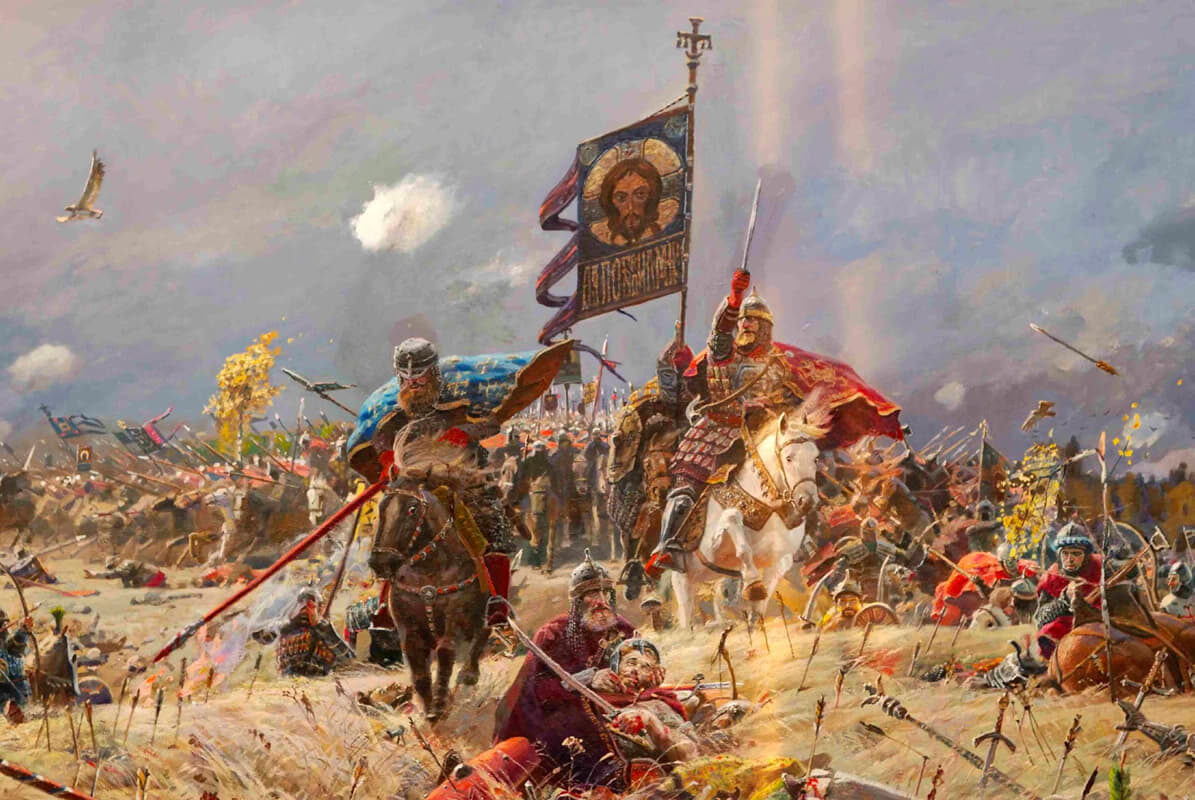
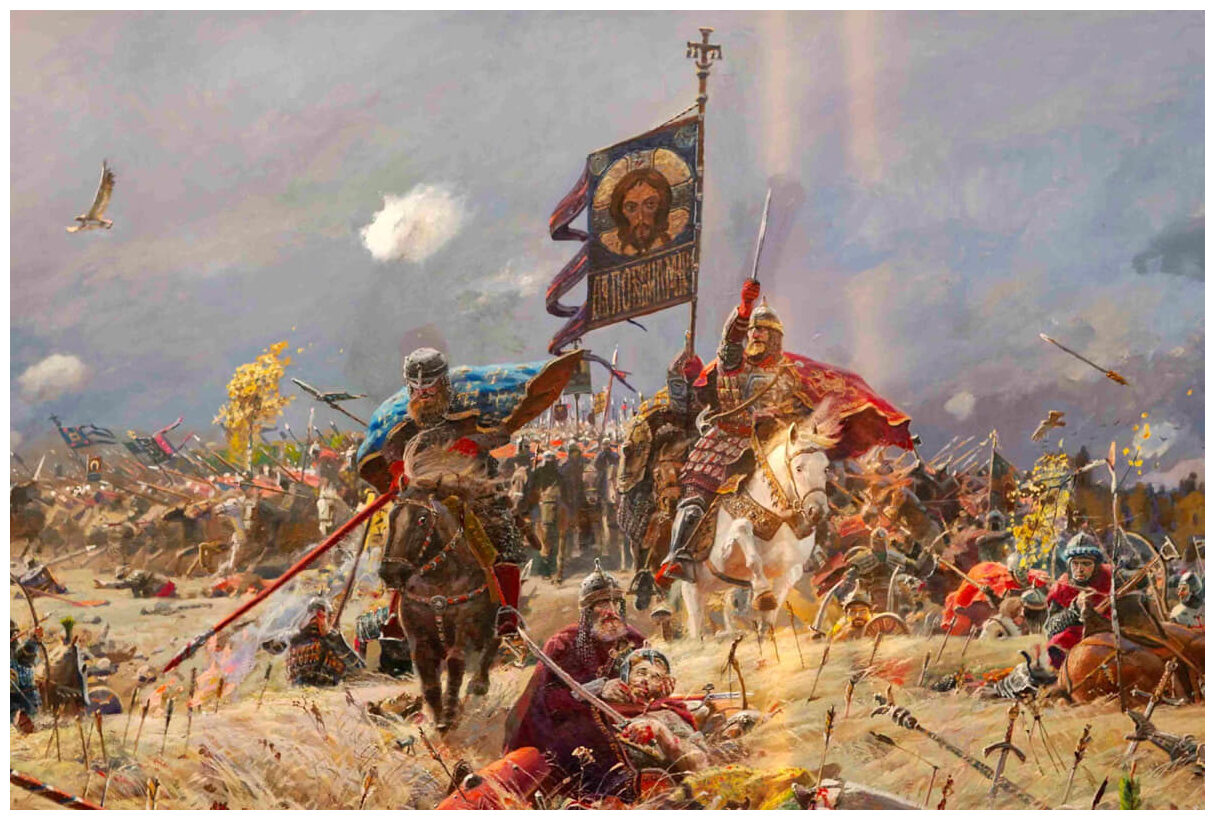
© Pavel Ruzhenko (2005)"Kulikovo Field."
The best way to verify the
failure of the current Ukrainian offensive, at least so far, is the
discretion and silence of the media. Had the operation gone differently, it would have grabbed all the headlines. But the sad reality is different: the fearsome German leopards have become an endangered species and a reward of one million rubles is given to the Russian serviceman who catches one of these vermin. Rheinmetall's shares plummeted when the photos of German scrap metal made into phosphatin in the steppes of New Russia began to be published. But the fault lies not with the machines or the brave Ukrainians who dare to crew them, but with their sponsors — those who devised an offensive to satisfy Western investors' need for victories.
Because this adventure was not designed on military criteria — but on marketing.In recent weeks, the prestigious Western press has discovered that the Russians do not fight all that badly, that they seem to know something about artillery and fortification and that they are not just the horde of drunks and incompetents described to us by our "experts."
Moreover, it has been proved that the Muscovite barbarians have an overwhelming air dominance and are very effective in electronic warfare, even more so than the invincible Americans. General Sergei Surovikin, who took over the leadership of the front line of the Special Military Operation in September last year, is to blame for all this. When this general took command, the objectives of the Russian intervention in Ukraine were partly achieved: the essential one, which was to prevent the ethnic cleansing of the Donbass, and some secondary ones, such as the land link between Crimea and the rest of the Russian Federation, the control of the Sea of Azov and the destruction of the Ukrainian air force and a good part of its army. But the Maidan regime did not fall and the West succeeded in preventing a peace agreement in March and April 2022. Another NATO success was the accelerated rearmament of Zelensky's battered army. The few Russian troops guarding the front were not reinforced after the April political failure and in August-September the Ukrainian offensives in Kharkov and Kherson took place.
The first one was a success due to the poor coverage of that front, but the Russians managed to withdraw without great losses and after brilliant rearguard battles in Krasniy Liman, where they broke the Ukrainian encirclement twice. The army of Kiev paid for its military success with a very high number of casualties, because Russian air superiority compensated in part for the low density of its ground forces. At Kherson, the Ukrainian offensive was a bloody failure, especially at the Ingulets, where the ford of that river cost thousands of dead in front a Russian line that remained unmoved. It was Surovikin's fear that the Noya Kakhovka dam would burst and leave his thirty thousand men cut off from communication — which made him to take the most difficult decision of the Russian intervention: to abandon Kherson and withdraw to the right bank of the Dnieper.
Political rather than military defeat for Russia and spectacular propaganda success for Zelensky.














Comment:
- The key moments of the aborted Wagner revolt in Russia
- Prigozhin's Gambit — Treason by any other name
- Prigozhin's Folly: The Russian 'Revolt' That Wasn't Strengthens Putin's Hand
- The real casualties of Russia's 'civil war'? The Beltway "expert" class
Mark Sleboda has a few things to say about Prigozhin and Wagner: Prigozhin's Mutiny - One Man's Ego as Tragicomedy Farce