
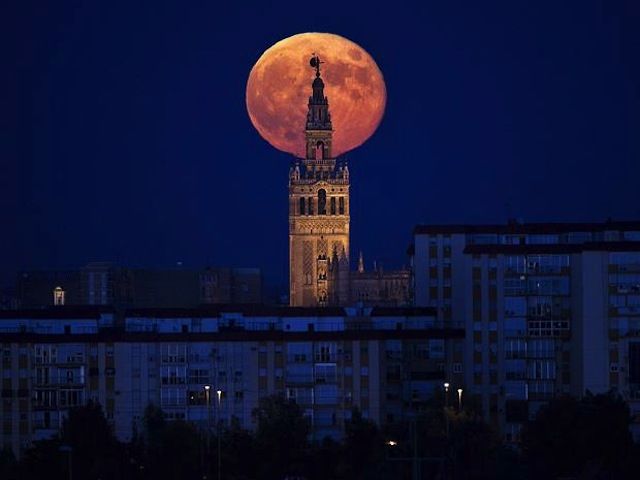
© Independent
A Supermoon, or perigee moon, happens when the full or new moon does its closest fly-by of the Earth, making it look bigger than it normally does. And the spring equinox refers to the time of the year when the day and night are of equal duration, mid-way between the longest and shortest days.
The solar eclipse refers to a phenomenon where the sun and moon line up, so that the latter obscures the former. And while it won't be affected by the two other events, it is rare that the three events happen even individually.
Supermoon
Most of the time, there are between three and six Supermoons a year. There is set to be six in 2015, two of which have already happened. The next will take place on March 20, the day of the eclipse, and the others will come in August, September and October.
Eclipses can only happen at new moon, when the moon appears is entirely in shadow. And the spectacular Supermoon images that are often spotted can only happen when the moon is full, since it can only be seen then.
As a result, only the last three Supermoons of this year will be visible — because the moon is new rather than full on March 20, it won't be seen. But it will be gliding past us closer than ever, and its shadow will be visible as it blocks out the sun on Friday morning.

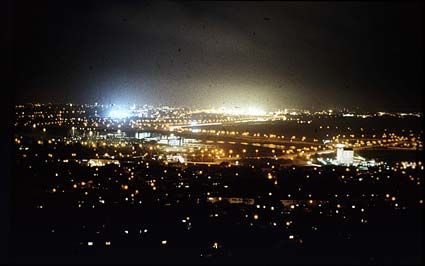










Comment: Now that we have the ability to keep lights burning around the clock, not only are humans becoming sleep deprived, but it appears this is having dire effects on our ecosystem in ways that science is only beginning to understand.