
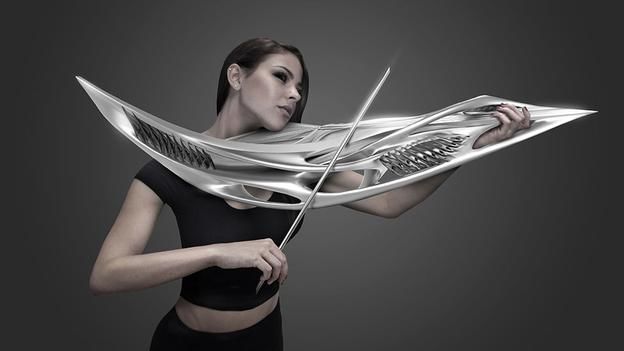
© MONAD Studio / Eric Goldemberg / Veronica ZalcbergPiezoelectric Violin
"Our desire to create unusual instruments emerged when we realised the aesthetic and technical issues we were facing as architects did not differ much from those of musicians and composers," Goldemberg tells me. He and Zalcberg were interested to explore a "new conception for violin core functionality", and the instrument - which will be exhibited alongside other curious sonic specimens including their take on the cello, a 'hornucopia', and Hall's 'monobaribasitar' - is the result of "intense research on design and computation, leading to direct engagement with musicians, luthiers, composers and interactive artists of different kinds".





















Comment: The world of classical music is moving into the future with more instruments being re-designed: Gergely Bogányi's classical piano makeover