Science & TechnologyS


Fireball

Asteroid skimmed by Earth on Tuesday

It came close. 2015 HD1 passed just 0.2 lunar distances away (45,600 miles or 73,400 km).
Asteroid 2015 HD1
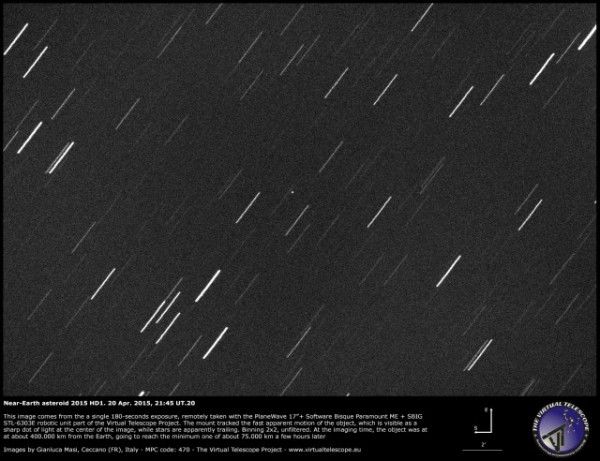
© The Virtual Telescope ProjectThe Virtual Telescope Project acquired this image on Monday evening, April 20, 2015.
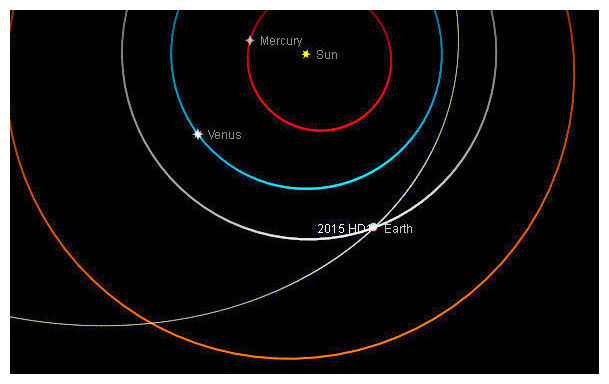
On Tuesday morning according to U.S. clocks - at approximately 3 a.m. CDT, or 8 UTC - a small and very faint asteroid passed just 0.2 lunar distances or 45,600 miles (73,400 km) above Earth's surface. That's about twice as far as geostationary satellites. The Mt. Lemmon Survey, based in Tucson, Arizona, first saw this asteroid three days ago, on April 18.

The asteroid was expected to reach climb briefly to magnitude +13.2 - much too faint to see with the eye alone. The Virtual Telescope Project viewed the asteroid last night and provided the image above. Read their report.

Comment: See also:


Fish

Significant portion of Deepwater Horizon oil transported to sea floor via marine snow

oil spill deepwater horizon
© Sean Gardner/Reuters Where did the oil go?
After the accident on the Deepwater Horizon platform five year ago in the Gulf of Mexico, an estimated 210 million gallons of oil leaked at a depth of about 1,500 meters for 87 days. This spill was unusual, not only because of the duration and quantity of oil spilled, but because it was also the first oil spill at such great depths.

Where did the oil go? Initially the oil floated upward toward the sea surface. Crude oil consists of many different chemical components, each with different properties. Some of the components of the released oil formed a deep plume at around 1,000 meters of water depth, whereas another fraction continued its upward path until it reached the surface to form an oil carpet.

About 25% of the oil was recovered or removed by skimming and burning directly at the sea surface. Some of the oil evaporated and some was rapidly consumed by bacteria. But a large fraction dissipated, dissolved, or dispersed, naturally or due to the application of dispersants - chemicals that break down the oil into small droplets. These components of the oil remained in the water, even if concentrations were too low to measure reliably.

My research has focused on how oil and dispersants interacted with natural organisms in the water. My experiments suggest that a significant portion of the oil spilled from the well has been carried to the seafloor by marine particles and organisms, a finding that can help guide cleanup efforts in future spills.

Comment: The oil may have disappeared, but the devastating effects of the Deepwater Horizon spill continue to linger even after five years:


Phoenix

Scientists warn of supervolcanos with ability to destroy humanity, urge global governance to prepare

Image
© USGSMount Redoubt Eruption on April 21, 1990

A report presented by experts at a leading scientific foundation details the possibility of a supervolcano that could return humanity to pre-civilization state, urges global community to prepare.


Special Report

A report by the European Science Foundation has concluded that a large volcanic eruption poses the greatest risk to humanity and that an, "informed global governance system," is needed to prepare for the possibility.

Calling the threat of low-frequency, high impact events, "grossly underestimated," in disaster risk reduction plans worldwide, the report highlights the fact that, "large volcanic eruptions have the potential to impact climate, anthropogenic infrastructure and resource supplies on a global scale."

The 72 page report is chalked full of interesting facts and, overall, paints a picture of a world struggling to grasp the dangers posed by these rarely occurring disasters. Although the report should be read in full by anyone seeking the whole picture, the authors did incorporate a section with their key findings.

Comment: The sheer power and potential destructive force of mother nature should be humbling in its realization. Incredible to think that our planet's natural processes are capable of so much more destruction than the results of the psychopathic drive towards annihilation - which we read about every day in the articles posted to the Puppet Masters section of SOTT.net. But even more incredible is to know that the psychopathic aims and actions that are referred to there actually do affect the Earth's changes in fascinating ways. Read Earth Changes and the Human Cosmic Connection to understand how.


Alarm Clock

Babies feel pain 'like adults', MRI scan study suggests

crying baby
© Bernd Vogel/Corbis/ReutersAs recently as the 1980s it was common practice for babies undergoing surgery to be given neuromuscular blocks but no pain relief medication.
Scientists at Oxford University say a world-first form of research shows infants may be far more sensitive to pain than adults

The brains of babies "light up" in a similar way to adults when exposed to the same painful stimulus, suggesting they feel pain much like adults do, researchers said on Tuesday.

In the first of its kind study using magnetic resonance imaging (MRI), scientists from Britain's Oxford University found that 18 of the 20 brain regions active in adults experiencing pain were also active in babies.

Brain scans of the sleeping infants while they were subjected to mild pokes on the bottom of their feet with a special rod - creating a sensation "like being poked with a pencil" - also showed their brains had the same response to a slighter "poke" as adults did to a stimulus four times as strong, suggesting babies have a much lower pain threshold.

"Obviously babies can't tell us about their experience of pain and it is difficult to infer pain from visual observations," said Rebeccah Slater, a doctor at Oxford's paediatrics department who led the study.

"In fact some people have argued that babies' brains are not developed enough for them to really feel pain ... [yet] our study provides the first really strong evidence this is not the case."

Even as recently as the 1980s it was common practice for babies undergoing surgery to be given neuromuscular blocks but no pain relief medication.

Last year, a review of neonatal pain management in intensive care found that although these babies experience an average of 11 painful procedures per day, 60% do not receive any kind of pain medication.

"Our study suggests that not only do babies experience pain but they may be more sensitive to it than adults," Slater said. "If we would provide pain relief for an older child undergoing a procedure, then we should look at giving pain relief to an infant."

Comment: How anyone would have believed that babies wouldn't feel pain is beyond reason.


Fireball 5

Close passage of asteroid 2015 HD1 tonight

Asteroid 2015 HD1
© Gianluca MasiNewly found asteroid 2015 HD1 will pay a close visit to Earth overnight, zipping by at just 45,600 miles at 3:11 a.m. Tuesday morning April 21.
If you wake up in the middle of the night with weird dreams about flying asteroids, I wouldn't be surprised. Around 3 a.m. (CDT) tomorrow morning April 21, a 50-foot-wide asteroid will hurdle just 0.2 lunar distances or 45,600 miles over your bed.

The Mt. Lemmon Survey, based in Tucson, Arizona, snagged the space rock Saturday. 2015 HD1 is about as big as a full grown T-rex through not nearly as scary, since it will safely miss Earth ... but not by much.

Geostationary satellites, used for global communications, weather forecasting and satellite TV, are parked in orbits about 22,300 miles above the Earth. 2015 HD1 will zip by at just twice that distance, putting it in a more select group of extremely close-approaching objects. Yet given its small size, even if it were to collide with Earth, this dino-sized rock would probably break up into a shower of meteorites.

Lucky for all of us, astronomers conducting photographic surveys like the one at Mt. Lemmon rake the skies every clear night, turning up a dozen or more generally small, Earth-approaching asteroids every month. None yet has been found on a collision course with Earth, but many pass within a few lunar distances.

Wolf

The revealing truth about wolves

Image
© Jeff Vanuga/NPLMost of us don't see wolves as they really are
Wolves are either regarded as terrifying rabid killers, or beautiful examples of nature at its wildest

Reputation: Wolves have two public images. They inspire feelings of fear for their mad-eyed drooling, biting of children, and killing of livestock. But they also draw admiration for their strong, family-centric society, and as flagships of wild nature.

Reality: These extreme views of wolves are deeply held, but are rooted in history rather than modern-day reality. In the highly modified landscapes of Europe and North America, it is time to rethink the meaning of wolf.

How many wolves are there in Europe? If I'd answered this question a year ago, I might have suggested 1000. I would have been wrong, by an order of magnitude.

"If we'd been back in the 1970s then we'd have been talking about an endangered species," says John Linnell of the Norwegian Institute for Nature Research in Trondheim, and a member of the International Union for Conservation of Nature's Large Carnivore Initiative for Europe.

However, over the last 40 years wolves have made an incredible comeback across the continent. "At the moment we're talking about 12,000 wolves in Europe," says Linnell. During the same period, the US population has also expanded rapidly, he says.

That's a lot of wolves. So is there any truth in the notion that wolves pose a danger to humans?

Mars

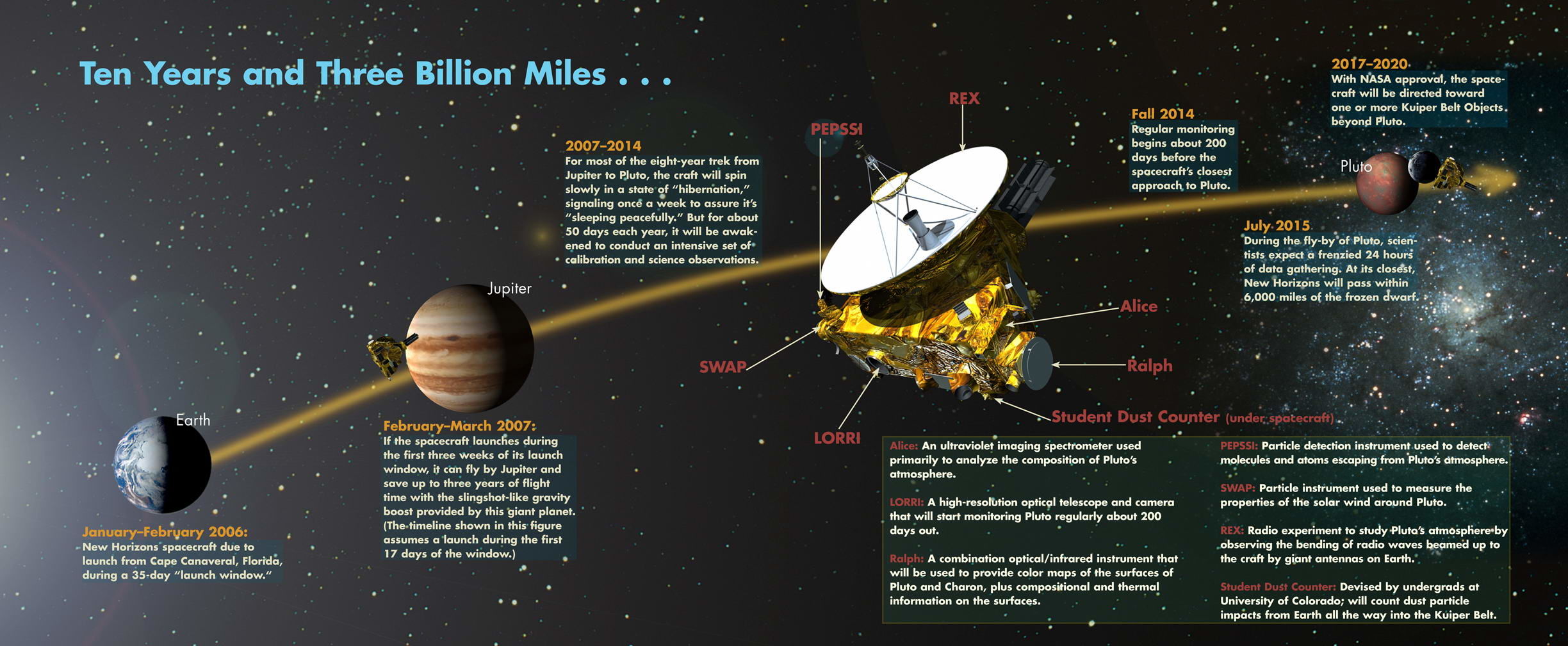
First color photo of Pluto and its moon Charon: Taken by NASA's New Horizons spacecraft

Pluto and its largest moon Charon
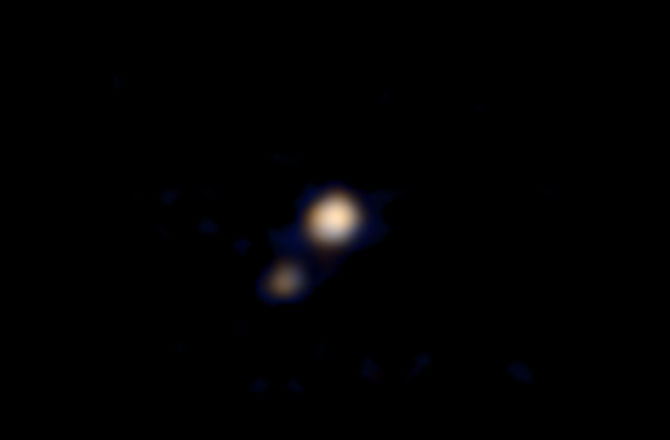
© NASA/Johns Hopkins University Applied Physics Laboratory/Southwest Research InstituteThis image of Pluto and its largest moon, Charon, was taken by the Ralph color imager aboard New Horizons on April 9, 2015, from a distance of about 71 million miles (115 million kilometers). It is the first color image ever made of the Pluto system by a spacecraft on approach.
Pluto, Charon and a growing number of smaller moons will offer an unprecedented scientific opportunity as our first robotic explorer to the Kuiper belt makes its historic flyby. But the mission will be far from over after July 14.
Pluto five moons
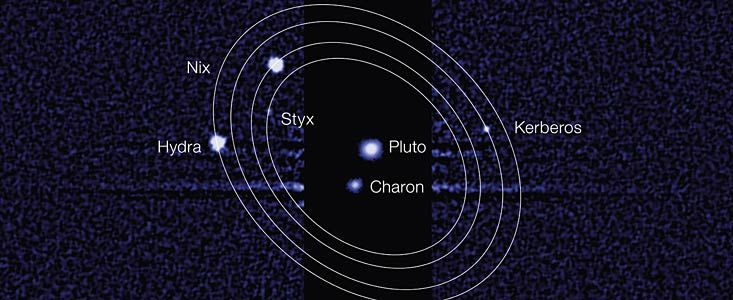
© ZME ScienceThe International Astronomical Union (IAU) is announcing that the names Kerberos and Styx have officially been recognised for the fourth and fifth moons of Pluto, which were discovered in 2011 and 2012.
NASA's New Horizons spacecraft is expected to make a historic flyby only 7,750 miles (12,500 kilometers) from the dwarf planet's surface. In the meantime, we've been gradually getting a sharper and sharper view of the dwarf planet and its system of moons. New Horizons - a compact, lightweight, powerfully equipped probe, packing the most advanced suite of cameras and spectrometers ever sent on a first reconnaissance mission.
New Horizon probe to Pluto
© NASA, ZME ScienceNew Horizon launched from Earth on January 19, 2006 and now is back online after 9 year journey to Pluto.

Comment: See also:


Rainbow

Color of light may be more important than brightness in its impact on body's internal clock

sunrise
© tuelekza / Fotolia
Research by scientists at The University of Manchester has revealed that the colour of light has a major impact on how the brain clock measures time of day and on how the animals' physiology and behavior adjust accordingly. The study, for the first time, provides a neuronal mechanism for how our internal clock can measure changes in light colour that accompany dawn and dusk.

In research publishing on April 17th in the Open Access journal PLOS Biology, the researchers looked at the change in light around dawn and dusk to analyze whether colour could be used to determine time of day. Besides the well-known changes in light intensity that occur as the sun rises and sets, the scientists found that during twilight light is reliably bluer than during the day.

The researchers next recorded electrical activity from the brain clock while mice were shown different visual stimuli. They found that many of the neurons were more sensitive to changes in colour between blue and yellow than to changes in brightness.

Comment: Keeping the body clock working optimally has important health consequences as disruptions can affect the immune system.


Eye 1

Smart meters vulnerable to hacking and tampering

smart meter
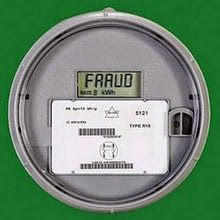
There have been a lot of theories about what could happen when Smart Meters (SMs) are tampered with and customers receive "false-reading, tampered-with" utility bills—water, gas, or electric—when hackers access the porous microwave networks that transmit in-the-house information that electric SMs constantly collect, then radio-transmit via microwaves back to utilities home offices.

That's not some "pie-in-the-sky" theory; it's of great concern to security experts!

According to Sally Ward-Foxton of Crosstalk (Oct. 2012)
But this increasing 'digitalisation' also adds a lot more opportunities for tampering with the meters in some way, resulting in security vulnerabilities. These vulnerabilities obviously need to be considered before introduction of the smart meters to make sure everyone is paying their way when it comes to electricity.

Comment: In addition to the vulnerability to hacking and price gouging involved with smart meter technology there is also the very real risk of health problems associated with these meters.


Music

Have you heard 'the hum'? Mystery of Earth's low droning noise could now be solved

Earth
© The Independent, UKIt was often blamed on phone masts, submarine communications and pipes.
Scientists have confirmed the cause of a strange humming noise that emanates from the Earth and has baffled people for more than forty years - and was even a factor in one reported suicide.

The noise has been talked about worldwide and also made local newspaper headlines in the UK. It is often referred to as a "phenomenon" and "the hum", usually prefixed with the location of where it is heard.

In Britain, the most famous example was the "Bristol hum" that made the news in the late 1970s. One newspaper asked readers in the city: "Have you heard the Hum?" and at least 800 people said they had - according to the BBC - and some had suffered headaches and nosebleeds from it.

It has been described like "a diesel car idling in the distance" by a BBC interviewee and the maddening sound has driven people stir-crazy in trying to figure it out. Especially when they can only hear it at home and during the night.

People living on the south coast have complained this week of a constant and low-pitched sound for which they have found no cause - as reported by Plymouth Herald.

It has been mistaken for leaking pipes, phone masts, wind farms, low-frequency submarine communications and even mating fish.

"For the first few years I lost sleep, couldn't concentrate and was unable to do anything. I was constantly in tears, which put a great strain on my husband. It has changed me from an active, creative person to a stifled, angry pessimist," a woman told The Independent back in 1994.

Doctors blamed patients' abilities to hear it on tinnitus, until Addenbrooke's Hospital in Cambridge had confirmed sometime in the 1990s that the cause is external.