Science & TechnologyS


Robot

Neuroscientist creates mouse neuron based computer chip that can smell explosives

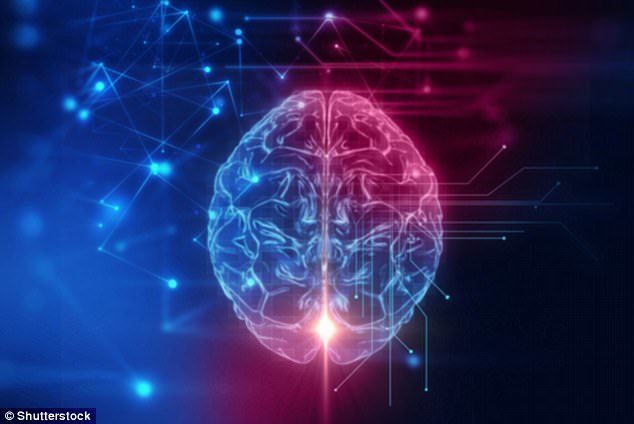
computer brain
The Koniku Kore device is a 'world first' that is able to breath in and smell air - meaning it could detect volatile chemicals and explosives or even illnesses such as cancer.
A technology expert has created a computer chip based on mice neurons that could recognise the smell of explosives.

The device could be implanted into the brain of future robots, which could be trained to recognise danger via odours, replacing traditional airport security.

The Koniku Kore device is a 'world first' that is able to breath in and smell air, meaning it could detect volatile chemicals and explosives or even illnesses such as cancer.

This means in the future passengers could skip tedious airport security lines, while the special device sniffs out explosives silently in the background.

While those in the field of Artificial Intelligence (AI) are working furiously to create machines that can mimic the brain, or - like tech entrepreneur Elon Musk - implant computers in our brains, one researcher has found a way to merge lab-grown neurons with electronic circuitry.

Comet

Thunderbolts Space News: Electric Comets

Electric comets
© YouTube/Thunderbolts Project (screen capture)
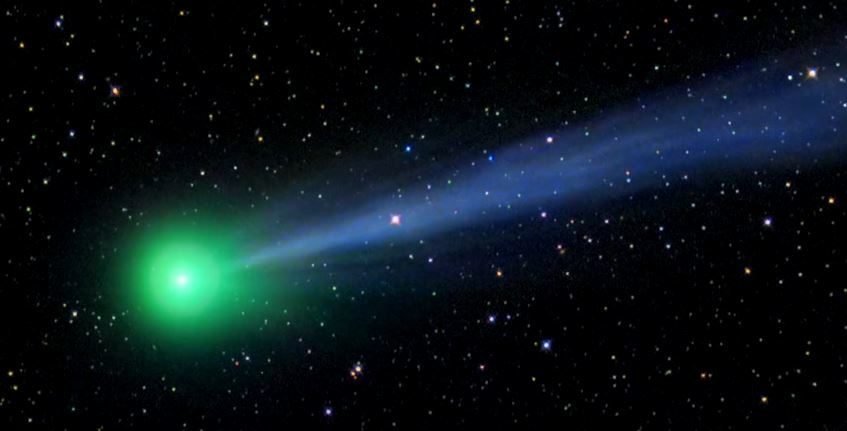
In our previous episode, we began a commemoration of the 5-year anniversary of Space News from the EU with a comprehensive summary of the most significant findings to date from comet missions. Today, we continue our commemoration with a review of the some of the most dramatic and "surprising" comet displays, all of which point to the electrical nature of cometary phenomena.


Comment: The Electric Universe model is clearly explained, with a lot more relevant information, in the book Earth Changes and the Human Cosmic Connection by Pierre Lescaudron and Laura Knight-Jadczyk.


Info

The basis of the Universe may be Information, not energy or matter

dark energy
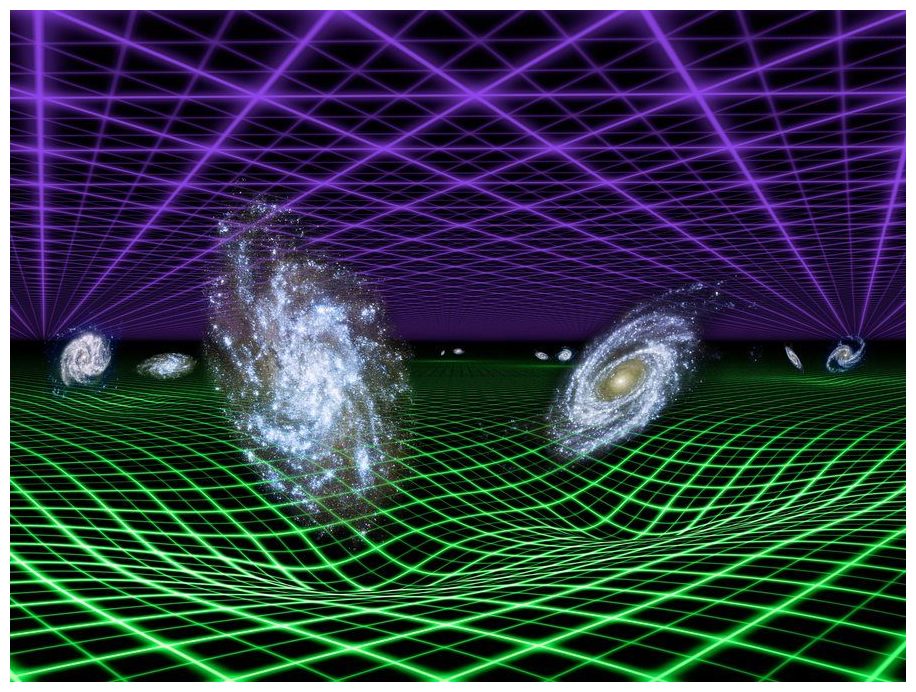
© NASA/JPL-CaltechAn artist’s conception of dark energy.
There are lots of theories on what are the basis of the universe is. Some physicists say its subatomic particles. Others believe its energy or even space-time. One of the more radical theories suggests that information is the most basic element of the cosmos. Although this line of thinking emanates from the mid-20th century, it seems to be enjoying a bit of a Renaissance among a sliver of prominent scientists today.

Consider that if we knew the exact composition of the universe and all of its properties and had enough energy and know-how to draw upon, theoretically, we could break the universe down into ones and zeroes and using that information, reconstruct it from the bottom up. It's the information, purveyors of this view say, locked inside any singular component that allows us to manipulate matter any way we choose. Of course, it would take deity-level sophistication, a feat only achievable by a type V civilization on the Kardashev scale.

Mid-20th century mathematician and engineer Claude Elwood Shannon, is thought the creator of classical information theory. Though few know of him outside of scientific circles, he's being hailed today as the "father of the digital age." Shannon's spark of genius came in 1940 at MIT, when he noticed a relationship between Boolean algebra and telephone switching circuits.

Comment: From the same Evolution News blog quoted in the above comment:
Perry came close to acknowledging a designer of nature, but one suspects that the materialist/atheist ideological correctness that plagues science dissuaded him from drawing the obvious conclusion. The centrality of information to nature implies a mind on the receiving end - form is after all just that which is intelligible about a thing - but even more importantly, information presupposes a mind on the creating end.

Forms can exist in minds and in things, but the existence of formal and final causes in nature presupposes a mind that directs natural processes to actual intelligible ends. As Thomas Aquinas wrote in his Fifth Way, just as we infer an archer when we see an aimed arrow fly through the air, it is reasonable to infer a mind that aims nature's processes according to regularities and physical laws.

Information, understood as formal and final cause, is what makes nature real. And information presupposes a designer.
David Ray Griffin, influenced by philosopher and mathematician Alfred North Whitehead, calls that source of information the cosmic mind.


Brain

The research is not conclusive: You did not inherit your intelligence solely from your mother

DNA woman
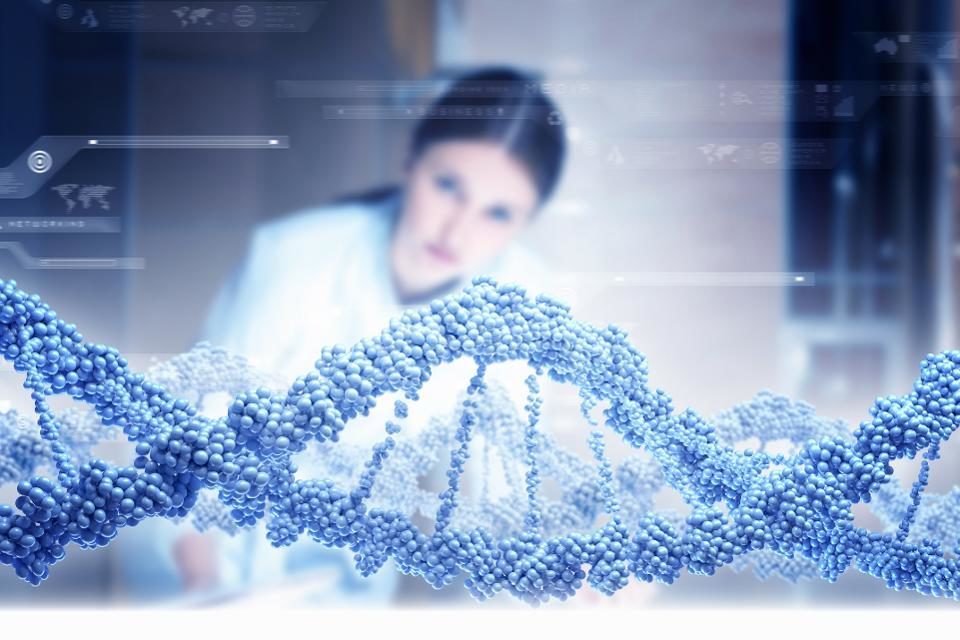
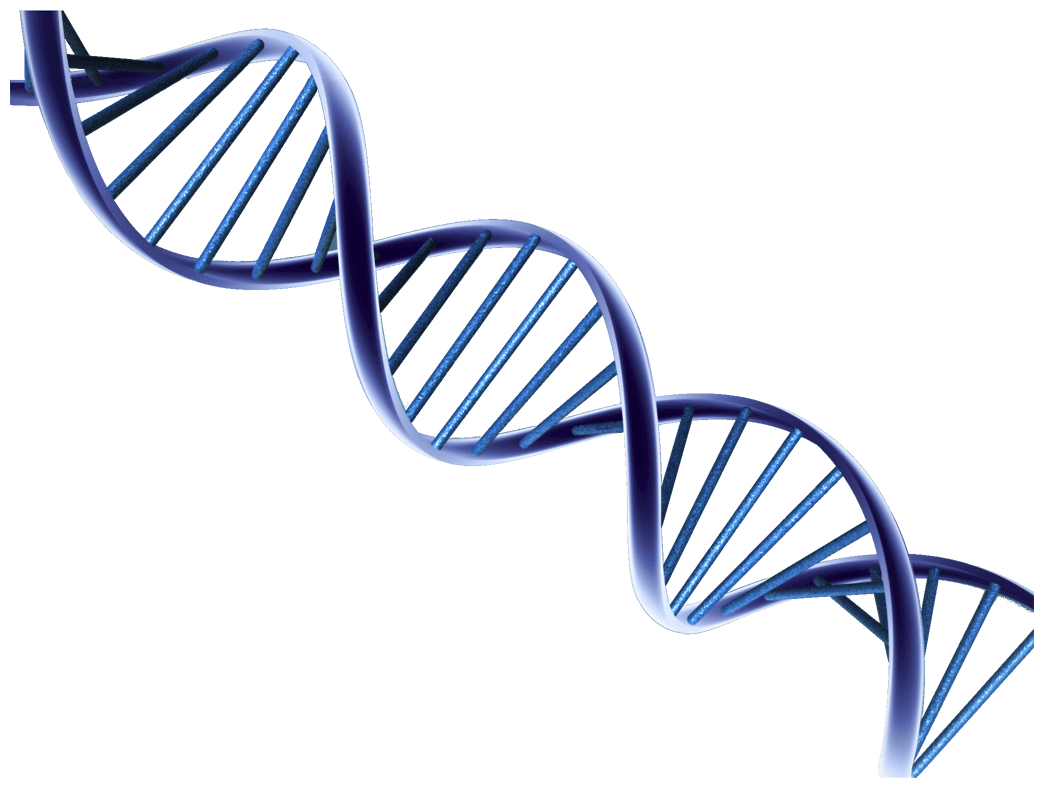
© ShutterstockNo, that's not a remotely accurate representation of DNA.
A garbled post from a website called Second Nexus has gone viral in my feeds (and possibly yours), likely because of its eye-catching headline claim that "New Research Establishes That Intelligence Is Inherited From The Mother." The piece is bylined "Editorial Staff," presumably because everyone was too embarrassed to put a real name on it.

The premise of the post seems to be that science has traced "intelligence genes" to the X chromosome and that:
children are more likely to inherit intelligence from their mothers because intelligence genes are located on the X chromosomes (and mothers have two).

Mothers do tend to have two X chromosomes, but they aren't identical chromosomes, and of course, they got one of them from their fathers. Mothers generally pass only one X to their children (after the two X chromosomes engage a little genetic swapping themselves), and those children in turn receive the second sex chromosome (X or Y) from their fathers. Whatever is on the X can pass from mother to child or father to (usually) daughter, but the two X chromosomes the mother has aren't the same and don't at all automatically double the odds of inheriting a specific variant.

Gear

Russia installs Crimea bridge railway arch in unique operation

Crimea Bridge
© Ruptly
Russian engineers have begun a 72-hour moving operation to position a 227-meter-long railway arch for the Crimea Bridge on the piers located in the Kerch Strait in what is regarded as a "unique operation" in global bridge building.

The arch, which stands 227 meters long and 45 meters high, was assembled onshore at the Kerch Peninsula. On Sunday, the construction teams started transporting the whole construction, which weighs more than 6,000 tonnes into place in the Kerch Strait, where it will be installed on special 35 meter-high piers and thus form one of the fairway arches of the Crimea Bridge.

"The maritime operation [envisaged] in the Crimea Bridge construction project is without exaggeration unique for the world's bridge building," the deputy CEO on infrastructure projects of the Stroygazmontazh company, which is responsible for the operation, said, as cited by RIA news agency.

HAL9000

Are superbrains getting closer? Musk 'lines up $100m' to fund Neuralink brain-computer interface

Experiment with Brain-Computer Interface (BCI) in neuroscience laboratory
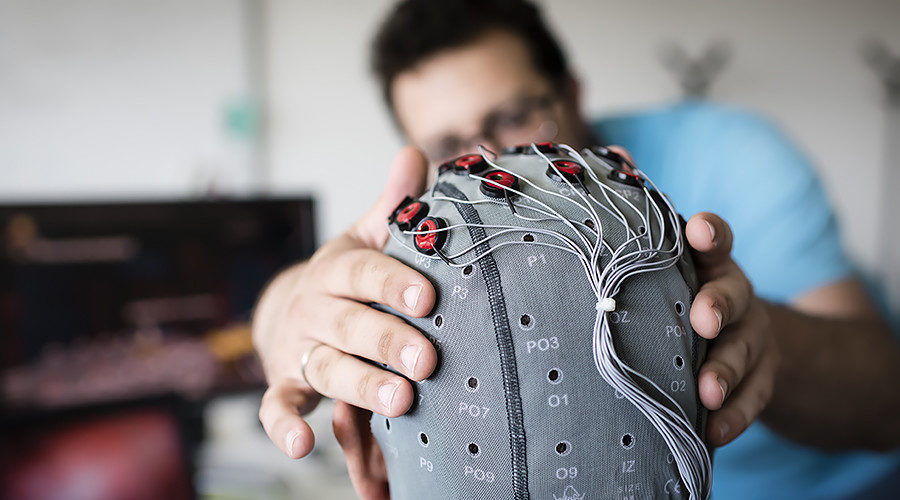
© Erik Tham / Getty ImagesExperiment with Brain-Computer Interface (BCI) in neuroscience laboratory.
Elon Musk could be preparing to invest $100 million of his own money to fund Neuralink, the start-up the billionaire tycoon hopes will one day produce technology capable of connecting the human brain to a computer, and save us from AI overtake.

A filing with the US Securities and Exchange Commision (SEC) confirms that Neuralink already has $27 million in funding, and Musk took to Twitter Friday to shoot down suggestions that the company was looking for outside investors.

While Musk himself has been equivocal about the filing, Bloomberg stated that he "has taken steps to sell as much as $100 million in stock to fund the development."

Headphones

Science journal study shows how neurons in the auditory cortex respond to pitch in speech

sound waves
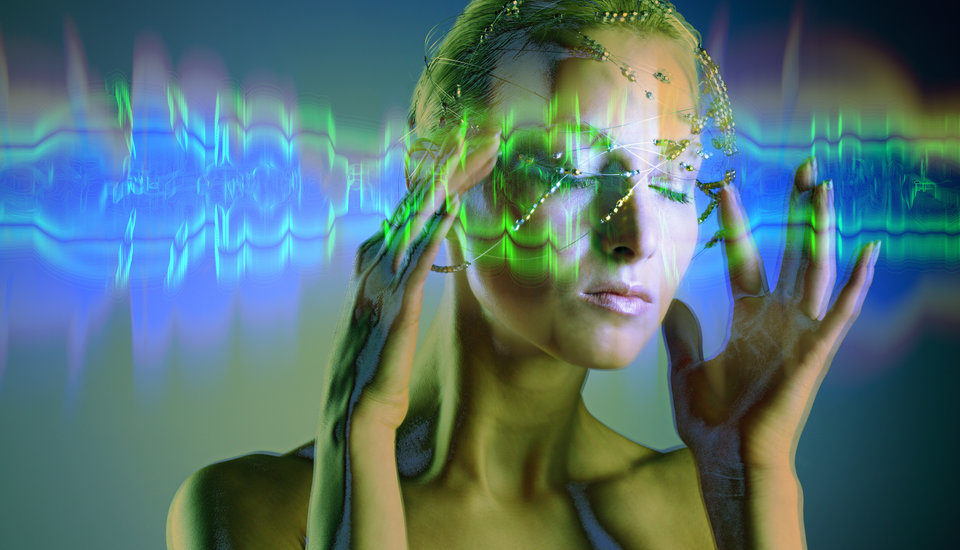
© Coneyl Jay
The same words spoken by the same person can have completely different meanings depending on pitch and where emphasis is placed, and now researchers understand why.

Consider, for a moment, the comic genius of Mel Blanc, the renowned "man of a thousand voices" who played Bugs Bunny, Daffy Duck, Foghorn Leghorn, Porky Pig, and every other major male Warner Brothers cartoon character with the exception of Elmer Fudd.

Sherlock

Twins eye-tracking study offers insight into autism

autism research
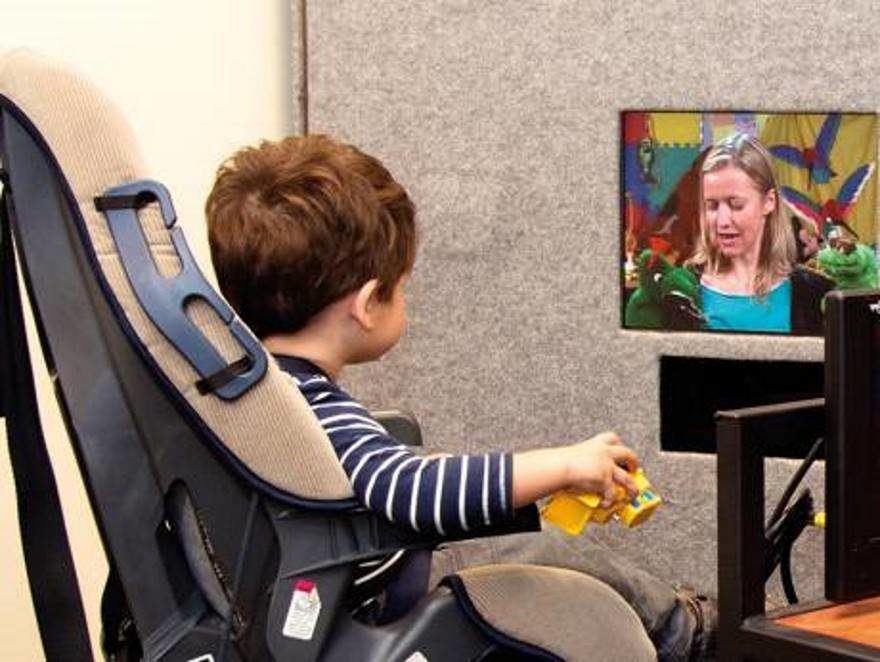
© New York TimesIn an undated handout photo, a toddler takes part in a study tracking eye movements
Research suggests that genetics underlie how children seek out formative social experiences like making eye contact or observing facial expressions

How we look at other people's faces is strongly influenced by our genes, scientists have found in new research that may be especially important for understanding autism because it suggests that people are born with neurological differences that affect how they develop socially.

The study, published in the journal Nature, adds new pieces to the nature-versus-nurture puzzle, suggesting that genetics underlie how children seek out formative social experiences like making eye contact or observing facial expressions. Experts said the study may also provide a road map for scientists searching for genes linked to autism.

"These are very convincing findings, novel findings," said Charles A. Nelson III, a professor of paediatrics and neuroscience at Harvard Medical School and Boston Children's Hospital, who was not involved in the research. "They seem to suggest that there's a genetic underpinning that leads to different patterns of brain development, that leads some kids to develop autism."

Cassiopaea

Anna Karenina hypothesis: A Grand Unified Theory of unhealthy microbiomes

coral reef
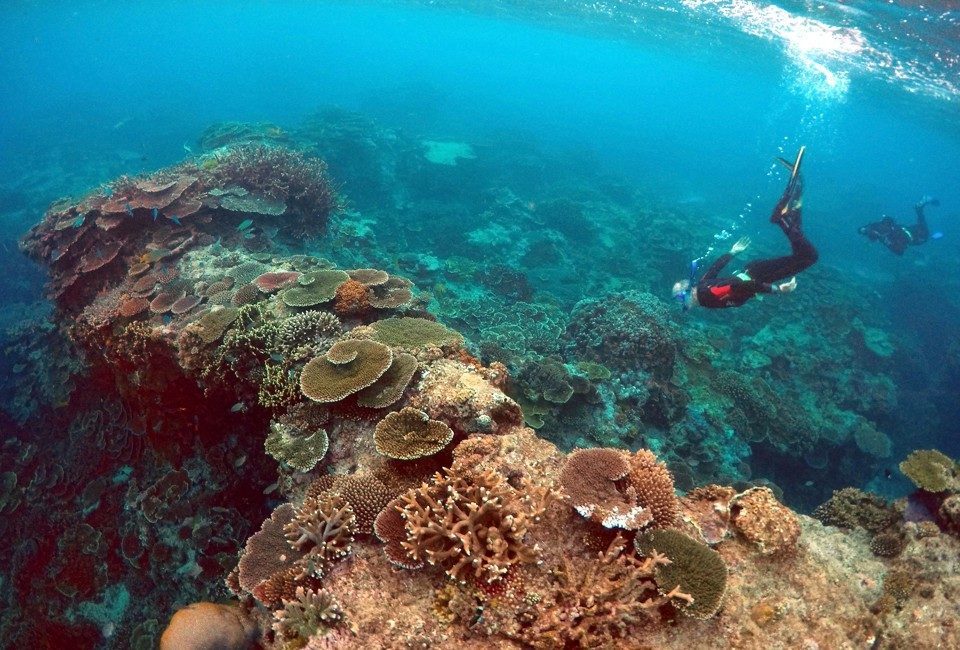
A coral reef with snorkelers
Coral reefs inspired a new theory about unhealthy microbiomes
The Anna Karenina hypothesis says that every unbalanced microbiome is unbalanced in its own way.

In 2012, Rebecca Vega Thurber looked at the results of the large underwater experiment she had been running for three years-and was disappointed.

Since 2009, her team had been traveling to the coral reefs of the Florida Keys. In some spots, they exposed the corals to nitrogen and phosphorus, to simulate the agricultural runoffs that often pollute these reefs. In other areas, they used wire mesh to keep fish away, mimicking the effects of overfishing. They wanted to know if these sources of stress disrupt the relationship between the corals and the trillions of microbes that live with them-and whether these disruptions lead to the corals' demise.

Info

'Dark DNA' could change thinking on evolution

DNA Design
© God & Science Org
DNA sequencing technology is helping scientists unravel questions that humans have been asking about animals for centuries. By mapping out animal genomes, we now have a better idea of how the giraffe got its huge neck and why snakes are so long. Genome sequencing allows us to compare and contrast the DNA of different animals and work out how they evolved in their own unique ways.

But in some cases we're faced with a mystery. Some animal genomes seem to be missing certain genes, ones that appear in other similar species and must be present to keep the animals alive. These apparently missing genes have been dubbed "dark DNA". And its existence could change the way we think about evolution.

My colleagues and I first encountered this phenomenon when sequencing the genome of the sand rat (Psammomys obesus), a species of gerbil that lives in deserts. In particular we wanted to study the gerbil's genes related to the production of insulin, to understand why this animal is particularly susceptible to type 2 diabetes.

But when we looked for a gene called Pdx1 that controls the secretion of insulin, we found it was missing, as were 87 other genes surrounding it. Some of these missing genes, including Pdx1, are essential and without them an animal cannot survive. So where are they?

The first clue was that, in several of the sand rat's body tissues, we found the chemical products that the instructions from the "missing" genes would create. This would only be possible if the genes were present somewhere in the genome, indicating that they weren't really missing but just hidden.