Science & TechnologyS


Attention

Professors issue warning tech is superseding human decisions and it's not great

AI letters
© Pinterest
Scholars create program to test software for bias and discrimination

In the future, your future might depend on a series of carefully calculated zeros and ones. As technology improves, humans become less involved in decisions that affect our lives - and that isn't exactly a good thing.

As artificial intelligence gains ground, college professors at the University of Massachusetts-Amherst have developed a program to test software for bias and discrimination. Yes, racial discrimination. But more than that. Healthcare decisions. Loan decisions. Heck, even how Amazon decides package-sending rates.

"Today, software determines who gets a loan or gets hired, computes risk-assessment scores that help decide who goes to jail and who is set free, and aids in diagnosing and treating medical patients," according to the program's developers. With that, it's critical "software does not discriminate against groups or individuals," argue researchers, adding that their field of study is "undervalued" and "countless examples of unfair software have emerged."

In a scholarly article published for an upcoming software engineering conference, computer scientists Alexandra Meliou and Yuriy Brun, who created the program along with PhD student Sainyam Galhotra, detail the "growing concern" of software discrimination.

In the paper, the two professors forecast the evolving and increasing influence software will have on human life in the future, and argue software currently plays an outsized role in society. "Going forward, the importance of ensuring fairness in software will only increase," the paper states. The scholars used examples that illustrate bias against the wealthy and the downtrodden.

Comment: As stated, AI already has bias without discernment. It offers mechanical responses mimicking a small but powerful segment of society that can't distinguish emotions, experience empathy or offer common human responses. Similar in profile, AI stands to become a function of, a useful tool for, and a supplementary numerical increase to that pathological profile wielding the power of decision.


Cassiopaea

Historical observations reveal ancient Nova

Nova Scorpii 1437
© K. Ilkiewicz and J. MikolajewskaThis image shows the ejected shell of the recovered Nova Scorpii 1437. The red tick marks show the current location of the source and the red plus sign marks the location of the shell center in 1437.
Astronomers and historians pinpoint the source of a 15th-century classical nova. It's currently regathering strength.

In 1437, Korean royal astronomers observed a new star appearing in the constellation Scorpius. "A guest star began to be seen between the second and third stars of Wei," they wrote in the Sejong Sillok, a chronicle of the reign of King Sejong who ruled Korea from 1418 to 1464. The star faded from sight after 14 days.

What the puzzled subjects of King Sejong witnessed was a classical nova - the outburst of a white dwarf in a close binary system when it collects sufficient hydrogen from its companion star.

In this scenario a white dwarf, normally hydrogen-poor, accumulates fresh gas on its surface until the bottom layers become deep and hot enough that hydrogen atoms begin to fuse. A runaway thermonuclear reaction ensues, turning the dwarf's thin surface layer into a shell-shaped hydrogen bomb.

But little is known about what happens to the binary system centuries after the white dwarf throws its tantrum. Astronomers think the system remains relatively unharmed and the gas transfer resumes, setting things in motion for another catastrophic event. Indeed, "recurrent novae" re-explode on observably short timescales.

A team led by Michael Shara (American Museum of Natural History) with help from Richard Stephenson (Durham University), a historian specializing in Asian astronomical records, followed the indications from the Sejong Sillok to look for the stellar system responsible for the guest star, now called Nova Scorpii 1437. "It was the best-located classical nova in over 2,000 years of records by Chinese, Korean and Japanese astronomers," Shara says. "We expected it to be faint, so a fairly precise location was essential if we were to have any realistic chance of recovering it."

Rocket

Russia and China agree to work together on space explorations: Joint Moon missions from 2018

Astronaut
© Sputnik
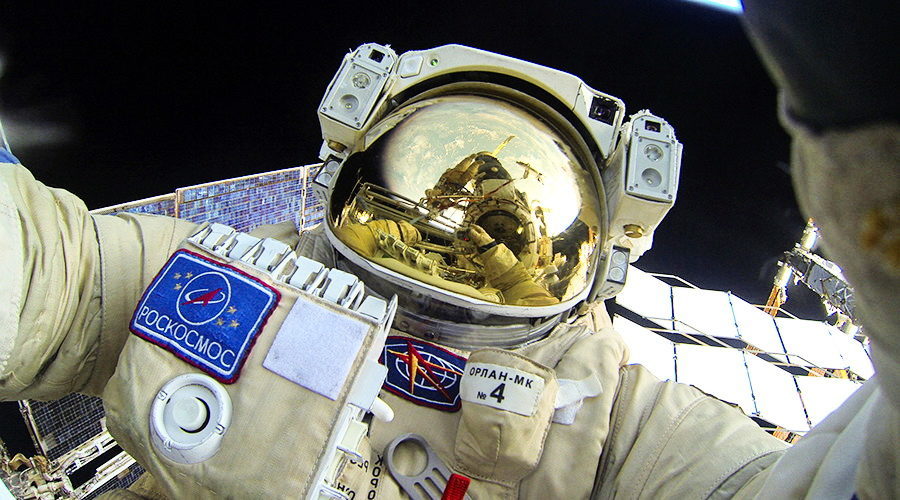
Russia and China are due to sign a mutual agreement on space exploration from 2018 to 2022, a spokesperson from Russia's official space agency has confirmed. It will include satellite development and missions to the Moon. The deal, which covers five fields of space exploration, is expected to be signed in September, RIA Novosti reported Monday. "The approval of the new program is planned during the next meeting of the subcommittee on outer space of the Russian-Chinese commission for the preparation of regular meetings of the heads of government, which is scheduled for September 14, 2017 in Moscow," a spokesperson from Roscosmos, told RIA.

The statement confirms reports by the Chinese network CTGN, which said Sunday that Moscow and Beijing were working towards a joint venture for the 2018-2022 period, but said the agreements were to be signed in October. The five areas of cooperation are satellites, developing new materials, researching space debris and remote monitoring of Earth as well as lunar missions. These arrangements will boost bilateral co-operation as well as both countries' space programs in the face of uncertain relations with Western partners. "China's and Russia's respective cooperation with some Western countries in aerospace sometimes is hindered by trust issue as aeronautic and space developments are closely related to military fields," Wang Ya'nan, deputy editor of Aerospace Knowledge magazine told the Global Times newspaper Tuesday.

Comment: Last year China has expressed an explicit interest in acquiring Russia's renowned rocket engineering.
See also:


People 2

Gender bias STEM research is biased: Women actually have the hiring advantage

rosalind franklin
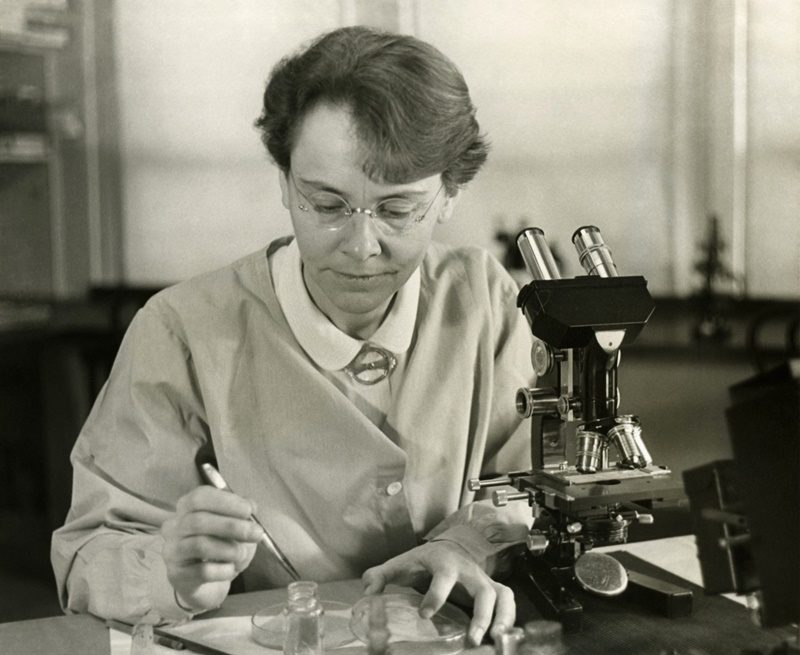
I don't agree with everything in the infamous "Google Memo" written by James Damore, but I can understand why one might write such a memo after sitting through one too many training sessions on unconscious bias. I'm a professor in a STEM discipline, and like many STEM fields mine has substantially fewer women than men. Like every STEM professor that I know, I want my talented female students to have fair chances at advancing in the field. I've served on (and chaired!) hiring committees that produced "short lists" of finalists that were 50 percent women, I've recommended the hiring of female job applicants, I've written strong reference letters for female job applicants and tenure candidates, and I've published peer-reviewed journal articles with female student co-authors. At the same time, I've become increasingly frustrated by the official narratives promulgated about gender inequities in my profession arising from our unconscious biases. These narratives are, at best, awkward fits to the evidence, and sit in stark contradiction to first-hand observations.

My field is smaller than many other STEM fields, so for the sake of anonymity I will not name it, but all available data shows that the proportion of women in my discipline remains stable from the start of undergraduate studies and on through undergraduate degree completion, admission to graduate school, completion of the PhD, hiring as an assistant professor, and conferral of tenure. There have even been statistical studies (conducted by female investigators, FYI) showing that the number of departments with below-average proportions of women is wholly consistent with the normal statistical fluctuations expected from random chance in unbiased hiring processes. I cannot say that everyone in my field is perfectly equitable in all of their actions, but I can at least say that available evidence strongly suggests that the sexist actions of certain individuals do not leave substantial marks on the composition of our field. This should be a point of pride for us: Whatever sins might be committed by some individuals, as a community we have largely acted fairly and equitably in matters with tangible stakes for people's careers.

Saturn

Saturn's rings may be far younger than previously thought

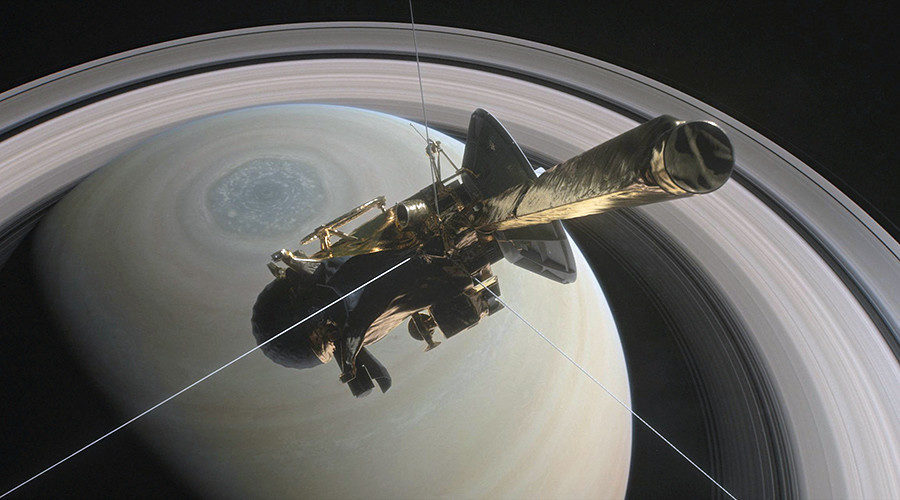
Cassini is pictured above Saturn
© NASA / ReutersThe spacecraft Cassini is pictured above Saturn's northern hemisphere.
As Cassini continues its terminal descent towards Saturn, its unique perspective from between the planet's rings and surface has yielded unprecedented insights into one of the solar system's enduring treasures.

The spacecraft, which arrived at the planet 13 years ago to see out its 20-year mission, has just two more close flybys before it meets its fiery end on September 15. It has, however, sent back information which could indicate that Saturn's rings are far younger than previously believed.

"For younger rings, it would require a comet, or a centaur (one of a group of small, icy objects), or perhaps even a moon moving too close to Saturn. Saturn's gravity would break apart that object and then the remaining bits would go on to form rings," explained Linda Spilker, NASA's Cassini project scientist on a conference call with media this week.

Meteor

Nearly three-mile wide Asteroid Florence will pass close to earth on September 1st

asteroid florence
© NASA / JPL-Caltech
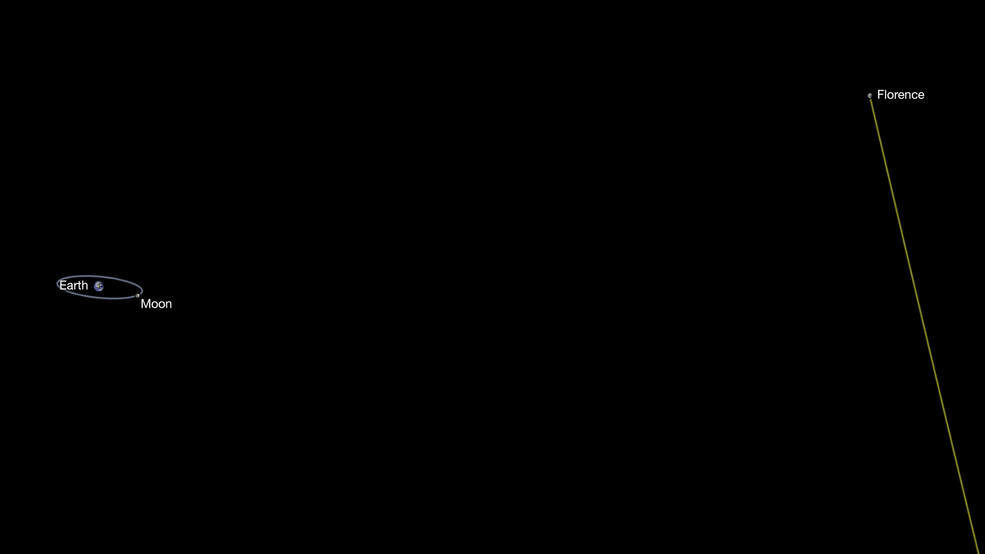
Asteroid Florence will pass by Earth on Sept. 1, 2017, at a distance of 4.4 million miles (7 million kilometers).

A large rock will fly past Earth on Sept. 1, 2017, at a distance of 4.4 million miles (7 million kilometers). Asteroid 3122Florence, named after modern nursing founder Florence Nightingale, is the largest object to make a close-encounter since NASA began tracking near-Earth objects (NEO) in the 1990s.

"While many known asteroids have passed by closer to Earth than Florence will on Sept. 1, all of those were estimated to be smaller," said Paul Chodas, manager of NASA's Center for Near-Earth Object Studies (CNEOS) at the agency's Jet Propulsion Laboratory in Pasadena, California.

Eye 1

Tyrannized by technology: Your cell phone could soon be turned into a mobile, scannable version of your "papers"

mobile biometric driver's licence
Bad enough that we are required by law to present our "papers" - government-issued ID cards, egregiously mislabelled as driver's licenses - whenever a government bullyboy so demands. Just as in the former East Germany, just as in the former Soviet Union - and in another place whose name it's hardly necessary to mention.

But in those places - in those times - tyranny was limited somewhat by technology.

In our time, the technology available to tyranny is almost limitless - and the laws which used to at least somewhat protect us have become the means by which technology tyrannizes us.

Corporations, which give a damn about our rights as much as Ted Bundy cared about his victims, provide the technology - and exploit the law - to profit from tyranny.

Telescope

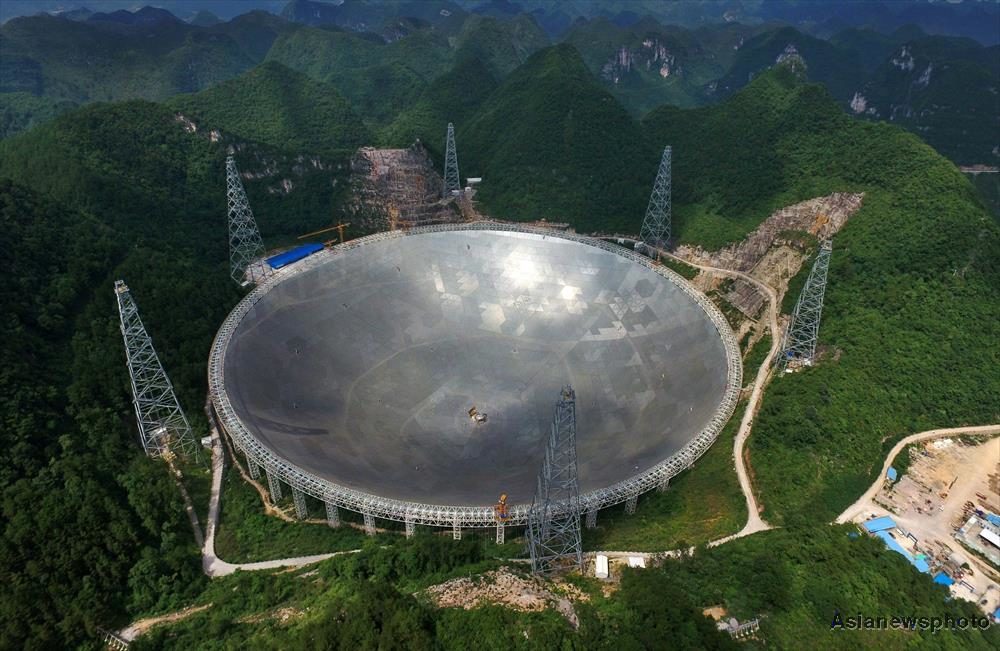
Superhero astronomer needed: China offering over a million dollars for a foreigner to run the world's largest telescope

China Fast telescope

Only a handful of astronomers might be qualified to run the Fast facility in Guizhou - and the challenges of the job could be putting them off


China is offering more than US$1.2 million to hire a foreign astronomer to run the world's largest radio telescope, but is struggling to find applicants.

Fast, the world's largest single-dish radio telescope, is looking for a chief scientist from overseas to oversee the daily operation of the 1.2-billion yuan (US$178 million) facility. Over the last few months, it encountered unexpected difficulties in finding a qualified, willing candidate as the job faces many challenges, according to people involved in the hiring process.

Whoever becomes Fast's director of scientific operation would receive a financial package consisting of eight million yuan research funding, a salary comparable with such a role in Western countries and numerous subsidies, such as free housing.

Such financial incentives have become common as many senior positions for scientists have opened up on the mainland and the nation steps up its efforts to attract high-quality candidates for its rapidly growing research sector

Info

Immune cells may prevent stem cell growth in spinal cord repair

human stem cell
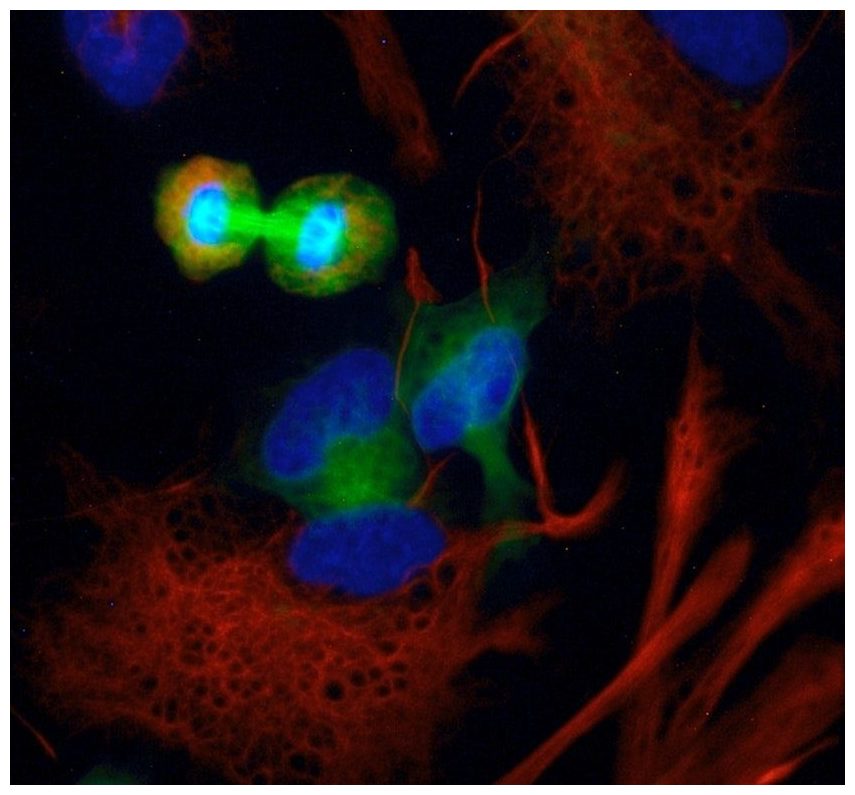
© Hal X. Nguyen and Aileen J. AndersonA human stem cell replicating itself.
That scab that forms after you cut yourself is the work of your immune system coming to the rescue, fighting off invaders, and helping to heal the wound.

But when it comes to spinal cord injuries, the healing process goes awry.

Immune cells rush in and cause a scar that blocks the ability of neurons to regrow and reconnect. However, recent studies have shown that the immune system can also aid regeneration.

"The immune system has both positive and a negative impact - what it does is really context specific," says Jan Kaslin, who studies neural regeneration in zebrafish at the Australian Regenerative Institute of Medicine in Melbourne, Australia.

Stem cells provide a great hope for damaged spinal cords and brain injury - but it has not been clear on how the immune system may affect the regrowth.

Satellite

Forty years on, Voyager spacecrafts still hurtles through space

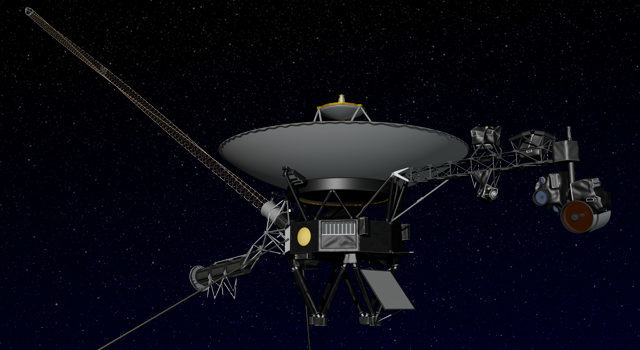
Artist's concept of NASA's Voyager spacecraft
© NASA/JPL-CaltechArtist's concept of NASA's Voyager spacecraft.
Are we alone? Forty years ago, NASA rocket scientists sought to answer this question by launching the Voyager spacecraft, twin unmanned spaceships that would travel further than any human-made object in history.

They are still traveling.

When Voyager 1 and 2 launched about two weeks apart in 1977 from Cape Canaveral, Florida, scientists knew little about the outer planets in our solar system, and could hardly imagine the scope of their upcoming space odyssey.

"None of us knew, when we launched 40 years ago, that anything would still be working, and continuing on this pioneering journey," said Voyager project scientist Ed Stone.

Voyager's main mission was to explore other planets including Jupiter, Uranus and Neptune, but it also carried the story of humanity into deep space.