Science & TechnologyS


Jupiter

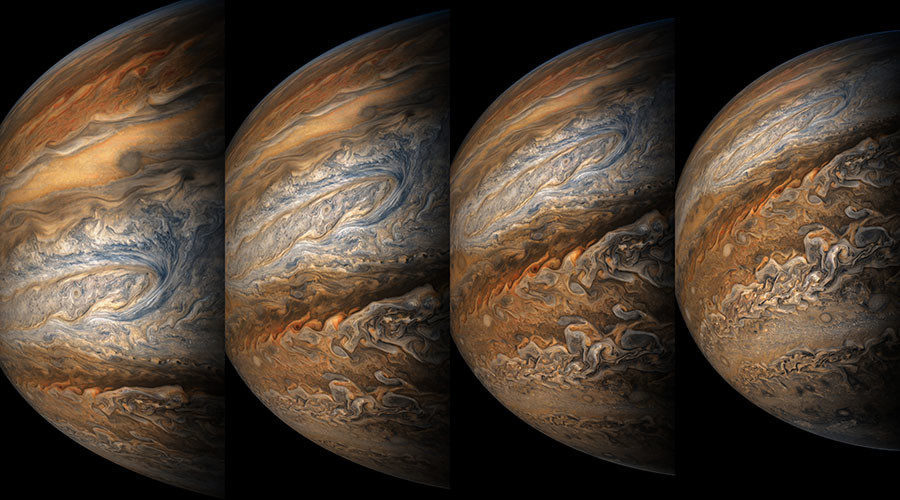
Jupiter captured in glorious detail by Juno flyby

Juno's Jupiter flyby
© NASAThe images were part of the probe's seventh flyby.
NASA's Juno spacecraft is gifting us its latest batch of images taken during its seventh flyby of Jupiter. The latest snaps reveal the beauty of the planet's swirling clouds with the public invited to add color to the raw images.


The space probe made the flyby on September 1, coming within 3,500km (2,200 miles) of the planet. Swirling clouds are visible in the images, indicating storms in the planet's upper atmosphere.

Info

Do solar storms lead to beached whales?

Beached Whales
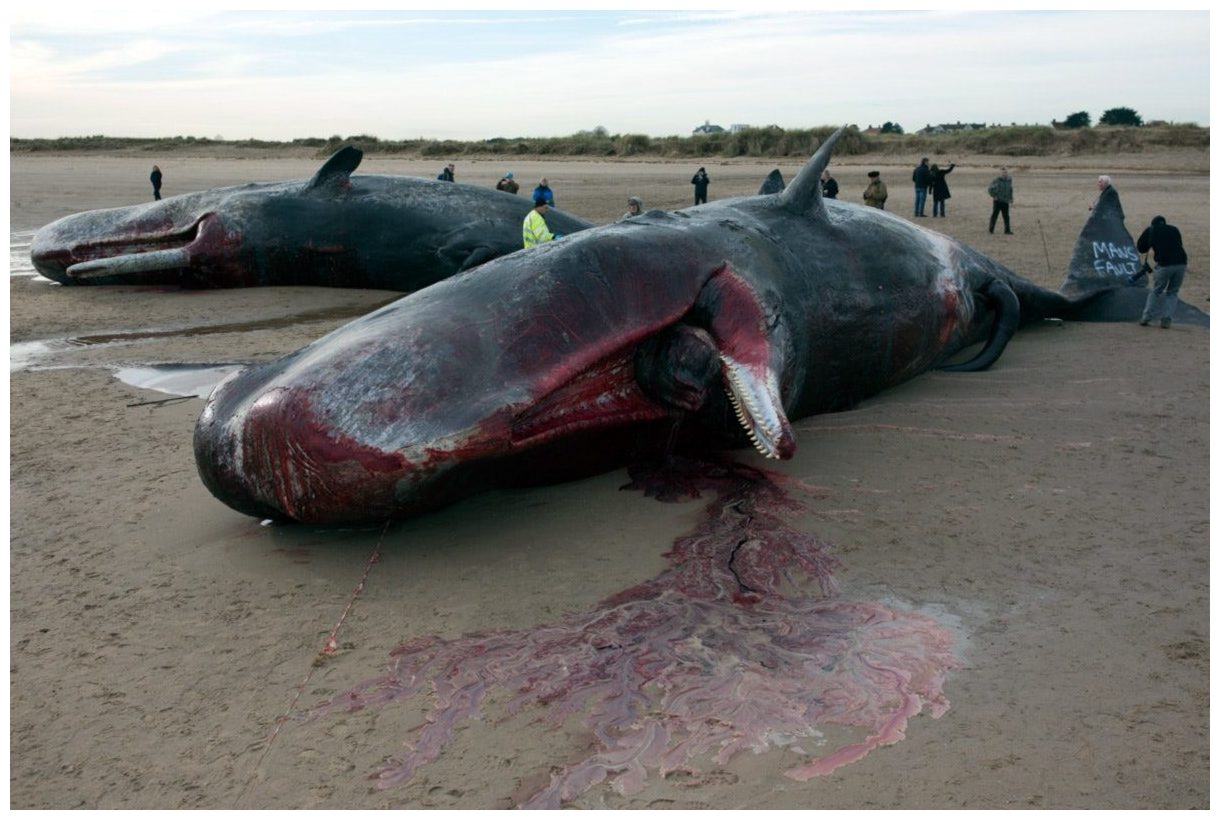
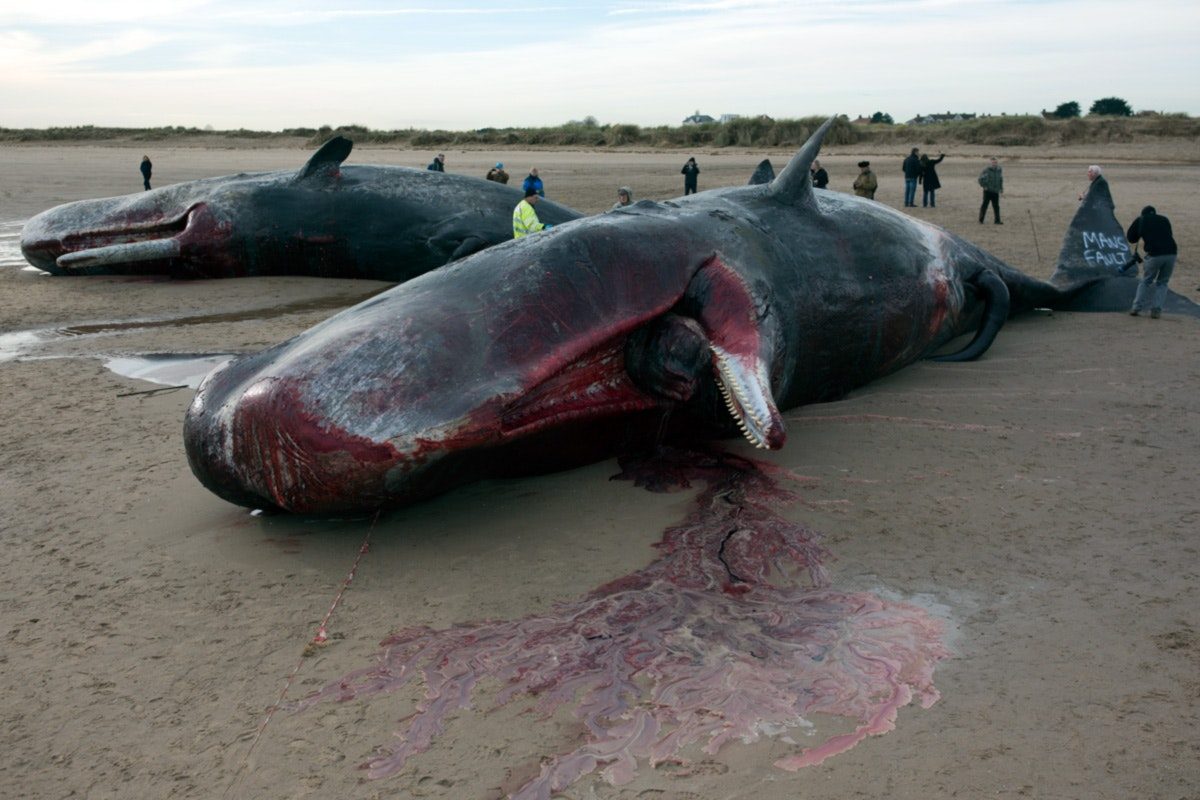
© Dan Kitwood/GettySperm whales stranded at Skegness on England's North Sea coast in January 2016.
In early 2016 a spate of sperm whale strandings in the North Sea perplexed scientists. Many theories were proposed for why 29 of the huge marine mammals - all males, most relatively young - died on European beaches in the course of January and the first few days of February, ranging from poisoning by pollutants to climate-change-induced dislocation.

According to a paper published in the International Journal of Astrobiology, however, the real cause was not human activity of any sort - it wasn't even on Earth.

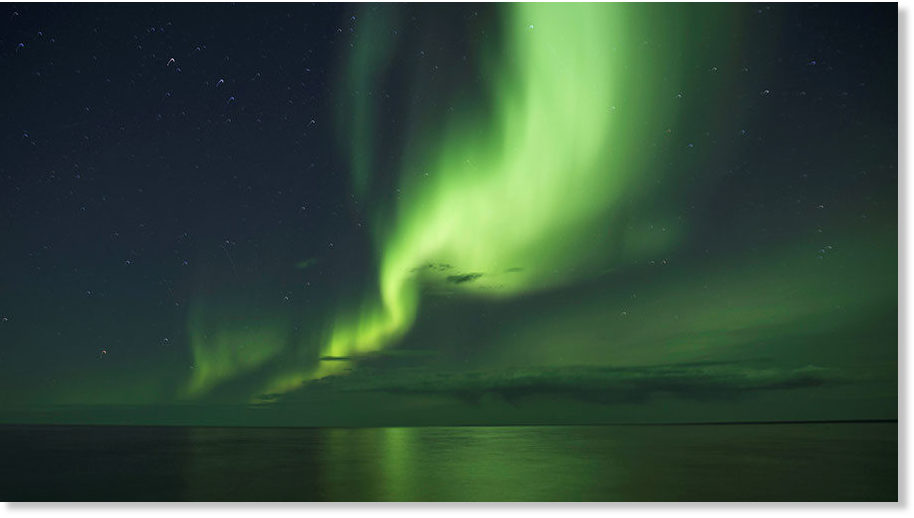
Instead, the authors propose that solar storms threw off the navigation systems of the whales and led them to become lost and stranded. Solar storms, caused by ejections of charged particles from the Sun, disrupt the Earth's magnetic field, especially near the poles, where they are also responsible for producing auroras.

Lead author Klaus Heinrich Vanselow of Christian-Albrechts-Universität in Kiel, Germany, had earlier found correlations between solar activity and recorded numbers of North Sea sperm whale strandings over several centuries of historical records. The new study is the first to connect specific strandings to specific solar activity, however.

Gear

Dead Hand: A real doomsday device made by the Soviets in the '80s, and the Russians still have it today

Dramatization
You've all seen Dr. Strangelove, which means I'm pretty sure you understand the general idea behind a doomsday device: if you destroy us, we destroy you, no matter what. The concept of an automatic system that guarantees nuclear retaliation if a country is subjected to a nuclear attack has been part of the collective nuclear nightmare for decades. It's not just a concept, though. Such a doomsday device exists, and it goes by the chilling name Dead Hand.

Just for fun, or, really, whatever the diametric opposite of 'fun' is, let's go over what such a doomsday device is designed to do. In the event of a nuclear attack on a given country, a doomsday device is designed to launch a vigorous retaliatory nuclear strike on the attacker, regardless of whether or not anyone is left alive in the attacked country to order it.

It's a fully automatic system; it can't be overruled or disabled. It only activates once it's sure everyone in power (those are the key words - everyone in power) is dead. The whole point of such a system is to make the whole business of having a nuclear war at all seem futile.

Even if you launch the first strike, a doomsday device insures that any victories gained from taking the initial act of aggression will be hollow, because you'll be dead, too. It's a way of guaranteeing 'mutually assured destruction,' which is the process by which peace is maintained-everyone with nukes must think 'fuck it, it's not worth it.'

The one true doomsday device that's known to exist has been around since 1985 and is called Система «Периметр», or, in normal people talk, Perimeter System. It's also more evocatively known as Dead Hand.

Bulb

Researchers invent completely new type of camera that sees through structures inside the human body

camera photos human body
Way better than X-ray!
Medical techniques for looking inside our bodies have come a long way, but in the future it looks like doctors may be able to see absolutely everything going on under our skin.

Researchers have invented a new kind of camera that can actually see through structures inside the human body, detecting light sources behind as much as 20 centimetres (7.9 inches) of bodily tissue.

The current prototype, developed by researchers from the University of Edinburgh in the UK, is designed to work in conjunction with endoscopes - long, slender instruments that are often equipped with cameras, sensors and lights to peer inside hollow cavities inside the human body.

Solar Flares

New study suggests that solar storms are the cause of sperm whales beaching in North Sea

Pat Kane / Reuters
29 whales were stranded off the North Sea.
The Northern Lights may disrupt the navigation mechanisms employed by sperm whales, according to new research. Mass strandings in the North Sea were connected to large solar storms which took place in late 2015.

"Sperm whales spend their early, non-breeding years in lower latitudes, where magnetic disruptions by the sun are weak and thus lack experience of this phenomenon," according to the new research, published in the International Journal of Astrobiology.

Scientists studied the stranding of 29 sperm whales in the North Sea in January 2016 on beaches in Germany, the Netherlands, the UK and France. The strandings puzzled scientists as all the whales were in otherwise good health.

Robot

Facebook's AI learns to mimic human expressions by watching videos of Skype conversations

humanoid robot
© Johannes Eisele/AFP/Getty ImagesHumanoid robots may be cute up to a point, but once they become a bit too realistic, they often start to creep us out – a foible called the uncanny valley. Naturalistic reactions are the way to evade the uncanny valley.
There's something not quite right about humanoid robots. They are cute up to a point, but once they become a bit too realistic, they often start to creep us out - a foible called the uncanny valley. Now Facebook wants robots to climb their way out of it.

Researchers at Facebook's AI lab have developed an expressive bot, an animation controlled by an artificially intelligent algorithm. The algorithm was trained on hundreds of videos of Skype conversations, so that it could learn and then mimic how humans adjust their expressions in response to each other. In tests, it successfully passed as human-like.

To optimise its learning, the algorithm divided the human face into 68 key points that it monitored throughout each Skype conversation. People naturally produce nods, blinks and various mouth movements to show they are engaged with the person they are talking to, and eventually the system learned to do this too.

Comment: Further reading:


Brain

Scientists use magnetic pulses to zap 'voices' from schizophrenia sufferers

Schizophrenia
Scientists have pinpointed a part of the brain where "voices" torment schizophrenia sufferers, and partially muted them with magnetic pulse treatment, a team reported on Tuesday.

More than a third of sufferers treated with magnetic pulses in a patient trial experienced "significant" relief, the scientists said in a statement.

"We can now say with some certainty that we have found a specific anatomical area of the brain associated with auditory verbal hallucinations in schizophrenia," the team said.

"Secondly, we have shown that treatment with high frequency TMS (Transcranial Magnetic Stimulation) makes a difference to at least some sufferers."

Further research must be done to confirm the usefulness of TMS as a treatment in the longer term.

Comment: There are many potential causes for schizophrenia.


Galaxy

Astronomers find evidence of enormous black hole in heart of Milky Way

milky way black hole
© NASA. ESA/C. Carreau
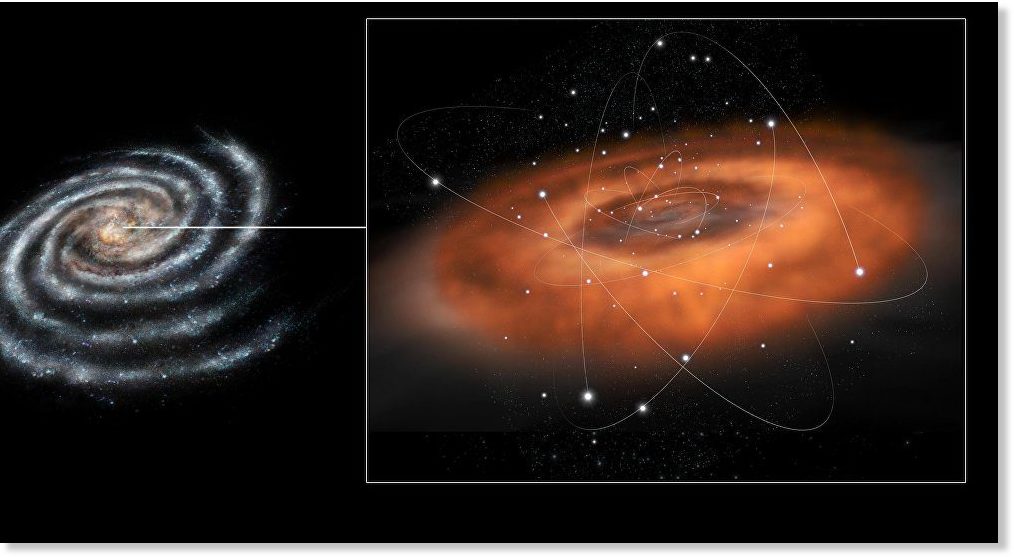
Astronomers have for the first time found evidence of an enormous black hole near the heart of the Milky Way galaxy. They say it is possibly one hundred thousand times more massive than the sun has been found hiding in a toxic gas cloud near the galaxy's center.

Tomoharu Oka, an astronomer at Keio University in Tokyo, told Sputnik about the importance of the find.

"This may be the second largest black hole in the Milky Way after Sagittarius A at the very centre of the galaxy and the first detection of an IMBH candidate in the Milky Way."

He revealed it was likely to sink into the nucleus by dynamical friction and eventually merge to it.

"The IMBH may have been formed by merging of stellar mass black holes. Such events generate strong gravitational waves."

Galaxy

Medium sized black hole 100,000 times bigger than sun discovered near center of Milky Way

ALMA Observatory in northern Chile
© Paul Hanna / Reuters
A new kind of black hole has been found at the center of the Milky Way - a find that may help explain the evolution of the phenomena.

In research conducted by Japanese astronomers using the ALMA Observatory in northern Chile, a black hole 100,000 times the size of our sun was found within a molecular gas cloud. Its relatively small size means that it is the first to be identified as an intermediate-mass black hole (IMBH).

Professor Tomoharu Oka of Japan's Keio University believes that black holes with masses greater than a million solar masses are at the center of all galaxies and are essential to their growth. The origins of supermassive black hole, however, remain a mystery.

"One possible scenario is IMBHs - which are formed by the runaway coalescence of stars in young compact star clusters - merge at the center of a galaxy to form a supermassive black hole," said Prof Oka.

HAL9000

Elon Musk: Global race for AI will 'most likely cause' WWIII as computers launch first strike

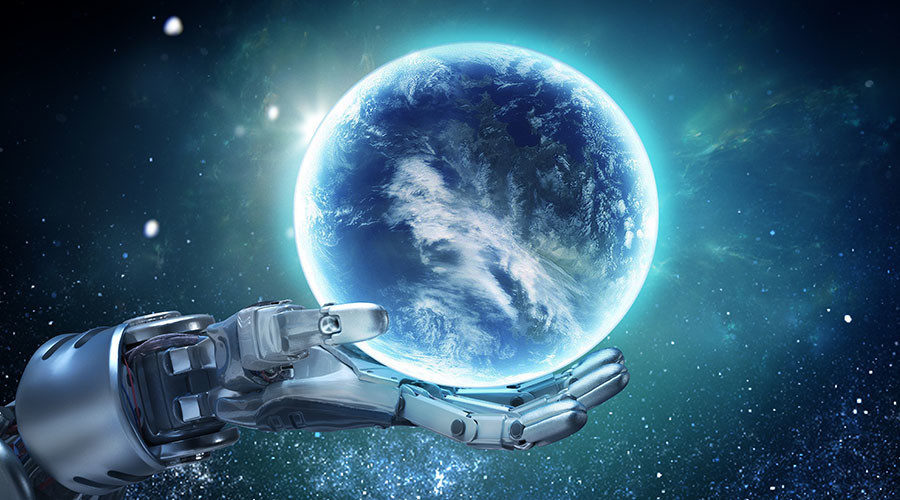
AI hand holding Earth graphic
© Paper Boat Creative / Getty Images
Competition for superiority in Artificial Intelligence at national level will "most likely" cause World War Three, billionaire entrepreneur Elon Musk has said, warning that an AI may deem first use its best chance of winning.

"China, Russia, soon all countries with strong computer science. Competition for AI superiority at national level most likely cause of WW3," Musk tweeted.

It will likely not even be the countries' leaders that start the war, Musk elaborated, but "one of the AI's, if it [AI] decides that a pre-emptive strike is most probable path to victory."