Science & TechnologyS


Black Cat 2

Toxoplasma parasite effects severely underestimated

Girl with Cat
© Anders AnderssonTwo billion people are infected with the Toxoplasma Gondi parasite, most commonly contracted from cats.
Except for a couple of specific circumstances - notably pregnancy - the world's most common parasite in humans, Toxoplasma gondii, is thought to induce few symptoms and no serious effects.

However, research from 32 scientists at 16 institutions, linking parasite proteins with small non-coding human RNA molecules known as microRNA, and comparing outcomes for various diseases between infected and non-infected people, suggests we have severely underestimated the situation.

The research, published in the journal Scientific Reports, implicates T. gondii in the progress of neurodegenerative diseases, epilepsy, and certain cancers.

Around the world, more than two billion people carry the parasite. The most common route of infection involves one of its primary reservoirs, the domestic cat. Parasite eggs find their way into humans - and many other animals - via contact with cat faeces.

Such contact does not need to be direct. T. gondii eggs are extremely resilient and can survive dormant for many months in open environments - these frequently include vegetable patches and fields, where cats may defecate into the soil, from which the eggs are transferred to harvested plants.

The parasite, once hatched, lodges in the brain.

Rocket

China's mysterious 'physics-defying' EmDrive could allow journey to Mars in weeks

EM Drive China
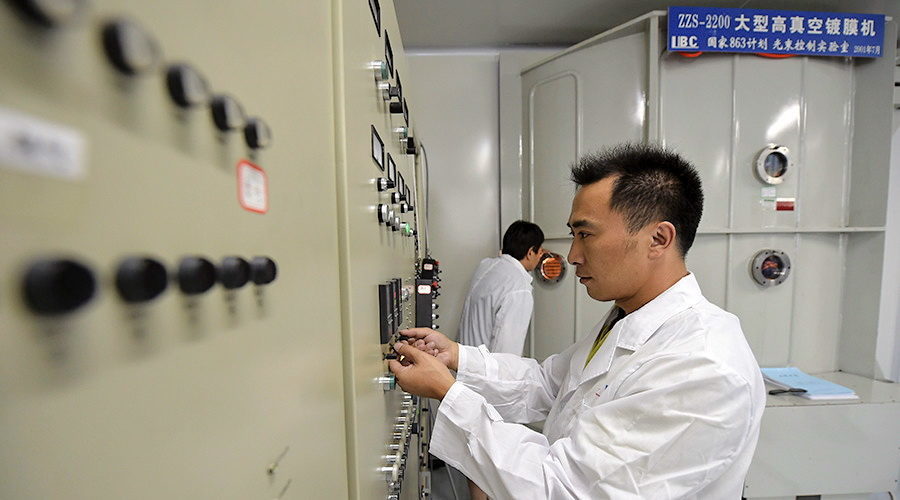
© Liu Kun / Global Look PressChina's announcement would put them ahead of NASA in the race for an EM Drive.
A mysterious propulsion system that 'defies physics' may be close to reality in China, where scientists say they have finished work on the EmDrive. Much sought after by space agencies, the system could potentially allow for travel to Mars in weeks. Scientists in China claim to have developed a working prototype of the EmDrive, according to state TV, with a test due to take place in space in the near future. Developed by scientist Dr Chen Yue at the China Academy of Space Technology (CAST), it would put China's space agency ahead of NASA.

The EmDrive is key to the future of space exploration, eliminating the need for a conventional propellant to produce thrust. "For every action there must be an equal and opposite reaction," Newton's Third Law states, emphasizing the need for propellant in all modes of travel. China claims to have defied that law, producing an EmDrive that produces thrust by bouncing microwaves around in a closed container with no propellant required. In theory, this is the equivalent of "trying to pull yourself up by your shoelaces and hoping you'll levitate," Steven Thomson of the University of St Andrews said in 2015.

Comment: China has leapfrogged other countries in terms of technology development over the past 15 years.

See also:


Document

Scientists find evidence linking Antarctic volcanic eruptions to ancient climate change in the Southern Hemisphere

Mount Takahe volcano
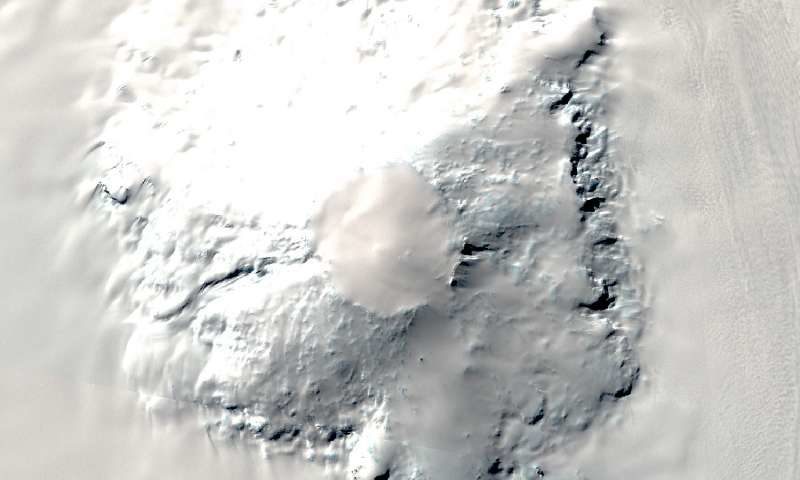
© Landsat Image Mosaic of Antarctica (LIMA)A 15-meter pan-sharpened Landsat 8 image of the Mount Takahe volcano rising more than 2,000 meters (1.2 miles) above the surrounding West Antarctic ice sheet in Marie Byrd Land, West Antarctica.
New findings published today in the Proceedings of the National Academy of Sciences of the United States of America (PNAS) by Desert Research Institute (DRI) Professor Joseph R. McConnell, Ph.D., and colleagues document a 192-year series of volcanic eruptions in Antarctica that coincided with accelerated deglaciation about 17,700 years ago.

"Detailed chemical measurements in Antarctic ice cores show that massive, halogen-rich eruptions from the West Antarctic Mt. Takahe volcano coincided exactly with the onset of the most rapid, widespread climate change in the Southern Hemisphere during the end of the last ice age and the start of increasing global greenhouse gas concentrations," according to McConnell, who leads DRI's ultra-trace chemical ice core analytical laboratory.

Climate changes that began ~17,700 years ago included a sudden poleward shift in westerly winds encircling Antarctica with corresponding changes in sea ice extent, ocean circulation, and ventilation of the deep ocean. Evidence of these changes is found in many parts of the Southern Hemisphere and in different paleoclimate archives, but what prompted these changes has remained largely unexplained.

"We know that rapid climate change at this time was primed by changes in solar insolation and the Northern Hemisphere ice sheets," explained McConnell. "Glacial and interglacial cycles are driven by the sun and Earth orbital parameters that impact solar insolation (intensity of the sun's rays) as well as by changes in the continental ice sheets and greenhouse gas concentrations."

Eye 1

Facial recognition algorithm that identifies sexual orientation has LGBT community in uproar over potential uses

Gay AI identification software
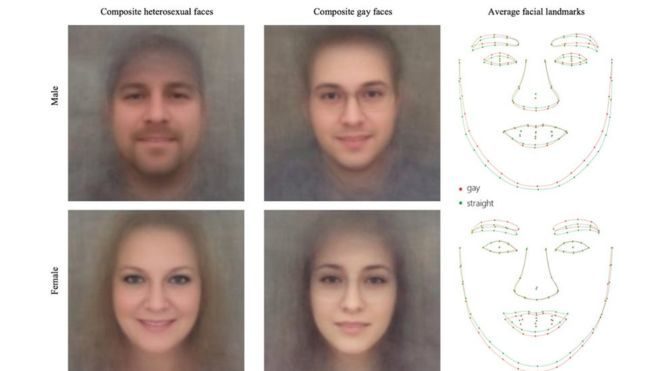
The study created composite faces judged most and least likely to belong to homosexuals
A facial recognition experiment that claims to be able to distinguish between gay and heterosexual people has sparked a row between its creators and two leading LGBT rights groups.

The Stanford University study claims its software recognises facial features relating to sexual orientation that are not perceived by human observers.

The work has been accused of being "dangerous" and "junk science".

But the scientists involved say these are "knee-jerk" reactions.

Details of the peer-reviewed project are due to be published in the Journal of Personality and Social Psychology.

Comment: See also: Gaydar: Stanford U. creates computer algorithm that can distinguish straight from gay


HAL9000

AI algorithms are getting schooled on fairness

machine learning fairness
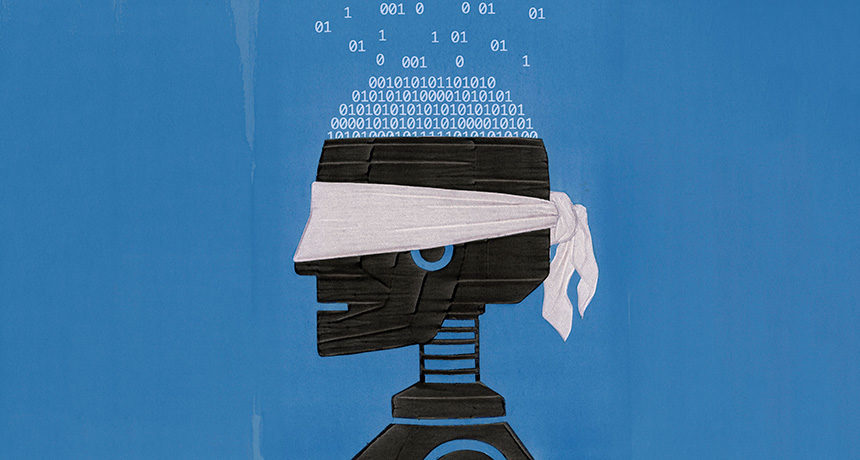
© Alex NabaumThere is more than one approach to trimming unintended biases from the machines that we are teaching to make more and more of our decisions.
Machine-learning programs can introduce biases that may harm job seekers, loan applicants and more

You've probably encountered at least one machine-learning algorithm today. These clever computer codes sort search engine results, weed spam e-mails from inboxes and optimize navigation routes in real time. People entrust these programs with increasingly complex - and sometimes life-changing - decisions, such as diagnosing diseases and predicting criminal activity.

Machine-learning algorithms can make these sophisticated calls because they don't simply follow a series of programmed instructions the way traditional algorithms do. Instead, these souped-up programs study past examples of how to complete a task, discern patterns from the examples and use that information to make decisions on a case-by-case basis.

Unfortunately, letting machines with this artificial intelligence, or AI, figure things out for themselves doesn't just make them good critical "thinkers," it also gives them a chance to pick up biases.

Microscope 2

A new look at archaic DNA tells a different story of human evolution

neanderthal dna
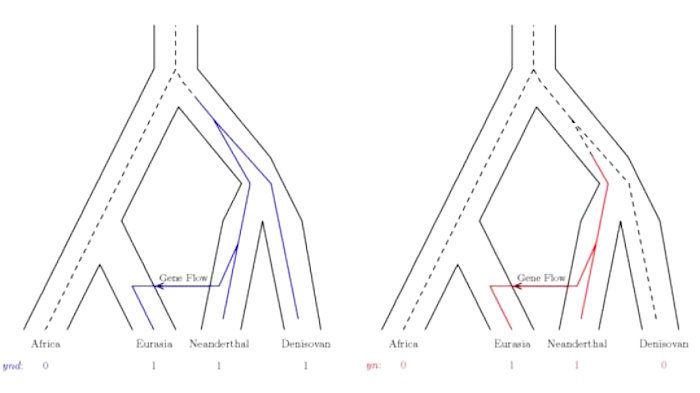
© Alan Rogers, University of UtahThese population trees with embedded gene trees show how mutations can generate nucleotide site patterns. The four branch tips of each gene tree represent genetic samples from four populations: modern Africans, modern Eurasians, Neanderthals, and Denisovans. In the left tree, the mutation (shown in blue) is shared by the Eurasian, Neanderthal and Denisovan genomes. In the right tree, the mutation (shown in red) is shared by the Eurasian and Neanderthal genomes.
Hundreds of thousands of years ago, the ancestors of modern humans diverged from an archaic lineage that gave rise to Neanderthals and Denisovans. Yet the evolutionary relationships between these groups remain unclear.

A University of Utah-led team developed a new method for analyzing DNA sequence data to reconstruct the early history of the archaic human populations. They revealed an evolutionary story that contradicts conventional wisdom about modern humans, Neanderthals and Denisovans.

The study found that the Neanderthal-Denisovan lineage nearly went extinct after separating from modern humans. Just 300 generations later, Neanderthals and Denisovans diverged from each other around 744,000 years ago. Then, the global Neanderthal population grew to tens of thousands of individuals living in fragmented, isolated populations scattered across Eurasia.

Bug

Extinct 'hell ant' with metal horns & trap jaw found inside amber (PHOTOS)

Amber with hell ant
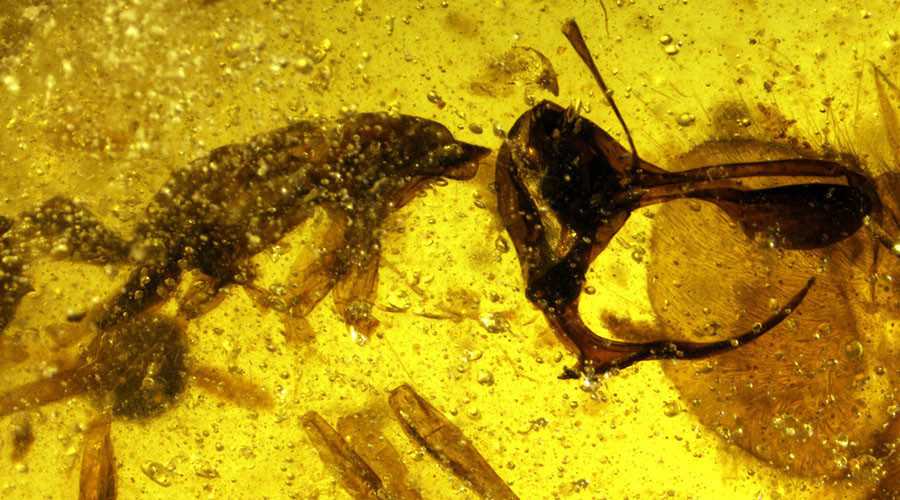
© P. Barden, H.W. Herhold, D.A. GrimaldiA lateral view of the newly described species Linguamyrmex vladi.
Scientists have discovered that while monstrous dinosaurs roamed the earth, the insect world contained its own fearsome creature - a 'hell ant' with a reinforced metal horn on its head.

A number of extinct insects have been given the sinister 'hell ant' moniker - including the Haidomyrmex cerberus, which had curious L-shaped mandibles.

But researchers from the New Jersey Institute of Technology have revealed a new hair-raising creature found inside amber, dating back 99 million years.

According to the study, the hell ant, known as Linguamyrmex vladi, hunted and defended itself in ways which differ dramatically from modern ants.

Comment: See also: 100 million-year-old amber holds tiny feathered chick


Rose

The hidden abilities of plants: They form memories

plant studies, plant memories
© Sebastien Thibault.
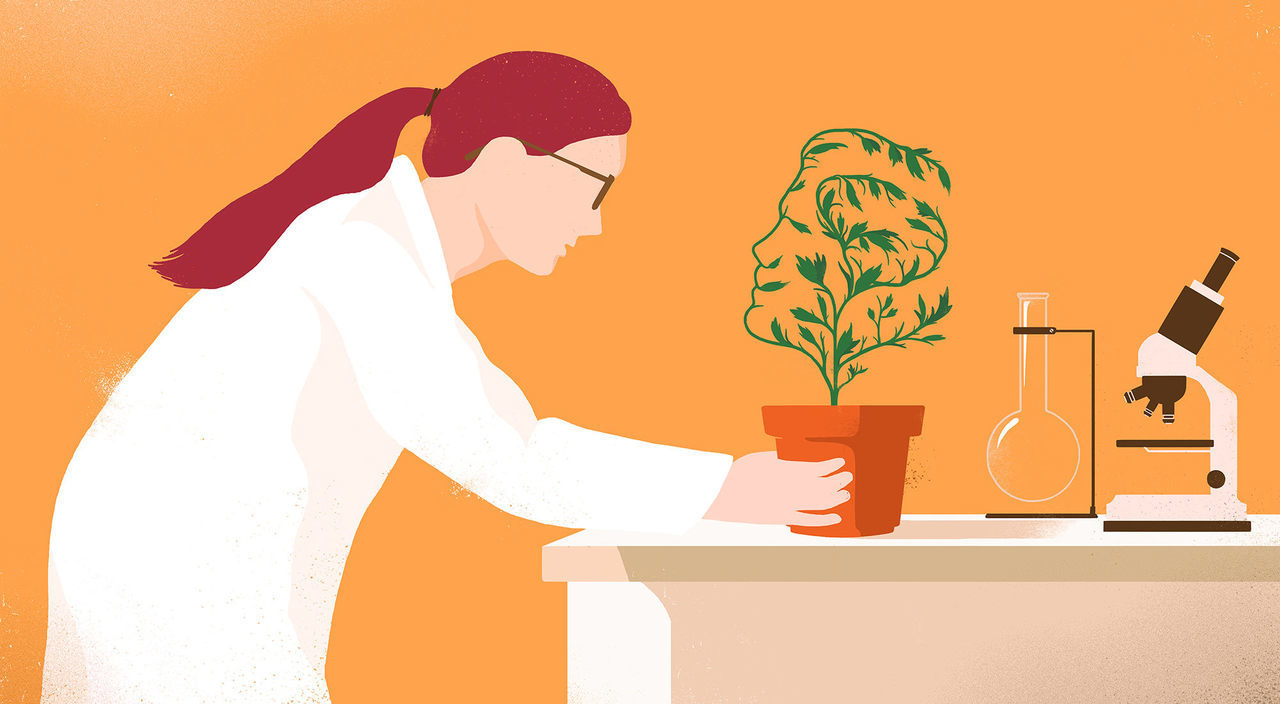
Monica Gagliano began to study plant behavior because she was tired of killing animals. Now an evolutionary ecologist at the University of Western Australia in Perth, when she was a student and postdoc, she had been offing her research subjects at the end of experiments, the standard protocol for many animals studies. If she was to work on plants, she could just sample a leaf or a piece of root. When she switched her professional allegiance to plants, though, she brought with her some ideas from the animal world and soon began exploring questions few plant specialists probe-the possibilities of plant behavior, learning, and memory.

"You start a project, and as you open up the box there are lots of other questions inside it, so then you follow the trail," Gagliano says. "Sometimes if you track the trail, you end up in places like Pavlovian plants."

In her first experiments with plant learning, Gagliano decided to test her new subjects the same way she would animals. She started with habituation, the simplest form of learning. If the plants encountered the same innocuous stimulus over and over again, would their response to it change?

Comment: See also:


Satellite

International Space Station forced to seek shelter during massive solar flare

solar flare
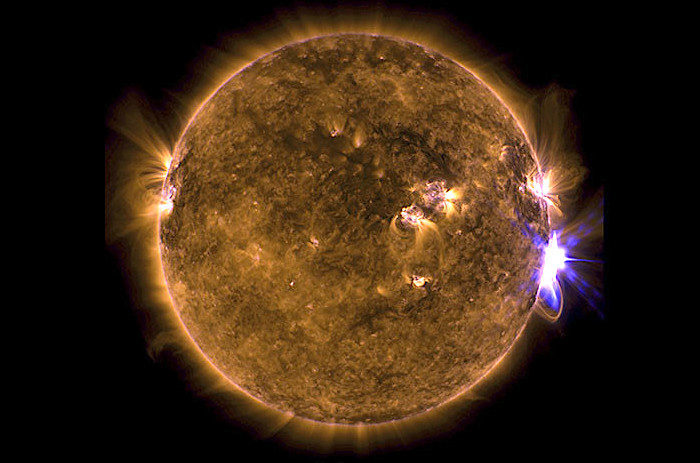
© SDO / Goddard / NASANASA's Solar Dynamics Observatory captured this image of a solar flare – as seen in the bright flash on the right side – on Sept. 10, 2017
The International Space Station (ISS) crew had to hide in a special shelter during a massive solar flare, a nuclear scientist said. The sun produced several huge solar flares last week, one of which was the strongest observed in a decade.

"Yesterday [on Sunday], the cosmonauts on the ISS received an 'alert' signal, and they had to seek a temporary shelter at the station," Mikhail Panasyuk, the head of Skobeltsyn Institute Of Nuclear Physics in Moscow, said at a press conference.

On Sunday, a solar flare was reported by scientists across the globe. Called X8.2, it "produced a rapid increase in relativistic proton levels," according to NASA.

The increase in proton activity coincided with a time at which the ISS was nearer the sun, according to Panasyuk. The proton stream was higher than that of the powerful solar flare that took place on September 7, he said. "A powerful proton stream can break through ISS shell," he added.

Solar flares are huge bursts of radiation released by the sun. The Earth's atmosphere protects us from the worst effects of the resulting radiation storms, but if the flare is big enough, it can disrupt GPS satellites, certain radio frequencies and other global communications temporarily.

Comment: Solar flares from the past week:


Family

Berkeley researchers find that people have 27 distinct emotional states - not 6 as previously thought

emojis
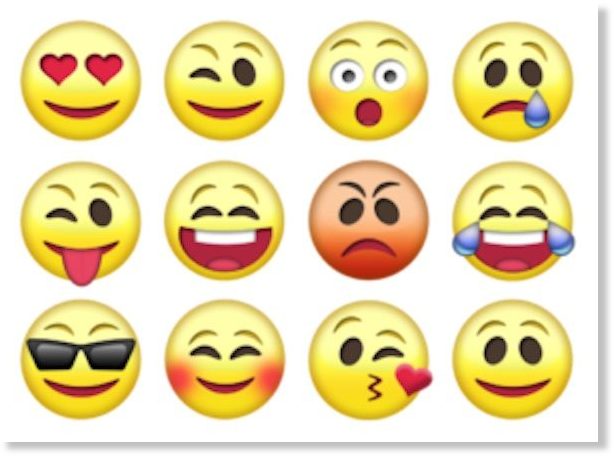
Human emotions may not be as plentiful as the hundreds of emojis we use on social media, but they’re still more complex than previously believed.
Human emotions may not be as plentiful as the hundreds of emojis we use on social media, but they're still more complex than previously believed. A new study examining the various ways that we express ourselves determined that humans display 27 distinct emotional states.

Researchers at the University of California, Berkeley recruited a diverse sample of 853 men and women to watch short five-to-ten second long video clips meant to evoke a range of reactions, hoping to measure the true spectrum of human emotions.

The study's experimental component, which incorporated nearly 2,200 silent clips, split participants into one of three groups.

One group disclosed their unfiltered emotional reactions to 30 clips they viewed to the researchers, allowing for raw documentation.

"Their responses reflected a rich and nuanced array of emotional states, ranging from nostalgia to feeling 'grossed out,'" says lead author Alan Cowen, a doctoral student in neuroscience, in a university news release.