Science & TechnologyS


Comet

A solar eruption 'photobombed' the Mars encounter with Comet Siding Spring

meteor shower Mars CSS
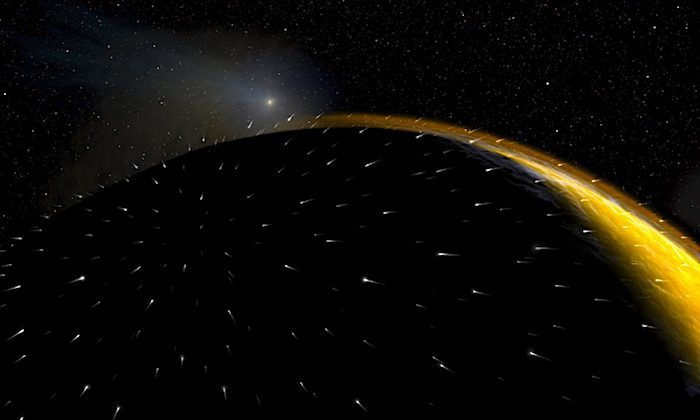
© Don Davis / IUVS TeamAn artist's conception of the martian meteor shower due to Comet Siding Spring. The comet has passed the planet in this image, and is shown left and above the planet, heading towards the outer solar system. The planet's atmosphere is exaggerated to highlight the presence of a coherent group of meteors due to the comet's debris stream.
When Comet C/2013 A1 (Siding Spring) passed just 140,000 kilometres from Mars on 19th October 2014, depositing a large amount of debris in the martian atmosphere, space agencies coordinated multiple spacecraft to witness the largest meteor shower in recorded history. It was a rare opportunity, as this kind of planetary event occurs only once every 100,000 years. However, scientists analysing the data have found that a very powerful Coronal Mass Ejection (CME) launched by the Sun also arrived at Mars 44 hours before the comet, creating significant disturbances in the martian upper atmosphere and complicating analysis of the data. Results describing the combined effects of the comet and the CME throughout the martian atmosphere are being presented in a special session at the European Planetary Science Congress (EPSC) 2017 in Riga on Thursday, 21st September.

Snowflake Cold

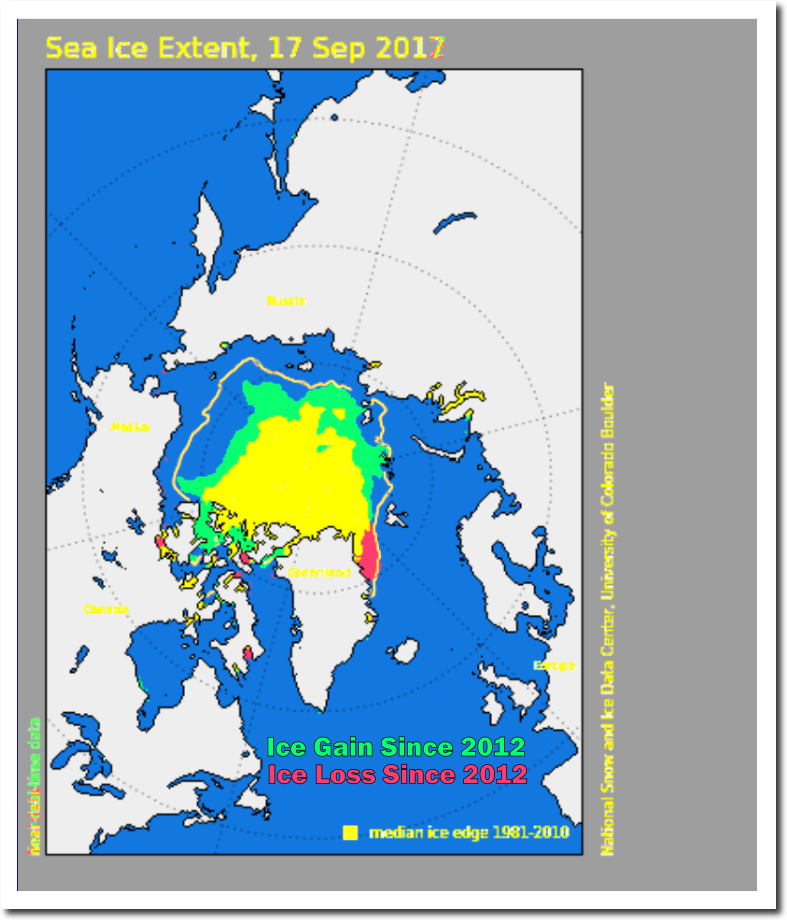
Data shows massive Arctic Ice gain over past five years

"Science is the belief in the ignorance of the experts" - Richard Feynman

Arctic sea ice extent is up 40% from this date five years ago.
Ice gain loss arctic
© National Snow and Ice Data Center
Sea extent ice comparisons: 2012 2017

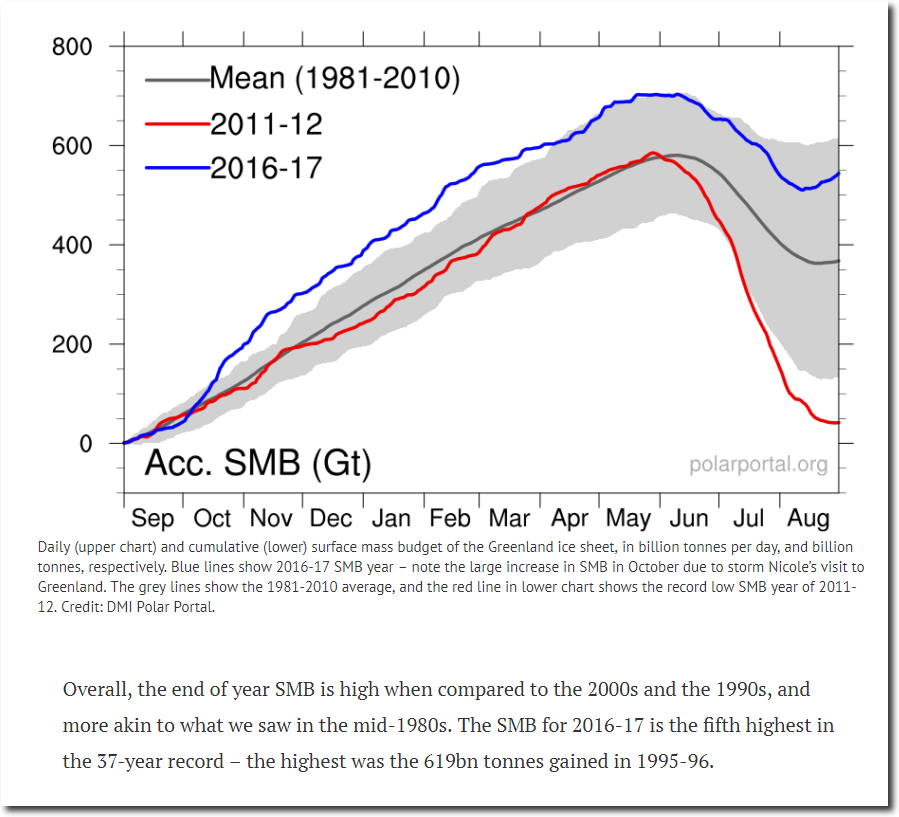
Greenland's surface gained ten times as much ice as it did five years ago, and was the fifth highest on record.
greenland ice cover
© polarportal.org

Comment: The real story is more nuanced. It is possible to have both Arctic ice gain and melting permafrost, if you don't try to ascribe them to the same mechanisms.

Melting permafrost is associated with methane pockets bubbling up to the surface. This implies heating from within, such as undetected movements of magma and, there can still be a general cooling trend if one looks to solar activity as a driver, instead of man's puny effect on the atmosphere.


Archaeology

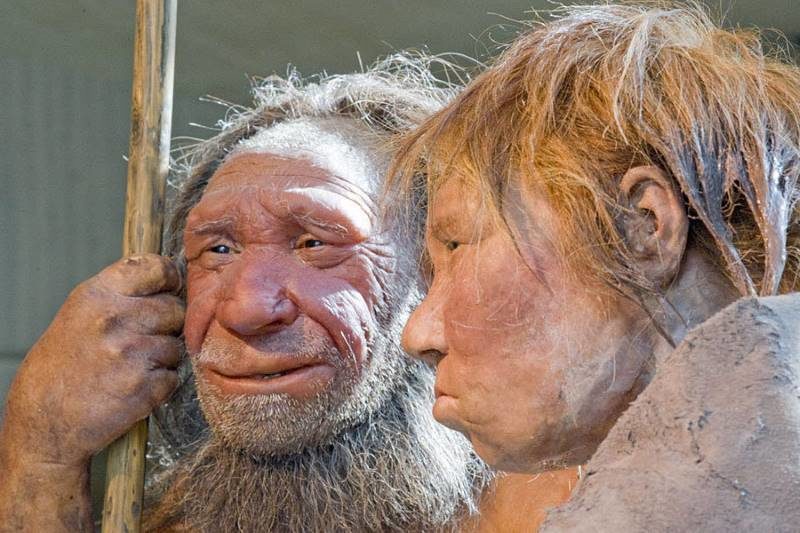
Neanderthals may have died out due to competition with homo sapiens for food resources

neanderthal neandertal
© Martin Meissner/Associated PressThe findings showed that just like the Neanderthals, early modern humans or our ancestors had mainly mammoth and plants on their plates, creating a battle for food that Neanderthals lost.
Early modern humans and Neanderthals shared a similar diet -- consisting mainly of mammoth and plants -- and also competed for food which led to their downfall, new research has claimed.

"According to our results, Neanderthals and the early modern humans were in direct competition in regard to their diet, as well -- and it appears that the Neanderthals drew the short straw in this contest," said Dorothee Drucker, biogeologist from the University of Tubingen in Germany.

The first representatives of Homo sapiens colonized Europe around 43,000 years ago, replacing the Neanderthals there approximately 3,000 years later.

"Many studies examine the question of what led to this displacement -- one hypothesis postulates that the diet of the anatomically modern humans was more diverse and flexible and often included fish," added Herve Bocherens from the University of Tubingen.

Brain

A world never imagined: Human brain is full of multi-dimensional geometrical structures operating in up to 11 dimensions

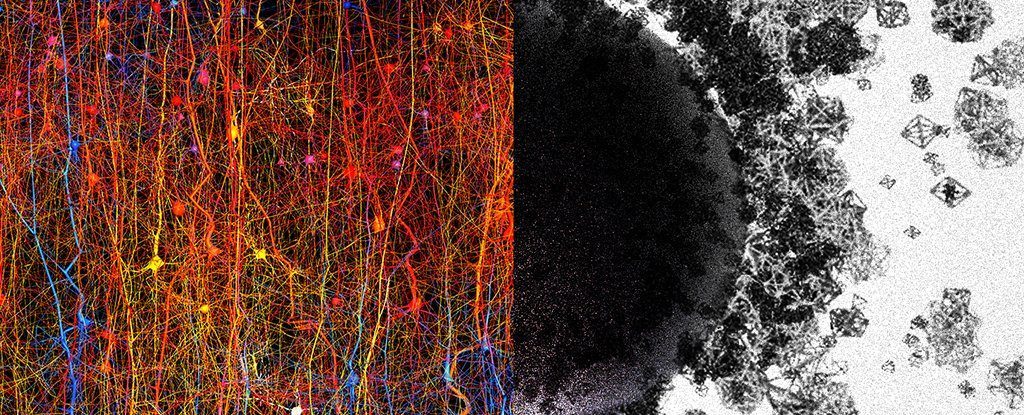
Human brain network
© Blue Brain ProjectConceptual illustration of brain networks (l) and topology (r)
Neuroscientists have used a classic branch of maths in a totally new way to peer into the structure of our brains. What they've discovered is that the brain is full of multi-dimensional geometrical structures operating in as many as 11 dimensions.

We're used to thinking of the world from a 3-D perspective, so this may sound a bit tricky, but the results of this new study could be the next major step in understanding the fabric of the human brain - the most complex structure we know of.

This latest brain model was produced by a team of researchers from the Blue Brain Project, a Swiss research initiative devoted to building a supercomputer-powered reconstruction of the human brain.

The team used algebraic topology, a branch of mathematics used to describe the properties of objects and spaces regardless of how they change shape. They found that groups of neurons connect into 'cliques', and that the number of neurons in a clique would lead to its size as a high-dimensional geometric object (a mathematical dimensional concept, not a space-time one).

"We found a world that we had never imagined," says lead researcher, neuroscientist Henry Markram from the EPFL institute in Switzerland.

Satellite

Herschel Space Observatory: Discovering the cosmic water trail

Taurus Molecular Cloud Herschel Observatory
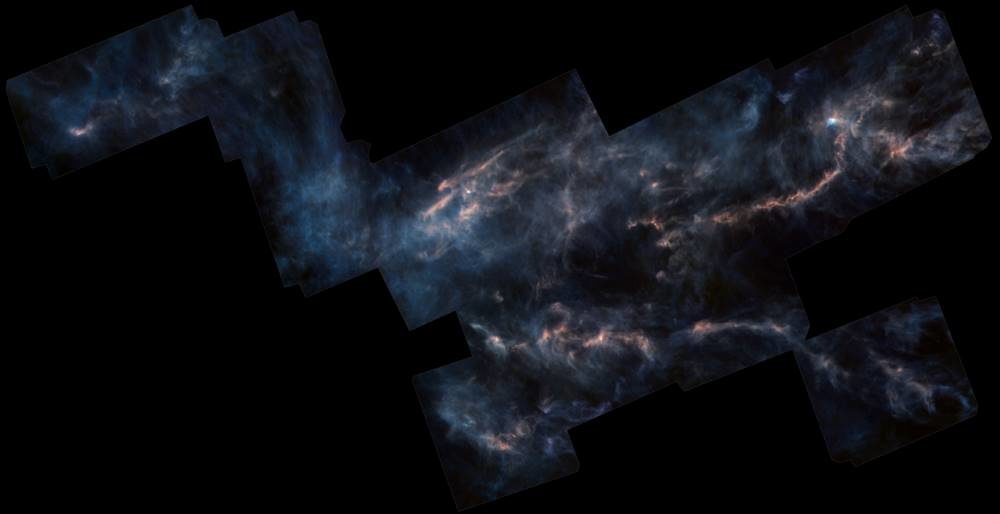
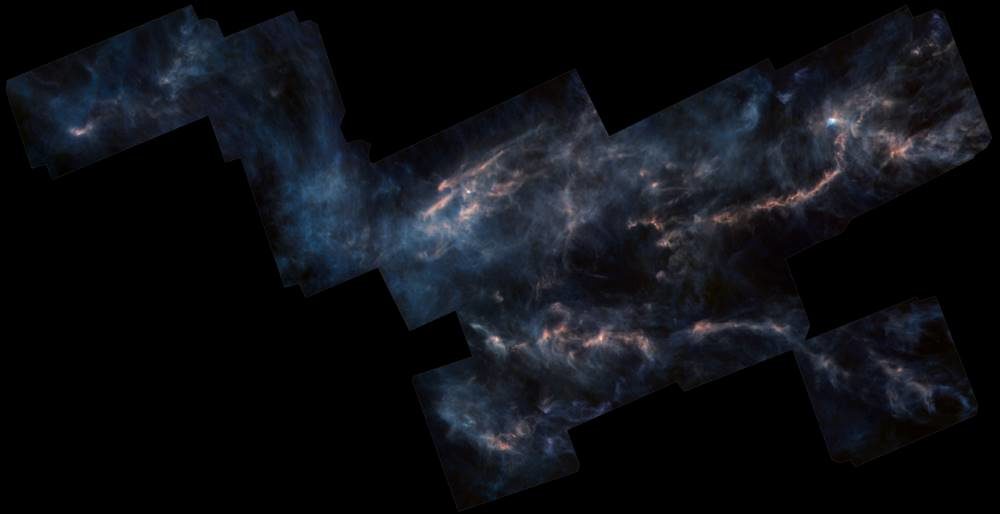
© ESA/Herschel/NASA/JPL-Caltech, CC BY-SA 3.0 IGO; Acknowledgement: R. Hurt (JPL-Caltech)This mosaic combines several observations of the Taurus Molecular Cloud performed by ESA's Herschel Space Observatory. Located about 450 light-years from us, in the constellation Taurus, the Bull, this vast complex of interstellar clouds is where a myriad of stars are being born, and is the closest large region of star formation.
During almost four years of observing the cosmos, the Herschel Space Observatory traced out the presence of water. With its unprecedented sensitivity and spectral resolution at key wavelengths, Herschel revealed this crucial molecule in star-forming molecular clouds, detected it for the first time in the seeds of future stars and planets, and identified the delivery of water from interplanetary debris to planets in our solar system.

Water is essential to life as we know it on Earth. It covers over 70 percent of our planet's surface and is present in trace amounts in the atmosphere. While it may seem abundant, especially if we're looking at the blue-hued stretch of a lake, sea or ocean, water is only a minor component of the total mass of Earth.

In fact, it is not at all clear whether the water that is currently present on our blue planet was there around the time of its formation, 4.6 billion years ago, or it is was delivered by later impacts of smaller celestial objects.

According to one of the leading theories to explain how the solar system came into being, Earth and the inner planets were extremely hot and dry for the first several hundred million years after their formation. In this scenario, water was delivered to these planets only later by violent impacts of small bodies such as meteorites, asteroids, and/or comets - the remaining debris of the protoplanetary disc out of which the planets and their moons took shape.

Blue Planet

'Brains' of the plant world: Tree roots can probe hundreds of feet deep in search of water

plant roots search water
© Credit: Ying Fan Reinfelder/Rutgers University-New Brunswick
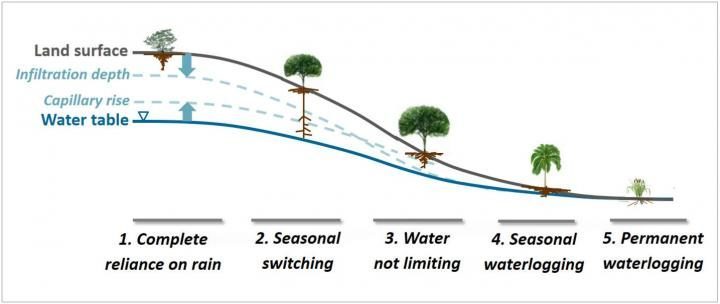
Searching for water, some tree roots probe hundreds of feet deep and many trees send roots through cracks in rocks, according to a new study led by a Rutgers University-New Brunswick professor.

Moreover, the depth of plant roots, which varies between species and soil conditions, will play a key role in plants' adaptation to climate change, said Ying Fan Reinfelder, a professor in the Department of Earth and Planetary Sciences and Department of Environmental Sciences.

"Charles Darwin once wrote, in effect, that the tips of plant roots are like the brains of plants," Reinfelder said. "Roots sense the environment. They sense the water, where there's more nutrients, and they go for these resources. Roots are the smartest part of the plant."

Reinfelder and colleagues published their findings online today in the Proceedings of the National Academy of Sciences. The study demonstrated the relationship between plant roots and water availability. It shows, through observations and modeling, that soil hydrology is the key force driving local and global patterns of root depths.

Fish

'City'-like area constructed by octopuses discovered in Australian bay

octopus
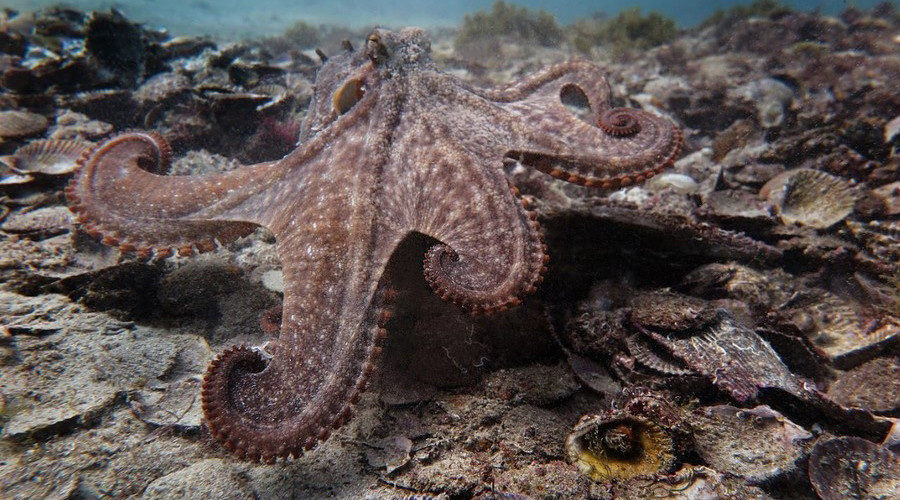
© Peter Godfrey-SmithOctopus in 'Octlantis'
The discovery of an underwater city built by octopuses, dubbed Octlantis, has led researchers to conclude the mysterious mollusks aren't the loners we thought they were.

Octopuses have long been thought solitary creatures, with mating typically the only meeting between the two sexes. The creatures always go their separate ways afterward.

However in Jervis Bay, off the coast of New South Wales, Australia, researchers recently discovered a 'city' built by octopuses on rocky outcrops using piles of old shells.

Comment: Cephalopods are very intelligent creatures


Info

French scientists create bizarre magnetic material

Magnets
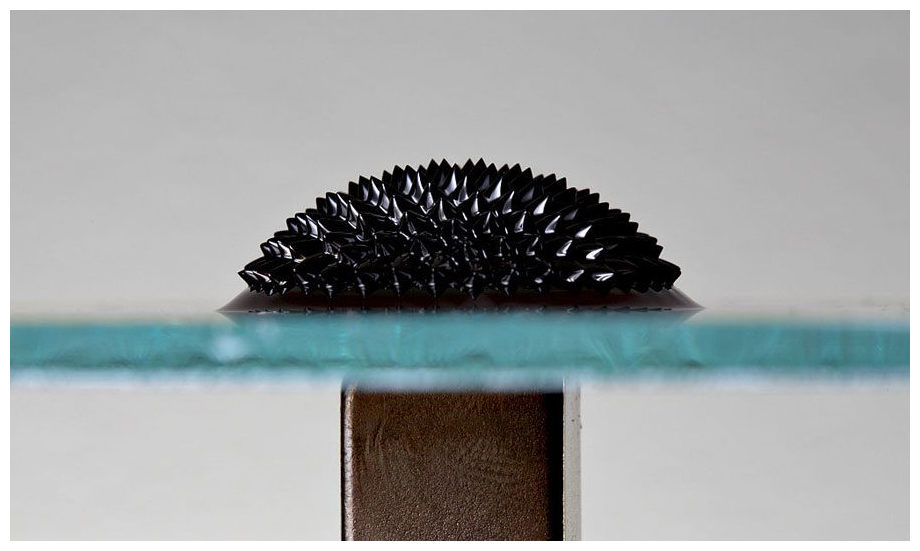
© Gregory F. MaxwellA blob of magnetic fluid that helps to visualize the magnetic field lines generated by the magnet underneath.
Scientists have discovered a new way to manipulate the magnetic structure of certain materials to form a kind of magnet known as fragmented spin ice. The resulting material possesses some of the weirdest magnetic properties known to science. Researchers are still trying to figure out exactly how these weird magnets behave, and learning to harness them could one day lead to novel applications. The discovery was published last month in the journal Nature Communications.

Tiny, frustrated magnets

Inside every material there are magnetic and nonmagnetic atoms. While both are essential for determining the material's many properties, the magnetic atoms control the magnetic properties. Acting like individual tiny magnets, the magnetic atoms collectively determine the overall magnetic properties of the material, which depends on the strength and coordinated orientation of each of these tiny atom-sized magnets. This is how we get a fridge magnet that behaves differently from the surface of the fridge. And it's why both differ when compared to the plastic fridge handle. The strength and orientation of the tiny magnets within each of those three items are closely related to a fundamental property of individual nuclei and electrons known as spin. Because of this close relationship, sometimes scientists simply call the tiny magnets "spins."

In spin ice the tiny magnets, or spins, are arranged in a very specific way. Unlike most magnetic materials, which take up relatively straightforward formations, such as lining up along a single direction, or just pointing in random directions, the individual spins inside a spin ice material have no simple way to organize themselves. This is usually due to the geometric arrangement of the atoms themselves -- when the atoms are put together in a certain way, the individual spins simply can't find a position that's consistently comfortable, as if they're trying to fit together like a bunch of badly built floor tiles.

Seismograph

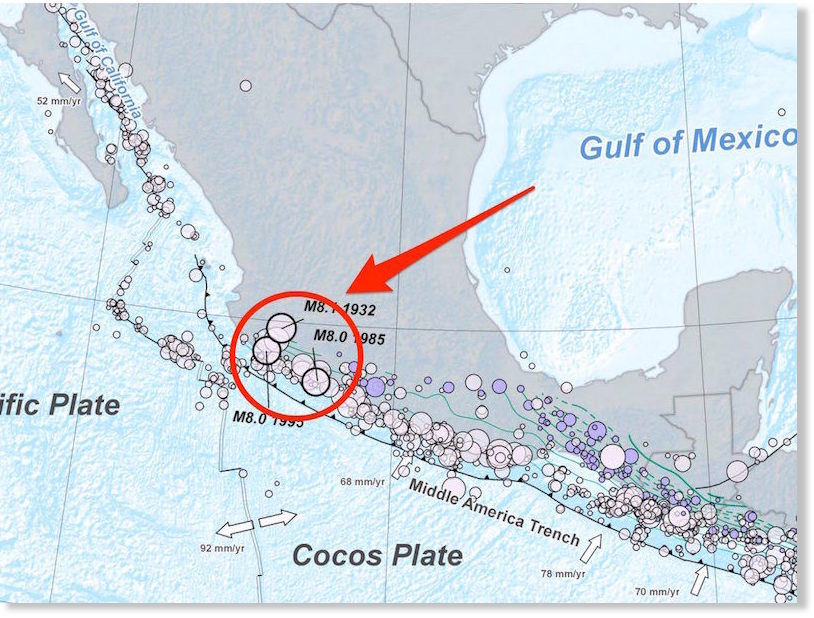
The reasons why Mexico is terribly prone to the occurrence of earthquakes

tectonic plates
© USGSA map of the tectonic plate forces that subject Mexico to regular earthquakes.
If giants were playing a game of Jenga with countries as their table-tops, Mexico would be one of the last locations to get picked.

The country sits atop three of the Earth's largest tectonic plates - the North American plate, the Cocos Plate, and the Pacific Plate. Whenever these chunks of crust grind or butt up against one another, earthquakes happen. As a former lakebed, Mexico City is also home to soft soil that essentially acts as an amplifier for tremors, often making smaller earthquakes feel much larger.

On Tuesday, a deadly quake reverberated along the boundary between the Cocos and the North American plate as the southern-most plate slid beneath its northern neighbor. The 7.1-magnitude temblor, which struck about 3 miles northeast of the city of Raboso, happened less than two weeks after the country was struck by an even more powerful 8.1-magnitude quake and 32 years to the day after a deadly magnitude 8.1 quake killed more than 9,500 people in Mexico City.

Comment: For news and updates on the most recent quake to hit Mexico, see:

7.1 magnitude earthquake hits southern Mexico - Buildings collapse in Mexico City - Quake strikes on anniversary of 1985 'big one' (VIDEOS, IMAGES) - UPDATES


Cassiopaea

Astronomers baffled to discover stars that appear older than the universe

oldest star andromeda galaxy
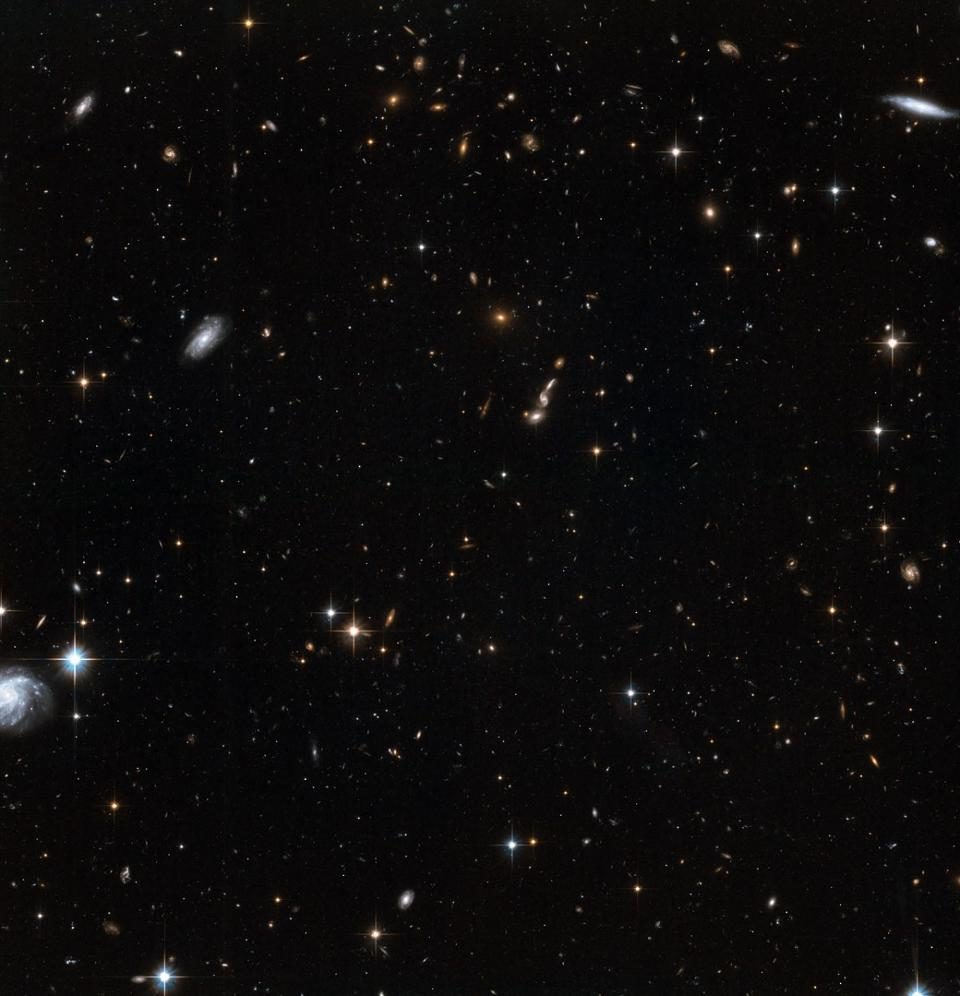
© NASA, ESA and T.M. Brown (STScI)In the Andromeda galaxy, the oldest individual stars are found in the galaxy's halo. However, globular clusters and random field stars may prove to contain the oldest stars of all in the entire Universe.
If you understand how stars work, you can observe the physical properties of one of them and extrapolate its age, and know when it had to have been born. Stars undergo a lot of changes as they age: their radius, luminosity, and temperature all evolve as they burn through their fuel. But a star's lifespan, in general, is dependent on only two properties that it's born with: its mass and its metallicity, which is the amount of elements heavier than hydrogen and helium present within. The oldest stars we've found in the Universe are nearly pristine, where almost 100% of what makes them up is the hydrogen and helium left over from the Big Bang. They come in at over 13 billion years old, with the oldest at 14.5 billion. And this is a big problem, because the Universe itself is only 13.8 billion years old.