
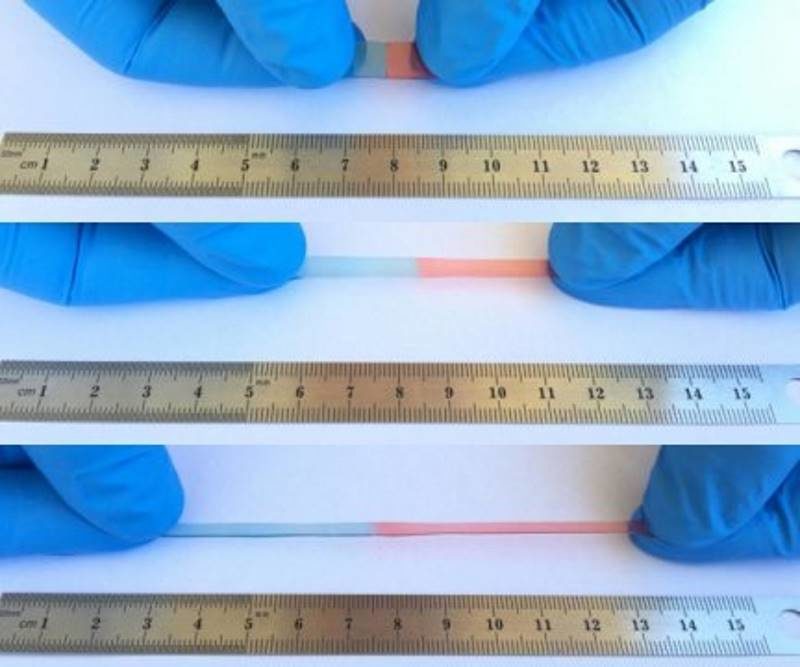
© Wang labsA new material not only heals itself, but it also stretches up to 50 times its usual size; these properties could fix your phone's battery if it cracks or prevent it from breaking in the first place.
Japanese researchers say they have developed a new type of glass that can heal itself from cracks and breaks.
Glass made from a low weight polymer called "polyether-thioureas" can heal breaks when pressed together by hand without the need for high heat to melt the material.
The research, published in Science, by researchers led by Professor Takuzo Aida from the University of Tokyo, promises healable glass that could potentially be used in phone screens and other fragile devices, which they say are an important challenge for sustainable societies.

















Comment: Given the plasticity of the brain, choosing a sample that is reflective of the overall population must be quite difficult, if not impossible. But choosing a sample from more diverse populations will, no doubt, offer more answers to the mysteries of the brain.
See also: