Science & TechnologyS


Cell Phone

Snowden's new app turns your phone into a portable security system

edward snowden
Your digital security, any sufficiently paranoid person will remind you, is only as good as your physical security. The world's most sensitive users of technology, like dissidents, activists, or journalists in repressive regimes, have to fear not just hacking and online surveillance, but the reality that police, intelligence agents, or other intruders can simply break into your home, office, or hotel room. They can tamper with your computers, steal them, or bodily detain you until you cough up passwords or other secrets.

To help combat that threat, one of the world's most well-known activists against digital surveillance has released what's intended to be a cheap, mobile, and flexible version of a physical security system. On Friday, the Freedom of the Press Foundation and its president, famed NSA leaker Edward Snowden, launched Haven, an app designed to transform any Android phone into a kind of all-purpose sensor for detecting intrusions.

Safe Haven

Designed to be installed on a cheap Android burner, Haven uses the phone's cameras, microphones and even accelerometers to monitor for any motion, sound or disturbance of the phone. Leave the app running in your hotel room, for instance, and it can capture photos and audio of anyone entering the room while you're out, whether an innocent housekeeper or an intelligence agent trying to use his alone time with your laptop to install spyware on it. It can then instantly send pictures and sound clips of those visitors to your primary phone, alerting you to the disturbance. The app even uses the phone's light sensor to trigger an alert if the room goes dark, or an unexpected flashlight flickers.

Comment: Interesting concept but what's not clear is how this app, while itself may be secure, would prevent an eavesdropper accessing your phone at a firmware level. Naturally, the Russophobic press had their reservations, well because, Russia!


Question

Bizarre whirlpool phenomenon observed in southern seas

Whirlpool
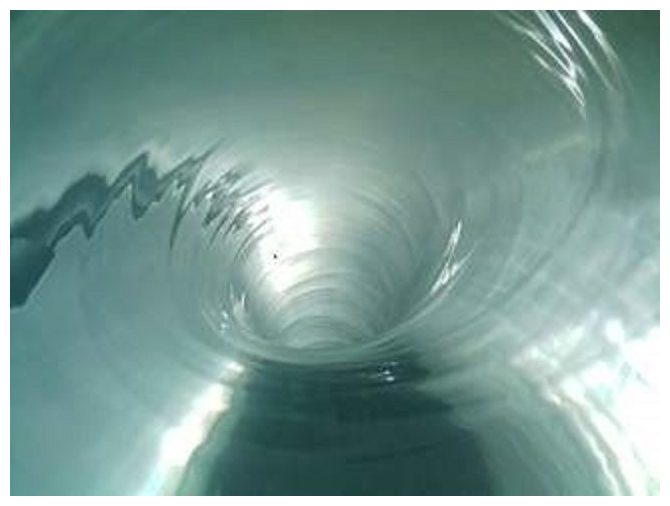
© Flickr user Dave StokesA small whirlpool.
Scientists have spotted a bizarre phenomenon reeling through the southern seas: linked swirls of water that resemble giant whirlpools spinning in opposite directions.

Rotating masses of water called eddies are common in the ocean. The newly revealed pairs, however, churn through the water up to ten times faster than their single counterparts, and are connected underwater by a U-shaped vortex. What's more, they might be able to slurp up tiny marine animals and ferry them great distances. Researchers are now trying to figure out how these maelstroms came to be and why they behave so weirdly.

Eddies, which can measure more than 60 miles across, are typically created by turbulence in larger ocean currents. "When they reach a certain strength they spontaneously start meandering and breaking up into eddies," says Chris Hughes, an oceanographer at University of Liverpool in England and one of the scientists behind the new discovery. Eddies play an important role in the ocean by mixing water from different areas, he says. They can stir up nutrients normally found in deeper waters and transport water across gyres, patterns of circular ocean currents that can be thousands of miles wide. This is essential for transporting heat from the equator up to the waters around the poles. "That really wouldn't be possible without the eddies," Hughes says.

Info

A new understanding of obesity - The body's own bathroom scales

Bathroom Scales
© University of Gothenburg
Researchers at Sahlgrenska Academy, University of Gothenburg, Sweden, have found evidence for the existence of an internal body weight sensing system. This system operates like bathroom scales, registering body weight and thereby fat mass. More knowledge about the sensing mechanism could lead to a better understanding of the causes of obesity as well as new anti-obesity drugs.

"We have discovered a completely new system that regulates fat mass. We hope this discovery will lead to a new direction in obesity research. The findings may also provide new knowledge about the cause of obesity and, in the long run, new treatments of obesity", says John-Olov Jansson, Professor at Sahlgrenska Academy.

He explains:
"Quite simply, we have found support for the existence of internal bathroom scales. The weight of the body is registered in the lower extremities. If the body weight tends to increase, a signal is sent to the brain to decrease food intake and keep the body weight constant".
The study was performed on obese rodents that were made artificially heavier by loading with extra weights. The animals lost almost as much weight as the artificial load. The extra weights caused body fat to decrease and blood glucose levels to improve.

Meteor

Larger than expected! Arecibo Observatory telescope snaps new radar images of 'potentially hazardous' asteroid Phaeton

asteroid
© Mark A. Garlick / AFPThe 3200 Phaethon, named after a mythical Greek character credited with almost destroying the sun, came within 10.3 million kilometers of Earth on December 16.
An asteroid listed as a potential hazard to Earth is about one kilometer larger than first thought, according to astronomers.

The 3200 Phaethon, named after a mythical Greek character credited with almost destroying the sun, came within 10.3 million kilometers of Earth on December 16.

The relatively close encounter, about 27 times the distance of the Earth to the moon, enabled scientists at the recently renovated Arecibo Observatory Planetary Radar to get a closer look at the egg-shaped asteroid.

Comment: See also: 'Potentially hazardous' 5km-wide Asteroid 3200 Phaethon to pass close to Earth tomorrow


Hearts

Love at first...smell? New dating app based on link between DNA and pheromones to play matchmaker

Pheramor
© Michael Starghill Jr.Bin Huang, Asma Mirza, and Brittany Barreto, co-founders of Pheramor, pose for a portrait in their downtown Houston office Wednesday November 29th.
The first question out of Asma Mirza's mouth when she makes a new acquaintance these days is, "Are you single?" If she gets a yes, the 27-year-old CEO quickly follows up with a request to swab the inside of her new friend's cheek, in hopes it will help them find true love.

Often, people look at her like she's crazy. They'll ask, "What does my DNA have to do with love?"

According to an ever-growing body of scientific research, the answer is: quite a bit. That's why Mirza and 26-year-old geneticist Brittany Barreto have spent the last year huddled in their downtown Houston office, working steadily to launch the nation's first genetics-based dating app, Pheramor.

Their phone-based app, which they plan to officially roll out in February, combines genetic information with data gleaned from social media posts to create user profiles.

"Scientists can actually predict who's attracted to whom," Barreto explained. "It has to do with your pheromones."

And the genes that control those ever-important pheromones can be analyzed through a simple cheek swab.

Comment: See also:


Horse

Genetically engineered super horses could be born in 2019 and be allowed to compete in the Olympics

gmo horse
© PAGenetically modified horses will be faster and stronger than even champion racehorses like Frankel (pictured), and they could be born in 2019
Genetically engineered super-horses could be born in 2019 after a genetic breakthrough by a laboratory that has previously cloned polo ponies.

Using gene editing technique Crispr, scientists could create faster and stronger racehorses - and they have already created a healthy embryo.

Under current rules, the genetically enhanced animals would be allowed to compete at all international events, including the Olympics.

Crispr is a tool for making precise edits in DNA, discovered in bacteria.

The acronym stands for 'Clustered Regularly Inter-Spaced Palindromic Repeats'.

The technique involves a DNA cutting enzyme and a small tag which tells the enzyme where to cut.

Magnify

Professor Paul McKeigue's reassessment: Syria's Khan Sheikhoun chemical attack

toxic gas plumes plastic, khan sheikhoun gas attack analysis

Comment: This reassessment follows Tim Hayward's original guest blog article featuring his colleague, Professor Paul Mckeigue, who back in August 2017 detailed a 'probability calculus' assessment of the Khan Sheikhoun chemical attack in Syria, which can be reviewed as follows: Professor Paul McKeigue on Khan Sheikhoun "chemical attack": How to weigh a mountain of evidence.


In this post, Professor Paul McKeigue analyses the recent report of the UN-OPCW Joint Investigative Mechanism into the chemical incident in Khan Sheikhoun, Syria, in April 2017. In the light of its findings, he compares the likelihood of two scenarios: (1) the official US-UK hypothesis of a chemical attack by the Syrian air force using sarin; (2) the 'false flag' hypothesis that small quantities of sarin were used to generate a forensic trail to disguise a managed massacre of the victims.

He discusses several anomalies and puzzles in the report. A critical piece of evidence he finds is its detail on the alleged airstrike: this is revealed to be incompatible with the Pentagon's own flight track map. Since nobody has suggested that the Pentagon's flight track was wrong, he concludes, 'the hypothesis of a chemical attack by the Syrian air force can be excluded as having zero likelihood.'

Clearly, this raises very serious questions indeed.

Cow

Very bad science: Study suggests people from poor countries should eat less meat due to environmental concerns

farming, big agriculture
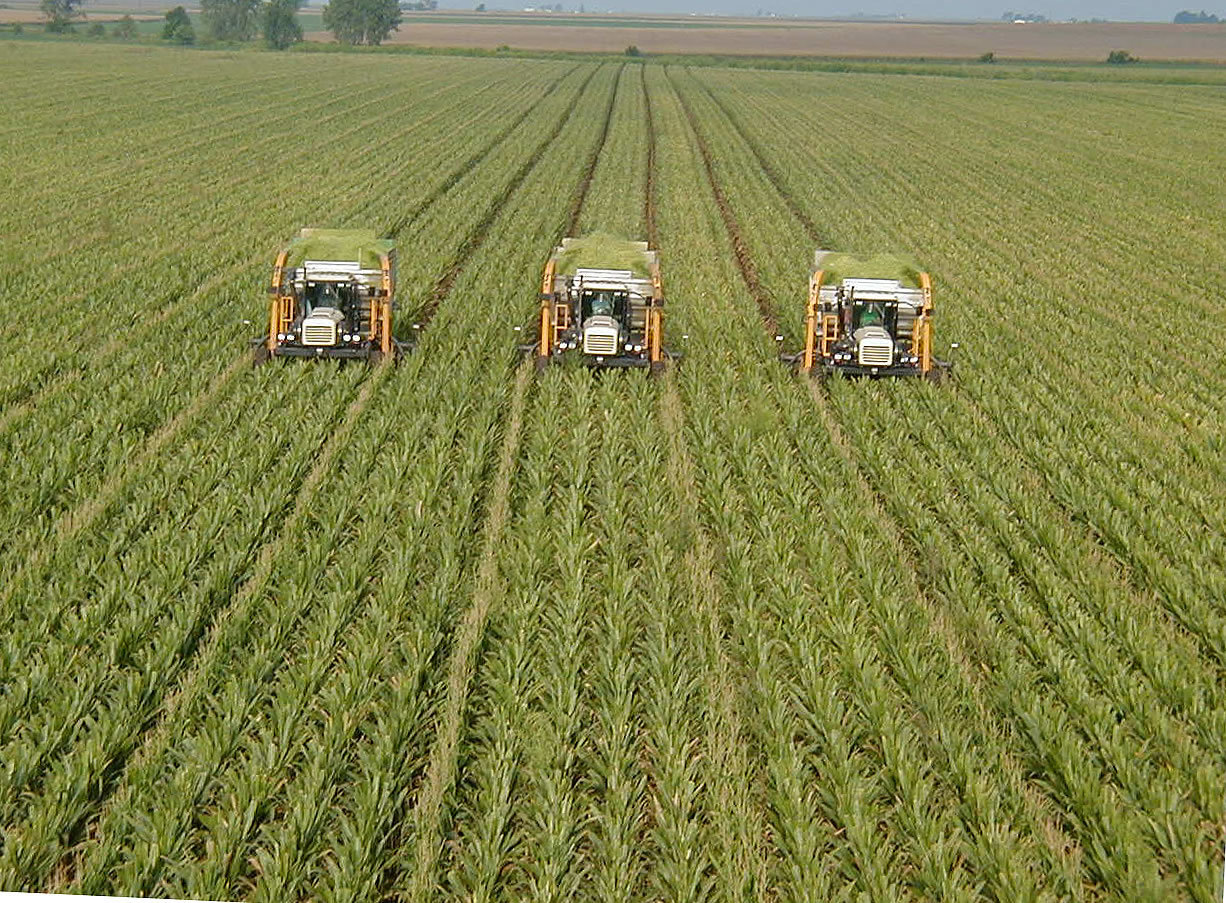
A study published in PNAS recommends climate be taken into consideration when drafting national recommended diet guidelines. The study further recommends that poor people should consume vegetable protein instead of meat protein, in line with dietary recommendations for rich countries.

The abstract of the study;
Evaluating the environmental impacts of dietary recommendations

Paul Behrensa, Jessica C. Kiefte-de Jong, Thijs Bosker, João F. D. Rodriguesa, Arjan de Koninga, and Arnold Tukkera

Dietary choices drive both health and environmental outcomes. Information on diets come from many sources, with nationally recommended diets (NRDs) by governmental or similar advisory bodies the most authoritative. Little or no attention is placed on the environmental impacts within NRDs. Here we quantify the impact of nation-specific NRDs, compared with an average diet in 37 nations, representing 64% of global population. We focus on greenhouse gases (GHGs), eutrophication, and land use because these have impacts reaching or exceeding planetary boundaries. We show that compared with average diets, NRDs in high-income nations are associated with reductions in GHG, eutrophication, and land use from 13.0 to 24.8%, 9.8 to 21.3%, and 5.7 to 17.6%, respectively. In upper-middle-income nations, NRDs are associated with slight decrease in impacts of 0.8-12.2%, 7.7-19.4%, and 7.2-18.6%. In poorer middle-income nations, impacts increase by 12.4-17.0%, 24.5-31.9%, and 8.8-14.8%. The reduced environmental impact in high-income countries is driven by reductions in calories (∼54% of effect) and a change in composition (∼46%). The increased environmental impacts of NRDs in low- and middle-income nations are associated with increased intake in animal products. Uniform adoption of NRDs across these nations would result in reductions of 0.19-0.53 Gt CO2 eq⋅a−1, 4.32-10.6 Gt PO3−4 eq⋅a−1, and 1.5-2.8 million km2, while providing the health cobenefits of adopting an NRD. As a small number of dietary guidelines are beginning to incorporate more general environmental concerns, we anticipate that this work will provide a standardized baseline for future work to optimize recommended diets further.

Comment: It is hard to build a sound scientific argument when you start with premises which are arguably incorrect. In this case, that nationally recommended diets and vegetarianism are generally healthier than common diets, and that agriculture is less damaging to the environment than animal farming. See: And Lierre Keith's book The Vegetarian Myth: Food, Justice and Sustaintability


Gear

Driverless taxis became a reality in 2017 and hardly anyone noticed

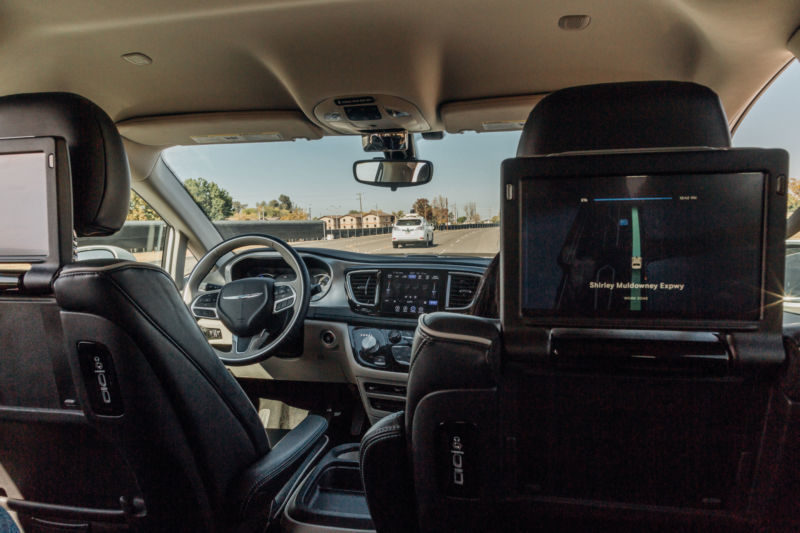
There are now actual driverless cars on the roads in Phoenix. That's a big deal.
Inside Driver less taxi
© Waymo
On November 7, Waymo announced it would begin regularly testing fully driverless cars-without a safety driver-on public roads. It was a momentous announcement. A technology that had seemed like science fiction a decade earlier became a reality. And the announcement was greeted with a yawn by much of the media and the public-if they noticed at all.

Consider this December 7 article by Eric Adams, a writer for The Drive. Adams wrote that "Level 4 technology"-that is, a car like Waymo's that can operate with no driver in a geofenced area-"is legal to operate precisely nowhere in the world right now." In fact, Waymo had been operating its driverless fleet in Arizona with the tacit approval of Arizona regulators for several weeks by that point. The Motley Fool wrote on November 30 that "it's not yet clear how Waymo will bring its technology to market," even though Waymo had already announced that its first product would be a Phoenix-area taxi service.

Beaker

Heidelberg Uni physicists find evidence of an exotic state of matter

fermion pairing
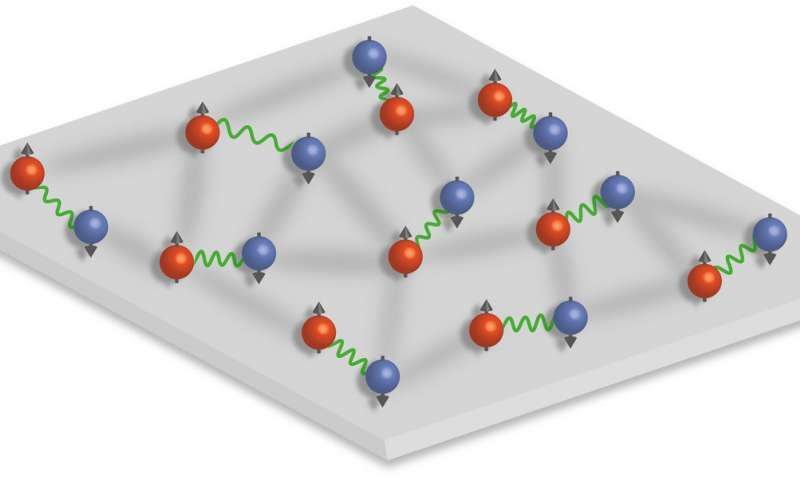
© Puneet MurthyIn a known and well-understood scenario, pairing is caused solely by the attraction between two fermions (green lines). However, Heidelberg scientists found that with strong interactions between the fermions, a different type of pairing takes place, which strongly depends on the density of the surrounding medium (gray shaded regions). This suggests that in this state, each particle is not only paired with one other particle, but that there are additional correlations with other particles in its surroundings.
Using ultracold atoms, researchers at Heidelberg University have found an exotic state of matter where the constituent particles pair up when limited to two dimensions. The findings from the field of quantum physics may hold important clues to intriguing phenomena of superconductivity. The results were published in Science.

Superconductors are materials through which electricity can flow without any resistance once they are cooled below a certain critical temperature. The technologically most relevant class of materials, with exceptionally high critical temperatures for superconductivity, is poorly understood so far. There is evidence, however, that in order for superconductivity to occur, a certain type of particles - the fermions - must pair up. Moreover, research has shown that materials which become superconducting at relatively high temperatures have layered structures. "This means that electrons in these systems can only move in two-dimensional planes", explains Prof. Dr. Selim Jochim of Heidelberg University's Institute for Physics, who heads the project. "What we did not understand until now was how the interplay of pairing and dimensionality can lead to higher critical temperatures."