
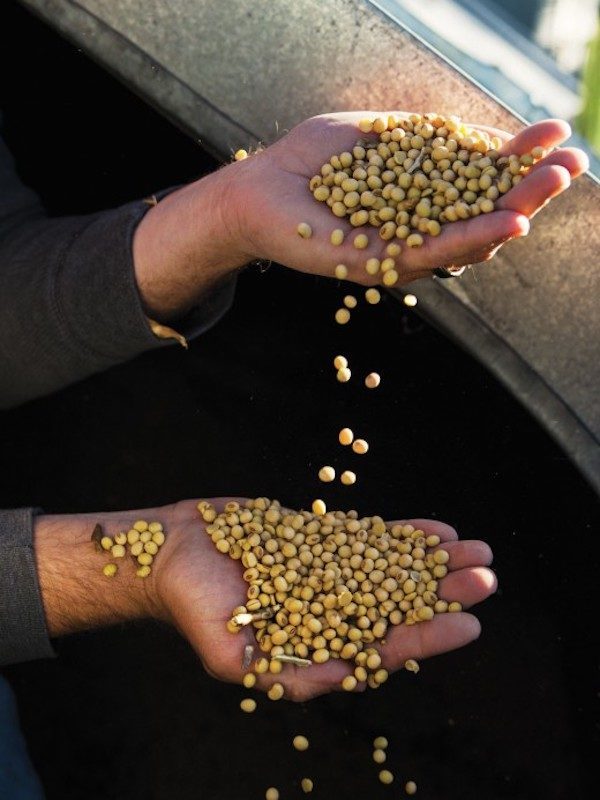
When I visited Jason McHenry's farm in South Dakota, the young farmer, dressed in worn jeans and sunglasses, led me up a slippery steel ladder on the side of a grain bin. We tumbled through the manhole into a shifting mountain of soybeans. You could sift them through your fingers and taste their sweet, cloudy flavor.
The U.S. soybean crop is four billion bushels a year, about 240 billion pounds. It generates the most cash receipts for American farms after cattle and corn. Of those beans, more than 90 percent are genetically modified organisms, or GMOs-that is, they've been genetically enhanced, most often through the addition of a gene from a soil bacterium that renders them immune to the weed killer glyphosate, commonly known as Roundup.

















Comment: The good doctors are on the right track.