Science & TechnologyS


Moon

First total lunar eclipse on January 31st

On Wednesday, January 31, 2018, the first total lunar eclipse in more than two years graces the skies above North America. But unlike the previous one, this eclipse is positioned perfectly for the West Coast and Pacific Rim, while the East Coast and the Atlantic Regions will see little, if any, of the show.
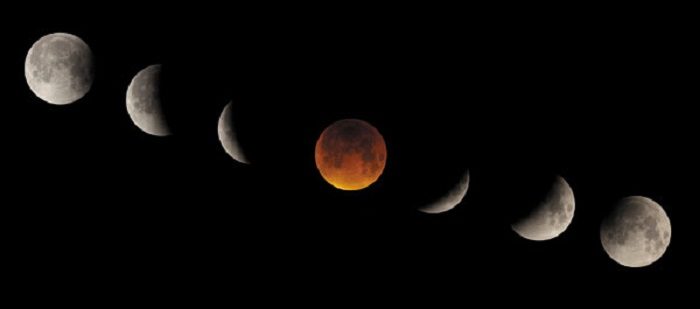
Total Lunar Eclipse
© Sean WalkerThis sequence taken during the last total lunar eclipse on September 28, 2015, was captured in seven separate exposures with a Canon Rebel XSi DSLR and an 8-inch f/3.3 Newtonian reflector.
The eclipse occurs in the morning for western North America and the near Pacific. For the East Coast, the Moon sets before totality arrives, so the best you'll see from, say, Pittsburgh, is a partial eclipse. Viewers in the western contiguous United States (roughly west of a line drawn from Grand Forks, North Dakota, to El Paso, Texas) will have good views of most of the action, with the Moon setting at the end of or soon after totality. The farther west/northwest the viewer, the better the event. Los Angeles sees the end of totality in a brightening sky; the Moon sets before the second partial stage is complete. More northwesterly Seattle sees almost the entire eclipse, missing only the subtle end stage. Honolulu and Anchorage see every stage in an enjoyably dark sky. Alaska, Yukon, most of British Columbia, the Northwest Territories, parts of Nunavut, and Hawai'i see the eclipse from start to finish.

Totality falls on the evening of January 31st for eastern Asia and the far Pacific. China, Mongolia, Japan, Korea, Russia, New Zealand, the Philippines, and most of Indonesia and Australia will see the eclipse in its entirety. (Perth, you miss the opening minutes of the event, but this is no big deal as the subtle shadow in the early stages of a total eclipse isn't visible to the naked eye.)

Snowflake Cold

Study predicts next phase of solar cycle will bring on 'Mini Ice Age' as early as 2020

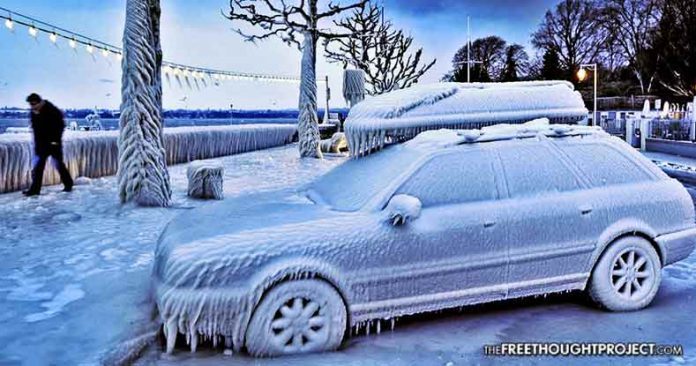
ice covered car ice age
A team of astrophysicists has conducted a years-long study showing that in only a few years, Earth may experience a mini ice age that would drastically change how we live.

A bombshell study, led by professor Valentina Zharkova of Northumbria University, suggests that in the next few years Earth will enter into a cooling phase that will set off a series of events leading to a mini ice age.

Researchers came to the somewhat alarming conclusions by creating a mathematical model of the sun's magnetic fields.

According to the models, there will be a "huge reduction" in solar activity for 33 years between 2020 and 2053. This will cause global temperatures to decrease-drastically.

The temperatures will plummet to levels not seen since the 17th century.

Comment: More from Valentina Zharkova's work:


Fish

Research indicates multiple causes for whale strandings

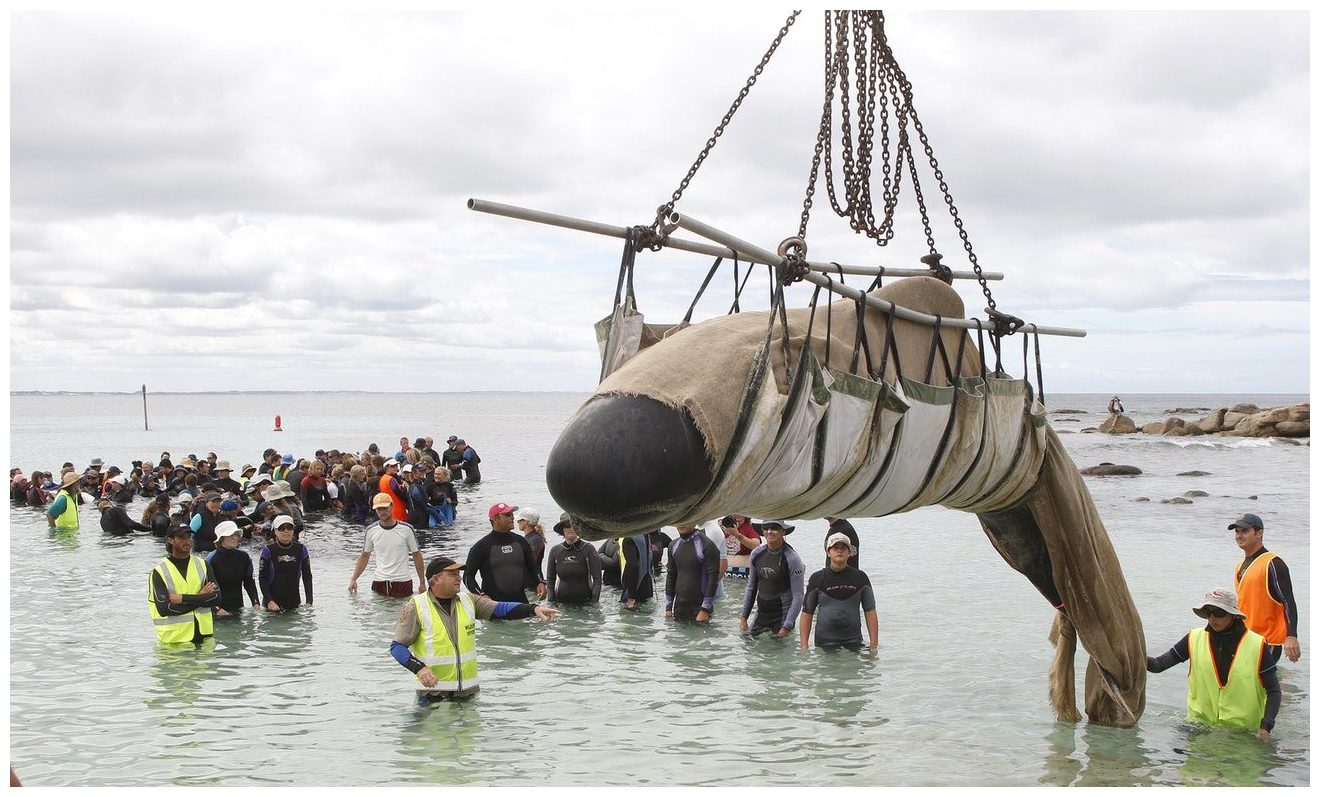
Stranded Whale Rescue
© Tony Ashby/Stringer/Getty ImagesA whale rescue effort in Perth, Western Australia, in 2009. Research suggests multiple causes behind strandings.
In June 2015, 337 dead whales were found in a fjord in Chilean Patagonia. It was quickly declared one of the largest whale stranding events known to science.

Researchers suggested a recent explosion of toxic red algae could be behind the mysterious phenomenon, but they couldn't say for sure.

The following year, more than 80 short-finned pilot whales beached themselves on the coast of the Bay of Bengal in India, seemingly unable to navigate away from the shoreline.

When rescuers managed to move 36 of them back to sea, they appeared disoriented, and struggled to rejoin their pod. Some even found their way back to the beach and stranded themselves once more.

And in February 2017, in what has become one of the biggest mass stranding events in New Zealand history, 416 pilot whales beached themselves on the South Island's Farewell Spit beach, followed by roughly 240 more that ran aground between the settlements of Puponga and Pakawau. This time, many of them were refloated.

Potential explanations abound, including solar storms, military sonar, and even the Moon's gravitational pull, but what's become increasingly clear each time is that no one really knows what's going on.

And that's not necessarily a bad thing, according to Mark Hindell, professor of marine science at the University of Tasmania in Australia.

Comet 2

Did comet impacts kill lots of animals in Alaska?

impact-related microspherules
© Hagstrum et. al/Scientific Reports
To laypeople, the "muck" found in certain areas of Alaska and Yukon is just dirt - dark, silty, often frozen, and full of plant material. To miners, it is somewhat of a nuisance. When dug out and left to thaw, the muck lets loose a fetid stench due to its high organic content. To scientists, however, the muck is a graveyard, and a fascinating one at that. Over the years, thousands of remains of bison, mammoth, horse, musk ox, moose, lynx, lion, mastodon, bear, caribou, and even camel have been uncovered.

More interesting than the mere presence of this zoological gold mine is the actual condition of the remains. Cached inside the frozen mucks for as long as 48,000 years, the remains are remarkably well preserved, with some carcasses mostly intact and effectively mummified. Even more curious, many animals show no signs of predation, scavenging, or decomposition, and despite disarticulated bones, seemed to be in relatively good health at the time of their demise.

This made Jonathan Hagstrum, a research geophysicist at the U.S. Geological Survey, wonder... What killed all of these animals? He and colleagues Richard Firestone, Allen West, James Weaver, and Ted Bunch share an intriguing hypothesis.

They think the seemingly sudden deaths of many of these animals in the Alaskan and Yukon mucks could be explained by airbursts and impacts from comet debris that struck Earth during the Late Pleistocene, between 11,000 and 46,000 years ago. Hagstrum and his colleagues recently presented new evidence for this idea in the journal Scientific Reports.

Network

7 surprising statistics about Twitter in America

twitter big screenshot
© AP Photo/Richard Drew, File
Ah Twitter, we thought we knew you.

A comprehensive survey (1,753 respondents) released today by Edison Research, paints a fascinating picture of Twitter and its role in America's social media ecosystem.

The full 49-page study is full of interesting graphs and data morsels, but these are the 7 findings that I didn't anticipate:

1. Twitter is Ubiquitous

Like Terrell Owens, Carrie Underwood, and Coke Zero, Twitter is almost universally on the radar of Americans. 87% of respondents had heard of Twitter, compared to 88% who had heard of Facebook. (Note that the survey population was 12 and up, including a representative portion of seniors). Thus, we can safely assume that with the exception of Amish, prisoners, and sea creatures, the entirety of the country knows about Twitter.

Robot

Fembot fatale? Sex bots could potentially be hacked to murder people in future

robot android virtual reality
© ISTOCK/GETTY IMAGES
If you've been keeping up with technology news this year you'll be aware that people are a bit concerned about artificial intelligence.

Elon Musk is convinced that it is going to kill everyone and a Google AI managed to create its own AI which was more powerful than any version a human has ever built.

Yeah, it isn't looking good and we wouldn't bet against Judgment Day from the Terminator movies happening anytime soon.

Just when you thought it was advanced computer systems and the military that were out to get us, it turns out that sex robots - the very machines designed to give us pleasure - could be about to kill us too.

Sex robots have been with us for quite a few years now and they have already attracted their fair share of warnings and controversy.

However, a warning from Dr Nick Patterson, a cybersecurity lecturer at Deakin University, Australia has to be the starkest yet.

He believes that in the future sex robots could be easier for hackers to access and control than a laptop or a mobile phone.

From there these remotely controlled cyborgs could be used for all sorts of nefarious means such as violence and murder.

Comment: A vision of the future?


Every innovation in technology opens the doors to many possibilities. A subset of those possibilities will always be worse than the others. And since a subset of humans always go for the worse options, it's pretty much a sure thing that if sex bots can be hacked, they will be.


Brain

The reason some people don't learn from mistakes, their brains are not really processing the information

Child
Adults who have had stressful childhoods find it harder to sense risky situations approaching, new research finds.

As a result, looming health, financial or legal problems could be more difficult to spot for people who were maltreated early in life.

But when the bad luck hits, people who have had stressful childhoods get hit harder - perhaps because it is more of a surprise.

Professor Seth Pollak, who led the study, said:

"It's not that people are overtly deciding to take these negative risks, or do things that might get them in trouble.

It may very well be that their brains are not really processing the information that should tell them they are headed to a bad place, that this is not the right step to take."

Comment: See also:


Snowflake Cold

Reality check: The Sun is cooling faster than anyone suspected - and lowering Earth's temperature along with it

sun cooling
The danger from the Global Warming crowd is that they are misleading the entire world and preventing us from seeing what is dangerously unfolding that sparks the rapid decline in civilization - GLOBAL COOLING. I previously warned that this is not my opinion, but simply our computer. If it were really conscious it would be running to the store to buy heating pads. This year will be much colder for Europe than the last three. It will also be cold in the USA. We are in a global cooling period and all the data we have in our computer system warns that the earth is turning cold not warm.

This cooling is very serious. This decline in the energy output of the sun will manifest in a commodity boom in agriculture as shortages send food prices higher. We will see famine begin to rise as crops fail and that will inspire disease and plagues. We will see the first peak in agricultural prices come probably around 2024 after the lows are established on this cycle. We have been warning that this rise would begin AFTER 2017.


Comment: Consider reading: The Four Gender Non-Conforming Horsepersons of the Apocalypse


Jupiter

Jupiter's UV Aurora

Jupiter's Aurora
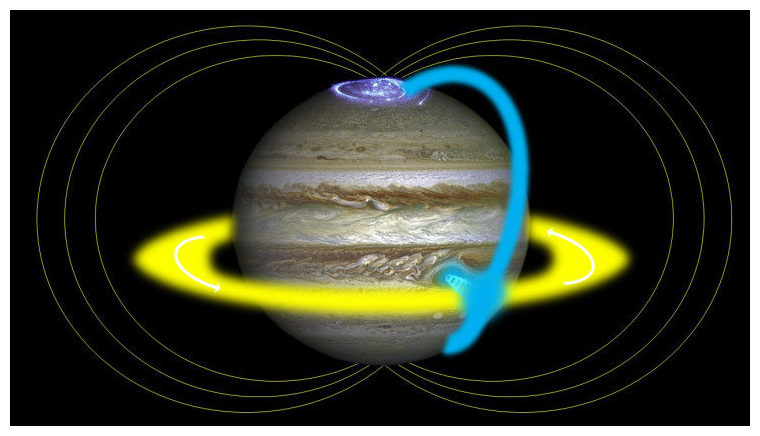
© AcksblogFig. 1. A portion of the 3He++ particles deflected to the poles to form auroral ovals.
As discussed in a recent post, Jupiter is a solid, highly deuterated, Methane Gas Hydrate (clathrate) body, density of 1.33 g/cm3 incorporating the full complement of known solar system elements. The terrestrial planets were each formed by unique impacts on Jupiter, The most recent of which was Venus. This impact left behind a continuous fusion reaction which has slowly declined over the past 6,000 years to a single reaction, usually written.

p + d -> 3He+ + γ (1)

As reasoned in a previous post and below, the author maintains this is not the correct form of the reaction, which should be written:

p + d -> 3He++ (2)

The energy produced by this aneutronic reaction is solely in the kinetic energy of 1030 light helium nucleons per second, 4.98 MeV, with velocities of 17,800 km/s on the MGH surface 50,000 km east of the Great Red Spot. These nucleons swirl in a vortex, due to the Coriolis effect (proportional to their velocity and the rapid rotation of Jupiter), exit the atmosphere via the Great Red Spot and circulate prograde (yellow in Figure 1) around the planet. This circulation of positively charged particles generates the unusual magnetodisk magnetic field of Jupiter. The field is powerful because it is produced in space, not shielded within the planet.

Rose

The minds of plants: From the memories of flowers to the sociability of trees, the cognitive capacities of our vegetal cousins are all around us

Cornish mallow (Lavatera cretica)
At first glance, the Cornish mallow (Lavatera cretica) is little more than an unprepossessing weed. It has pinkish flowers and broad, flat leaves that track sunlight throughout the day. However, it's what the mallow does at night that has propelled this humble plant into the scientific spotlight. Hours before the dawn, it springs into action, turning its leaves to face the anticipated direction of the sunrise. The mallow seems to remember where and when the Sun has come up on previous days, and acts to make sure it can gather as much light energy as possible each morning. When scientists try to confuse mallows in their laboratories by swapping the location of the light source, the plants simply learn the new orientation.

What does it even mean to say that a mallow can learn and remember the location of the sunrise? The idea that plants can behave intelligently, let alone learn or form memories, was a fringe notion until quite recently. Memories are thought to be so fundamentally cognitive that some theorists argue that they're a necessary and sufficient marker of whether an organism can do the most basic kinds of thinking. Surely memory requires a brain, and plants lack even the rudimentary nervous systems of bugs and worms.

Comment: Read more about The secret intelligence of plants