Science & TechnologyS


Galaxy

How quantised inertia gets rid of dark matter

black hole
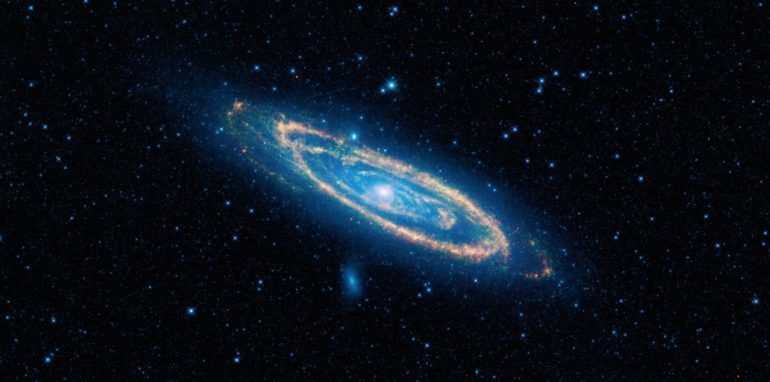
© NASA/JPL-Caltech/WISE Team
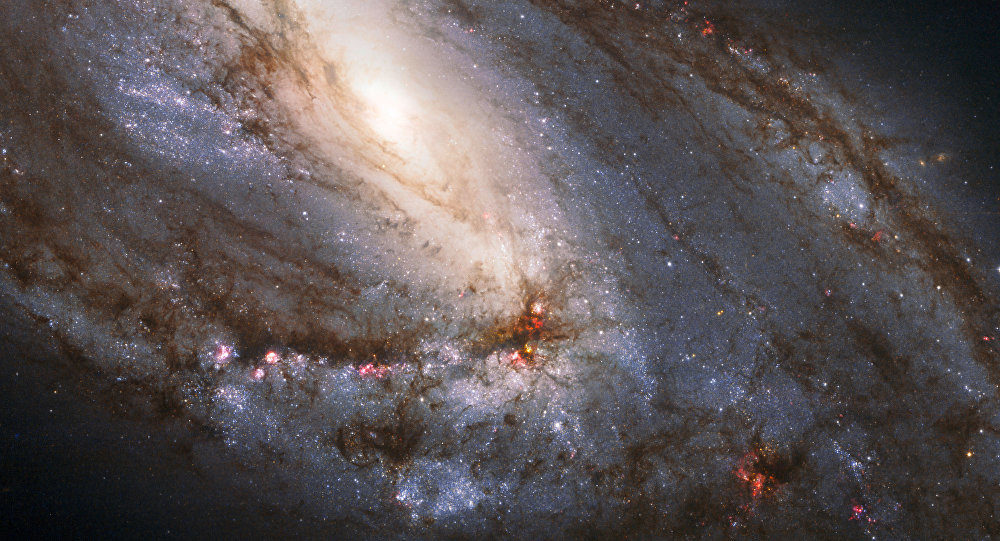
It is well-known that galaxies rotate so fast that centrifugal forces should have long ago beaten the gravitational self-attraction of all the visible mass we see, and torn them apart, but galaxies sit there apparently not being torn apart. This anomaly was first seen in galaxy clusters by Fritz Zwicky in 1933, and in the Milky Way by Rubin and Ford in the 1970s. Most astrophysicists have assumed that what keeps galaxies together is the gravity from vast invisible clouds of so-called dark matter and they have been looking for dark matter for many decades without success.

However, there is now good evidence that dark matter does not exist at all. For example, changes in the rotation speed as you go out from the galactic center are always associated with changes in the amount of visible matter at that radius, and nothing else, indicating that the dynamics are not controlled by any invisible matter. There is also a philosophical objection: arbitrary models like dark matter are insidious because they can be fudged to be right for the wrong reasons, and dark matter has to be adjusted arbitrarily for each galaxy separately, so it is not predictive.

Jet5

First batch of Russian 5th generation Su-57 fighter jets to be put in service 'very soon'

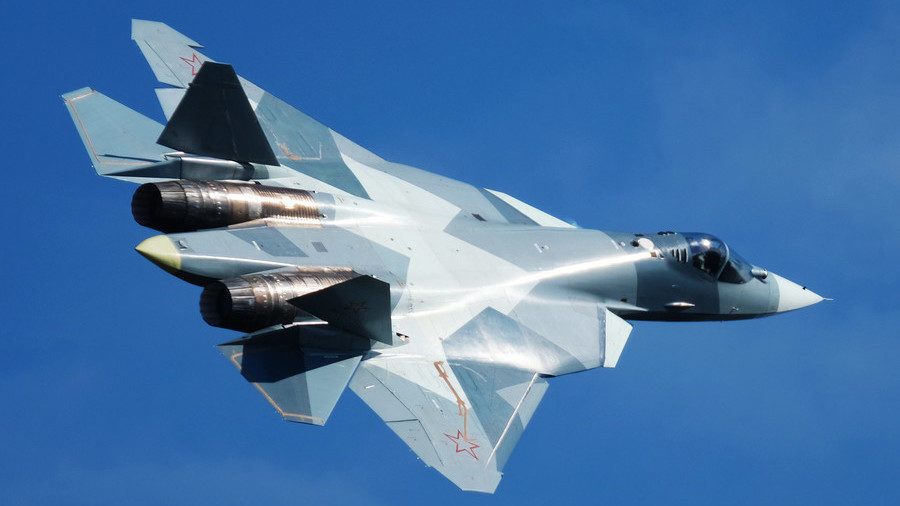
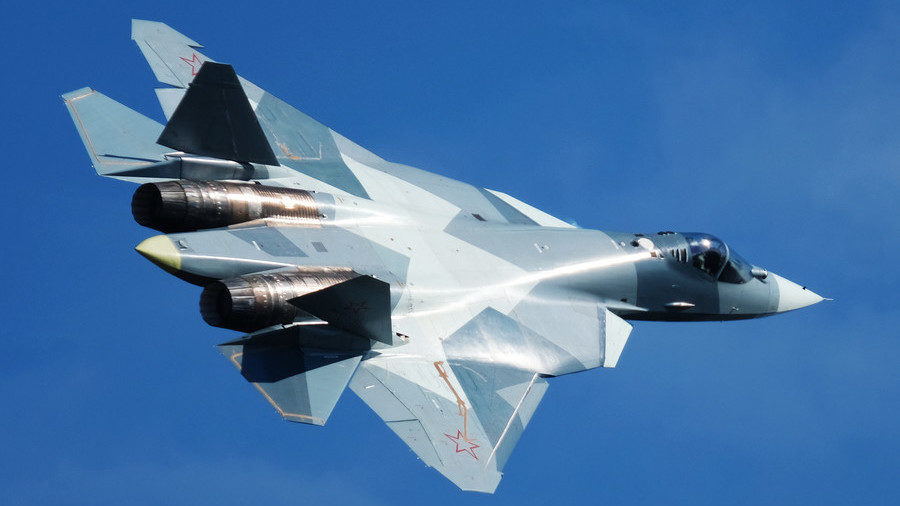
Russia's fifth generation Sukhoi Su-57 fighter jet
© Maksim Blinov / Sputnik
The Russian military is expected to receive the first batch of fifth generation Sukhoi Su-57 fighter jets "very soon," the corporation developing the plane said. The jet was known earlier as the PAK FA and T-50.

"The newest 5th generation aviation complex T-50/PAK FA, for which we have high hopes and plans, will be delivered to the Russian Air Force very soon," the Joint Aviation Corporation (OAK) said in a Facebook post.

Earlier on Saturday, a source in the aviation industry told Interfax that the delivery of the first planes of the maiden batch is expected to take place in 2018. A similar estimated time of delivery was given earlier by then-Russian Air Force commander Colonel General Viktor Bondarev.

The first nine machines are currently undergoing flight tests, according to the manufacturer. While the early jets were fitted with older "first-stage engines," the Su-57 recently received a new engine, developed specifically for the fifth-generation fighters. The fighter, fitted with the new Product 30 engine, successfully performed its maiden flight on December 5. While little is known about the specifications, the OAK said last year it was an entirely new engine designed from scratch.

The Su-57 jet fighter, designed to replace the iconic Sukhoi Su-27 in frontline tactical aviation, made its maiden flight in 2010. One plane has an estimated price tag of about $50 million.

Comment: Compare that with the price of US' fifth generation jet the F-35: Lockheed stated that by 2019, pricing for the fifth-generation aircraft will be less than fourth-generation fighters. An F-35A in 2019 is expected to cost $85 million per unit complete with engines and full mission systems, inflation adjusted from $75 million in December 2013.


Books

Study shows which books you read to your baby matters

baby and parent reading
© aijiro/Shutterstock.comHow can you maximize reading’s rewards for baby?
Parents often receive books at pediatric checkups via programs like Reach Out and Read and hear from a variety of health professionals and educators that reading to their kids is critical for supporting development.

The pro-reading message is getting through to parents, who recognize that it's an important habit. A summary report by Child Trends, for instance, suggests 55 percent of three- to five-year-old children were read to every day in 2007. According to the U.S. Department of Education, 83 percent of three- to five-year-old children were read to three or more times per week by a family member in 2012.

Galaxy

Will 2018 be the year we directly 'see' our first black hole?

black hole simulation
© Interstellar / R. Hurt / CaltechThe black hole, as illustrated in the movie Interstellar, shows an event horizon fairly accurately for a very specific class of rotating black holes.
The Event Horizon Telescope has come online and taken its data. Now, we wait for the results.

Black holes are some of the most incredible objects in the Universe. There are places where so much mass has gathered in such a tiny volume that the individual matter particles cannot remain as they normally are, and instead collapse down to a singularity. Surrounding this singularity is a sphere-like region known as the event horizon, from inside which nothing can escape, even if it moves at the Universe's maximum speed: the speed of light. While we know three separate ways to form black holes, and have discovered evidence for thousands of them, we've never imaged one directly. Despite all that we've discovered, we've never seen a black hole's event horizon, or even confirmed that they truly had one. Next year, that's all about to change, as the first results from the Event Horizon Telescope will be revealed, answering one of the longest-standing questions in astrophysics.

Chalkboard

New largest prime number discovered

Prime Numbers
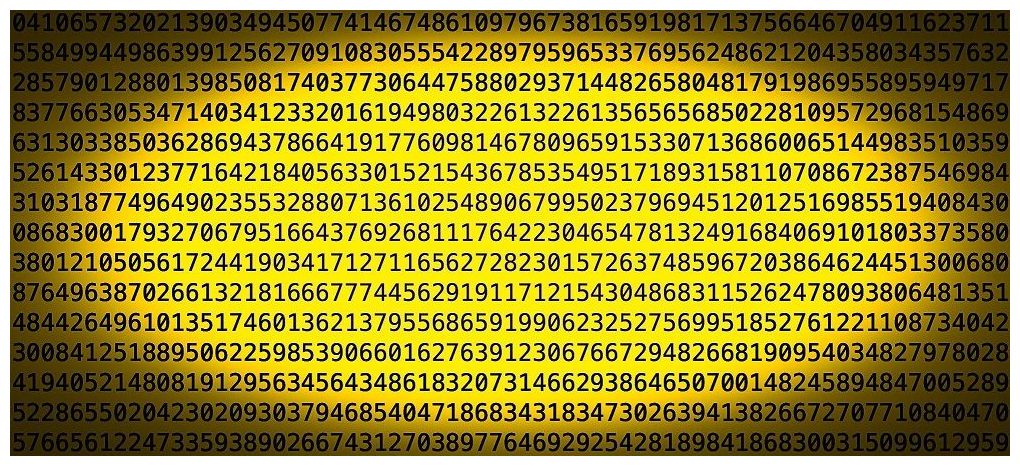
© Illustration by Stephen Shankland/CNETThe newly found number would fill an entire shelf of books totaling 9,000 pages.
If you have a whole lot of free time, you might be able to type out the largest known prime number.

The newly found number has 23,249,425 digits, nearly one million digits more than the previous record holder, discovered a year ago. Here comes the math: the new prime number is calculated by multiplying together 77,232,917 twos, and then subtracting one.

Because no one, not even a mathematician, has the time to recite 23 million digits, the number was given the not-so-catchy name of M77232917. (But its friends call it 2 to the power of 77,232,917 minus 1.)

A collaborative computer project called the Great Internet Mersenne Prime Search, which has been going on for years, found the number in late December, on a computer volunteered by Tennessee electrical engineer Jonathan Pace. Pace had been hunting for primes for 14 years. Merseene primes are a special class of rare prime numbers named for Jesuit scholar Marin Mersenne, who studied them in the 17th century.

Snowflake Cold

Researchers cool object beyond limits of known physics

supercooled membrane physics
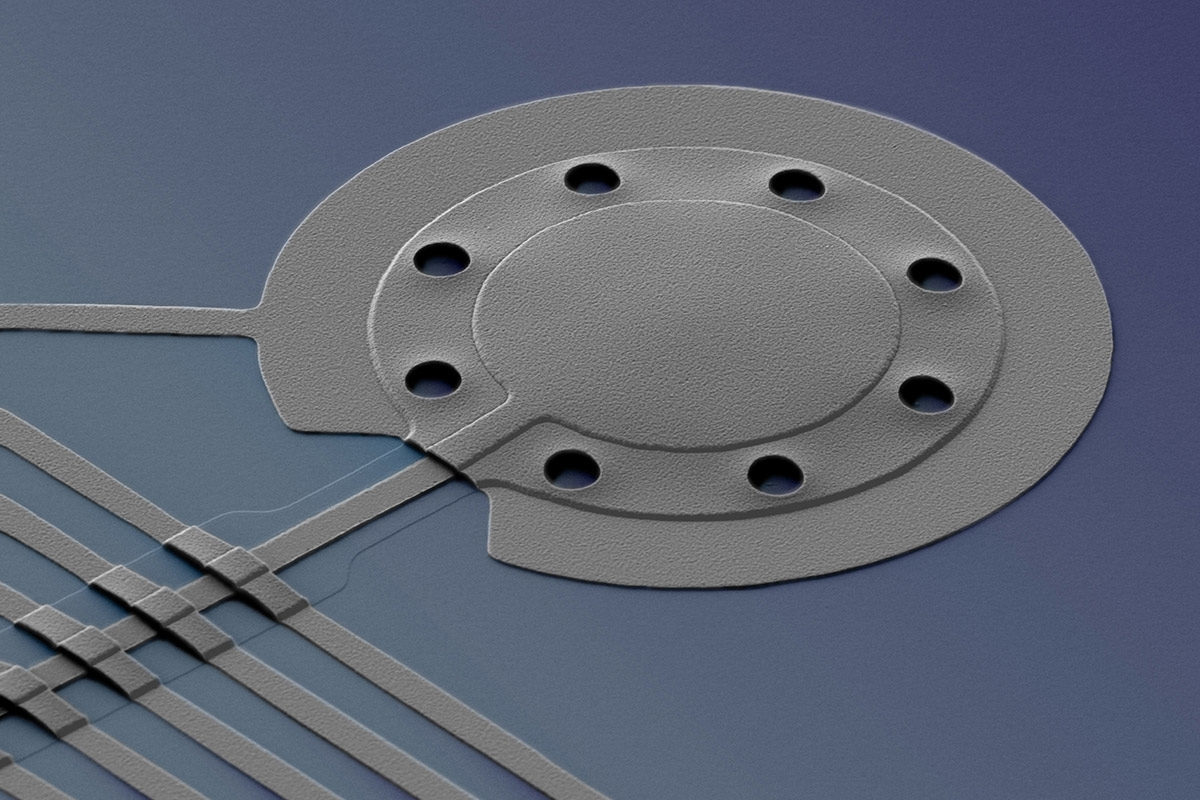
© Teufel/NISTTiny supercooled membrane
For the first time, physicists have cooled a mechanical object to a temperature colder than previously thought possible, taking it below the so-called "quantum limit" and bending the laws of physics.

Using a new technique, the team managed to chill a microscopic mechanical drum to an unheard-of 360 microKelvin, or 10,000 times colder than the vacuum of space. It's the coldest mechanical object on record.

"It's much colder than any naturally occurring temperature anywhere in the Universe," team leader John Teufel from the US National Institute of Standards and Technology in Boulder, Colorado, told Leah Crane from New Scientist.

Bulb

Four-dimensional physics now studied in two dimensions

blue box red things
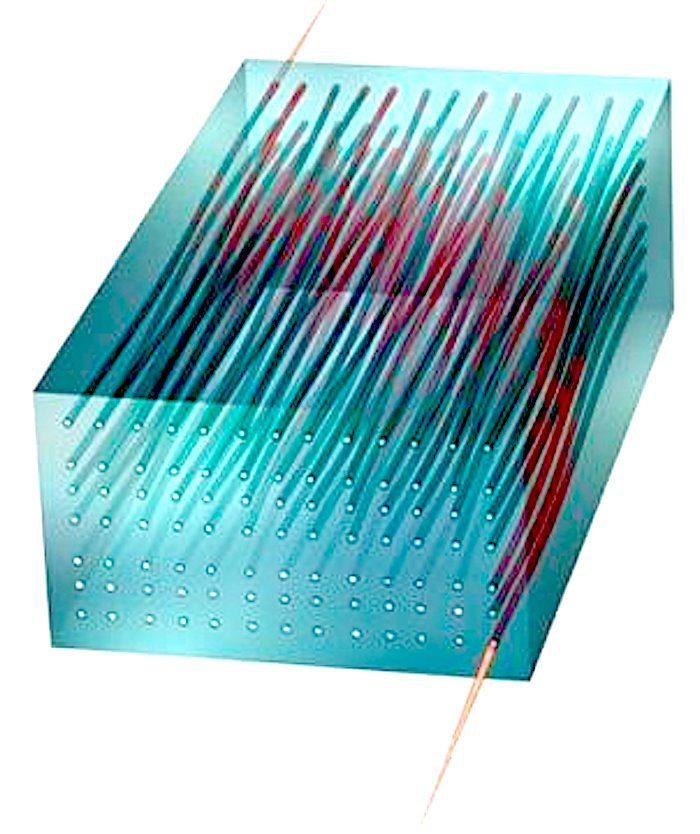
© Rechtsman laboratory, Penn State UniversityIllustration of light passing through a two-dimensional waveguide array. Each waveguide is essentially a tube, which behaves like a wire for light, inscribed through high-quality glass using a powerful laser, closely spaced to form the array. Light that flows through the device behaves precisely according to the predictions of the four-dimensional quantum Hall effect.
For the first time, physicists have built a two-dimensional experimental system that allows them to study the physical properties of materials that were theorized to exist only in four-dimensional space. An international team of researchers from Penn State, ETH Zurich in Switzerland, the University of Pittsburgh, and the Holon Institute of Technology in Israel have demonstrated that the behavior of particles of light can be made to match predictions about the four-dimensional version of the "quantum Hall effect" -- a phenomenon that has been at the root of three Nobel Prizes in physics -- in a two-dimensional array of "waveguides."

A paper describing the research appears January 4, 2018 in the journal Nature along with a paper from a separate group from Germany that shows that a similar mechanism can be used to make a gas of ultracold atoms exhibit four-dimensional quantum Hall physics as well.

"When it was theorized that the quantum Hall effect could be observed in four-dimensional space," said Mikael Rechtsman, assistant professor of physics and an author of the paper, "it was considered to be of purely theoretical interest because the real world consists of only three spatial dimensions; it was more or less a curiosity. But, we have now shown that four-dimensional quantum Hall physics can be emulated using photons -- particles of light -- flowing through an intricately structured piece of glass -- a waveguide array."

Fish

Russian scientists develop experimental underwater breathing technique - aimed at rescuing submarine crews

woman swimming underwater
© CCO
People and other air-breathing creatures normally drown when they get too much water in their lungs, but Russian scientists have proved that a dog can survive underwater using liquid breathing technology in an experiment aimed at saving the lives of submarine crews.

Liquid breathing is a form of respiration in which a normally air-breathing organism breathes an oxygen-rich liquid.

For many decades scientists have been looking for novel methods of salvaging distressed submariners and helping pilots and cosmonauts withstand extreme g-loads during long-term spaceflights.

During a scientific experiment, virtually identical to the system portrayed in James Cameron's 1989 science fiction movie The Abyss, a dachshund was dunked face down into a vessel filled with a liquid saturated with oxygen.

Just a couple of minutes later the dog was able to adapt to the new environment.

Laptop

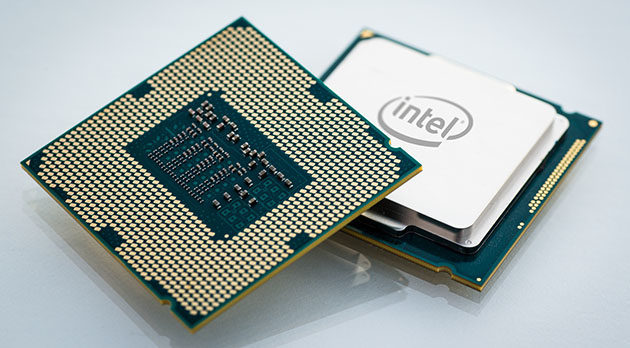
Major chip flaw leaves billions of devices vulnerable to security concerns

intel cpu
Two major flaws in computer chips could leave a huge number of computers and smartphones vulnerable to security concerns, researchers revealed Wednesday.

And a U.S. government-backed body warned that the chips themselves need to be replaced to completely fix the problems.

The flaws could allow an attacker to read sensitive data stored in the memory, like passwords, or look at what tabs someone has open on their computer, researchers found. Daniel Gruss, a researcher from Graz University of Technology who helped identify the flaw, said it may be difficult to execute an attack, but billions of devices were impacted.


Called Meltdown and Spectre, the flaws exist in processors, a building block of computers that acts as the brain. Modern processors are designed to perform something called "speculative execution." That means they predict what tasks they will be asked to execute and rapidly access multiple areas of memory at the same time.

That data is supposed to be protected and isolated, but researchers discovered that in some cases, the information can be exposed while the processor queues it up.

Comment: Apparently this issue affects devices from the last 20 years. Wonder how long the folks at the NSA have known about this...


Nebula

Russia joins search for space signals of unknown origin

Spiral galaxy
© AP Photo/ Hubble Heritage
Sergei Trushkin, an astronomer from the Special Astrophysical Observatory of the Russian Academy of Sciences, has explained why scientists are eager to discover the mystery of the fast radio burst phenomenon and how Russia's RATAN-600 radio telescope could help them.

The first fast radio burst (FRB) was identified in 2007 in data recorded by the Parkes Observatory in Australia. An FRB is a high-energy astrophysical phenomenon of a radio pulse lasting only for a few milliseconds.

"Taking into account our modest capabilities, we expected to identify a maximum of three to five such pulses during a year of observation. On the other hand, even if we manage to discover at least one event on the frequencies which are used to study the phenomenon, our understanding of these signals will radically change," Trushkin said at the annual conference "High Energy Astrophysics" in Moscow.