Science & TechnologyS


Brain

Scientists could soon be able to manipulate memories in the human brain

brain
Scientific research on the human brain has yielded some very interesting results. According to the world's foremost experts on the subject, they have made significant progress on the road to understanding human memories. Soon, they expect to be able to not only understand human memories fully but also to manipulate them at will.

Today's technology is slowly making it possible. And scientists are beginning to realize that, by combining a few different methods, they could come up with radical new solutions to the problem of how to better understand the brain when it comes to handling memories -- how they're made, where they're stored, and how they could be changed in the event that it becomes necessary.

According to Dr. Alison Preston from the University of Texas, memories were always sort of understood -- in the intuitive sense -- even if the mechanisms behind them were still unclear. But now, a number of different approaches might lead directly to open manipulation of memories in the human brain.

Comment: See also:


Question

Why aren't more people lefties?

nun beating boy
© ShutterstockOur environmental surroundings can pressure us to adopt certain behaviours, like handedness, even if we aren’t genetically wired that way.
In graduate school, I earned beer money by modelling for life drawing classes in various art departments. (Don't judge, grad school doesn't pay well and beer isn't free.) In the long hours standing around, I would survey the room and count how many of the aspiring artists were left-handed. Later in my career, I did the same thing - counting lefties, not standing around naked - in the biology classes I taught.

Funny thing, in any given class, around 10 per cent of the students were lefties. It turns out this is true for all human populations, not only middle-America university classes. Globally, about 90 per cent of people are righties. But why?

For as long as I can remember, I've been fascinated by handedness - our almost ubiquitous tendency to favour one hand over the other - and maybe a little envious of the rare left-handers. Their rareness gave a certain mystique - and they got to use those funky chair-desks with the desktop on the "wrong" side.

What do we know about the genetics of being right- or left-handed, or even ambidextrous? And how does this help shape our understanding of biology in general?

Comment: For more on handedness see:


Info

Testosterone may protect men from autoimmune diseases

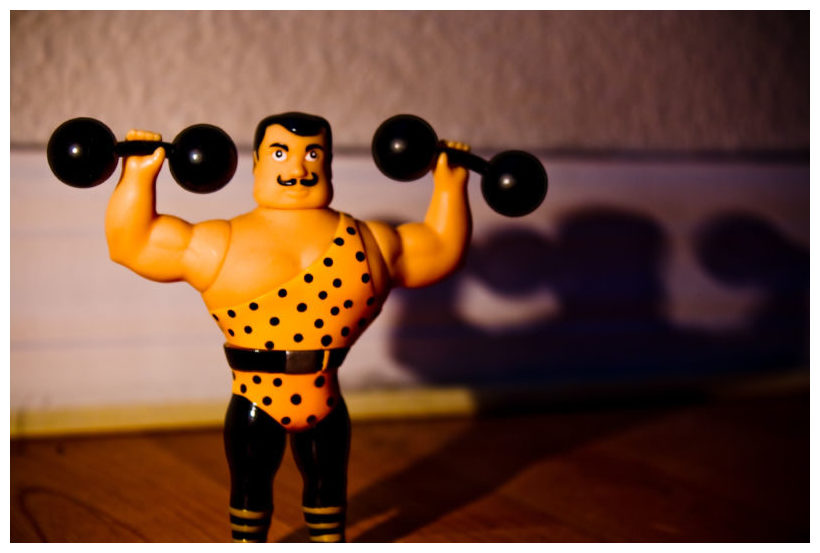
Strong Man
© Lauren Mitchell/Flickr
Testosterone. Source of prostates and testes, muscles and machismo, chest hair, and according to some, even math skills. Its levels are only one of the biological differences between males and females, but they may help to explain another: the discrepancies in the incidence of autoimmune diseases.

Women are three to nine times more likely than men to suffer from autoimmune diseases, including multiple sclerosis (MS), Grave's disease, celiac disease, systemic lupus erythematous, and rheumatoid arthritis. Not only do women get these diseases at higher rates, they usually get them at younger ages.

Men's higher testosterone levels-about seven to eight times higher than women's-have been shown to be protective for MS in both mice and men. But it was not clear exactly how this worked. Recent work in a mouse model of MS has filled in the downstream effectors that mediate testosterone's protective effects. These effectors might be useful as therapeutics, whereas testosterone use really isn't, especially for women, who are the ones who need it most.

Mars

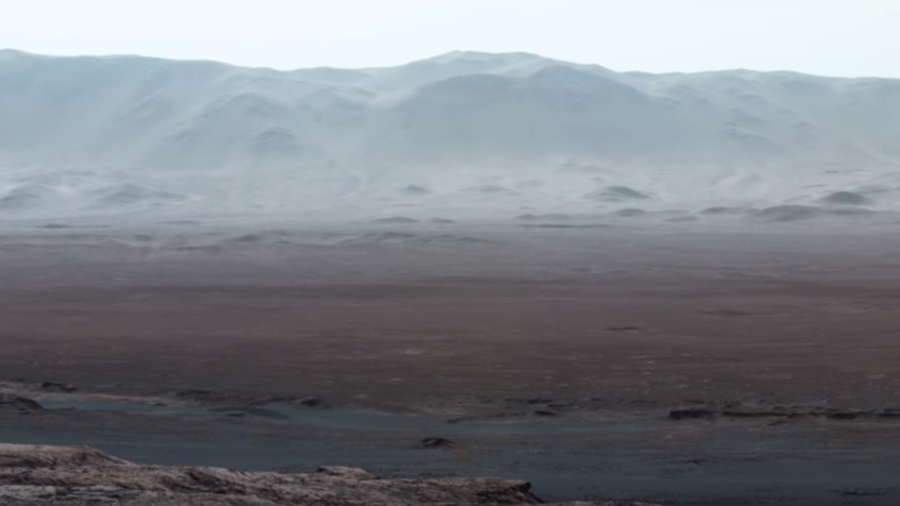
Mars Rover Curiosity snaps selfie and takes stunning panorama of Red Planet

Mars
© PL-Caltech/MSSS / NASA
NASA's Mars Rover Curiosity has sent a fresh update, and it appears the science-lab-on-wheels has been busy acting like a tourist, snapping selfies at famous sites and taking stunning panoramic photos of the Martian landscape.

The rover, which is part of NASA's Mars Science Laboratory mission, sends back raw images of what it encounters based on commands sent from the mission team.

The latest batch of photos shows the dusty robot posing for a selfie on Vera Rubin ridge which it's been investigating for the past few months in a bid to establish whether Mars is, or ever was, capable of supporting life.

In the background of the picture, the 3.4 mile high Mount Sharp can be seen just behind Curiosity's head.

Comet 2

Early humans witnessed global cooling, warming, and massive fires from comet debris impacts says major study

global temperatures 20,000 years

Graph of temperature for the last 20,000 years, provided to illustrate this story, but was not part of the original press release.
New research suggests toward end of Ice Age, human beings witnessed fires larger than dinosaur killers

On a ho-hum day some 12,800 years ago, the Earth had emerged from another ice age. Things were warming up, and the glaciers had retreated.

Out of nowhere, the sky was lit with fireballs. This was followed by shock waves.

Fires rushed across the landscape, and dust clogged the sky, cutting off the sunlight. As the climate rapidly cooled, plants died, food sources were snuffed out, and the glaciers advanced again. Ocean currents shifted, setting the climate into a colder, almost "ice age" state that lasted an additional thousand years.

Comment: For more on the events surrounding the Younger Dryas Impact and the very real possibility of it occurring again, see:


Gem

Researchers discover new phenomena when splitting a crystal in two

split crystal surface
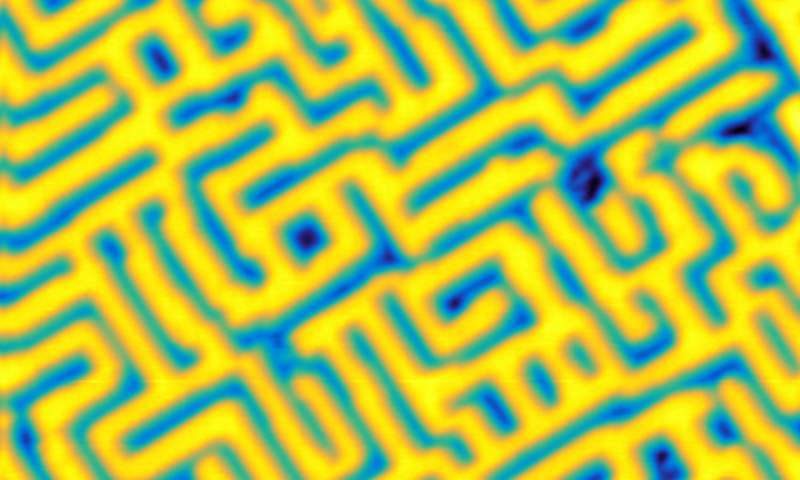
© TU WienA labyrinth-like structure emerges on the surfaceof a split ionic crystal
The remarkable strength of ionic crystals is easily explained at the atomic scale: Positively and negatively charged atoms sit side by side in a repeating periodic arrangement. The strong electrostatic force in between keeps them together.

But what happens when the periodic pattern comes to an abrupt end? Researchers at the Vienna University of Technology have carefully broken potassium tantalate crystals in specific directions, and imaged the resulting surfaces using a state-of-the art atomic force microscope. Their data was combined with computations performed at the University of Vienna, and a series of remarkable phenomena were ultimately explained. The results were published in Science, and are potentially useful for technologies such as hydrogen production.

Beaker

The strange properties of metallic hydrogen

metallic Hydrogen
© R. Dias and I.F. SilveraImage of diamond anvils compressing molecular hydrogen. At higher pressure the sample converts to atomic hydrogen, as shown on the right.
Solid. Liquid. Gas. The materials that surround us in our normal, everyday world are divided into three neat camps. Heat up a solid cube of water (aka ice), and when it reaches a certain temperature, it changes phases into a liquid. Keep cranking the heat, and eventually, you'll have a gas: water vapor.

Every element and molecule has its own "phase diagram," a map of what you should expect to encounter if you apply a specific temperature and pressure to it. The diagram is unique to each element because it depends on the precise atomic/molecular arrangement and how it interacts with itself under various conditions, so it's up to scientists to tease out these diagrams through arduous experimentation and careful theory. [The Strangest Space Stories Of 2017]

When it comes to hydrogen, we usually don't encounter it at all, except when it's buddied up with oxygen to make the more familiar water. Even when we do get it by lonesome, its shyness prevents it from interacting with us alone - it pairs up as a diatomic molecule, almost always as a gas. If you trap some in a bottle and pull the temp down to 33 kelvins (minus 400 degrees Fahrenheit, or minus 240 degrees Celsius), hydrogen becomes a liquid, and at 14 K (minus 434 degrees F or minus 259 degrees C), it becomes a solid.

Archaeology

Laser scans reveal advanced Mayan network of cities, farms and highways in Guatemalan jungle, including 7-story pyramid

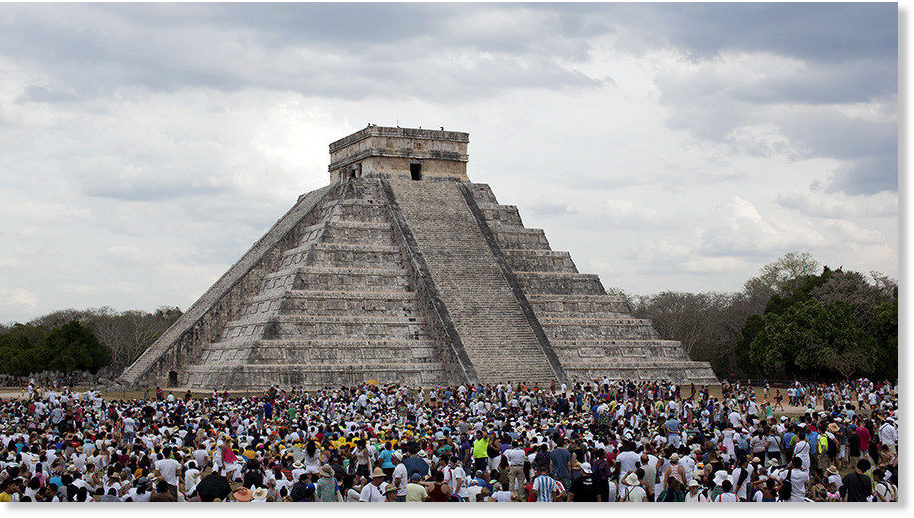
Mayan Pyramids
© Victor Ruiz Garcia / ReutersThe first two weeks of the study have already revealed new discoveries.
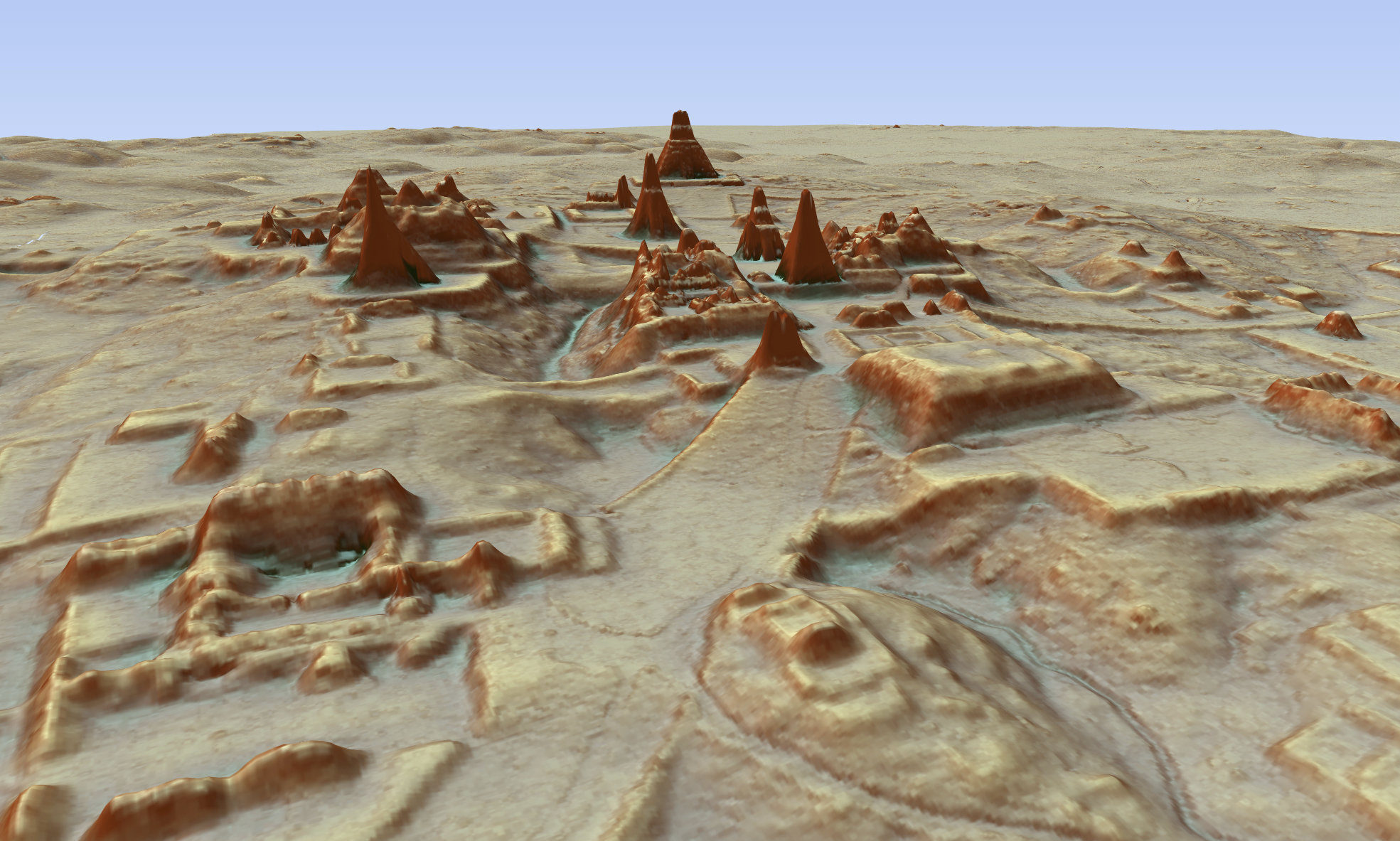
A vast, hidden network of cities, fortifications, farms and highways has been found hidden beneath the trees of the remote Guatemalan jungle.

Scans of the area exposed 60,000 previously unknown structures, including a seven-story pyramid.

The results suggest the region supported an advanced society that peaked around 1,200 years ago, led by a mysterious Maya dynasty archaeologists call the "Snake Kings".

Using a technology called LiDAR, scientists were able to strip away the tree canopy from aerial images and reveal the ancient civilisation underneath.
mayan cities
© Canuto & Auld-Thomas/PACUNAMThis digital 3D image provided by Guatemala's Mayan Heritage and Nature Foundation, PACUNAM, shows a depiction of the Mayan archaeological site at Tikal in Guatemala created using LiDAR aerial mapping technology. Researchers announced Thursday, Feb. 1, 2018, that using a high-tech aerial mapping technique they have found tens of thousands of previously undetected Mayan houses, buildings, defense works and roads in the dense jungle of Guatemala's Peten region, suggesting that millions more people lived there than previously thought

Info

Dentists may soon be able to regenerate teeth

Teeth
© PeopleImages Getty Images
For dentists, a cavity is a conundrum-in order to save the tooth they must further damage it. Currently, the primary way to treat a cavity is to excavate the decay and the surrounding area before filling the resulting crater with a durable surrogate material such as metal, plastic or glass cement.

But what if instead of drilling holes into teeth and patching them up with synthetic fillers, dentists could coax our pearly whites to regrow themselves? Recently, Paul Sharpe, a bioengineer at King's College London, and his colleagues discovered a new way to do exactly this in mice. Last year they published a study describing their innovative techniques in Scientific Reports. And since then they have made even more progress that edges this experimental procedure closer to human clinical trials. If the treatment eventually becomes part of the dentist's standard tool kit, scientists say it would easily be one of the field's most important advances in 50 years.

Our teeth get damaged all the time. Most of the injuries they endure are due to everyday wear and tear as well as the activity of microbes in the mouth. These organisms coat the surface of each tooth and feed on meal remnants. As they break down particles of food, some of these microbes produce and secrete acids as a by-product. And that acidity degrades enamel-the tooth's hard outer layer.

Sun

NOAA's dodgy 'climate and global change' fellowships axed

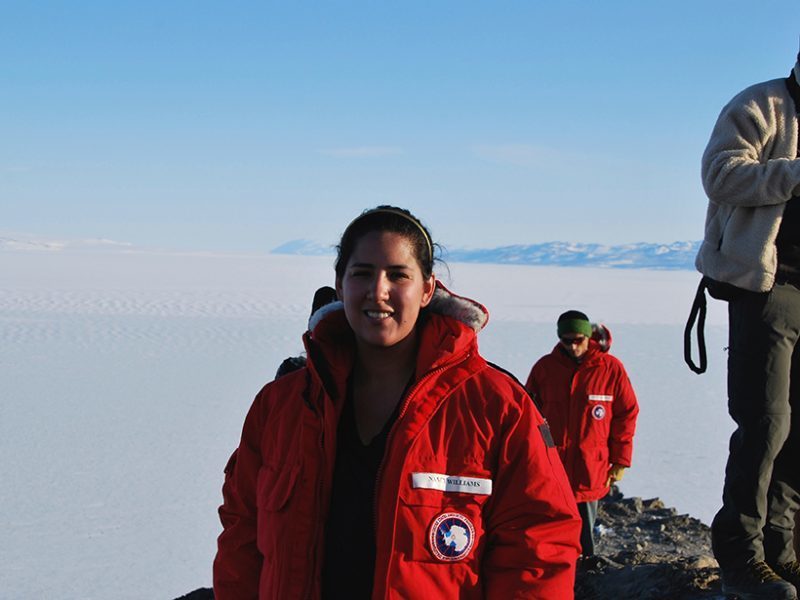
Nancy Williams at McMurdo Base overlooking the Ross Sea in Antarctica in 2011.
© Robert ThombleyNancy Williams at McMurdo Base overlooking the Ross Sea in Antarctica in 2011.
Reduced program is one of several that usually support climate science postdoctoral research but have eliminated or suspended funding opportunities.

Last March, Katie Travis, who was finishing a Ph.D. in atmospheric chemistry at Harvard University, got what seemed like a major boost for her budding career: She had been selected as one of eight fellows for the 2017 class of the National Oceanic and Atmospheric Administration's (NOAA) prestigious Climate and Global Change Postdoctoral Fellowship Program. But the announcement came with an ominous caveat-NOAA program managers did not actually have the money in hand.

Comment: The US under Trump's administration has been working to axe those programs which are known to distort data and subvert science in favor of the global warming scam. While these programs could be beneficial, as they are, they're doing their field as disservice. Hopefully, with them gone, real science will make a come back: