Networks regulate everything from ant colonies and middle schools to epidemics and the internet. Here's how they workWe live enmeshed in networks. The internet, a society, a body, an ant colony, a tumour: they are all networks of interactions, among people, ants or cells - aggregates of nodes or locations linked by some relation.
The power of networks is in their local connections. All networks grow, shrink, merge or split, link by link. How they function and change depends on what forms, or disrupts, the connections between nodes. The internet dominates our lives, not because it is huge, but because each of us can make so many local links. Its size is the result, not the cause, of its impact on our communication.
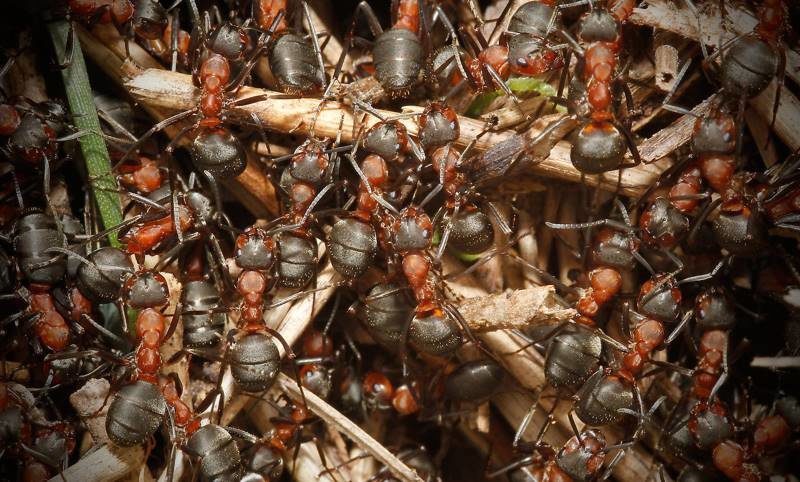
Nowhere is the decisive influence of local interactions easier to see than in ants, which I study. The local is all an ant knows. A colony
operates without central control, based on a network of simple interactions among ants. These are local by necessity, because an ant cannot detect anything very far away. Most ant species can't see, and all of them rely on smell, which they do with their antennae. The important interactions are when ants touch antennae, smelling each other, or the ground, smelling chemicals deposited by other ants.













Comment: More Myanmar amber discoveries: